


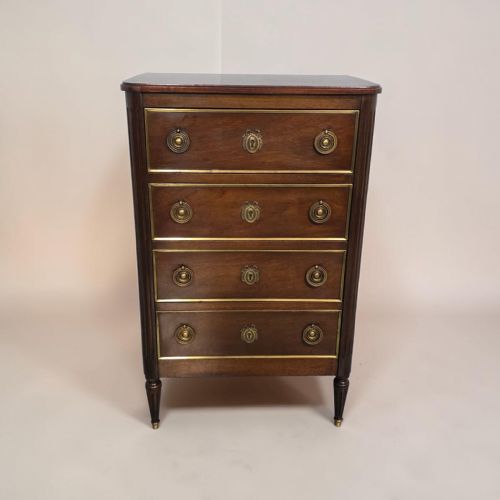


Antique Mahogany Semainier
An antique mahogany semainier is a tall, slender chest designed for the week, offering elegant vertical storage with rich timber grain.
Antique Mahogany Semainier
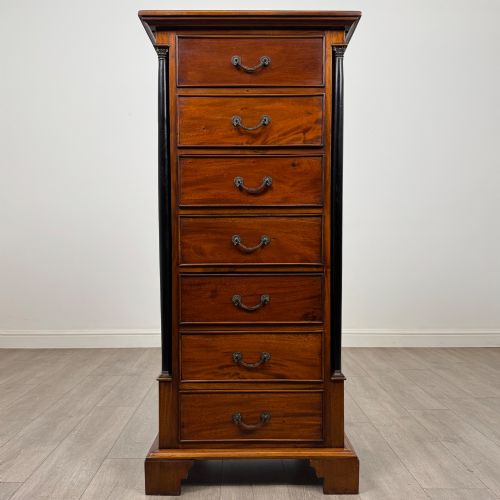
When you search for an antique mahogany semainier, you are looking at tall, narrow chests of drawers designed to hold seven drawers, one for each day of the week. These pieces emerge across the nineteenth century, the Edwardian era, and into the early twentieth century, taking forms such as Wellington chests and French tall cabinets.
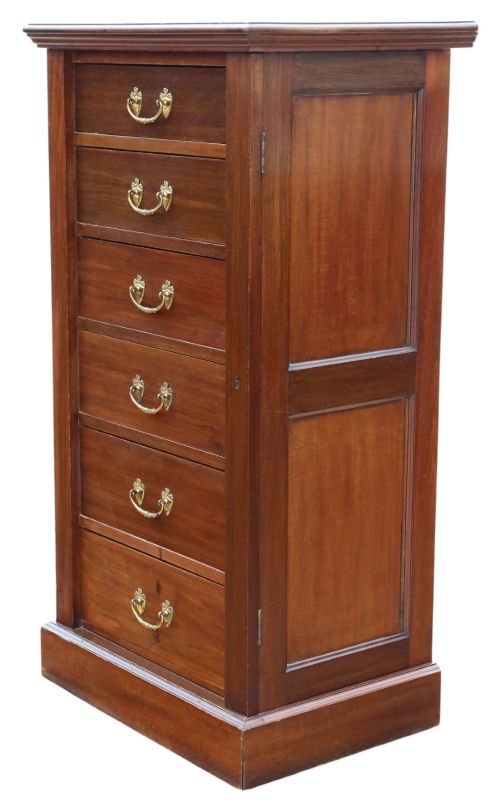
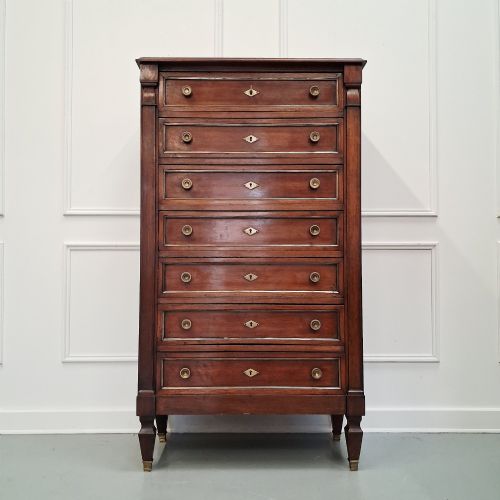
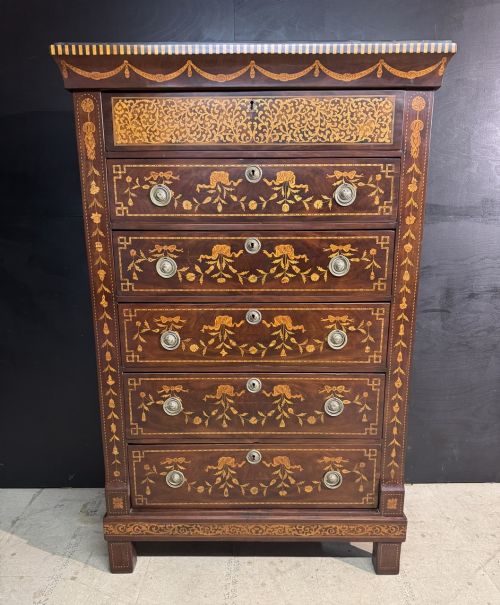
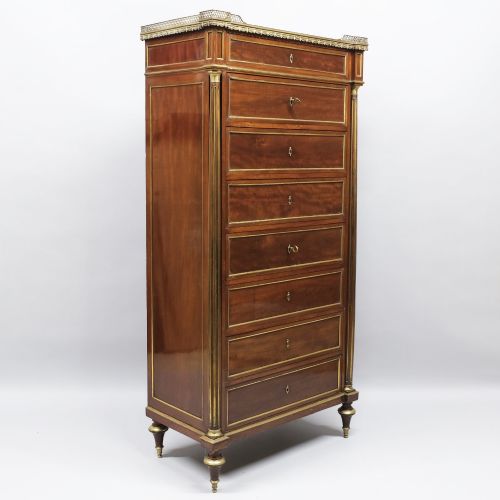
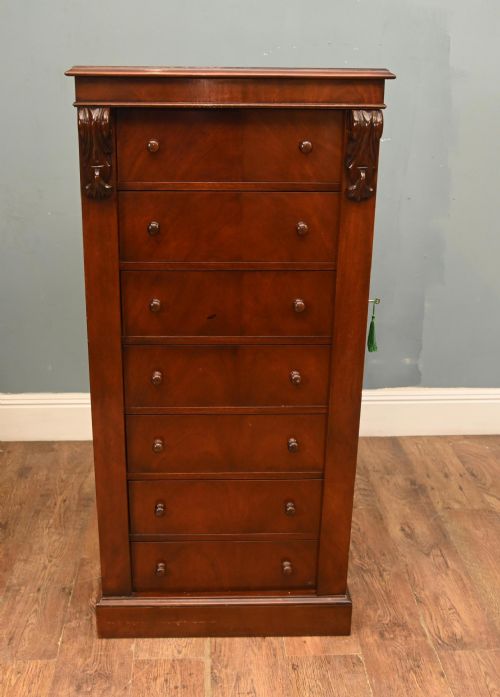
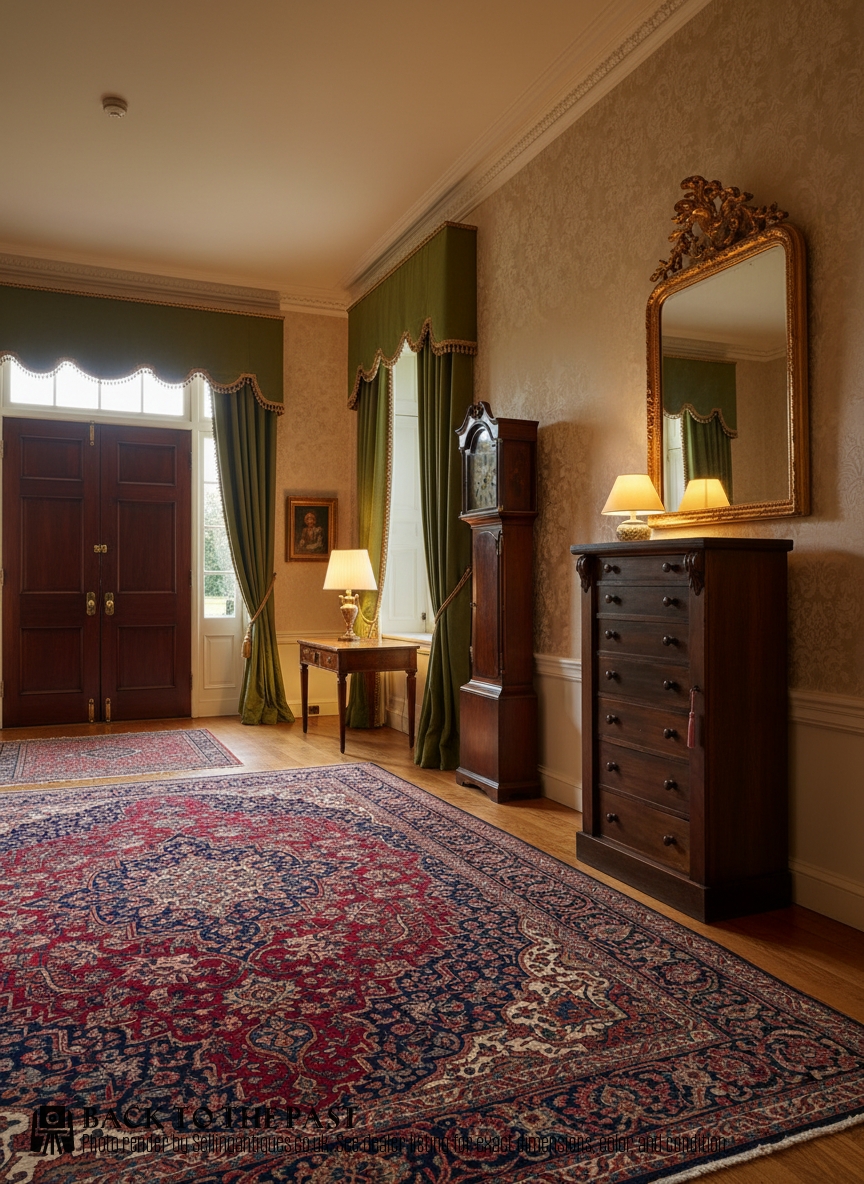
The versions most likely to meet you on this page include Victorian mahogany Wellington chests featuring a locking side pilaster, along with French Empire and Dutch neo-classical examples. Cabinetmakers built these tall forms to maximise storage in smaller bedroom spaces without sacrificing floor area.
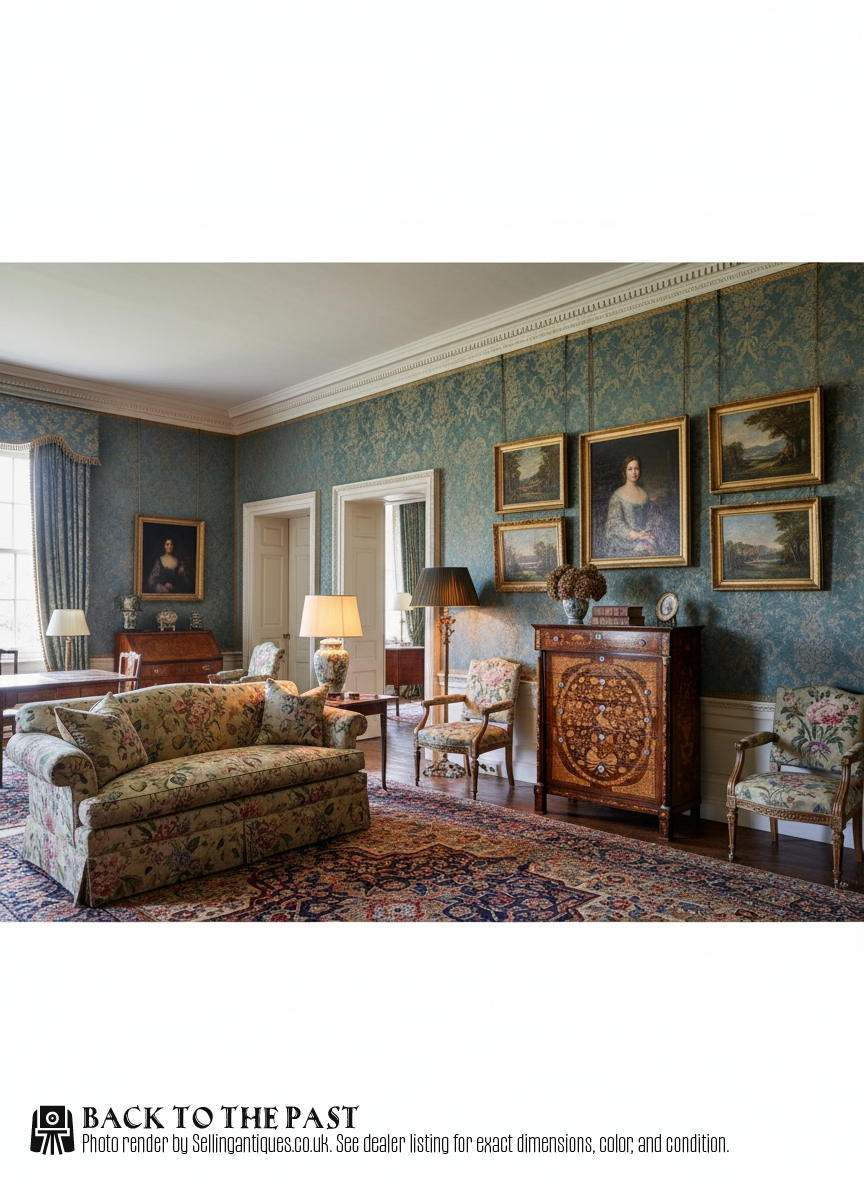
The selection encompasses English, Irish, and continental origins, including inlaid French pieces and Dutch marquetry items. You will also find pairs of bedside cabinets and slim pedestal chests sharing the same vertical proportions.
How they were made
Cabinetmakers constructed these pieces primarily from solid mahogany and pine carcasses, applying flame mahogany veneer to drawer fronts to create striking natural patterns. Finer examples incorporate secondary timbers like satinwood for contrast and interior drawer linings.
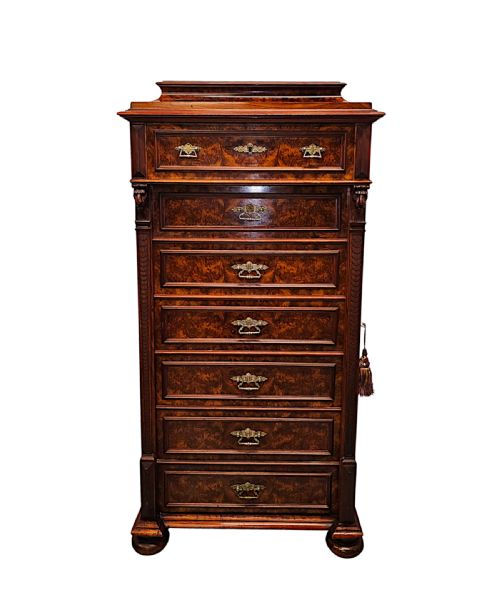
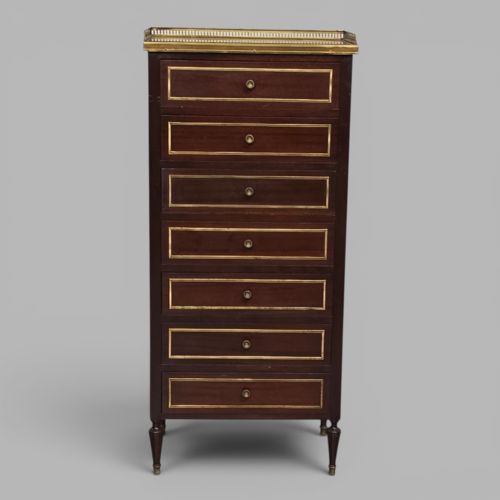
Makers integrated structural hardware such as brass handles, working secret locks on side pilasters, and cast ormolu and gilt bronze mounts on continental pieces. Marble tops also appear on certain continental semainiers to provide a durable and decorative upper surface.
French and Dutch pieces frequently utilise intricate marquetry inlay or striking gilt metal mounts to decorate the exterior carcase, distinguishing them from the simpler structural locking pilasters typical of English Wellington chests.
Some tall pharmacy cabinets cross over into this category, meaning your linen might once have shared quarters with dried herbs.
What varies in quality
Quality rests heavily upon the selection of the timber grain, where highly figured flame mahogany veneer demonstrates a superior choice compared to plain stock. The crispness of hand-cut dovetails within the drawers and the weight of the brass or ormolu mounts further separate standard production from exceptional workshops.
The presence of original working locks and keys, particularly the side locking mechanism on Wellington chests, dictates the integrity of the piece. Subtle details such as inlaid satinwood stringing and well-fitted marble slabs elevate the standing of continental and English examples alike.
Maple & Co.
The Antique Mahogany Semainier Glossary
- Semainier
- A tall French chest traditionally featuring seven drawers, one for each day of the week. This form provides substantial vertical storage with a minimal footprint.
- Wellington Chest
- A sturdy English tall chest featuring a hinged vertical locking bar on one side that secures all the drawers at once. It typically contains six or seven shallow drawers.
- Flame Mahogany Veneer
- A sliced timber veneer displaying a distinctive flickering flame pattern derived from the branch junctions of the tree. Cabinetmakers applied this to the primary drawer fronts for visual impact.
- Ormolu
- Gilt bronze mounts applied to furniture for decorative enrichment, common on French Empire pieces. This technique involves coating cast bronze in a layer of finely ground gold mercury amalgam.
- Marquetry
- The art of applying decorative pieces of veneer to a structure to form intricate floral or geometric designs. Dutch makers utilised this extensively on tall chests.
Antique Mahogany Semainier: Frequently Asked Questions
What is a semainier?
A semainier is a tall, narrow chest of drawers traditionally built with seven drawers, corresponding to the days of the week. Originating in France, this furniture form offered personal storage for garments while occupying minimal floor space in a bedroom.
Makers constructed these pieces using dense hardwoods like mahogany, often embellishing the exterior with fine veneers, marble tops, or gilt bronze mounts.
How does a Wellington chest work?
A Wellington chest operates via a hinged wooden locking bar or pilaster situated down one side of the drawer stack. When closed and locked with a key, this bar secures the edges of all the drawers simultaneously.
This clever mechanism originated in the nineteenth century and provided a secure method for storing valuables or private papers within a tall, slender cabinet.
Where should I place a semainier at home?
Semainiers excel in rooms where floor space is at a premium, making them ideal for bedrooms, dressing rooms, or narrow hallways. Their generous height combined with a small footprint allows them to provide significant storage without overwhelming the interior.
Pairing a mahogany semainier with traditional wardrobes or placing a marble-topped continental version in a study highlights its architectural proportions.
How do I tell English and French chests apart?
English versions, particularly Wellington chests, rely on architectural dignity with polished mahogany surfaces, understated mouldings, and functional side locking bars. French and Dutch examples frequently exhibit bolder ornamentation, including gilt metal mounts, marble tops, and marquetry inlay.
Continental pieces also tend to use the term semainier directly, whereas British examples often fall under the broader classification of tall narrow chests of drawers.