
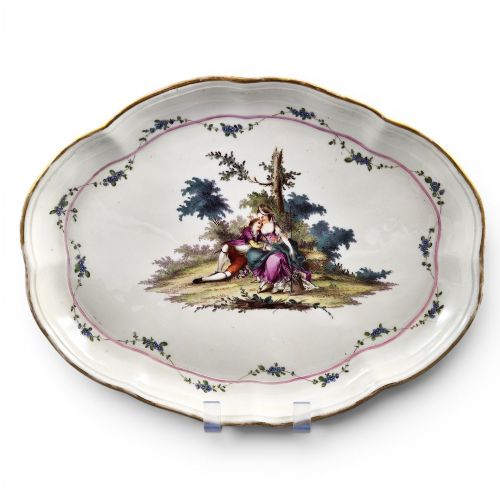


French Faience Dish
A french faience dish brings tin-glazed earthenware into the home, offering hand-painted regional colour and historic character from France.
French Faience Dish
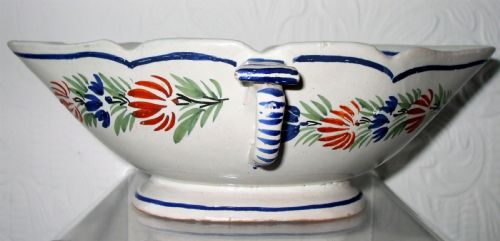
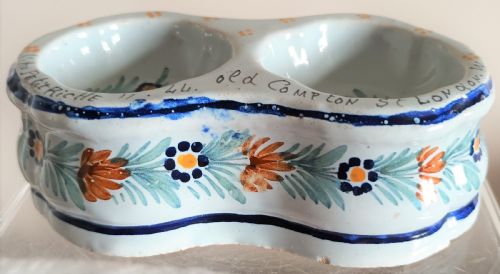
A french faience dish encompasses a wide variety of forms, including chargers, sweetmeat presentiers, pin trays, sauceboats, and table salts. These pieces originate from historic production centres across France, spanning the eighteenth and nineteenth centuries.
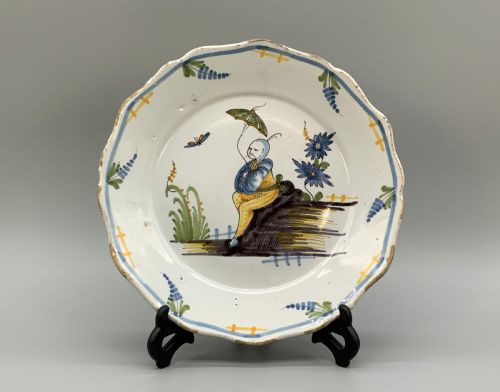
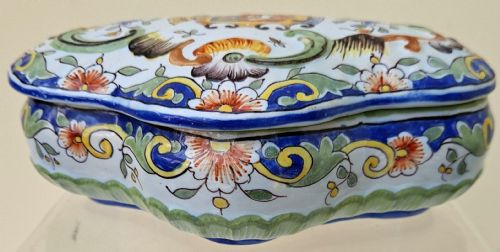
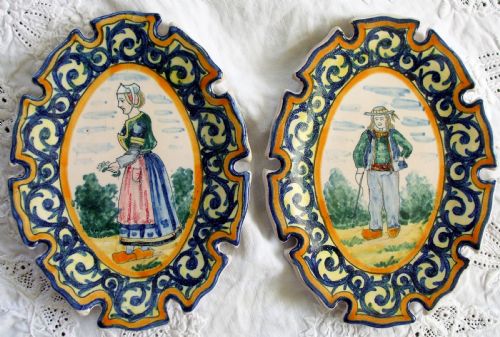
Functional serving pieces sit alongside decorative items like trinket boxes and wall plaques. The common thread is the tin-glazed earthenware body decorated with hand-painted scenes, floral motifs, or figures.
Materials and construction
Potters formed these items using earthenware covered in a white tin glaze, which provided an opaque surface for subsequent decoration. Artisans then applied metal oxide pigments directly onto the unfired or raw glaze.
Palettes typically incorporated manganese, yellow, puce camaieu, and blue and white enamel colours. Firing in kilns set the pigments into the glossy glaze, locking in the characteristic hand-painted brushwork.
Assessing quality and execution
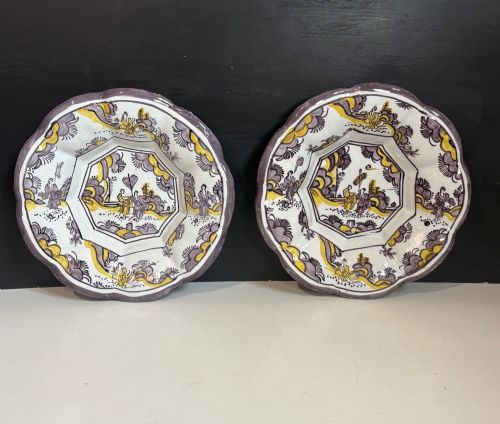
Quality rests primarily on the crispness and complexity of the hand-painted decoration. Finer pieces display confident brushwork in palettes like puce camaieu or detailed Chinoiserie scenes, whereas simpler domestic wares exhibit more rustic execution.
The weight of the earthenware body and the evenness of the tin glaze also differentiate output from major workshops and regional potteries. Well-preserved painted surfaces with minimal glaze disruption indicate superior historic care.
HB Quimper·HR Quimper·Joseph-Gaspard Robert·Desvres·Gien·Lille·Rouen·Malicorne
The French Faience Dish Glossary
- Tin Glaze
- A lead glaze rendered white and opaque by the addition of tin oxide. This coating forms the smooth canvas for traditional painted designs.
- Sweetmeat Presentier
- A specialised raised dish or stand used historically for serving small sweet confections or nuts. These footed pieces often feature compartmentalised sections.
- Vide-Poche
- A small decorative dish intended for emptying pockets of loose items like coins or keys. These shallow receptacles appear frequently in nineteenth-century French ceramics.
- Chinoiserie
- European artistic style reflecting Chinese motifs and landscapes. Artisans adapted these imaginative Eastern themes onto eighteenth-century chargers and plates.
French Faience Dish: Frequently Asked Questions
How are these dishes cleaned?
Wash tin-glazed earthenware gently by hand using warm water and mild soap. Avoid soaking historic pieces or placing them in mechanical dishwashers, as moisture can penetrate old ceramic bodies through microscopic glaze cracks.
Pat the surface dry immediately with a soft cloth. Proper handling preserves the delicate hand-painted enamel decoration and prevents further crazing of the glaze.
Can I use them for food?
Many older pieces contain lead within the historic glaze formulations. Using them for dry presentation items is generally preferred over serving wet or acidic foods.
Displaying them on walls or using them as decorative pin trays avoids potential chemical interaction with foodstuffs while protecting the fragile edges.
How do I identify Quimper pieces?
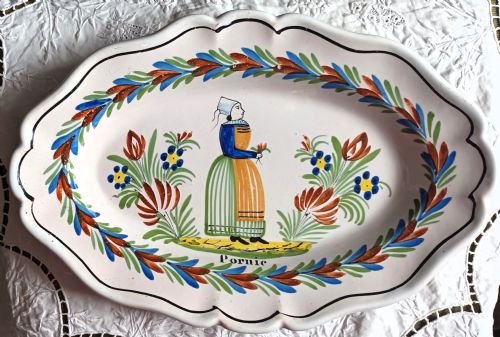
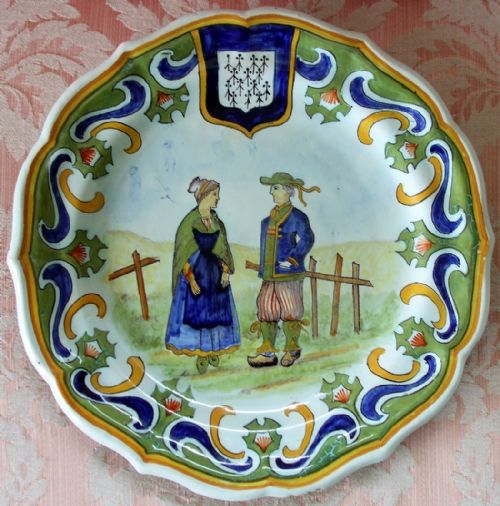
Quimper items often feature distinct depictions of Breton peasants in traditional regional dress, accompanied by floral borders. Look for painted initials or marks on the underside associated with the HB or HR workshops.
The palette frequently relies on blues and yellows, capturing the vernacular style of this specific French pottery region.
What is puce camaieu?
Puce camaieu describes a monochromatic painting technique executed in shades of purplish-red or pinkish-brown enamel. This restrained palette highlights fine brushwork and tonal shading without relying on multi-coloured pigments.
Dishes utilising this method often date to the mid-eighteenth century and reflect refined neoclassical or rococo tastes.