
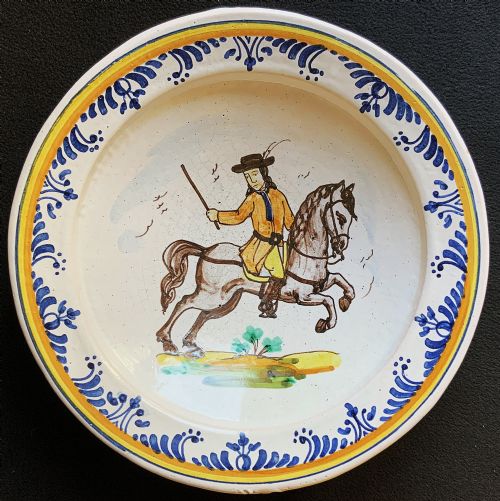


Polychrome Faience Dish
A polychrome faience dish brings vibrant tin-glazed earthenware into a room, offering centuries of European ceramic artistry for display and service.
Polychrome Faience Dish
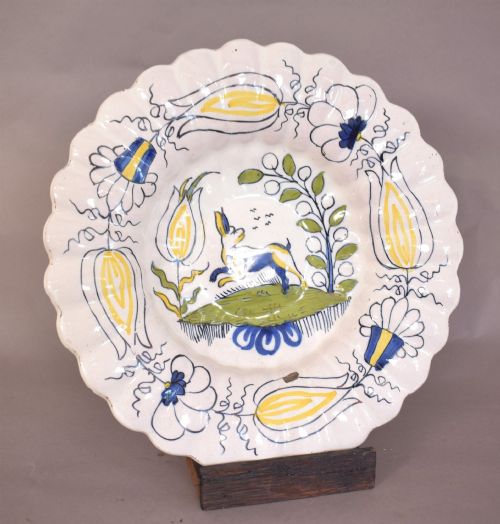
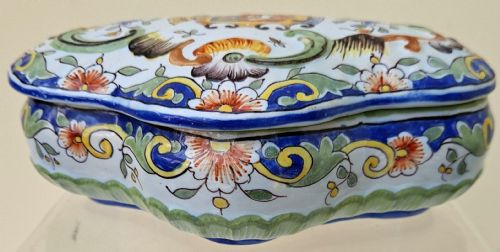
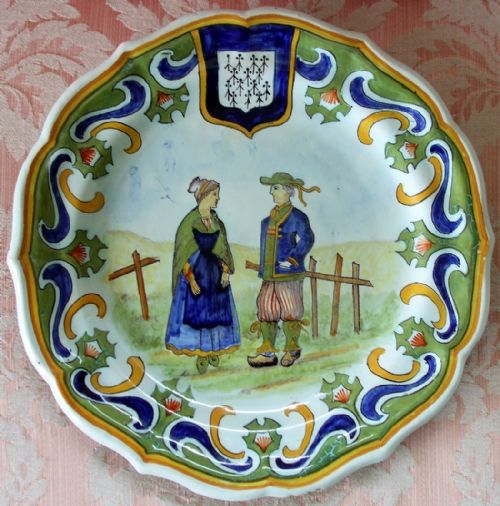
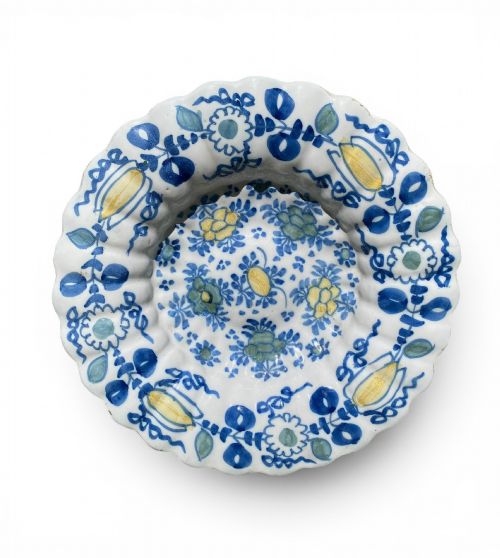
A polychrome faience dish covers a wide variety of tin-glazed earthenware forms, including chargers, plates, bowls, trinket boxes, and wall plaques. When exploring this selection, buyers most frequently encounter chargers and decorative plates originating from Dutch, French, Spanish, and Italian traditions.
The objects span multiple centuries, ranging from seventeenth-century Dutch Delftware and Spanish Catalana chargers to eighteenth-century sweetmeat presentiers and nineteenth-century French regional wares from Quimper, Desvres, and Lille.
How they were made
These pieces begin with a terracotta or earthenware body shaped into plates, bowls, or boxes. Potters then apply a tin glaze to create an opaque white surface suitable for painting.
Makers paint directly onto the unfired glaze using mineral pigments. Subsequent firing fuses the pigments into the glaze, producing the distinctive polychrome palette seen across Dutch, French, and Spanish workshops.
Regional styles represented include Dutch Baroque, French Provincial, Spanish Catalana, and Folk Art traditions.
What varies in quality
The quality of a polychrome faience dish rests upon the precision of the hand-painted decoration and the clarity of the tin glaze. Pieces with crisp geometric or floral motifs and well-controlled pigment application stand apart from simpler utilitarian wares.
Depth of glaze coverage and the sophistication of the regional style also distinguish finer examples. Early seventeenth- and eighteenth-century pieces often display greater artistic ambition in their palette and form compared to later nineteenth-century productions.
Desvres French Faience·Quimper French Faience·Rouen French Faience·Dorotheenthal Germany·Lille French Faience
The Polychrome Faience Dish Glossary
- Delftware
- Tin-glazed earthenware made in the Netherlands, encompassing both blue-and-white and polychrome decorated chargers, plates, and plaques.
- Charger
- A large ornamental or serving plate, frequently displayed on walls or sideboards during the seventeenth and eighteenth centuries.
- Tin Glaze
- A ceramic glaze made opaque by the addition of tin oxide, providing a smooth white background for painted decoration.
- Sweetmeat Presentier
- A specialised shallow dish or stand used for serving small confectionery, sweetmeats, or dried fruits.
Polychrome Faience Dish: Frequently Asked Questions
How do I clean a faience dish?
Clean these earthenware pieces gently with a soft, dry cloth or a slightly damp sponge. Avoid submerging older tin-glazed ceramics in water for extended periods.
Harsh detergents and abrasive scouring pads will damage the fragile glaze and mineral pigments. Treat them as decorative art rather than everyday tableware.
Can I hang these plates on the wall?
Many chargers and decorative plates were manufactured with display in mind, featuring foot rings suitable for specialised wire hangers. Ensure any hanging hardware supports the weight evenly without putting pressure on the ceramic rim.
Check the stability of the wall mount periodically, particularly with larger seventeenth- or eighteenth-century chargers.
How do I tell Dutch Delft from French faience?
Dutch Delft pieces often showcase distinct seventeenth-century geometric and floral motifs inspired by imported Asian porcelain. French regional wares from centres like Quimper or Desvres tend to feature characteristic local figures, flora, and distinct palette choices.
Examining the underlying earthenware body and glaze characteristics helps confirm the likely regional origin.
What is the difference between a charger and a plate?
Chargers are significantly larger than standard dining plates, typically measuring over thirty centimetres across. They were designed primarily for formal display on sideboards or walls rather than for holding individual portions of food.
Smaller plates served practical dining functions or held sweetmeats during formal gatherings.