


Vintage Faience Charger
These vintage faience charger plates bring tin-glazed earthenware and robust blue and white ceramics straight to your wall or table.
Vintage Faience Charger
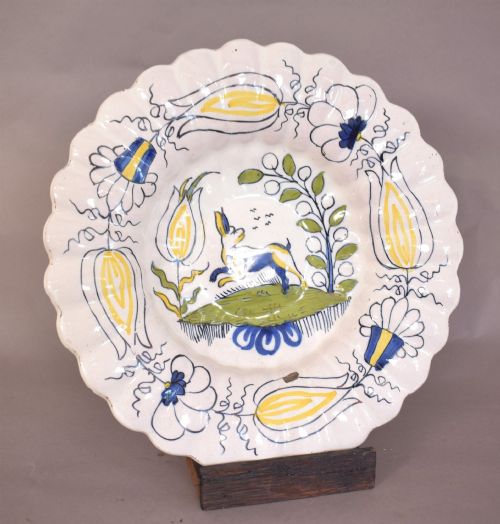
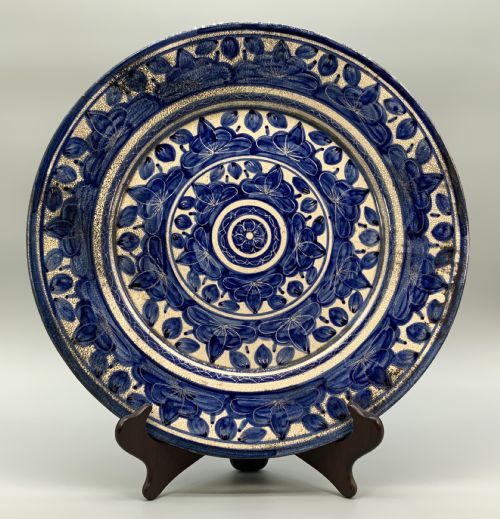
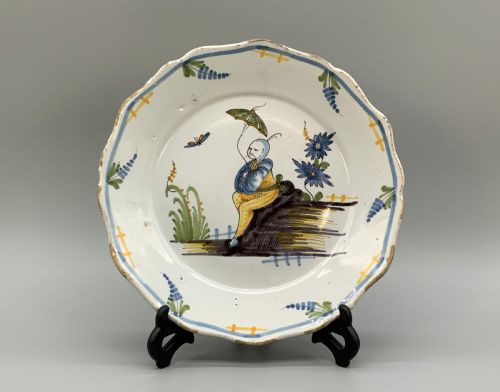
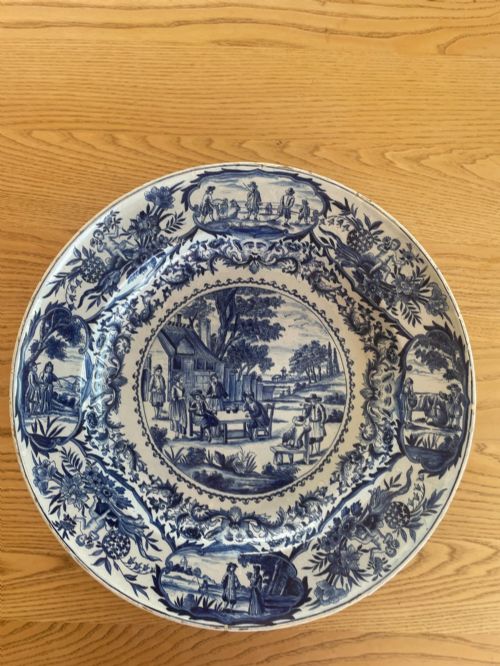
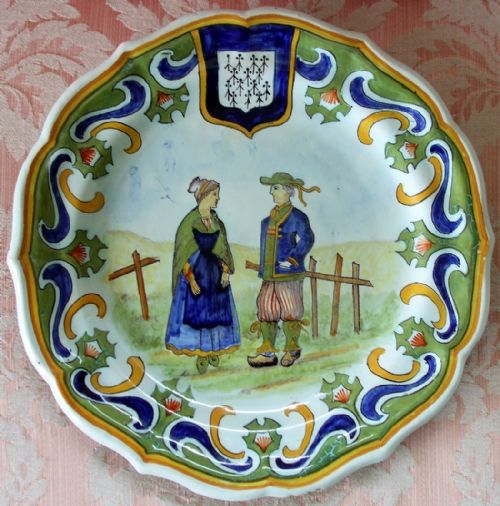
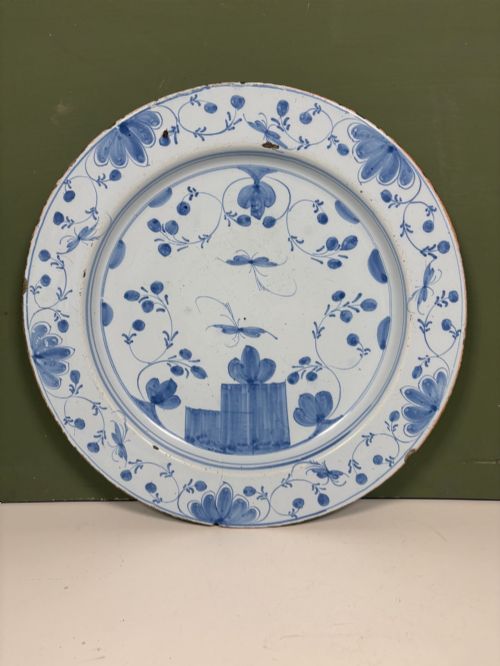
When you search for vintage faience charger, you are looking at large decorative plates and wall plaques made from tin-glazed earthenware and ceramic. The pieces you meet on this page span from the seventeenth century through to the twentieth century, originating from Dutch, French, Italian, and Moorish traditions.
The dominant forms are large wall chargers and decorative dishes, with Dutch Delftware and French faience appearing frequently. These objects combine broad display surfaces with hand-painted cobalt pigment, manganese, and yellow colours.
How they were made
Potters shaped earthenware bodies and coated them in a white tin glaze that provided an opaque, smooth canvas for painting. Artisans applied cobalt oxide, manganese, and other pigments directly onto the unfired or raw glaze, allowing the colours to absorb into the surface during firing.
Makers utilised traditional hand-painting techniques to execute floral motifs, figurative scenes, and Chinoiserie designs across large dish diameters. The interaction between the metallic oxides and the porous tin glaze created the characteristic soft bleeding of lines seen on these earthenware objects.
Listings span from the seventeenth century to the twentieth century, uniting Dutch Delftware, French faience, and Italian majolica in tin-glazed earthenware.
What varies in quality
The distinction between standard and superior pieces rests upon the crispness of the hand-painted brushwork and the complexity of the palette. Simpler monochrome blue designs sit alongside rich polychrome examples featuring manganese and yellow pigments applied with greater artistic control.
Depth of glaze coverage and the stability of the earthenware body during high-temperature firing also determine the visual weight of each charger. Finer examples display balanced composition across broad surfaces, whereas simpler productions show more casual execution in their folk art motifs.
Bassano pottery works·Desvres French Faience·Antique Lille French
The Vintage Faience Charger Glossary
- Charger
- A large decorative plate intended primarily for wall display or ceremonial table service rather than everyday dining. These broad dishes offer substantial space for painted scenes.
- Tin Glaze
- An earthenware glaze rendered white and opaque by the addition of tin oxide. This surface acts as a absorbent ground for pigments.
- Cobalt Pigment
- A metallic blue colouring agent used extensively in ceramic decoration. It maintains its deep tone under high kiln temperatures.
- Chinoiserie
- European decorative motifs inspired by Chinese art and porcelain exports. Artisans interpreted these Eastern designs through local pottery traditions.
Vintage Faience Charger: Frequently Asked Questions
How were faience chargers displayed?
These large dishes were traditionally hung on walls or stood on sideboards for formal display.
Their broad surfaces made them ideal for showcasing painted scenes in domestic interiors.
What is the difference between delft and faience?
Delft specifically refers to tin-glazed earthenware produced in Dutch towns, most notably Delft.
Faience is the broader European term encompassing similar tin-glazed ceramics made in France, Italy, and beyond.
Can these chargers be used for food?
Most vintage chargers function primarily as decorative wall plaques or display dishes rather than tableware.
The porous earthenware and historic tin glazes require careful handling away from daily dining use.
How do I date a tin-glazed charger?
Dating relies on stylistic shifts, painting palettes, and changes in the earthenware body over centuries.
Early seventeenth-century pieces differ noticeably in weight and pigment tone from later nineteenth-century revivals.