
Hand Painted Faience
When you search for hand painted faience, you enter a world of tin-glazed earthenware shaped into chargers, jars and vases across centuries of European craft.
Hand Painted Faience
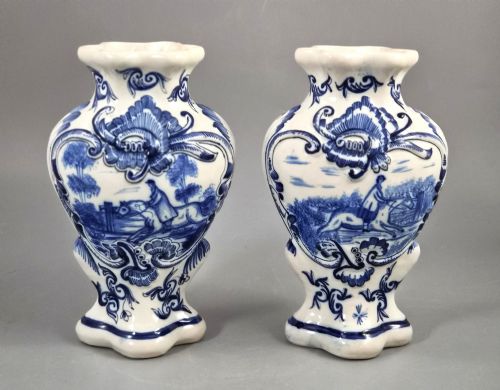
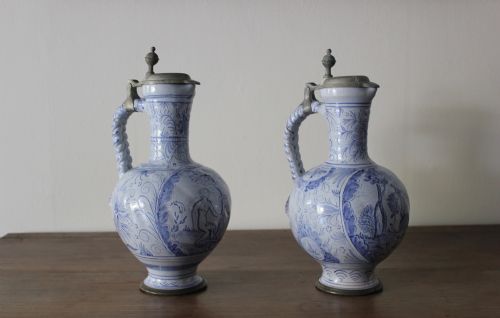
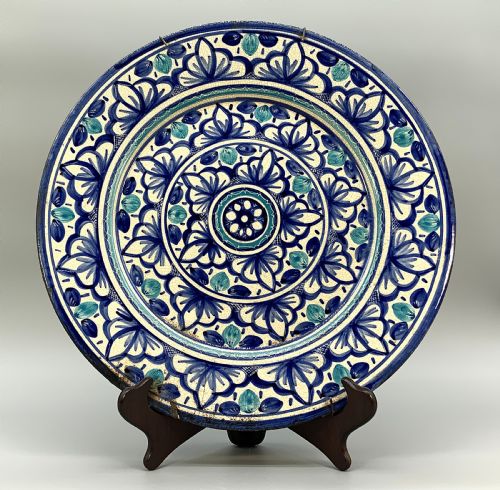
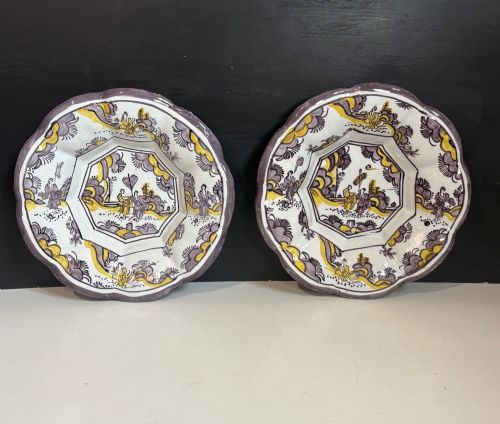
Hand painted faience encompasses tin-glazed earthenware vessels and plates produced across European centres from the seventeenth century onwards. Buyers frequently encounter Dutch Delftware alongside French regional pieces and Italian majolica in this category.
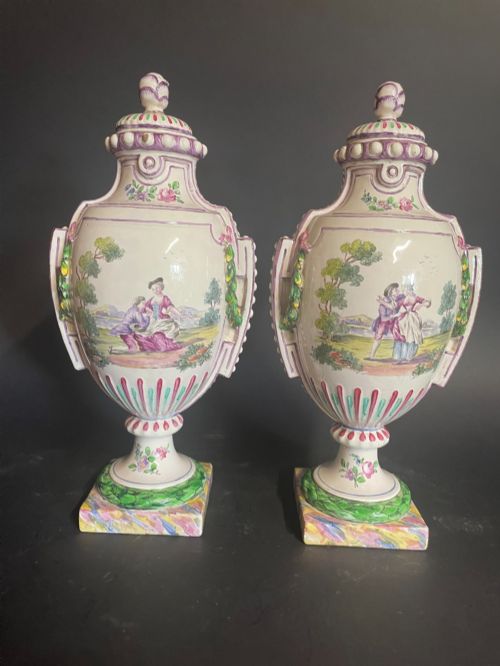
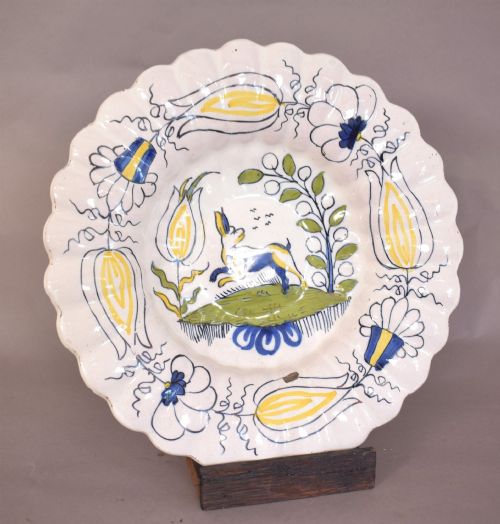
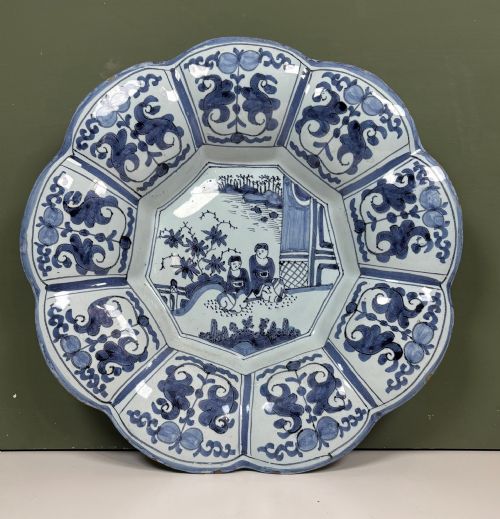
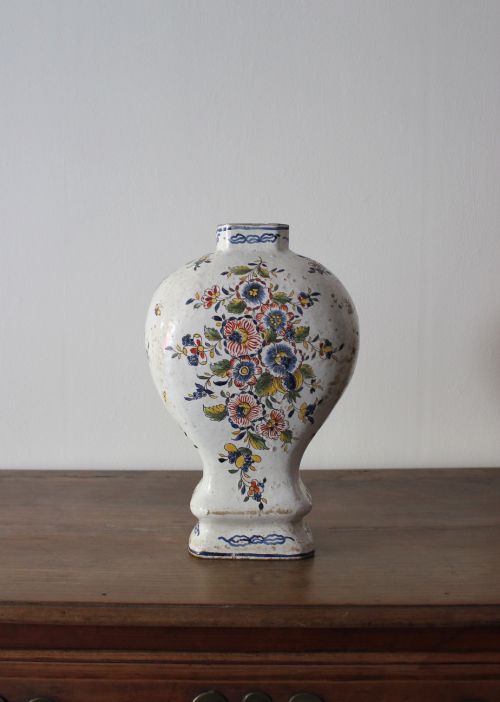
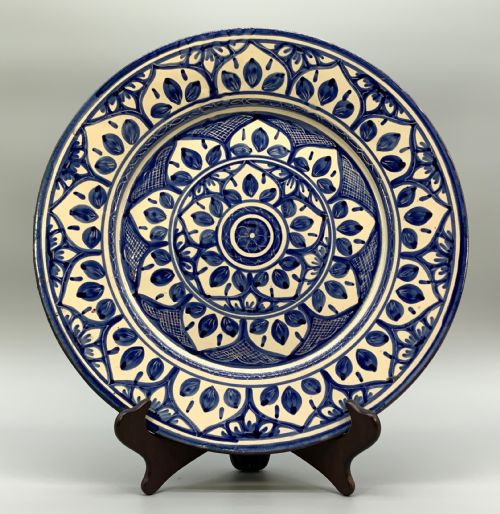
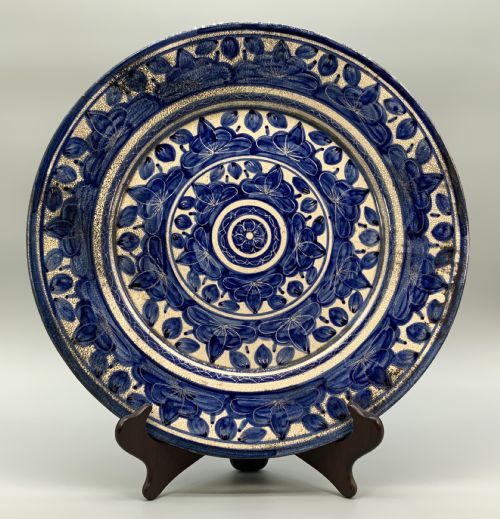
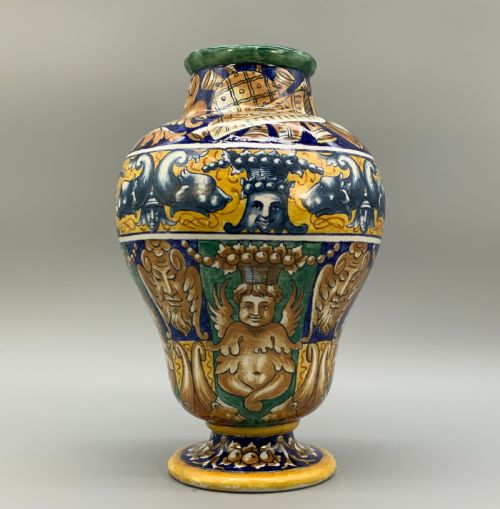
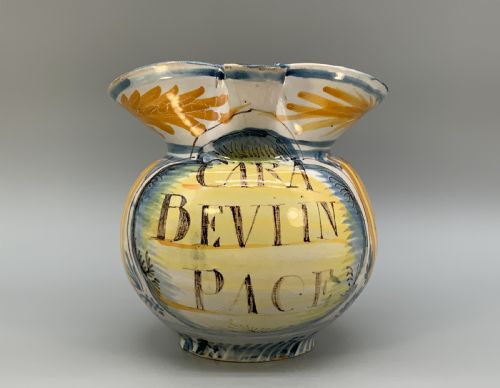
The objects take many functional and decorative forms, including large charger plates, apothecary jars, wall plaques, and lidded vases. Eighteenth-century examples sit alongside nineteenth-century revivals and later continental works.
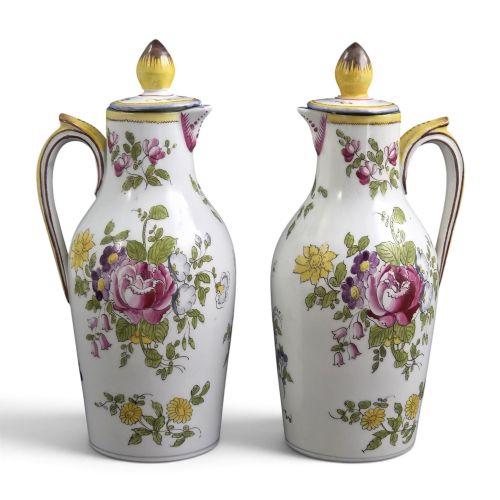
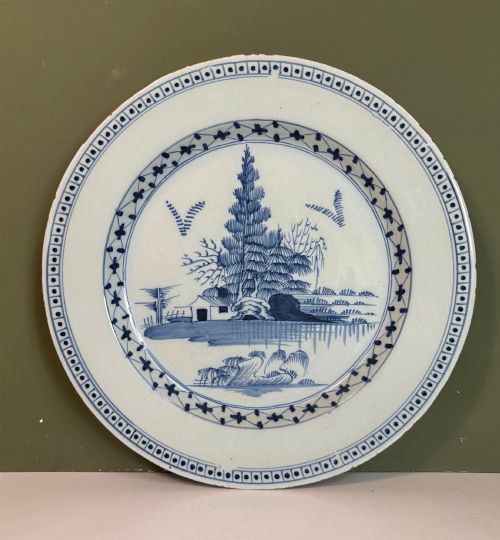
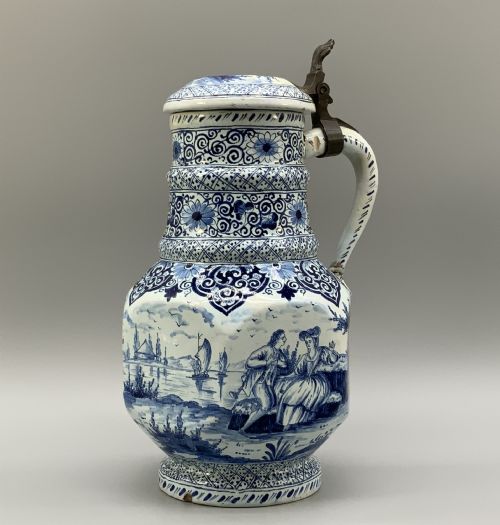
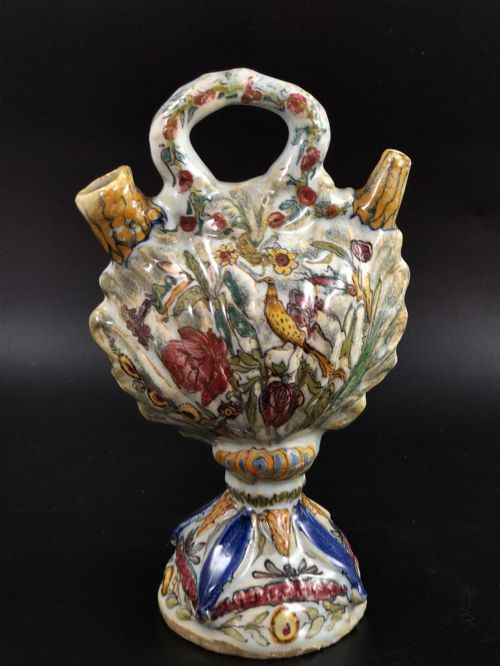
Makers utilised cobalt pigment and polychrome palettes to decorate ceramic surfaces with floral motifs, landscapes, and historical scenes. Each piece demonstrates manual brushwork applied directly to the porous glaze before firing.
How they were made
Potters shaped earthenware bodies from local clays, firing them into sturdy vessels ready to receive decoration. Artisans then coated the biscuit-fired pottery in an opaque white tin glaze that provided a smooth canvas for painting.
Painters applied cobalt pigment and various coloured metallic oxides directly onto the raw, absorbent glaze. A final kiln firing fused the pigments into the glaze layer, fixing the colours and producing a characteristic glossy finish.
Object forms range from wall plaques and apothecary jars to table salts, inkstands, and large decorative chargers.
What varies in quality
Quality rests primarily in the precision and fluidity of the hand painted brushwork across the ceramic surface. Superior examples display confident, detailed execution of motifs, whereas simpler items show hurried or repetitive strokes.
The stability and smoothness of the tin glaze itself distinguish finer pieces from coarser wares. Purity of the white ground and control during the high-temperature firing determine the visual depth of the pigments.
Fourmaintraux-Courquin·Doulton Lambeth·Théodore Deck·Joseph-Gaspard Robert
The Hand Painted Faience Glossary
- Faience
- Tin-glazed earthenware produced in France, Germany, and other European countries, typically featuring painted decoration. The technique creates an opaque white surface resembling porcelain.
- Tin Glaze
- A ceramic glaze made opaque by the addition of tin oxide. This milky white coating forms the essential base for hand-painted cobalt and polychrome designs.
- Charger
- A large decorative plate or platter designed for display rather than everyday dining. These pieces often feature elaborate painted scenes across a broad central field.
- Majolica
- Italian tin-glazed earthenware characterised by colourful polychrome painting. The term encompasses both Renaissance originals and later revival pieces.
- Cobalt Pigment
- A blue metallic oxide used extensively under the glaze to paint detailed patterns and narratives. It withstands high kiln temperatures without losing its intense colour.
- Polychrome
- Decoration employing multiple distinct colours rather than a single pigment. Artisans utilised mineral oxides to introduce yellows, greens, and manganese purples alongside blue.
Hand Painted Faience: Frequently Asked Questions
What is hand painted faience?
Hand painted faience refers to ceramic objects covered in an opaque tin glaze and decorated by hand with mineral pigments. The category includes plates, jars, vases, and tiles originating from various European pottery traditions.
Potters shaped these earthenware bodies before applying white glazes and painted designs. The pieces were then fired to bond the pigments permanently into the glossy surface.
Where were these pieces made?
Production centres spread across Europe, with significant traditions in the Netherlands, France, and Italy. Towns such as Delft, Nevers, Quimper, and Desvres developed distinct regional styles.
Dutch workshops focused on blue and white maritime and floral designs, while French and Italian makers often embraced rich polychrome palettes and figural scenes.
How can I date a piece?
Dating relies on examining the ceramic body, glaze characteristics, and painting style alongside any visible maker marks. Eighteenth-century pieces often display different clay compositions and pigment tones compared to nineteenth-century revival wares.
Backstamps, painter initials, and regional motifs help narrow down the period of manufacture. Comparing stylistic details with documented examples provides further chronological context.