
French Bronze Candlesticks
French bronze candlesticks bring classical proportion and rich metallic lustre to a room, ranging from restrained Empire designs to ornate Rococo Revival forms.
French Bronze Candlesticks
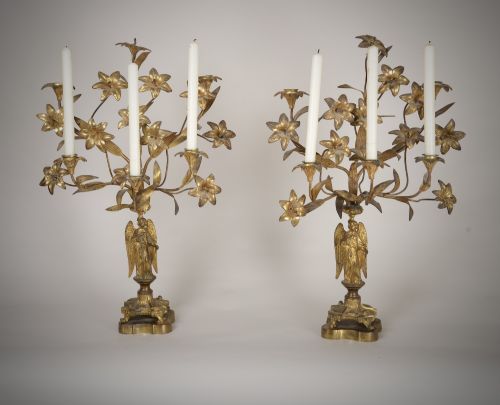
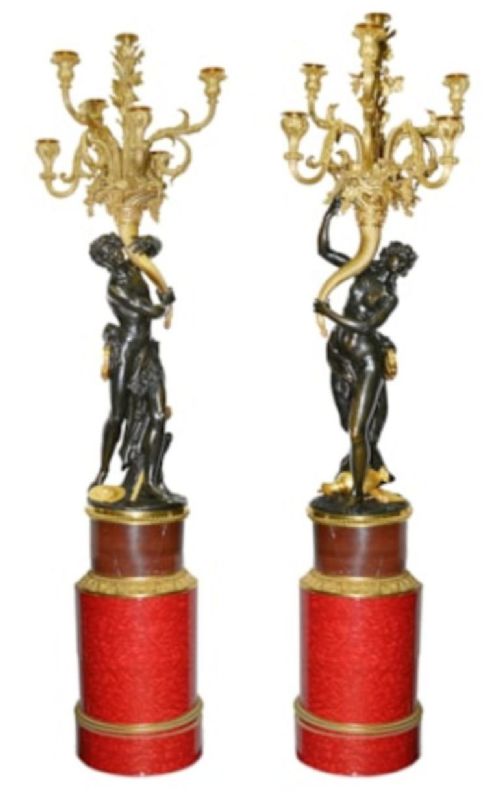
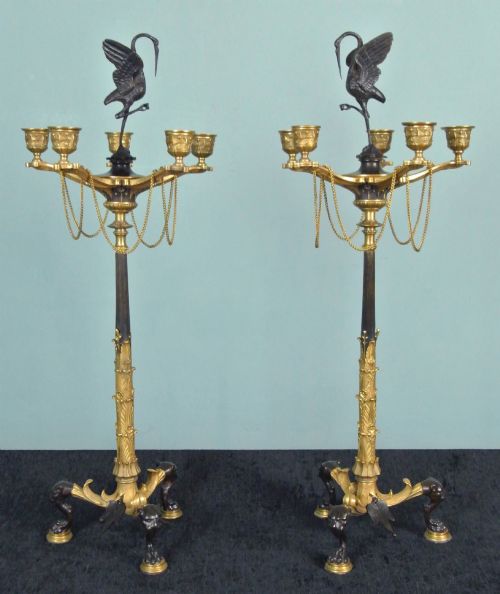
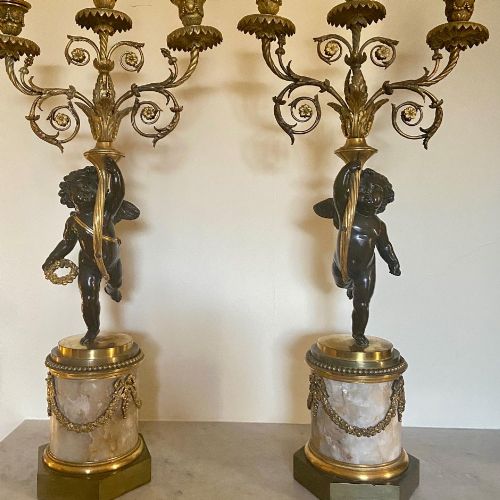
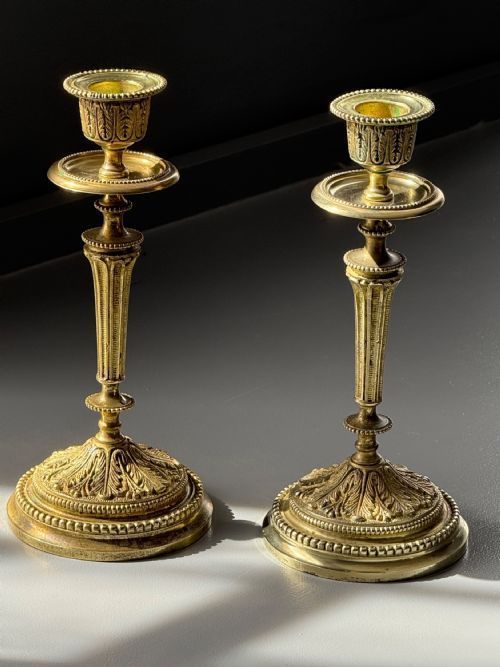
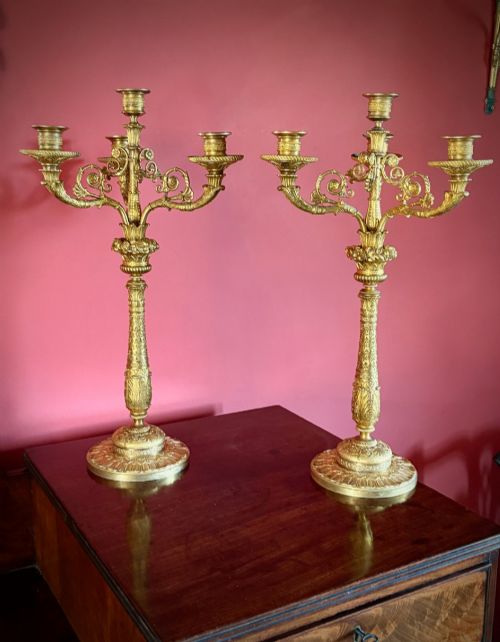
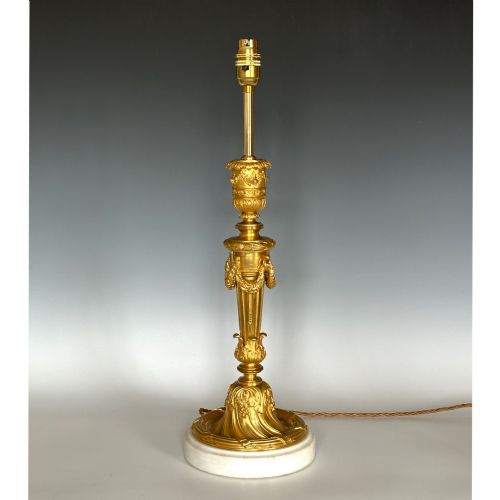
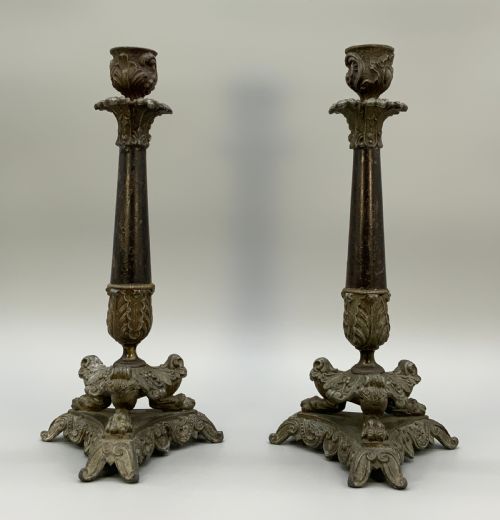
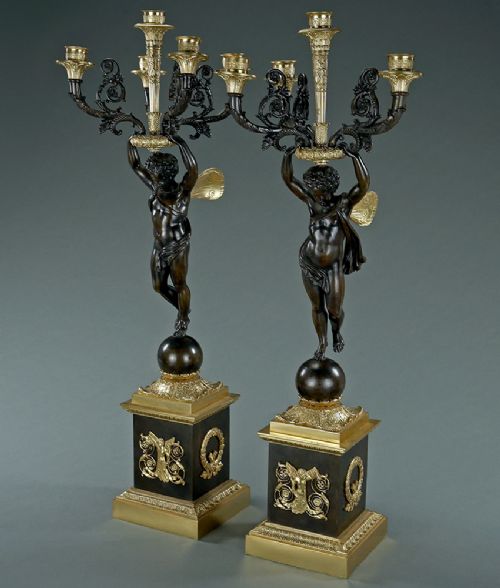
Buyers examining French bronze candlesticks typically encounter heavy metal lighting supports dating from the nineteenth century, produced in varied classical and revivalist modes. The selection frequently includes pairs cast in the Louis XVI style, alongside monumental multi-branch candelabra and pieces incorporating marble bases or animal motifs.
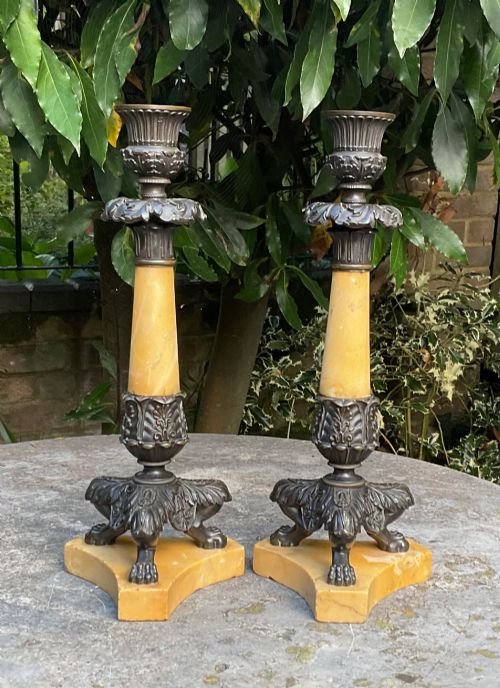
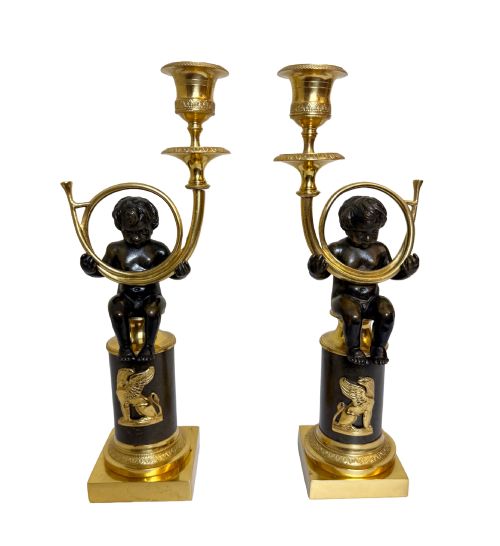
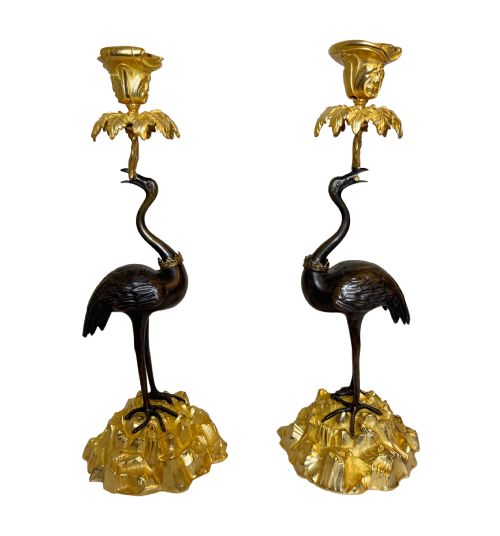
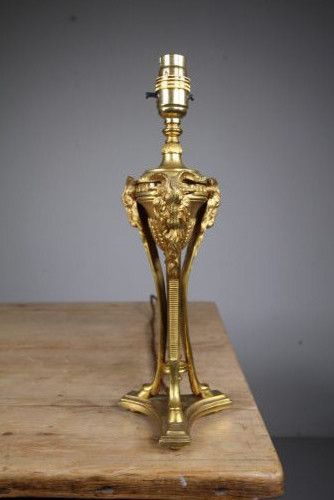
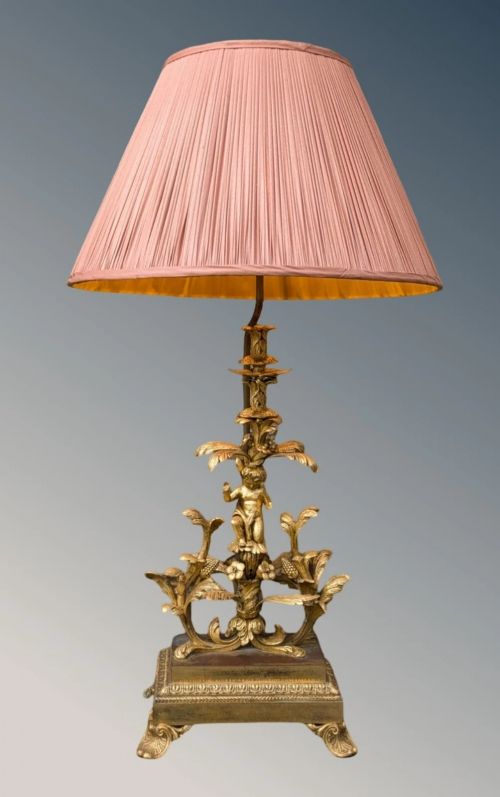
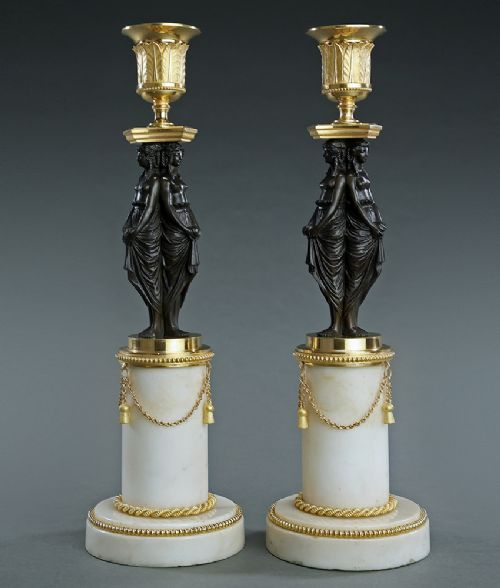
Forms span simple column sticks with lion paw feet to elaborate figural compositions featuring putti, caryatids, and storks. Many examples reflect specific historicist movements such as Retour d'Egypte, Gothic revival, and Art Nouveau, while others function as converted table lamps.
The inventory demonstrates a strong representation of nineteenth-century production alongside occasional eighteenth-century survivals. Makers and designers of the period employed durable bronze and brass foundations to build decorative accessories for mantelpieces and desks.
Materials and casting methods
Foundries combined patinated bronze with gilded elements known as ormolu, creating strong tonal contrast through chemical patination and gold leaf application. Artisans cast these metals using traditional techniques to achieve sharp relief on acanthus leaves, figures, and geometric mounts.
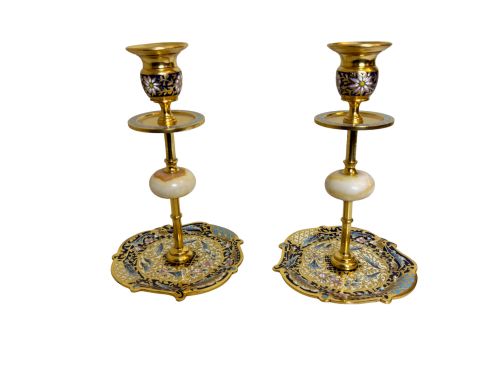
Secondary media frequently complemented the metalwork, including white marble, onyx, fluorspar, and champlevé enamel sections. These materials added weight and colour variation to the bases and stems of the lighting devices.
French Bronze Candlesticks Retail Price Guide 2026
Typical asking prices for french bronze candlesticks among the pieces listed under this phrase on Sellingantiques today, from the lower quarter to the upper quarter. They describe what is for sale here now, not the wider market.
Listings feature items mounted on white marble and onyx bases, alongside models enriched with champlevé enamel panels.
Assessing craftsmanship and design
Quality in these decorative objects rests upon the crispness of the chasing and the depth of the casting. Superior examples exhibit finely detailed hair, feathers, and drapery that required hours of hand-finishing by skilled artisans after the initial metal pour.
The integration of mixed materials also distinguishes higher grades of work, where marble plinths fit flush against precise bronze mounts and enamel cells show vibrant, even colouration without voids.
Barbedienne·Francois Redmond·Dugourc·Abel Landry·Henri Picard
The French Bronze Candlesticks Glossary
- Ormolu
- Gilt bronze produced by applying a mercury-gilding amalgam to a bronze base, creating a durable golden surface finish. This technique was widely utilised by French makers during the eighteenth and nineteenth centuries.
- Champlevé enamel
- A technique where troughs or cells are hollowed out of the metal surface and filled with vitreous enamel powder before firing. The resulting panels provide rich bands of colour alongside bronze mounts.
- Patinated bronze
- Metal treated with chemical solutions to darken the surface to a deep brown or black tone. This finish contrasts directly with bright gilt highlights on classical figures.
- Candelabra
- A branched lighting fixture designed to hold multiple candles simultaneously. These pieces often feature removable central finials and tiered arm arrangements.
- Retour d'Egypte
- A decorative style inspired by Napoleon's campaign in Egypt, incorporating motifs such as sphinxes, pharaohs, and winged figures. It forms a distinct sub-category within early nineteenth-century French metalwork.
French Bronze Candlesticks: Frequently Asked Questions
How do I date a pair of French bronze candlesticks?
Dating relies on stylistic clues, casting techniques, and the secondary materials used in the construction. Pieces reflecting the Louis XVI style or Empire period often display distinct architectural motifs and heavier mercury gilding.
Later nineteenth-century interpretations frequently incorporate machine-assisted finishing or industrial zinc alloys alongside traditional bronze. Comparing the base construction and patination against documented examples helps narrow the production window.
Were these candlesticks originally wired for electricity?
These items were manufactured exclusively for wax candles or oil combustion during the eighteenth and nineteenth centuries. Many surviving pairs retain their original sockets and drip pans.
Conversion to table lamps occurred later in their history to adapt antique lighting for modern domestic use. Collectors often look for conversions that preserve the original bronze components without irreversible alteration.
What is the difference between ormolu and gilt bronze?
The terms are frequently used interchangeably to describe gilded metalwork, but strict historical definitions depend on the period and amalgamation process. Ormolu specifically refers to mercury gilding practised extensively in France before health regulations restricted the method.
Later Victorian and Edwardian pieces often utilised electroplating to achieve a similar golden lustre on brass or bronze surfaces. Examining the texture and wear patterns helps determine the specific gilding method applied.
How should I clean bronze and ormolu?
Maintenance requires gentle dusting with a soft, dry brush to prevent the accumulation of grit within recessed chasing. Harsh chemical polishes strip away fragile gold leaf and historical patination permanently.
Professional conservation advice should be sought if tarnish obscures the underlying metal detail or if unstable marble bases require structural reinforcement.