

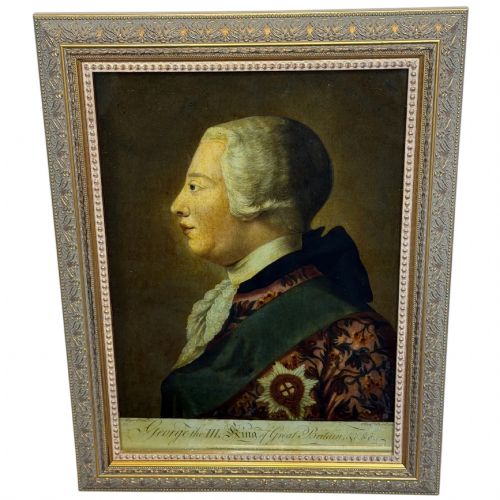
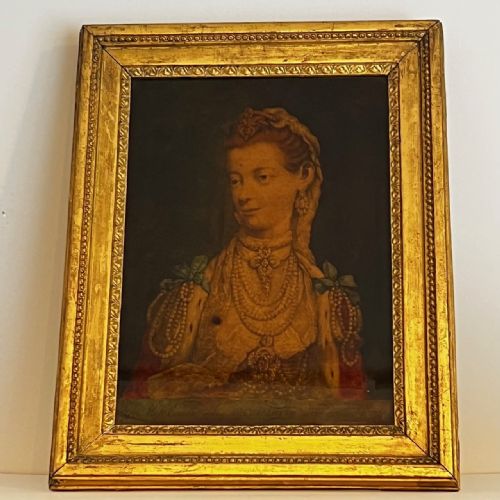


Framed Reverse Glass Print
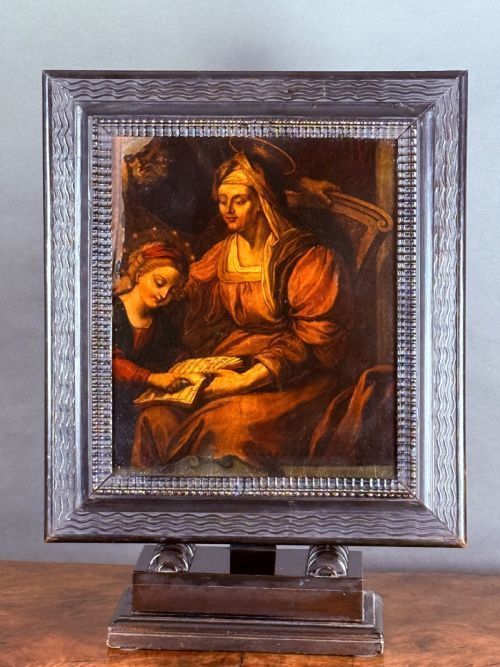
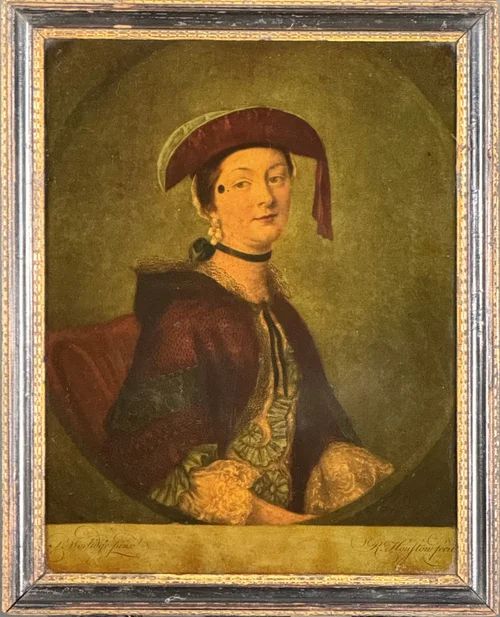
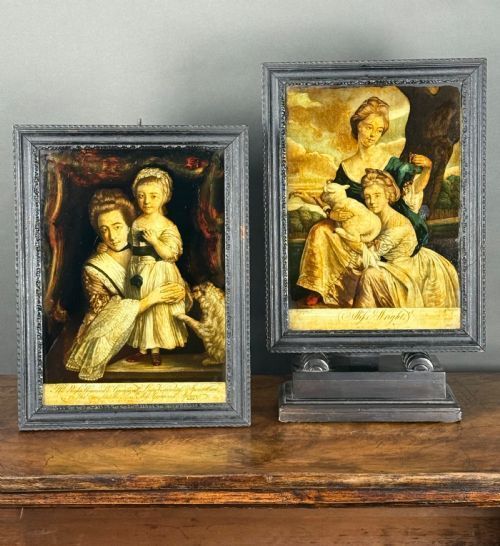
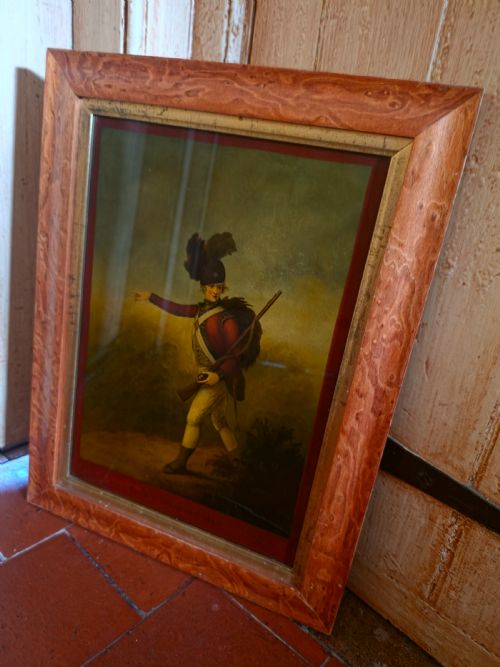
These framed reverse glass print examples combine intricate mezzotint engraving with delicate hand-colouring applied directly to the rear of the glass plate.
Framed Reverse Glass Print
A framed reverse glass print presents an image transferred and adhered to the back of a glass panel, allowing the viewer to look through the clear surface to see the work beneath. You will frequently encounter Georgian and Regency examples on this page, depicting royal portraits, literary scenes, or allegorical figures such as the seasons. Makers built these to protect delicate paper mezzotints and engravings from dust and atmospheric damage while giving the pigments a deep, glossy sheen.
The format spans from the late seventeenth century through the Victorian period, including later crystoleoms and twentieth-century reproductions. Many survive in their original wood frames, sometimes combined with mirrors or arranged in matching pairs showing seasonal themes. The subjects range from military heroes and naval engagements to domestic scenes and religious figures, reflecting the popular taste of each era.
How they were made
Craftsmen produced these works by taking a printed paper mezzotint or engraving and pasting it face-down onto a clean sheet of glass using a clear adhesive. Once dry, the paper backing was carefully rubbed away until only the thin inked lines remained adhered to the glass surface.
Painters then applied oil paint, pigment, and occasionally gold leaf directly onto the back of the lines in reverse, starting with the highlights and finishing with the background colours. This technique required precise planning because any mistake made on the first layer remained visible from the front.
Early craftsmen occasionally forgot to reverse their lettering before pasting the print down, resulting in wonderfully baffling backwards signatures visible through the glass.
What varies in quality
The skill of the hand-painting determines the depth and vibrancy of the finished picture, distinguishing master colourists from routine workshop output. Preservation of the original glass and the absence of flaking pigment or moisture staining also separate the finest survivals from heavily restored pieces.
Fletcher·Sebastiaan Vrancx·Charles Spooner·Richard Purcell·Frye·Abraham Cooper·W. Bishop·Richard Phillips·Schweninger
The Framed Reverse Glass Print Glossary
- Reverse glass painting
- A technique where the artist paints directly onto the rear of a glass sheet so the image is viewed through the front. This method protects the pigment from surface wear.
- Mezzotint
- A printmaking process of the tonal scraped variety, allowing smooth gradations of light and shade. It formed the foundational image for many eighteenth-century glass pictures.
- Crystoleum
- A Victorian method of applying coloured oil paints to a transparentized photograph mounted on glass. These often used multiple pressed layers to create a three-dimensional effect.
- Eglomise
- A process of applying cold gilding and painting to the rear of glass panels. It frequently appears in decorative borders and mirror plates associated with these prints.
- Regency
- The British stylistic period spanning the early nineteenth century. Pieces from this era often lean towards classical subjects and military commemoration.
Framed Reverse Glass Print: Frequently Asked Questions
What is a framed reverse glass print?
A framed reverse glass print is an image transferred to the rear of a glass sheet and hand-coloured from behind. This technique protects the delicate paper and gives the surface a glossy, luminous appearance.
Most examples found here date from the Georgian and Regency periods, housed in period wood frames. They capture a range of subjects from royal portraits to allegorical scenes.
How do I clean a reverse glass print?
You should clean the exterior wood frame with a dry cloth and avoid touching the glass directly with chemical sprays. Moisture can seep behind the glass and damage the delicate paint layers on the reverse.
Keep the piece away from direct sunlight to prevent the pigments and gold leaf from fading over time. Professional framing support helps maintain a secure seal against dust and humidity.
How can I tell the period of these prints?
Stylistic clues in the framing, costume, and subject matter help date each piece to eras such as the Georgian or Victorian periods. Eighteenth-century examples often feature fine mezzotint portraits, while later Victorian versions frequently include crystoleoms.
Examining the type of glass, backing boards, and framing construction provides further evidence of age. Older pieces often display hand-blown glass irregularities and original pine or maple frames.
Were these prints meant for domestic use?
These works were produced primarily as decorative wall art for middle- and upper-class homes during the eighteenth and nineteenth centuries. Their glossy surfaces caught candlelight effectively in dim rooms.
Subjects ranged from patriotic military heroes to domestic employment scenes, serving as both conversation pieces and moral instruction in the home.