



Georgian Reverse Glass Painting
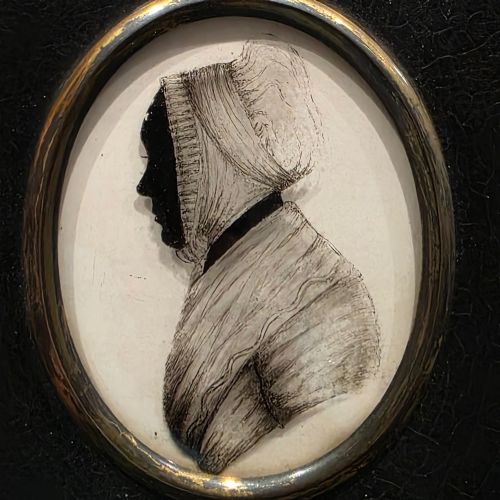
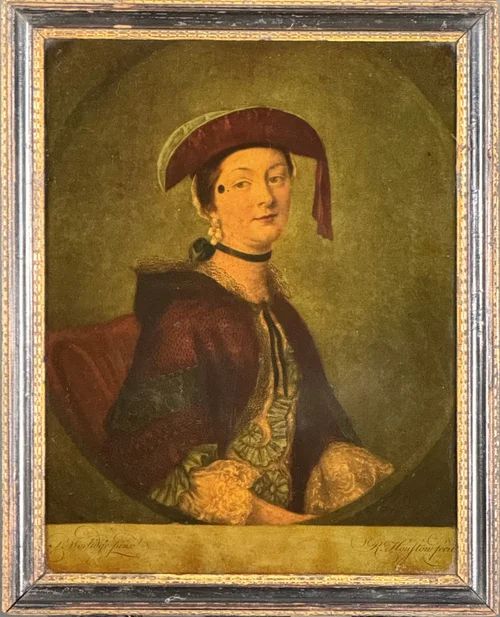
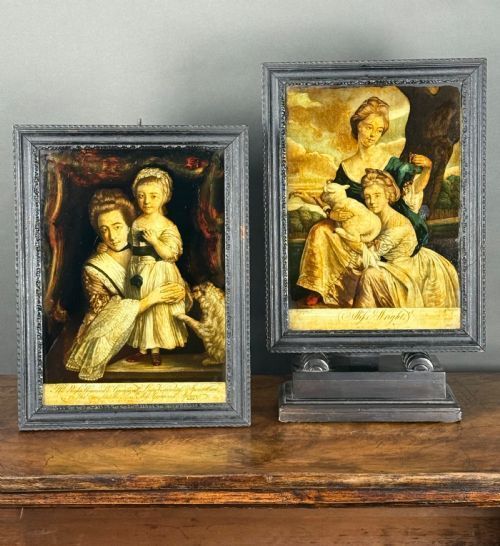
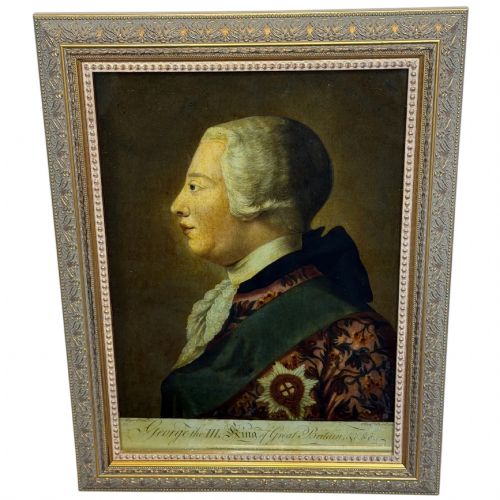
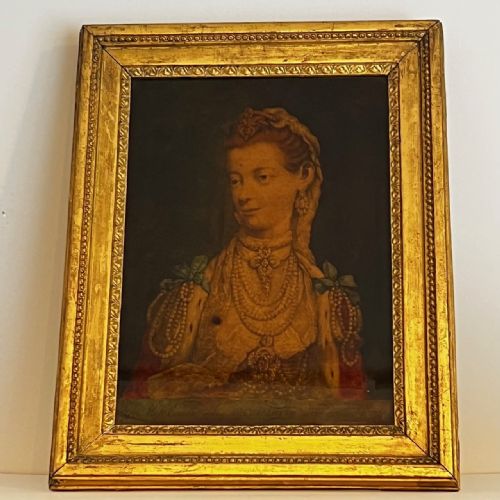
Georgian reverse glass painting brings together delicate hand-coloured mezzotints and silhouette miniatures applied directly to the rear of glass panels.
Georgian Reverse Glass Painting
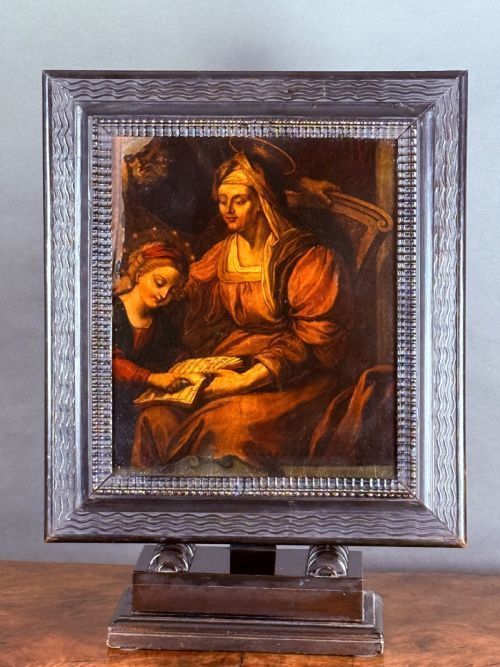
A georgian reverse glass painting sits behind a protective sheet of glass, where pigment, oil paint and gold leaf are applied to the reverse side so the finished image displays clearly through the front. The selection on this page spans wall art, portrait miniatures, framed prints, pier mirrors and trumeau panels.
Most examples date from the eighteenth and nineteenth centuries, encompassing the Georgian and Regency eras with occasional later reproductions and Chinese export mirror plates. Subjects range from royal portraits and classical allegories to military figures, sporting art and domestic scenes.
Materials and technique
Makers applied oil paint, pigment and ink directly onto the back of a sheet of glass, often transferring a printed mezzotint outline before adding hand-colouring. This reverse method required the artist to paint fine details and highlights first, finishing with the background layers last.
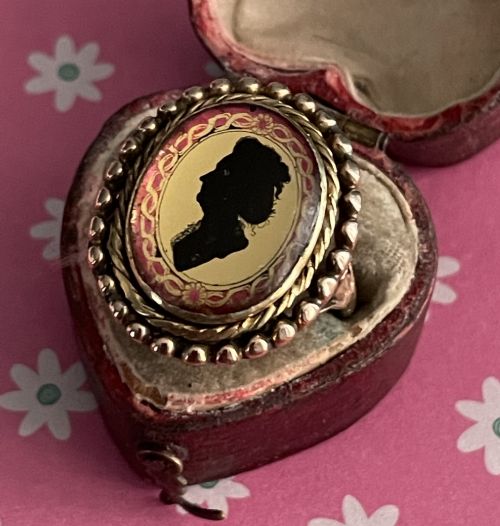
Many works incorporate gold leaf and silver pigment, known as verre églomisé, to catch the light behind the transparent image. Wooden frames, frequently made of maple or giltwood, house the glass panels to protect the fragile pigment layer from flaking.
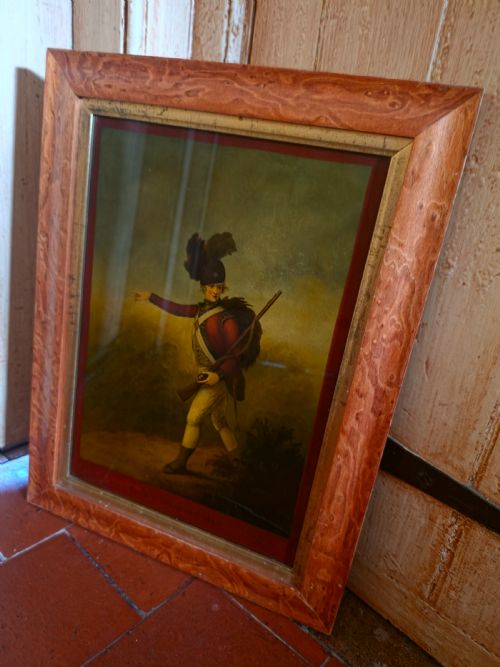
Several panels depict light infantrymen, match boys and naval engagements, proving Georgian households enjoyed martial drama alongside quiet domestic scenes.
What varies in quality
The finesse of the brushwork and the precision of the transferred mezzotint outline dictate the visual strength of each piece. Skilled hands achieved remarkable detail in facial expressions and costume, particularly within portrait miniatures and military subjects.
The condition of the pigment layer largely determines desirability, as flaking or pigment loss behind the glass alters the integrity of the image. Intact original wood frames and clear, stable glass panels preserve the piece more successfully over time.
Fletcher·Sebastiaan Vrancx·Charles Spooner·Richard Purcell·Frye·Abraham Cooper·W. Bishop·Richard Phillips·Henry Chichester Northover
The Georgian Reverse Glass Painting Glossary
- Verre églomisé
- A process of applying cold painting and metal leaf to the rear of glass. It creates a reflective, metallic background behind the subject.
- Mezzotint
- A printmaking method that achieves tonal gradation through roughening the copper plate. These prints served as the foundational image for reverse glass application.
- Trumeau
- A decorative wall mirror featuring a painted or printed panel positioned above the glass plate. These often incorporate reverse glass prints within Regency and Georgian interiors.
- Silhouette
- A filled profile portrait cut from paper or painted directly onto glass. They frequently appear highlighted with gold pigment.
Georgian Reverse Glass Painting: Frequently Asked Questions
How are these different from normal prints?
Standard prints display the ink on the front surface of paper, whereas a reverse glass work places the entire image behind a protective transparent barrier. The artist paints or transfers the composition in reverse so it reads correctly from the front.
This technique gives the artwork a luminous quality as light passes through the glass and reflects off the pigments and gold leaf. The glass itself acts as the protective varnish and glaze combined.
Can I hang these in bright rooms?
Direct sunlight causes significant damage to eighteenth-century pigments and oil paints over time. Position these pieces on interior walls away from windows to preserve the hand-coloured details.
Fluctuating temperatures and humidity also affect the wooden frames and the adhesion of paint to glass. Stable indoor environments prevent the delicate reverse layers from lifting or flaking.
How do I spot a later reproduction?
Examine the materials of the backing, frame and glass for age-appropriate characteristics. Eighteenth and nineteenth-century glass often displays tiny bubbles, uneven thickness and surface wear.
Modern reproductions frequently utilise machine-made glass and contemporary framing techniques without historical backing materials. The crispness of modern printing methods also differs from hand-pulled mezzotints.