

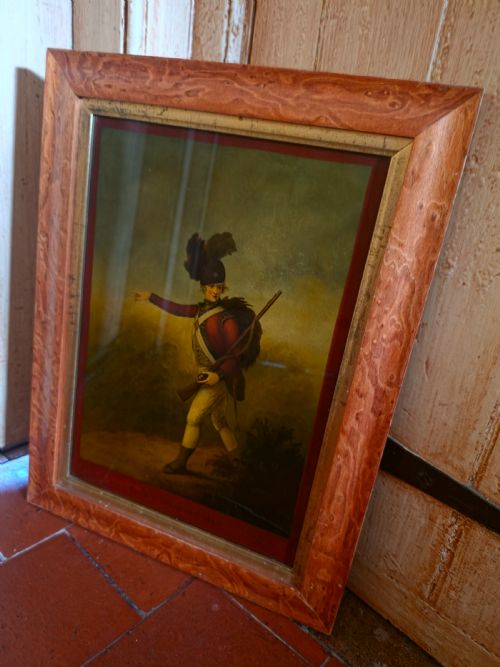
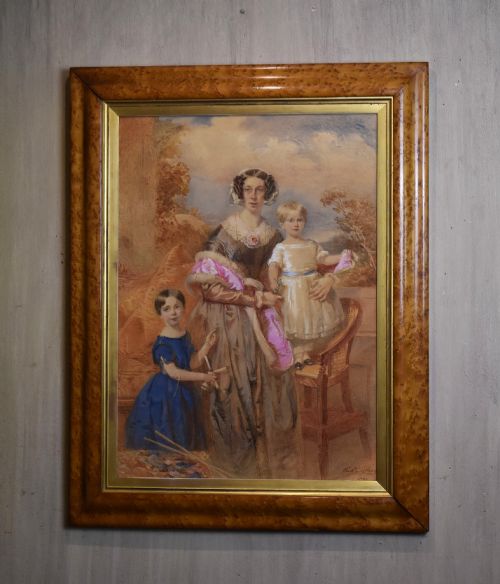
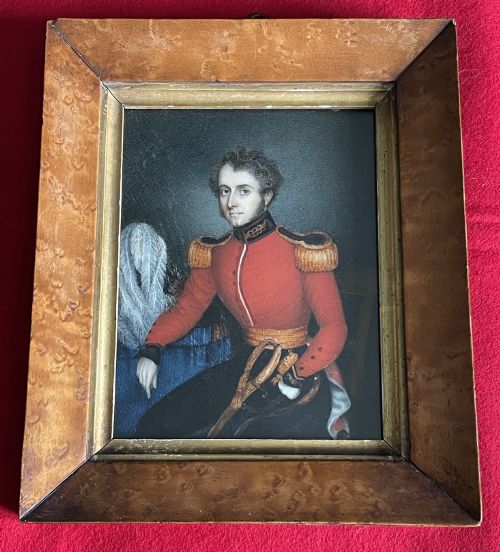


Birds Eye Maple Framed Artwork
Birds eye maple framed artwork brings together timber with distinctive figuring and period works on paper or panel.
Birds Eye Maple Framed Artwork
When you search for birds eye maple framed artwork, you encounter pieces from the Regency, Victorian, and nineteenth century periods. These items encompass watercolours, engravings, portraits, and mirrors housed in characteristic timber surrounds.
The objects on this page include family portraits, military miniatures, fashion watercolours, and architectural prints. Each piece pairs a distinct period medium with a figured wooden frame.
Most examples originate from the nineteenth century or around 1800. They present subjects ranging from individual silhouettes to naval engagements and continental oils.
How these pieces were made
Makers utilised timber chosen for its speckled grain pattern to construct the surrounds for paper and panel works. These frames house watercolours, prints, oil paintings, and reverse glass pictures.
Works on paper and glass use paint, ink, and gold leaf applied by hand. Wood frames receive careful shaping to highlight the natural figures within the maple.
Birds Eye Maple Framed Artwork Retail Price Guide 2026
Typical asking prices for birds eye maple framed artwork among the pieces listed under this phrase on Sellingantiques today, from the lower quarter to the upper quarter. They describe what is for sale here now, not the wider market.
Listings feature items from the Regency and Victorian periods, utilising maple, glass, paper, watercolour, and gold leaf.
What varies in quality
The standard of an item depends upon the crispness of the artwork and the intensity of the timber figure within the frame. Strong contrast in the wood grain elevates the visual weight of the surrounding piece.
Preservation of the delicate media, such as watercolours and reverse glass paintings, dictates the overall integrity of the object. Original pairings of frame and artwork hold greater interest than later assemblies.
Frederick Tatham
The Birds Eye Maple Framed Artwork Glossary
- Maple
- A dense wood known for distinctive dotted figuring that resembles tiny eyes. It provides a pale, patterned surface favoured for nineteenth century frames.
- Reverse glass
- A technique where paint or print is applied directly to the rear of a glass sheet so the image is viewed through the front. This method creates a glossy finish often seen in early frames.
- Watercolour
- A painting method using pigment suspended in a water-based solution on paper. It forms a primary medium for portraits and topographical scenes of the period.
- Silhouette
- A portrait profile filled in with a solid dark colour, typically black, against a light background. These were popular domestic records before the widespread use of photography.
Birds Eye Maple Framed Artwork: Frequently Asked Questions
What periods do these pieces date from?
The listings span the nineteenth century, including specific items from the Regency and Victorian eras as well as around eighteen hundred.
These dates align with the manufacturing period of the timber frames and the internal works on paper or panel.
What materials make up the frames?
The surrounds utilise maple timber, selected specifically for its speckled grain patterns, sometimes accompanied by gilt elements.
Protective glass fronts cover the paper watercolours, engravings, and reverse glass pictures contained within.
How should I clean the frame?
Wipe the wooden surface gently with a dry cloth to remove dust without disturbing the grain or finish.
Avoid liquid cleaners that might seep into the joints of the timber or damage the adjacent artwork.
Are the frames original to the art?
Many pieces retain their original maple surrounds, particularly those housing period silhouettes and architectural engravings.
Examining the fit and the backboards helps determine if the frame and the artwork have remained together since creation.