



British Soldier Portrait
A british soldier portrait captures the rigid bearing and service of men under arms from the eighteenth century onwards in oils, watercolours, and reverse glass.
British Soldier Portrait
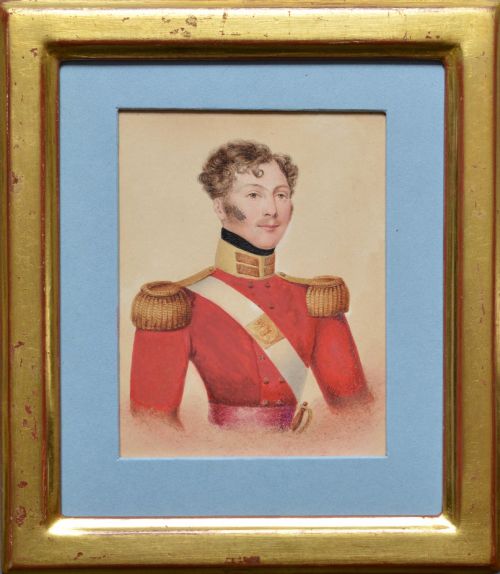
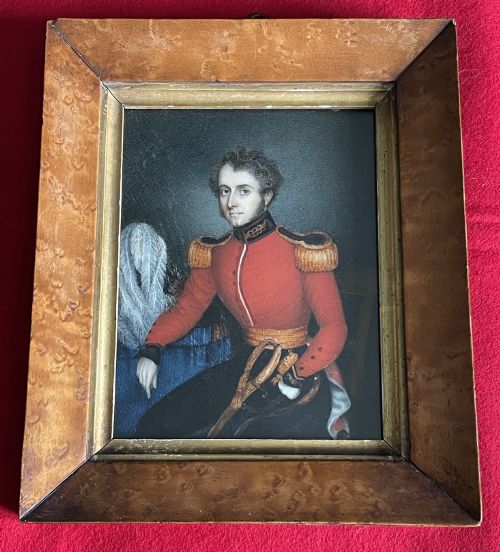
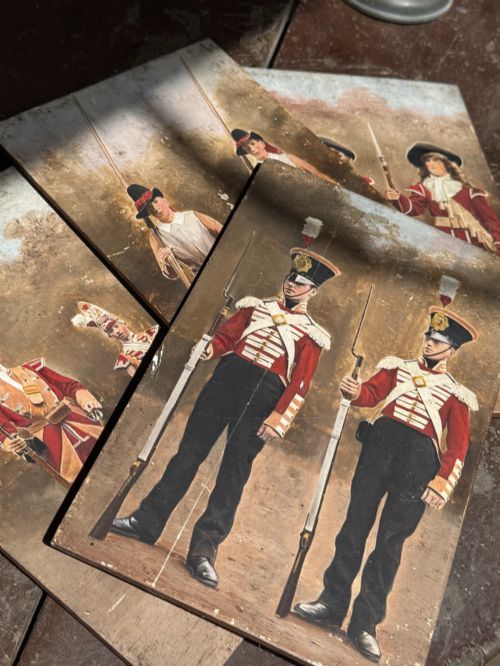
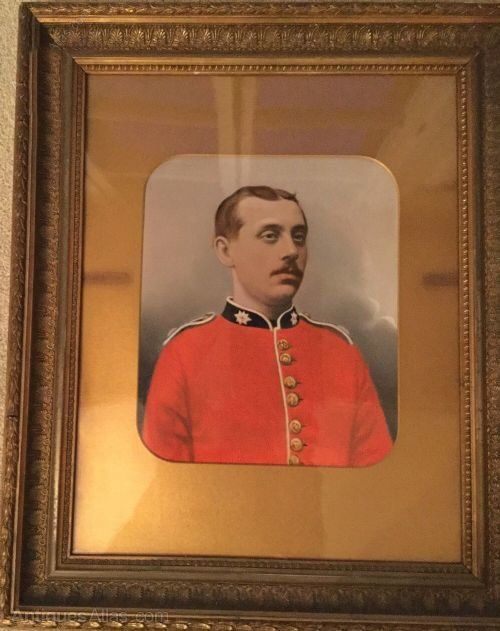
A british soldier portrait brings together framed artworks, miniature paintings, and ceramic figures depicting officers and enlisted men from various campaigns.
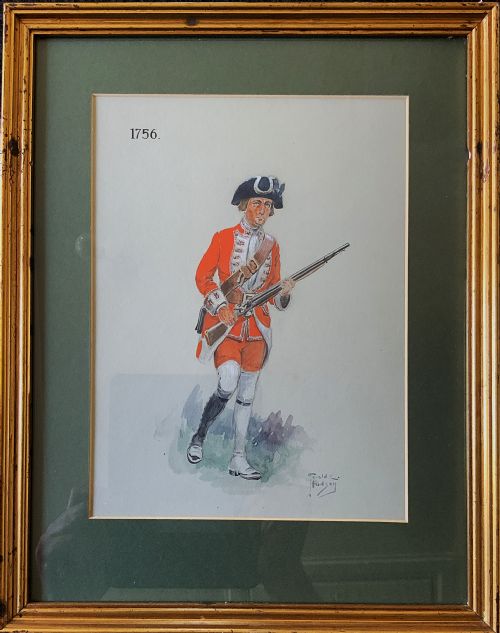
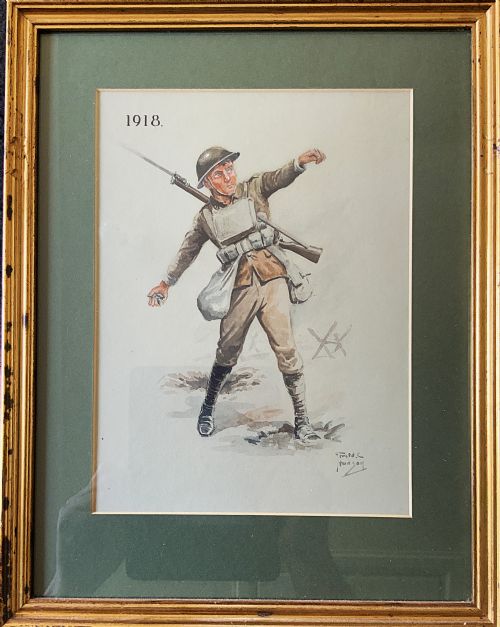
The selections range from eighteenth century watercolours and Regency military subjects to First World War oil paintings and Victorian red coat depictions.
Buyers frequently encounter nineteenth century canvases and watercolours alongside early twentieth century panels and pastel sketches.
Materials and methods
Artists deployed oil on canvas, watercolour and wash on paper, and pastel on paper to record military subjects.
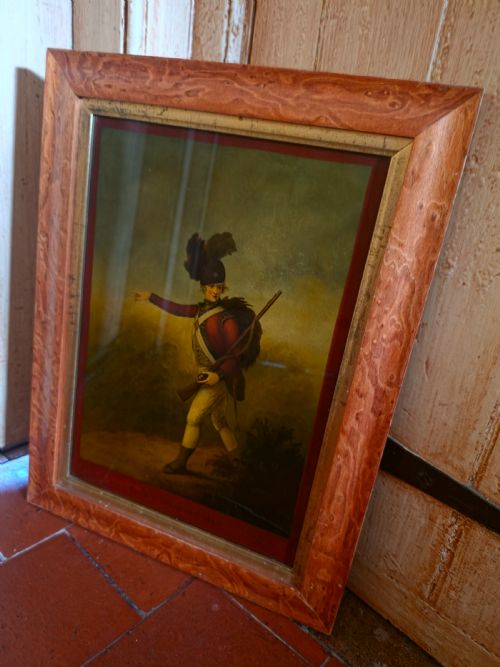
Specialist techniques include reverse glass painting, where the image is applied directly to the rear of the glass pane, and detailed work on wood panels.
Many examples are preserved in their period frames of gilt wood or timber.
Listings include works executed in oil on canvas, watercolour, pastel, and reverse glass across the eighteenth, nineteenth, and twentieth centuries.
Distinctions in standard
Condition varies between well-preserved surfaces protected by glass and pieces showing signs of age across the canvas or paper support.
Ernest Crofts·William Edward Millner·Harry Ashby·G Hindle
The British Soldier Portrait Glossary
- Watercolour
- A paint consisting of a pigment suspended in a water-based solution, frequently utilised on paper for military studies. It allows for delicate washes and precise detailing of uniform insignia.
- Reverse glass
- A technique where the painting is executed directly on the back of a glass sheet to be viewed from the front. This method protects the pigment from atmospheric dirt.
- Miniature portrait
- A small-scale painting, often executed on a delicate surface, capturing the likeness of an individual officer or soldier.
- Oil on canvas
- A medium utilising pigments bound with drying oils applied to a stretched woven fabric support. This combination provides rich colour depth and durability.
British Soldier Portrait: Frequently Asked Questions
What periods do these portraits cover?
The works span from the eighteenth century through the Napoleonic wars and the Victorian era up to the First and Second World Wars.
They document changing uniform styles and artistic approaches across successive military campaigns.
How were these military portraits displayed?
Most works are framed in wood or gilt wood for hanging on domestic walls. Miniature paintings and ceramic figures were typically placed on tabletops or mantelpieces.
Larger oil paintings served as formal records of service within family homes.
Are all the subjects identified?
Some pieces name specific individuals, regiments such as the Staffordshire 80th Regiment of Foot, or historical figures like General Charles George Gordon.
Others record anonymous soldiers, draftees, or officers whose exact identities are lost to time.
What mediums are most common?
Watercolour and wash on paper appear frequently alongside oil on canvas and pastel drawings. More unusual formats include reverse glass pictures and painted wooden panels.
Ceramic figures also represent the broader scope of military portraiture.