



Regency Military Artwork
Regency military artwork captures officers, commanders and battles in oil on canvas, paper and watercolour.
Regency Military Artwork
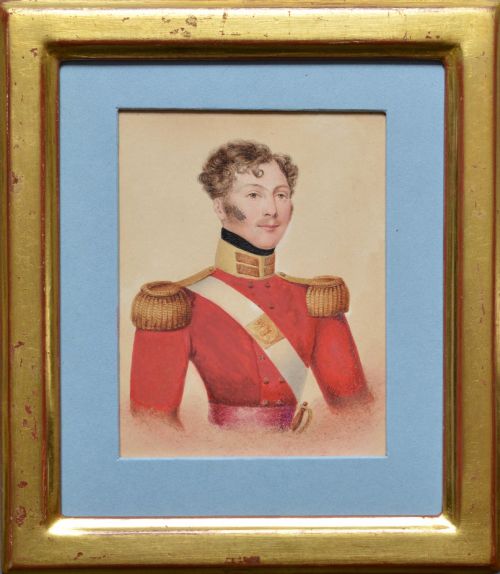
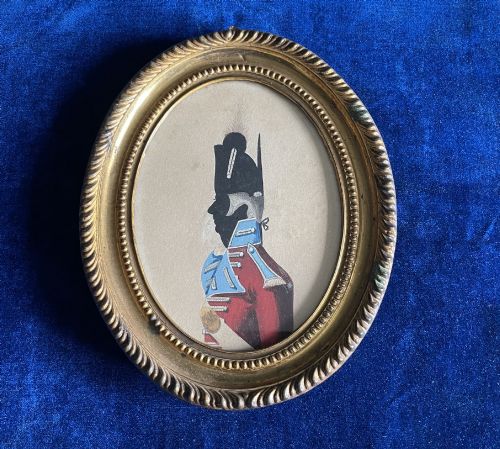
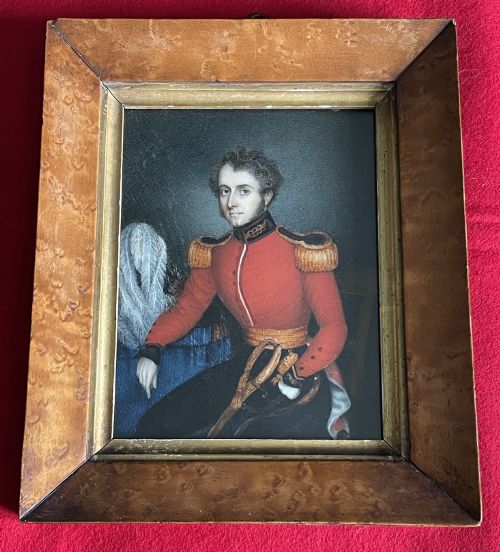
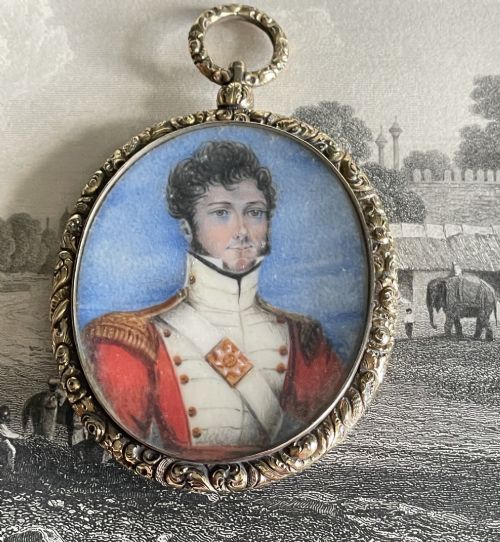
Regency military artwork encompasses portrait paintings, miniature portraits and battle scenes depicting officers, generals and admirals. These pieces originate from the 18th century, 19th century, Georgian and Regency periods, recording naval and army figures in formal uniforms.
The selections available here lean towards watercolours on paper and oil paintings on canvas, framed in wood and giltwood. Subjects include specific regiments, named commanders and combat scenes from the Napoleonic era.
How they were made
Support materials include prepared canvas stretched over wooden frames, heavy paper sheets for watercolours, and occasionally glass coverings to protect delicate portrait miniatures.
Object types seen here range from oil paintings and portrait miniatures to fine art and watercolour paintings.
What varies in quality
The standard of execution in regency military artwork rests on the precision of the subject's likeness and the accurate rendering of uniform insignia. Works by named artists or established schools display finer brushwork and more assured anatomical proportions.
The condition of the medium also determines distinction, with well-preserved oil surfaces and clean, unblemished watercolours representing the higher tier of surviving pieces.
Edward Pugh·Gerrit Schipper·Henry Wyatt·Robert Ker Porter·Ambrosini Jerome
The Regency Military Artwork Glossary
- Regency
- A period in British history spanning from 1811 to 1820, though the style often extends broadly to encompass the early 19th century.
- Portrait Miniature
- A small, highly detailed painting, typically executed on ivory, vellum or paper, depicting a specific individual.
- Giltwood
- Wood that has been treated with gold leaf or gold paint to create a decorative, metallic finish on frames.
- Watercolour
- A painting method in which the paints are made of pigments suspended in a water-based solution, usually applied to paper.
Regency Military Artwork: Frequently Asked Questions
What periods do these pieces cover?
The selections span the 18th and 19th centuries, with specific items originating from the Georgian and Regency eras, alongside a few later interpretations.
Dates reach from the late 1700s through the Napoleonic wars and into Victorian times.
How were portrait miniatures displayed?
These small works were often kept in protective cases or framed for intimate viewing in private chambers.
Their compact scale allowed officers to carry likenesses of family members or commanders during campaigns.
Are the subjects usually named?
Many portraits identify specific military figures, including lieutenants, generals, admirals and captains from named regiments.
Other works record anonymous officers or represent broader scenes like naval encounters and cavalry charges.
What framing materials appear most often?
Wood frames, frequently enhanced with gold leaf or giltwood, surround the majority of these paintings and watercolours.
Glass elements also protect sensitive paper works from environmental damage.