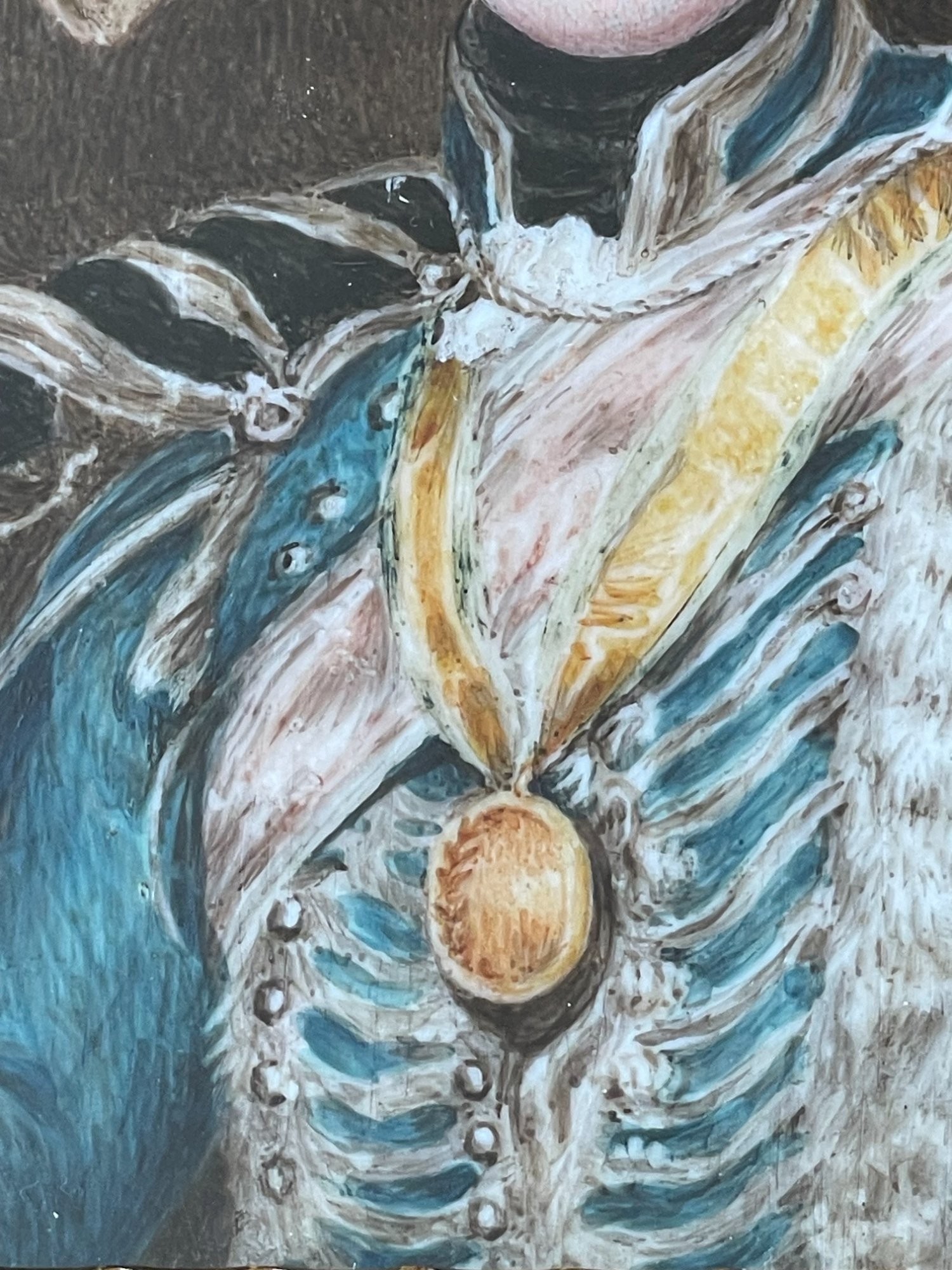
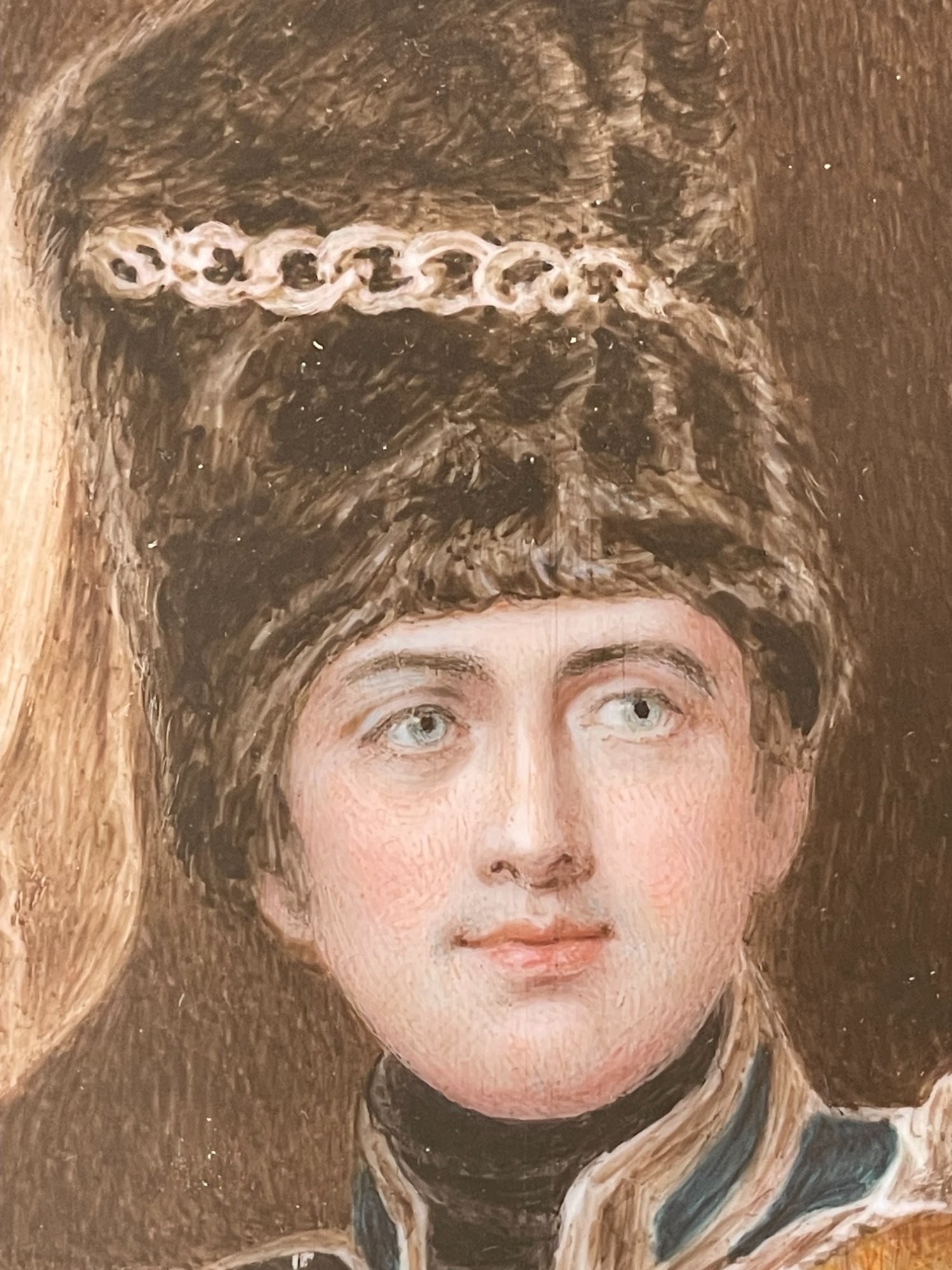
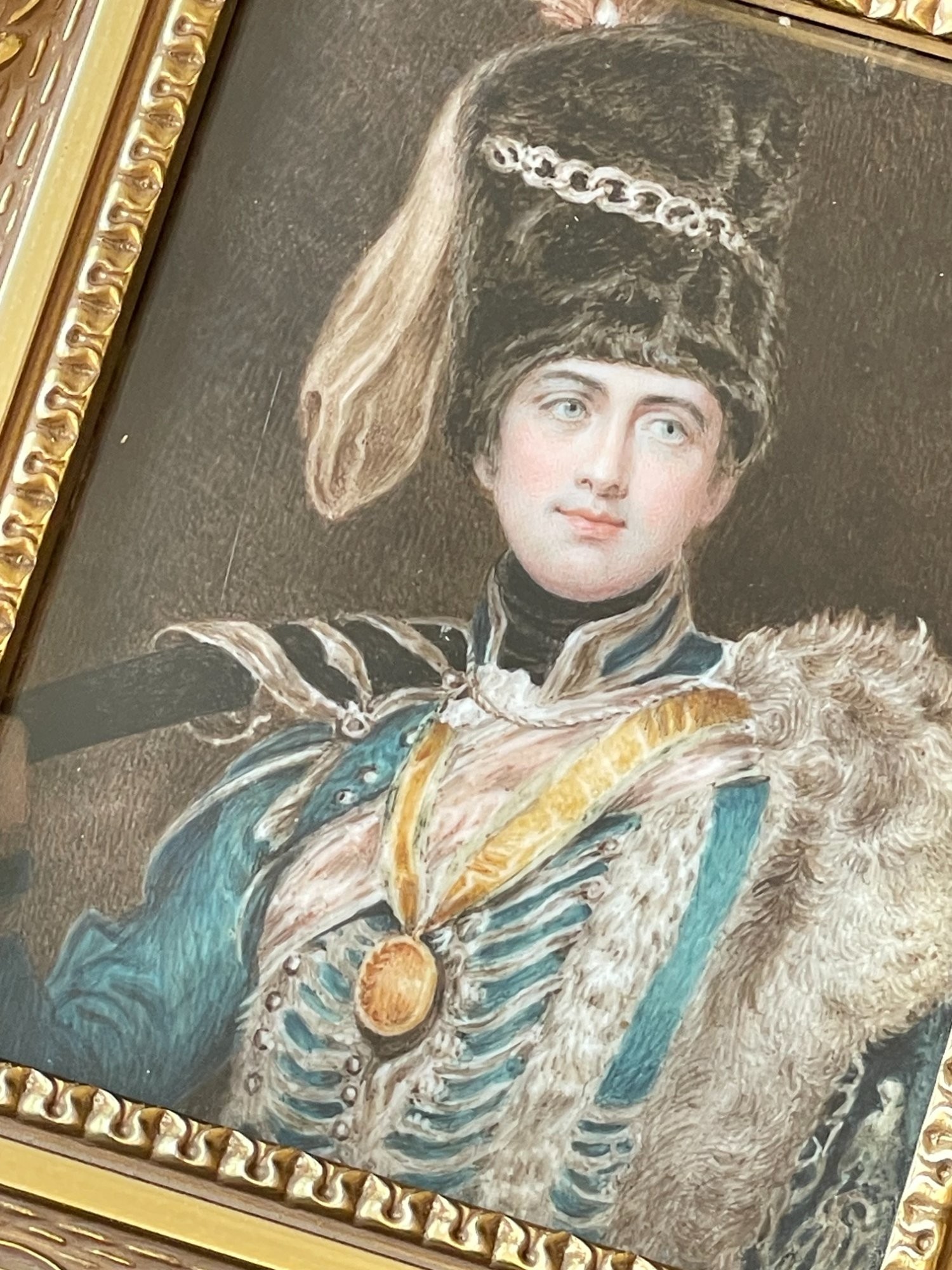
Wigs on the Green has dated this Antique Hussar Portrait Painting to the 19th Century.
The Lawrence portrait was painted at a turning point in Stewart’s career: having transitioned from the military to the diplomatic world, he was appointed Ambassador to Austria, a position he was to hold for nine years.
But, despite his illustrious military service, Stewart did not always live up to the romanticised image conveyed in this portrait. Indeed his indiscreet womanising, boorish and often inebriated behaviour together with his penchant for flashy dress (think bright yellow boots) earned him the nickname Lord Pumpernickel after a clownish theatrical character.
Charles married twice, adding his wealthy second wife’s surname to his own in 1819, as stipulated by his father-in-law’s will, to become Charles Vane. Through his Ulster-Scots father and his heiress wife, Vane inherited vast Irish and English estates but did not acquit himself well as a landlord especially during the Great Famine of the 1840s nor of his Co. Durham coal mines; indeed he vehemently opposed the Mines and Collieries Act of 1842 claiming his mines could not be profitable without the use of child labour.
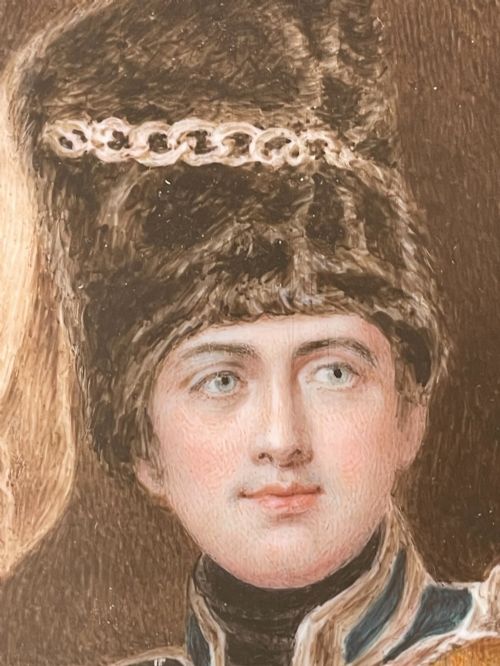
Upon the death of his half-brother in 1822 Vane became Viscount Castlereagh and Marquess of Londonderry. Following his death in 1854 his legacy was honoured by an equestrian statue in Durham and by Scrabo Tower, a folly, commissioned by his brother and located near his Irish estate at Mount Stewart (now managed by the National Trust).
The portrait is presented in a later gilt wood frame.
Framed Size: 220 x 195mm
Provenance: Private Collection
Ivory Exemption Ref.: LF8N6C67
Wigs on the Green has dated this Antique Hussar Portrait Painting to the 19th Century.
Small portraiture of character & historical interest
You can view the stock and full dealer information on the Wigs on the Green Profile Page
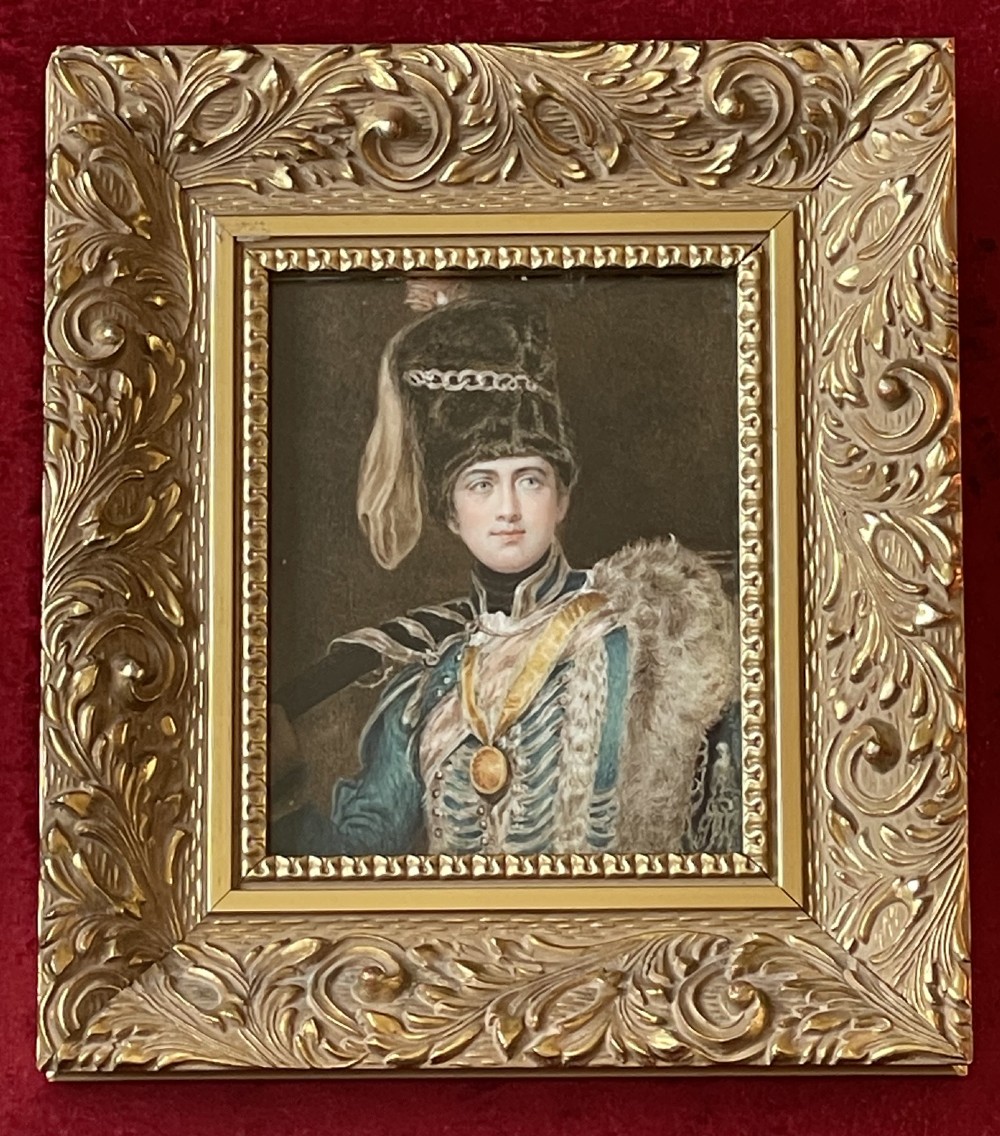
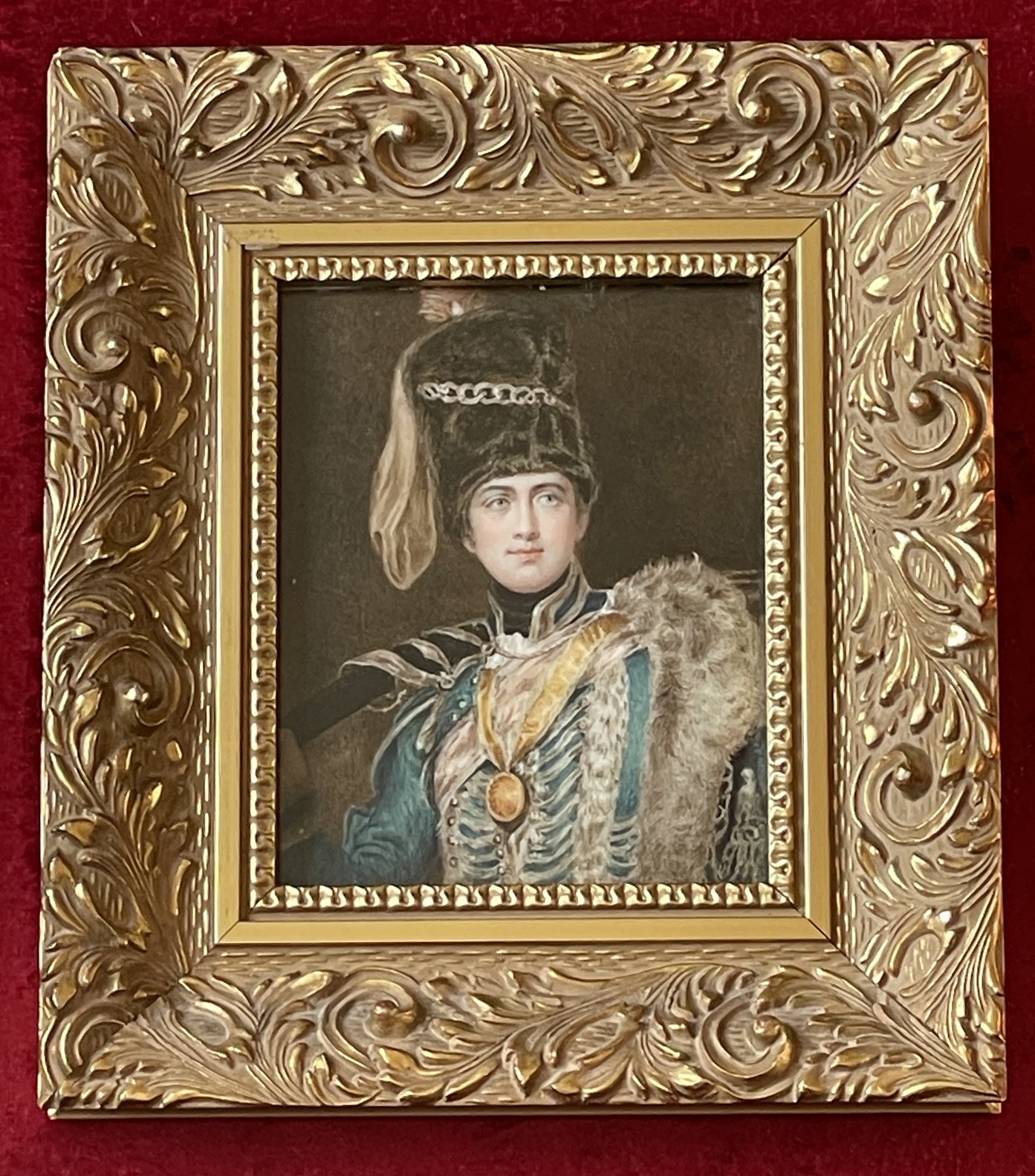
Portrait of Lt.-gen. Charles Vane-stewart Hussar