


Original Military Illustration
Original military illustration captures historical campaigns and personnel directly through period artwork, offering a tangible connection to past conflicts.
Original Military Illustration
Original military illustration encompasses authentic period artworks that record campaigns, regiments, and soldiers from the eighteenth century to the mid-twentieth century. When searching for original military illustration, buyers encounter framed paintings, drawings, and sketches executed in various media.
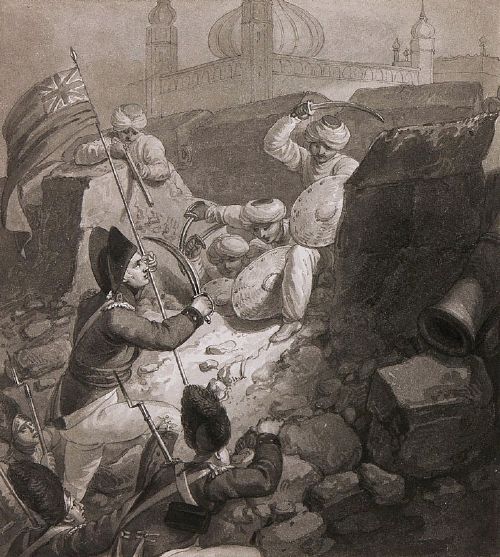
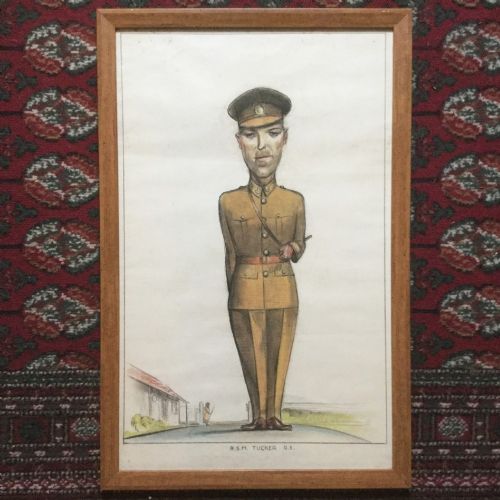
The selections span distinct periods including Georgian, Edwardian, and twentieth-century conflicts. Pieces range from detailed battle scenes and tactical sketches to characterful portraits of soldiers and officers.
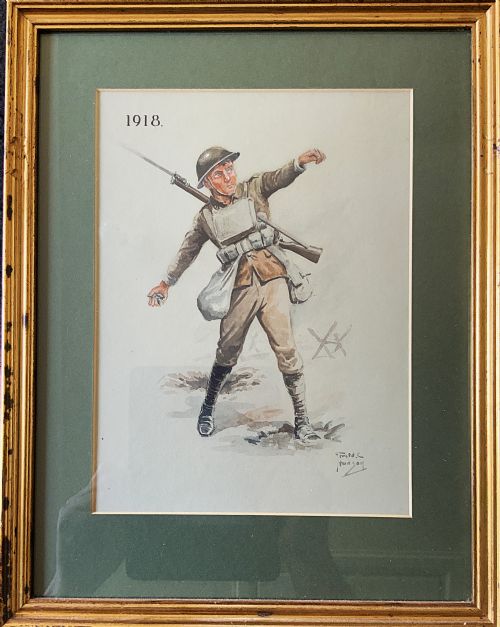
Most examples originate from the First World War and Second World War eras, alongside nineteenth-century depictions of historical engagements. These works frequently appear framed, ready for wall display in studies or libraries.
Materials and Methods
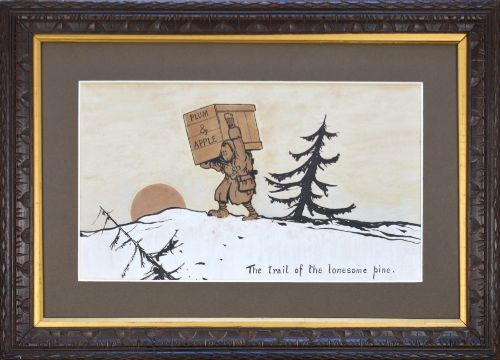
Artists relied primarily on paper supports for their agility in the field or studio, applying ink, watercolour, wash, pastel, and gouache. These water-based and dry media allowed practitioners to record rapidly shifting scenes or produce finished portraits with notable precision.
Many works incorporate pen and ink outlines combined with fluid watercolour or wash to establish tone and atmosphere. Framing protects these fragile paper surfaces from atmospheric damage and handling.
An air ace shoots his pistol directly from the cockpit at the enemy in a dramatic 1920s illustration.
The Spectrum of Quality
Distinction within original military illustration rests on the artist's ability to render anatomy, uniform accuracy, and dynamic movement convincingly. Works by documented figures command attention for their established provenance and sophisticated handling of medium.
Condition of the paper and vibrancy of the pigments dictate longevity and visual impact. Pieces that retain their original ink crispness and watercolour saturation stand apart from faded or heavily browned examples.
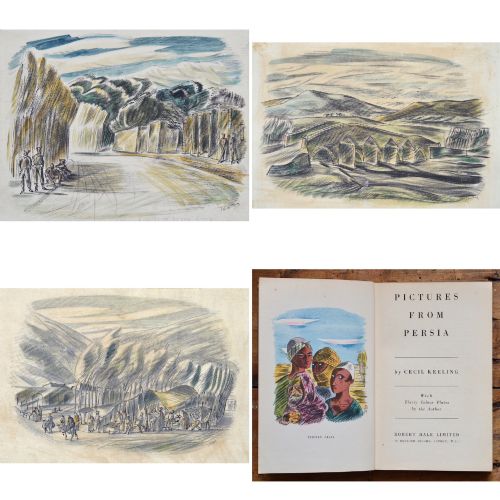
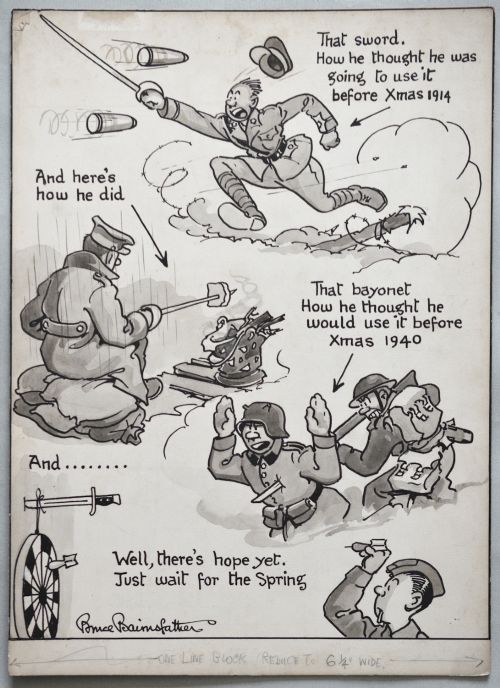
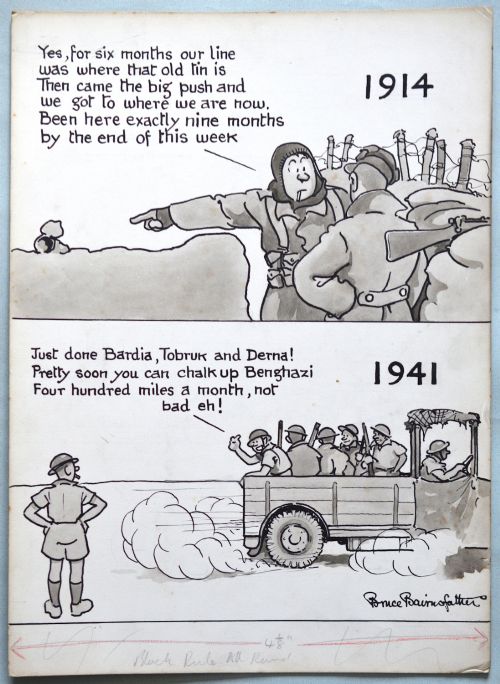
Cecil Keeling·Bruce Bairnsfather·William Marshall Craig·R.S.M.Tucker·Snaffles·Sidney Riesenberg
The Original Military Illustration Glossary
- Watercolour
- A paint consisting of pigment suspended in a water-based solution, applied to paper to create transparent washes of colour. It remains a primary medium for historical military sketches.
- Wash
- A thin, semi-transparent layer of diluted ink or watercolour applied with a brush to create tonal depth and shadow. Artists utilised this technique to define form quickly.
- Gouache
- An opaque water-based paint that provides solid, matte coverage, often combined with watercolour for highlights. It adds opacity to military portraits and campaign scenes.
- Pastel
- A dry drawing medium composed of powdered pigment and a binder, formed into sticks. It permits rapid application of rich colour in wartime sketches.
- Provenance
- The documented history of ownership and origin of an artwork. It establishes authenticity for signed pieces and named subjects.
Original Military Illustration: Frequently Asked Questions
How do I date a military drawing?
Dating relies on uniform details, armament changes, and the artist's active period documented in the signature or title. Paper stocks and framing styles also offer clues to the era of creation.
Contextual evidence such as specific wartime publications or campaign dates helps narrow the timeline further.
Where should I hang these artworks?
These pieces suit studies, libraries, or hallways where natural light can be controlled to prevent fading. Framing with conservation glass protects the paper from ultraviolet degradation.
Pairing works from similar conflicts or eras creates a cohesive display on the wall.
Are these works hand-painted?
The selection includes original hand-drawn and painted works executed in ink, watercolour, wash, pastel, and gouache. Each piece represents a unique creation by the artist's hand.
Buyers should inspect the medium details to differentiate between unique paintings and published prints.
What subjects are most common?
Subjects range from battlefield scenes and tactical engagements to individual portraits of soldiers and officers. Twentieth-century satirical illustrations and wartime sketches frequently appear.
Earlier eighteenth and nineteenth-century works often depict specific historical battles and campaigns.