
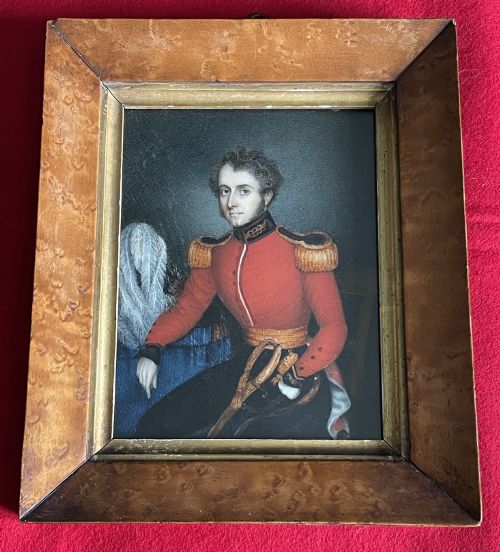
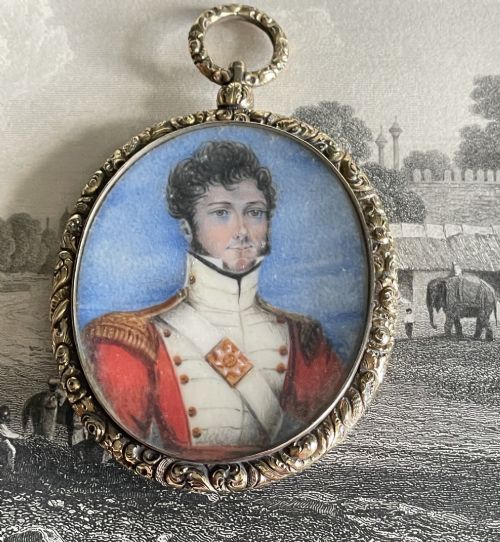


Military Watercolour Painting
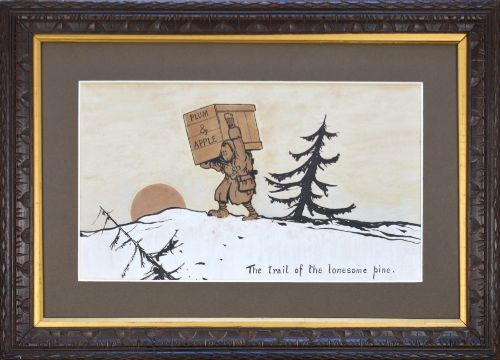
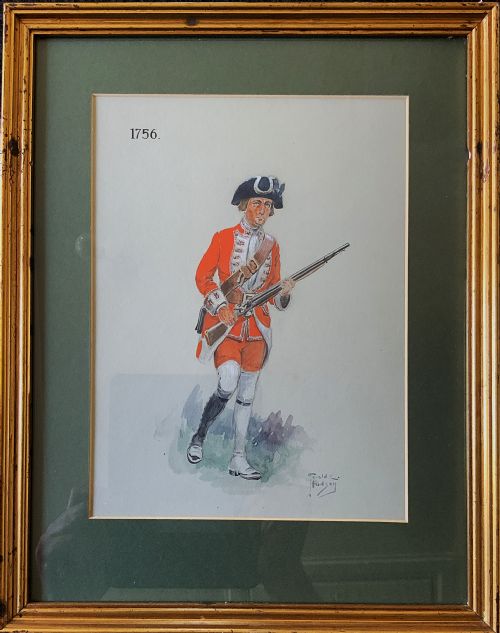
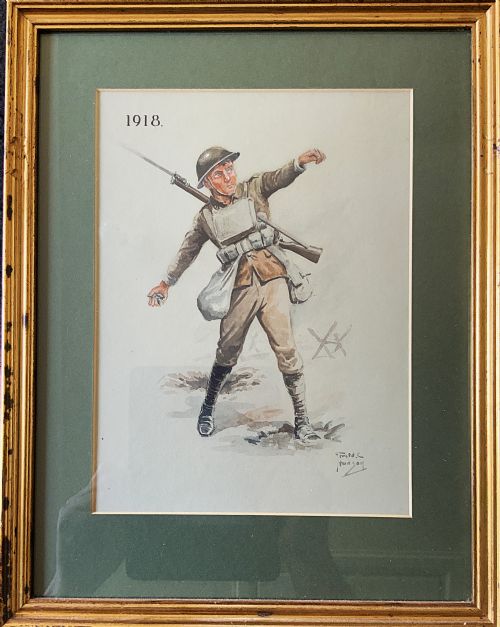
These military watercolour painting pieces capture officers, campaigns, and regiments across the eighteenth, nineteenth, and early twentieth centuries on paper.
Military Watercolour Painting
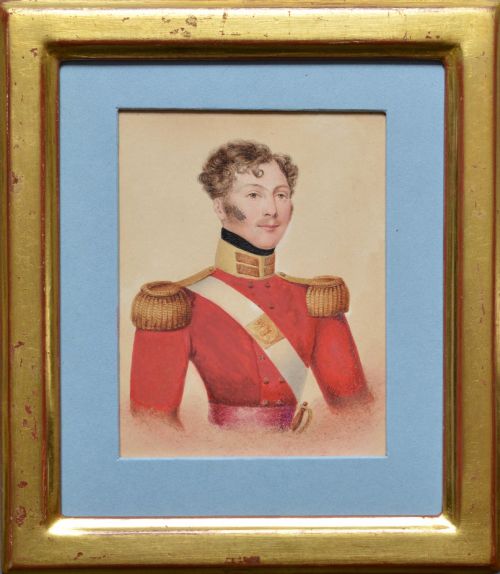
A military watercolour painting documents soldiers, sailors, regiments, and campaigns from the eighteenth century through to the First World War. Buyers encounter framed portraits of individual officers, cavalry studies, and narrative scenes of military life on paper.
The nineteenth century provides the largest share of these works, alongside Regency, Victorian, and Edwardian examples. Forms range from intimate portrait miniatures to larger framed artwork detailing uniforms, naval vessels, and garrison scenes.
Materials and execution
Framing materials typically comprise period giltwood and wood moulding that protect the water-soluble pigments from moisture and light. Gouache appears alongside traditional watercolour in depictions of naval ironclads and campaign landscapes.
Listings span the eighteenth, nineteenth, and early twentieth centuries, encompassing Victorian, Edwardian, and Regency eras.
Assessing quality in military works
Quality rests upon the precision of uniform rendering, anatomical accuracy, and the artist's ability to capture the likeness and rank of the sitter. Signed works by recorded artists carry distinct artistic merit compared to anonymous British school sketches.
Condition remains central, distinguishing bright, unfaded pigments and clean paper supports from pieces damaged by damp, foxing, or excessive light exposure. The framing material, whether original giltwood or a later replacement, influences the integrity of the piece.
Bruce Bairnsfather·J. Hardy·Thomas Mackay·Snaffles·Frank Dadd·Edward Pugh·Frederick Tayler·George Cattermole R.I.·Sir William John Newton·Leslie Moore·John Leech·Christiaan Andriessen·Orlando Norie
The Military Watercolour Painting Glossary
- Gouache
- An opaque water-based medium that provides dense highlights and flat colour areas in military scenes. It differs from transparent watercolour by containing a white pigment filler.
- Wash
- A thin, translucent layer of diluted watercolour or ink applied to paper to create shadows or atmospheric backgrounds. This technique establishes depth behind portrait subjects.
- Miniature
- A small-scale portrait painting executed with fine detail, often housed in a dedicated pocket case or frame. These works frequently depict specific military officers.
- Giltwood
- Wood carved and coated with gold leaf or metallic paint to form decorative picture frames. It is characteristic of period framing for fine art works.
- Regiment
- A permanent unit of an army commanded by a colonel, whose uniforms and insignia help date military artwork. Specific facings and shako plates identify the regiment in early watercolours.
Military Watercolour Painting: Frequently Asked Questions
How do I date a military watercolour painting?
Dating relies primarily on the style of the uniform, headdress, and facial hair visible in the portrait. Regimental insignia and inscribed dates on the mount or reverse also establish the period.
Paper characteristics and framing styles provide secondary clues, though older watercolours are frequently reframed in later periods.
Where should I hang these paintings?
Watercolours require careful placement away from direct sunlight to prevent the pigments from fading over time. Stable indoor humidity levels protect both the paper support and the antique wooden or gilt frames.
Interior walls in studies or hallways suit these framed artworks, provided windows do not cast harsh daily rays onto the surface.
Are miniature portraits painted on paper?
While many miniature portraits utilise paper supports, some examples appear on alternative surfaces such as agate panels. Artists applied extremely fine brushwork using watercolour and gouache to achieve high detail on a small scale.
These delicate panels are typically sealed behind protective glass within fitted frames.
What is the difference between watercolour and gouache?
Traditional watercolour relies on transparent pigments that allow the white of the paper to illuminate the colours. Gouache incorporates an opaque white additive that creates solid, matte areas of paint.
Artists frequently combined both mediums within a single military scene to highlight uniform braiding or metallic buttons.