

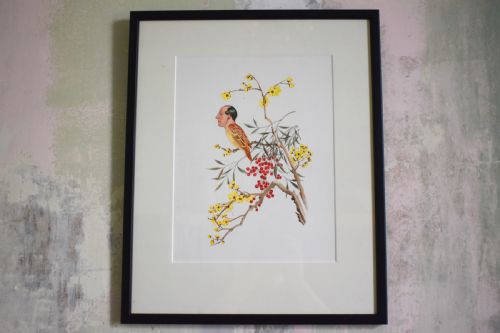
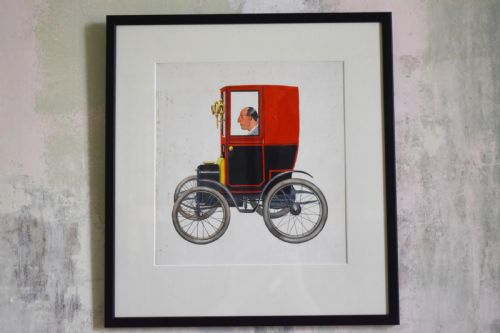
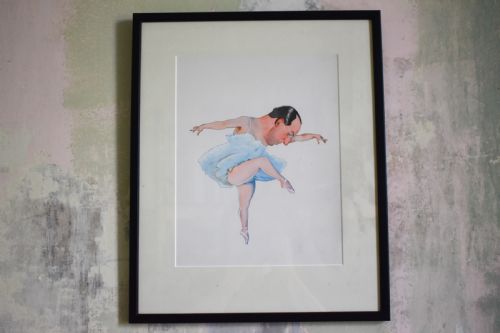
Black Framed Watercolour
When you search for black framed watercolour, you are looking at works on paper held in dark timber or ebonised surrounds.
Black Framed Watercolour
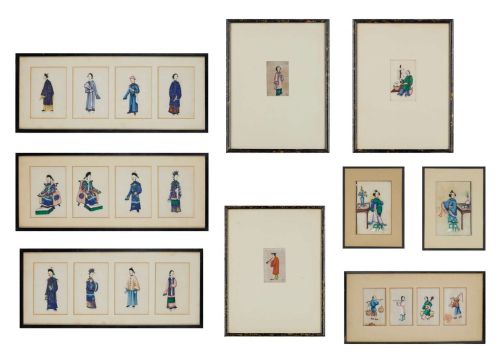
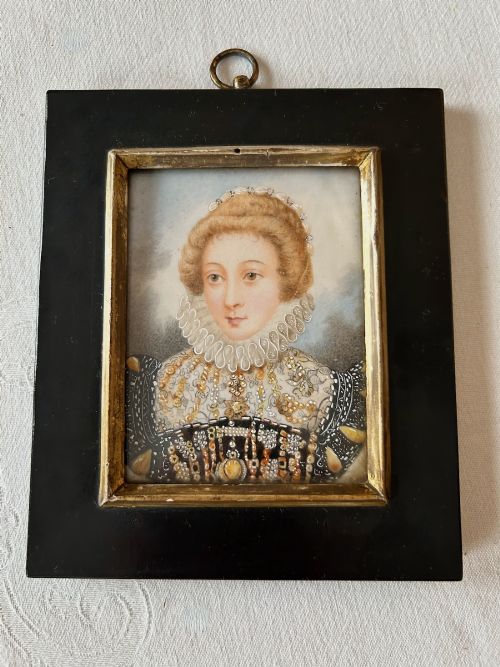
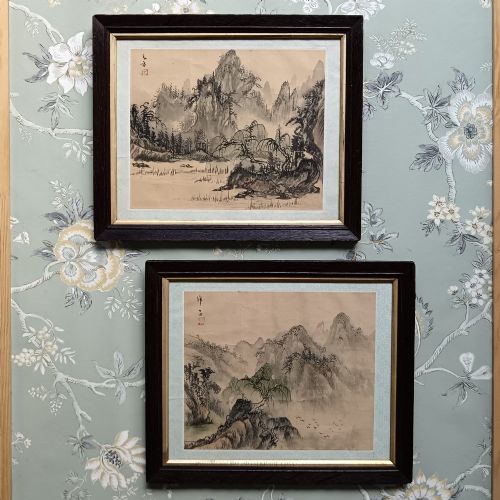
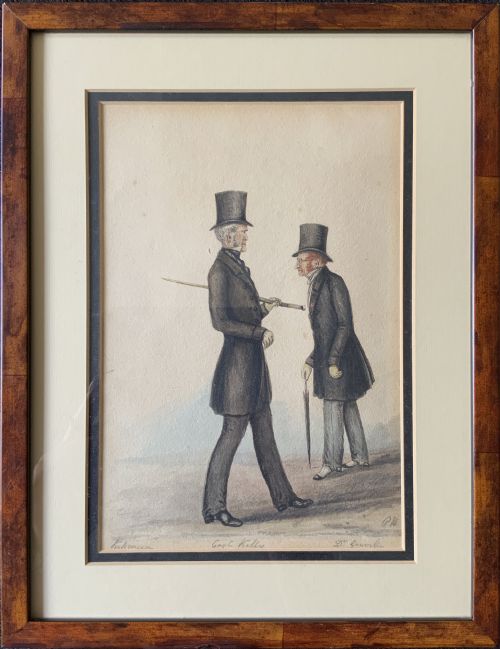
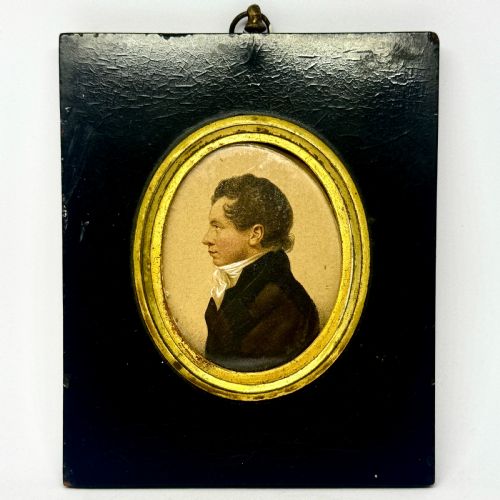
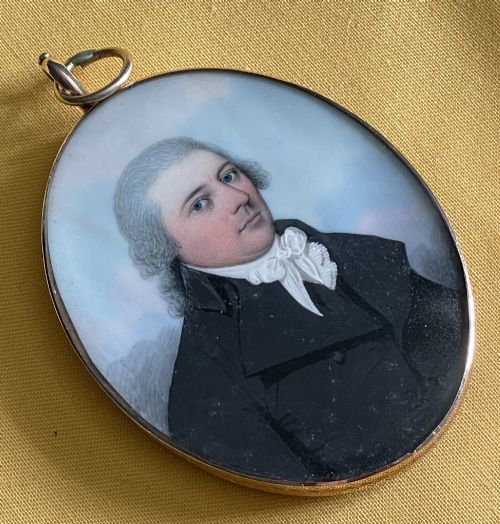
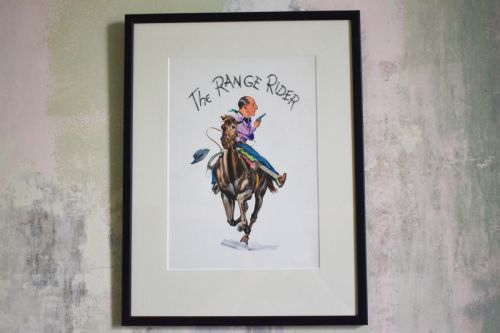
A black framed watercolour typically presents works on paper spanning the eighteenth, nineteenth, and twentieth centuries, encompassing landscapes, portraits, and caricatures. Buyers searching this phrase encounter framed artwork that ranges from British school watercolours to Chinese pith paintings and portrait miniatures.
The selection on this page relies heavily on nineteenth-century pieces alongside Georgian, Regency, and mid-twentieth-century examples. Common subjects include landscape ink drawings, folk art portraits, and narrative scenes housed in period ebonised wood mouldings.
How they were made
Watercolour paint and ink are applied to paper surfaces, occasionally including pith paper or silk, supported by wood frames and glass protection. Ebonised wood frames frequently incorporate gold leaf or brass elements to accent the inner edge of the mount.
Makers utilised traditional framing techniques where deep giltwood mounts and glass enclose delicate pigments. The framing materials serve to protect the watercolour and ink works from atmospheric damage while establishing a stark contrast against the dark timber.
Black Framed Watercolour Retail Price Guide 2026
Typical asking prices for black framed watercolour among the pieces listed under this phrase on Sellingantiques today, from the lower quarter to the upper quarter. They describe what is for sale here now, not the wider market.
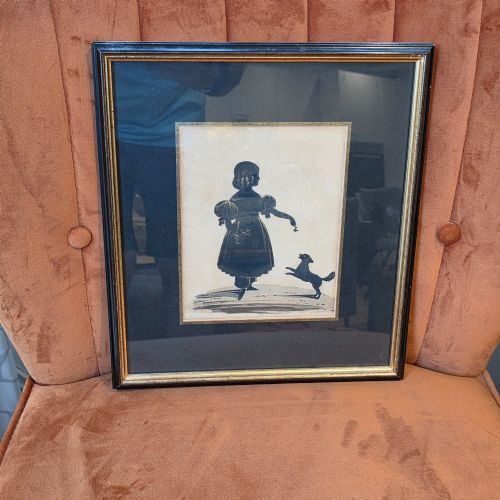
Several watercolours capture the stern gazes of nineteenth-century subjects sitting quietly beside their household pets.
What varies in quality
The distinction between tiers rests upon the precision of the brushwork and the preservation of the paper support. Superior examples demonstrate confident handling of pigment and ink, while lesser works show fading or unrefined draughtsmanship.
Originality of the framing contributes significantly to the integrity of the piece. Matching an eighteenth or nineteenth-century watercolour with its period ebonised wood frame elevates the overall standard compared to later replacements.
William James Hubard·Henri Fradelle·Frederick Buck·Edwin Lord Weeks·Alice Anne Renshaw·Archibald Skirving·Mabel Gear
The Black Framed Watercolour Glossary
- Ebonised wood
- Timber treated to resemble ebony, providing a dark, dense finish frequently used on nineteenth-century frames. This treatment creates a formal border that accentuates the tones within the watercolour.
- Pith paper
- A delicate material formed from the pith of the Tetrapanax papyrifer plant, seen in Asian export paintings. It requires careful handling and specialised framing behind glass.
- Portrait miniature
- A small-scale painting executed with fine detail, often depicting a specific individual from the Georgian or Victorian eras. These works are frequently housed in compact, dark frames.
- Gouache
- An opaque water-based medium used alongside transparent watercolour to build solid areas of colour and highlight details. It provides dense coverage on paper supports.
- Mount
- The card or paper border placed inside the frame to surround the artwork and separate the paper from the glass. Deeper mounts create spatial separation for the watercolour.
Black Framed Watercolour: Frequently Asked Questions
How should I hang a black framed watercolour?
Keep watercolours away from direct sunlight to prevent the pigments and paper support from fading over time.
Use sturdy picture hooks suited to the weight of the timber frame and glass.
Are these frames original to the paintings?
Many nineteenth-century watercolours retain their period ebonised wood frames, matching the era of the artwork.
Examine the backboards and fixings for signs of age that correspond with the date of the painting.
What is the difference between watercolour and gouache?
Watercolour relies on transparent washes that allow the white of the paper to reflect light through the pigment.
Gouache includes an added white pigment to create an opaque finish, yielding solid blocks of colour.
How do I identify a Victorian watercolour?
Victorian pieces often feature specific subject matter such as sentimental portraits, detailed landscapes, or narrative genre scenes.
The paper stock and framing materials from this period typically display distinct nineteenth-century manufacturing characteristics.