
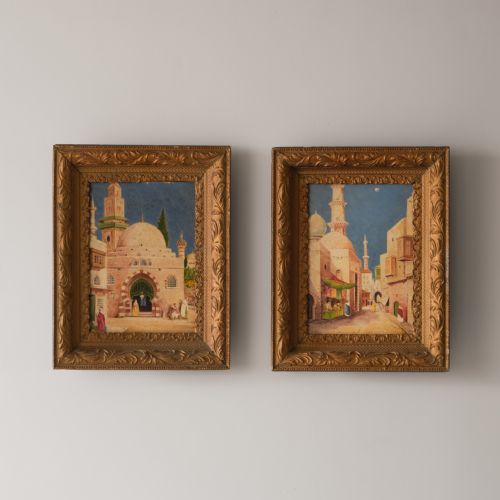
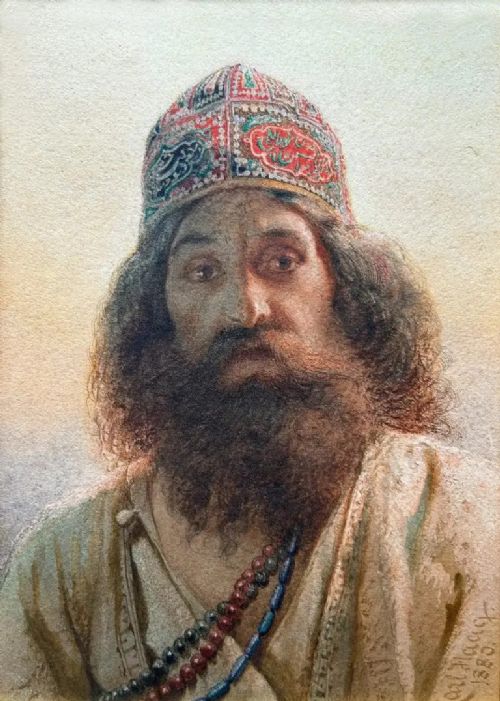


Orientalist Watercolour Painting
An orientalist watercolour painting captures the light, landscapes, and daily scenes of the Middle East and North Africa through delicate pigments on paper.
Orientalist Watercolour Painting
When you search for an orientalist watercolour painting, you encounter works spanning the nineteenth and twentieth centuries, including the Victorian period and the nineteen-forties. These pieces depict scenes such as old Bagdad, Cairo, the River Nile, the Suez Canal, and the Vale of Cashmere in Islamabad.
The objects take the form of framed paintings, pairs of works, and watercolours on board. Subjects range from Egyptian buffalo and farmers to travellers by a river Nile tributary, Bedouin tribesmen with camels, and Arabic seascapes.
Most examples originate from British, French, and American traditions, encompassing naive art, Regency styles, and late Victorian aesthetics. You are likely to meet landscapes, village views, and architectural studies framed in wood, gilt wood, or ebonised frames.
How orientalist watercolour painting works were made
Artists painted primarily with watercolour and gouache pigments upon a paper base or board surface, often employing a fluid wash technique to render skies and water. This method allowed for swift application of translucent colour suited to capturing bright regional light.
Makers housed these works behind glass within timber surrounds, utilising plain wood, gilt wood, and ebonised frames to protect the delicate pigment. Some pieces incorporate painted elements alongside pencil or ink underdrawing to define architectural and figurative details.
Orientalist Watercolour Painting Retail Price Guide 2026
Typical asking prices for orientalist watercolour painting among the pieces listed under this phrase on Sellingantiques today, from the lower quarter to the upper quarter. They describe what is for sale here now, not the wider market.
Camels and buffalo occasionally share gallery space with howling dawahes of Cairo.
What varies in quality
The strength of an orientalist watercolour painting rests in the handling of light and the competence of the wash technique, which separates deftly executed atmospheric scenes from stiffer, naive renderings. Masterful control of pigment transparency defines works by accomplished hands.
Framing and preservation also distinguish individual pieces, as works retained behind glass in their original ebonised or gilt wood frames retain better surface integrity. The specificity and historical context of the recorded location further elevate certain examples above generic compositions.
Carl Haag·Edwin Lord Weeks·Charles Bellay·Anne Dorrien Smith·Earl Haig
The Orientalist Watercolour Painting Glossary
- Gouache
- An opaque watercolour paint containing pigment mixed with a binding agent and white filler. This medium allows artists to add solid highlights and rich opaque passages over transparent washes.
- Watercolour Pigment
- Finely ground colour particles suspended in a water-soluble vehicle. It provides the primary translucent medium for sketching and painting on paper surfaces.
- Ebonised Frame
- Timber treated with a dark stain or finish to imitate ebony wood. This dark framing style was popular for contrasting with light watercolours during the nineteenth and twentieth centuries.
- Gilt Wood
- Carved or moulded timber coated with a thin layer of gold leaf or metallic gilt paint. It adds a decorative border that complements the warm tones of period paintings.
Orientalist Watercolour Painting: Frequently Asked Questions
What is orientalist watercolour painting?
An orientalist watercolour painting is a work on paper depicting scenes, architecture, and people of the Middle East, North Africa, and Asia, produced by Western artists.
These artworks range from nineteenth-century topographical views to twentieth-century landscape studies.
How should I hang these watercolours?
Watercolours are sensitive to light and require placement away from direct sunlight to prevent the pigments from fading over time.
Display them behind glass in rooms with stable humidity and temperature levels to protect both the paper and the original frame.
How do I date an orientalist watercolour?
Dating relies on stylistic clues, framing materials, artist signatures, and inscriptions noting specific locations or years like eighteen-seventy or nineteen-twenty.
Victorian and early twentieth-century pieces often carry specific period markers in their subject matter and mounting techniques.
What subjects appear in these paintings?
Common subjects include Nile tributaries, Bedouin tribesmen with camels, Egyptian villages, and Middle Eastern temples covered in lush green trees.
Artists also recorded military expeditions, desert landscapes, and coastal scenes across various regions.