
Victorian Watercolour Portrait
These pieces capture character and likeness on paper, offering an intimate window into nineteenth-century life when you search for a victorian watercolour portrait.

Victorian Watercolour Portrait
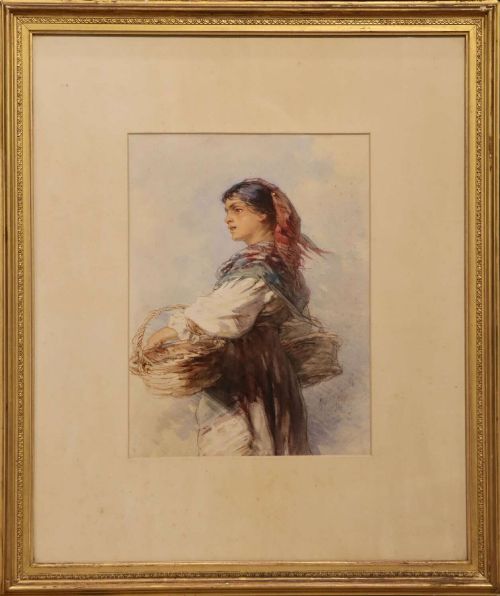
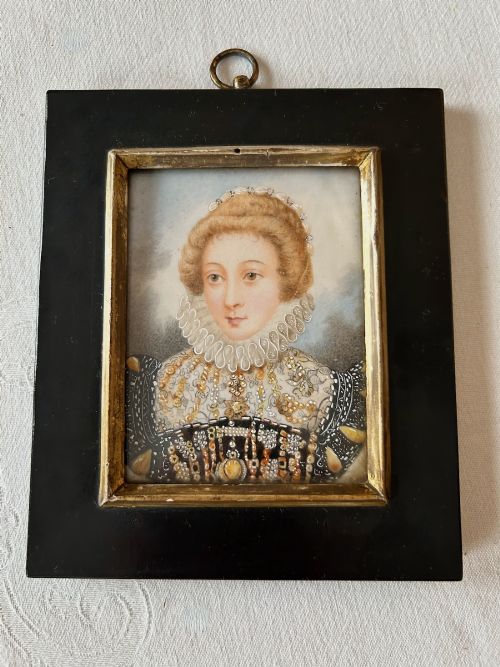
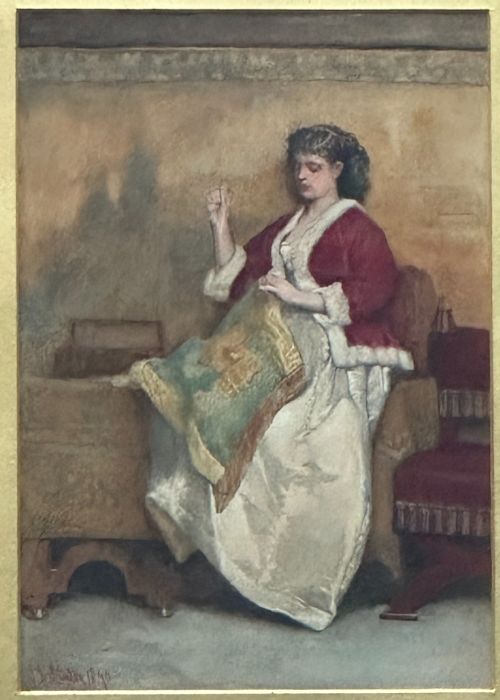
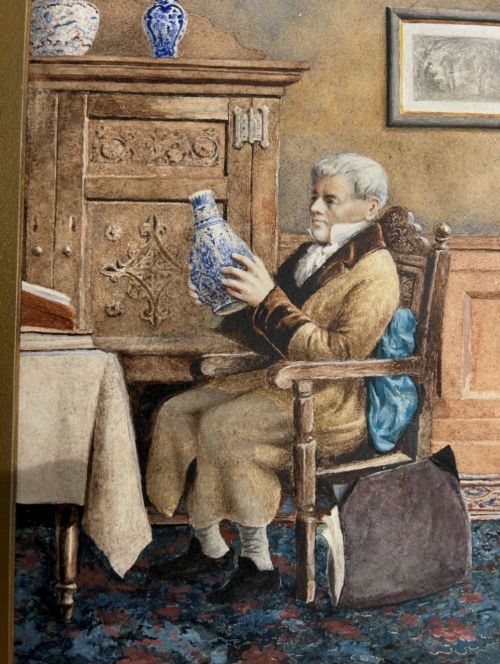
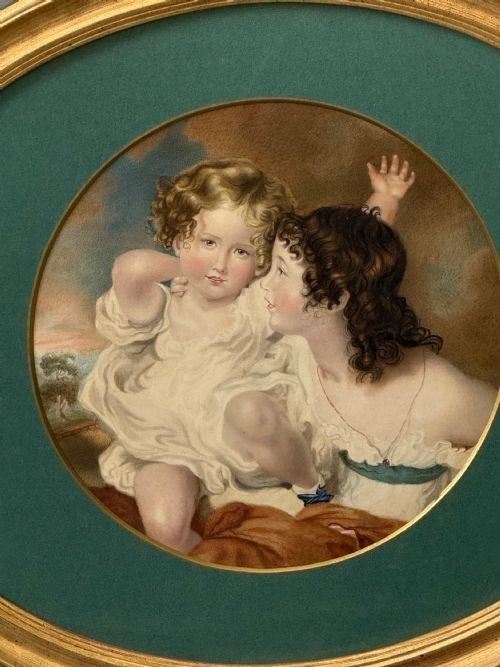
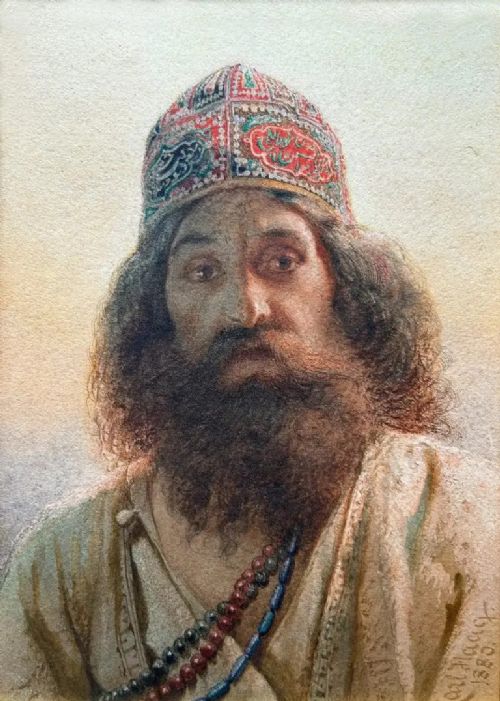
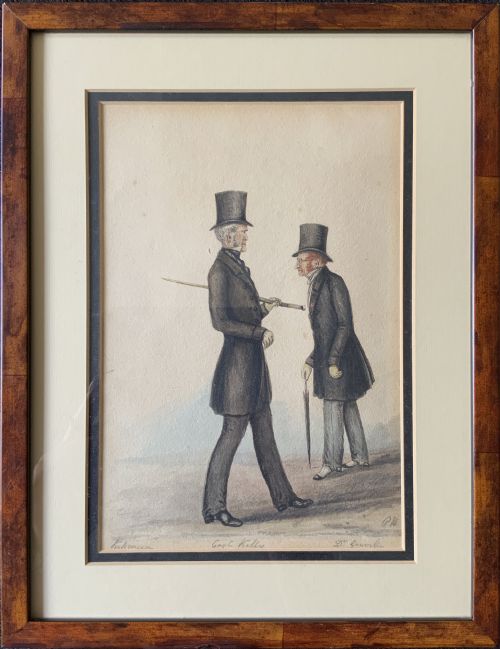
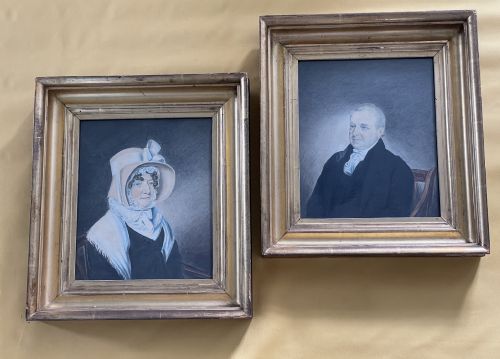
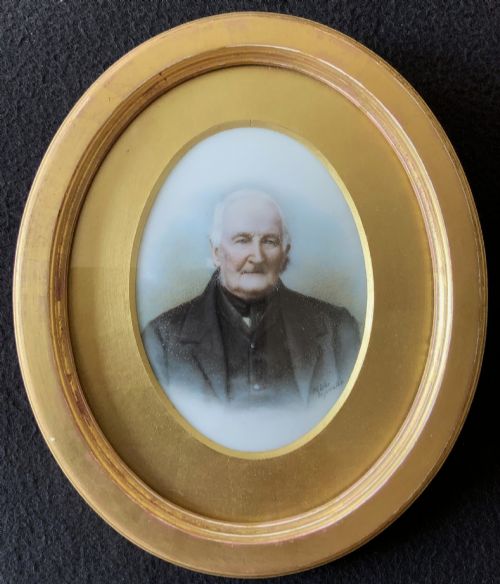
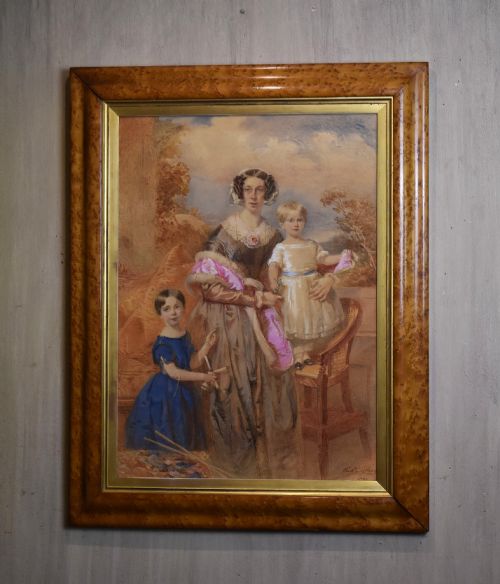
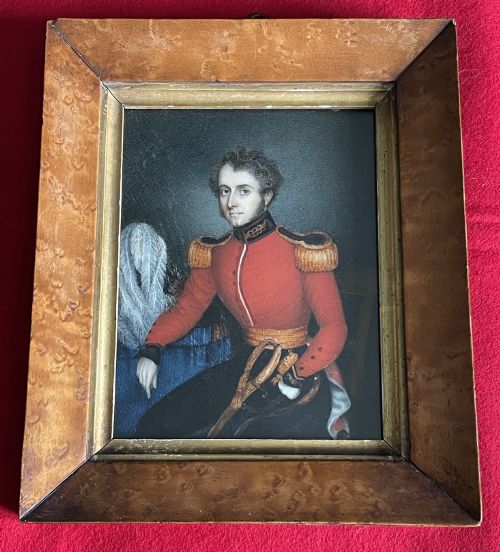
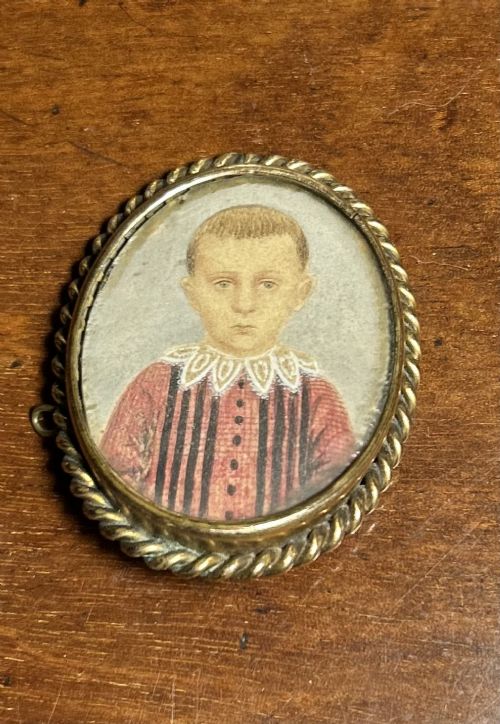
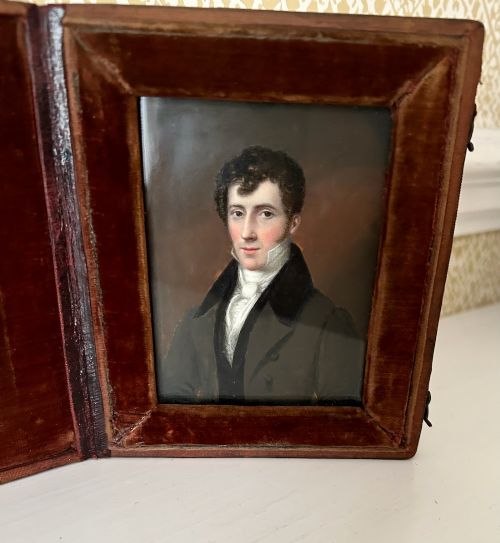
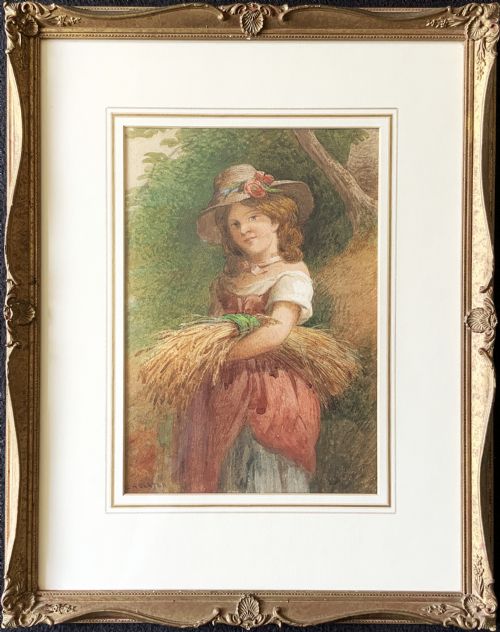
A victorian watercolour portrait on this page spans grand full-length studies, intimate miniature paintings designed for brooches or lockets, and character studies of children, officers, and peasants. Most examples originate from the nineteenth century, ranging from Regency beginnings through to the Victorian era and the turn of the twentieth century.
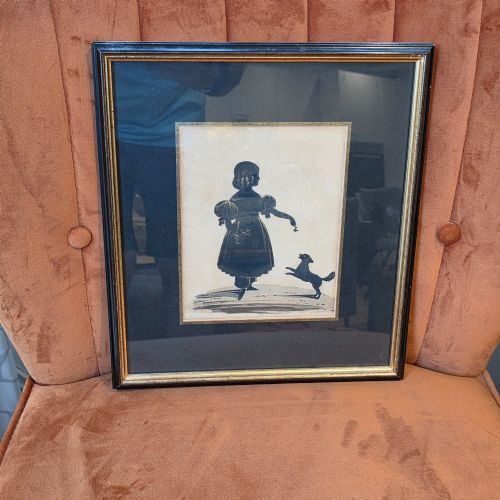
Subjects include individual gentlemen, young ladies adorned with springtime flowers, military officers, and children accompanied by pets or toys. Artists working in this medium recorded both formal sitters and informal genre subjects such as water carriers and fishermen.
The format varies widely from large framed wall art down to tiny oval miniatures housed in ebonised frames, maple wood, or gilt surrounds.
How They Were Made
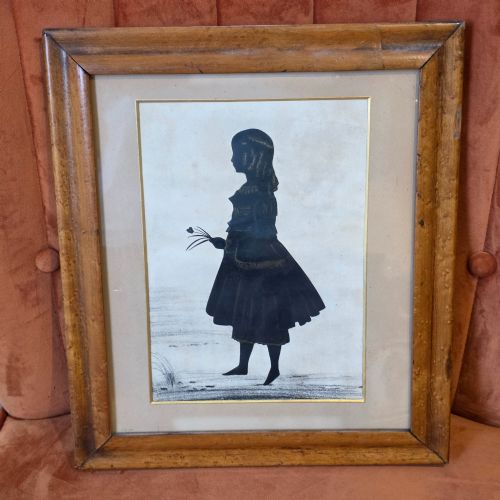
Artists painted primarily with watercolour pigment on paper, frequently combining pencil underdrawings, gouache for opaque highlights, and occasionally pastel. Some works incorporate cut-paper silhouettes layered with delicate watercolour details.
Support materials range from standard artist paper to glass and card, framed behind glass within wood mouldings, papier-mâché, or metal brooch mounts incorporating gilt and gold leaf.
Victorian Watercolour Portrait Retail Price Guide 2026
Typical asking prices for victorian watercolour portrait among the pieces listed under this phrase on Sellingantiques today, from the lower quarter to the upper quarter. They describe what is for sale here now, not the wider market.
Several portraits preserve the likenesses of beloved family pets, including dogs with hoops and hounds in the field.
What Varies in Quality
Quality rests upon the precision of the draughtsmanship and the artist's ability to render facial expression and psychological depth within the pigment. Finer works display meticulous brushwork in the rendering of lace collars, hair, and textiles.
The preservation of the paper and the vibrancy of the watercolour pigments dictate desirability, alongside the originality of the period frame, whether birdseye maple, ebonised wood, or gilt.
Guido Bach·William James Hubard·Henri Fradelle·Sir James Dromgole Linton·Henry Stacy Marks·Carl Haag·Frederick Tatham·Charles Henry Slater·Philip Richard Morris·Alice Anne Renshaw·Charles Bellay·Arthur Wardle·J. Hardy·Filipo Indoni·J Bizo·Henry E Hobson·Basil Nightingale·Helena Maguire·William Egley
The Victorian Watercolour Portrait Glossary
- Watercolour
- A paint consisting of pigment suspended in a water-soluble binder, used on paper to create translucent washes.
- Portrait Miniature
- A small-scale painting, often executed on ivory, card, or paper, intended to be held in the hand, worn as jewellery, or displayed in a small frame.
- Gouache
- An opaque water-based paint composed of pigment and other inert materials, frequently utilised alongside watercolour to add highlights.
- Birdseye Maple
- A figured wood showing small circular patterns resembling bird's eyes, commonly selected for nineteenth-century picture frames.
- Silhouette
- A portrait represented as a solid shape of a single colour, usually black, cut from paper or painted against a pale background.
Victorian Watercolour Portrait: Frequently Asked Questions
How do I display these watercolours safely?
Watercolour pigments fade rapidly when exposed to direct sunlight, so position framed works on interior walls away from windows.
Ensure glazing protects the paper surface from atmospheric moisture and household dust.
Were these painted from life?
Many portraits were commissioned directly from living sitters who sat for the artist in a studio setting.
Others relied on preliminary sketches or photographs, particularly as photographic techniques advanced during the latter half of the nineteenth century.
How can I tell the period of the frame?
Period frames often feature original construction methods such as corner mitres joined with wooden pegs and backboards held by old nails or screws.
Materials like burr maple, ebonised wood, and papier-mâché align closely with nineteenth-century framing conventions.
What is the difference between a miniature and a standard portrait?
Miniature portraits are scaled down significantly, often measuring only a few inches across, and were constructed to be portable or worn on the person.
Standard portraits were produced on larger sheets of paper intended primarily for wall display.