

19th Century Watercolour Portrait
When you collect a 19th century watercolour portrait, you acquire a hand-painted window into Victorian and Regency character.
19th Century Watercolour Portrait
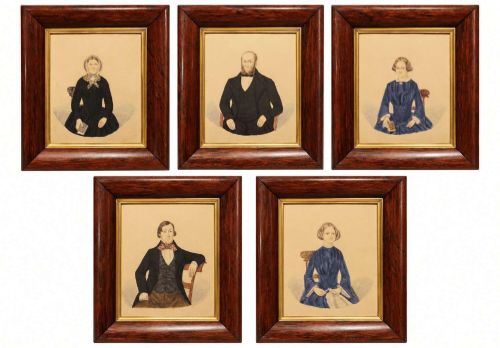
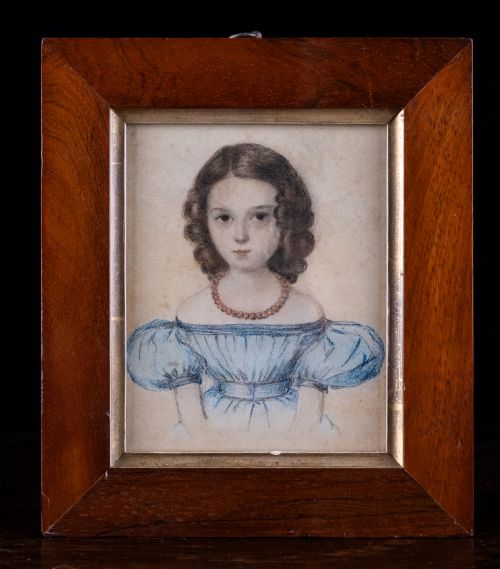
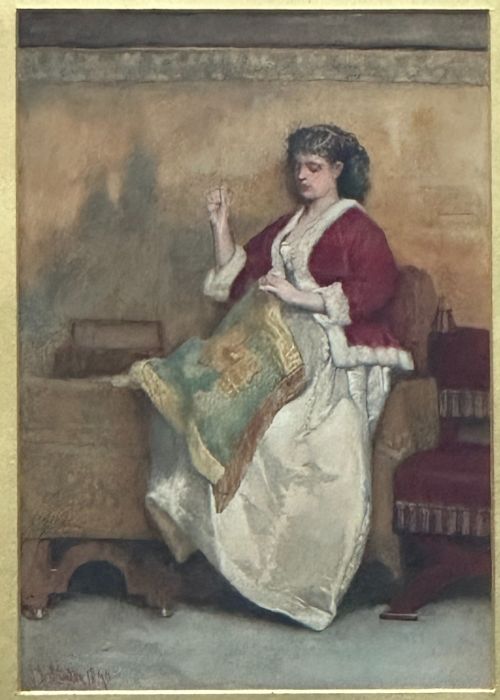
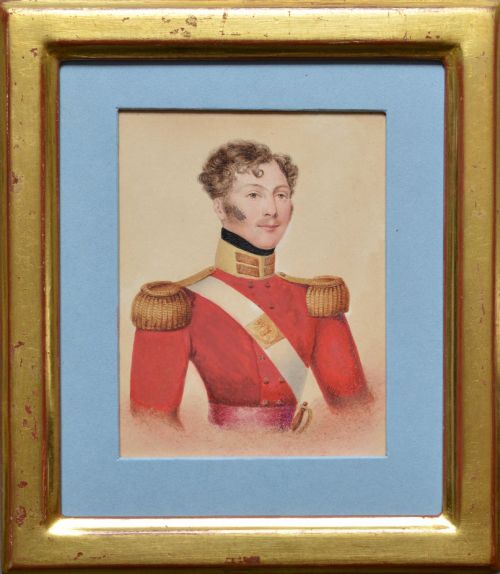
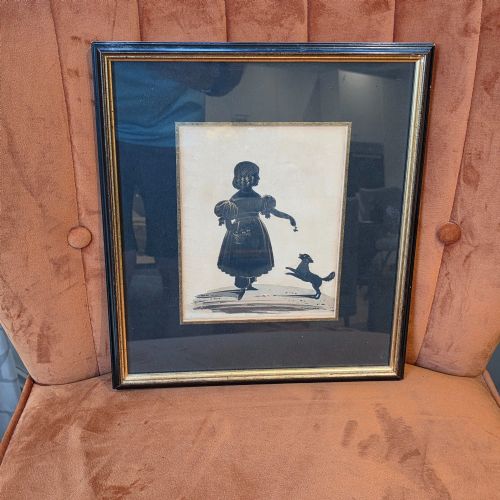
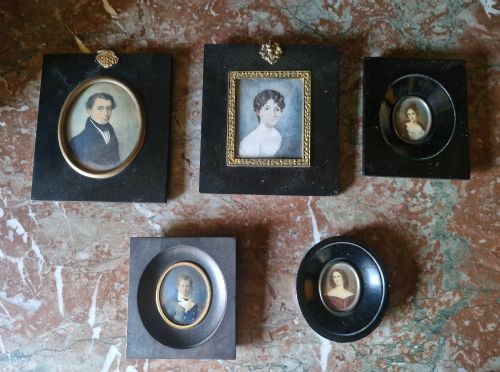
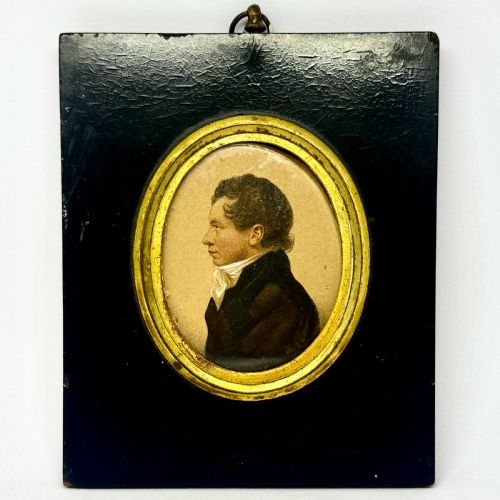
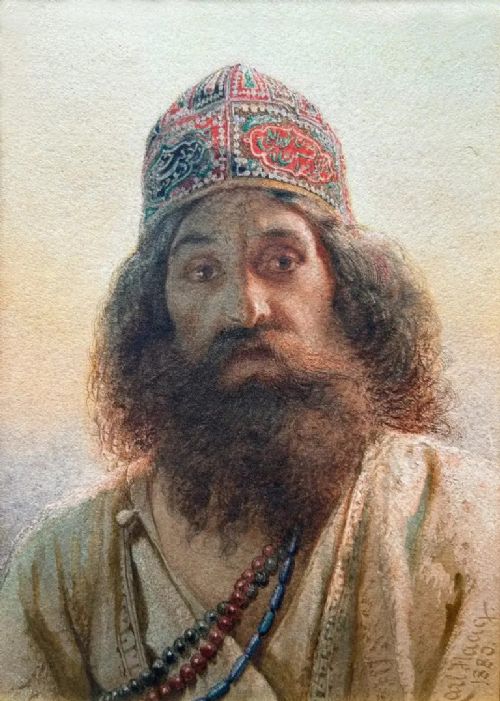
A 19th century watercolour portrait captures the likeness of sitters through delicate washes of pigment on paper, ranging from intimate miniature paintings to full-length studies. These works frequently emerge from the Victorian, Regency, and Georgian periods, produced by named British artists, continental painters, and anonymous folk art hands.
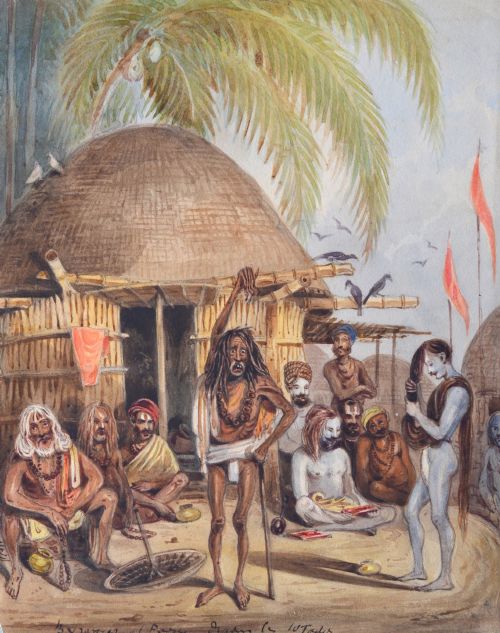
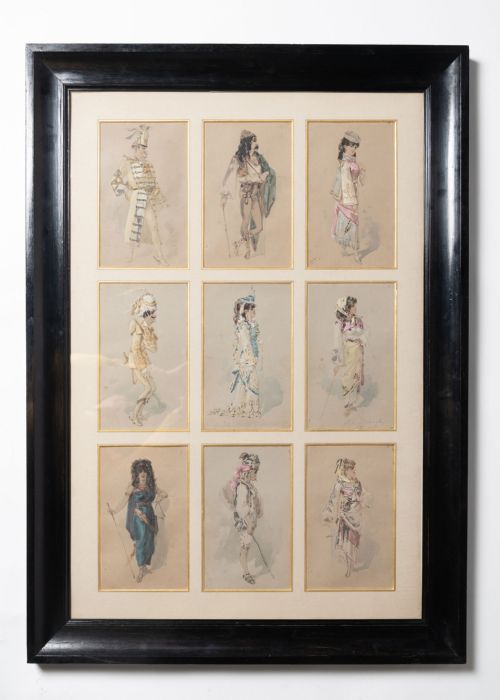
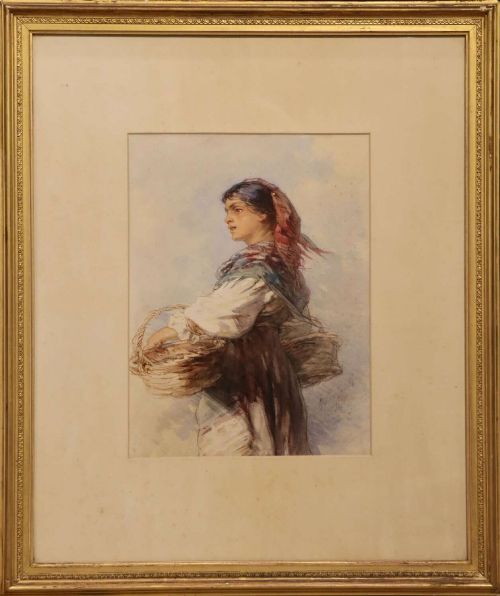
The subjects span from children and officers to peasants and society ladies, often framed in period wood, giltwood, or gilt metal under glass. Buyers encounter both polished academic works and charming folk art pieces that reflect the diverse aesthetic movements of the era, including Orientalism and Romanticism.
Materials and Technique
Artists painted directly onto paper or occasionally glass, applying watercolour washes sometimes heightened with gouache, pastel, or pencil details. Cut paper and silhouette techniques also appear, combining delicate scissor work with painted accents.
Finished pieces were housed behind protective glass within ornate gilt wood, simple wood, or gilt metal frames that preserved the fugitive pigments from light and moisture.
19th Century Watercolour Portrait Retail Price Guide 2026
Typical asking prices for 19th century watercolour portrait among the pieces listed under this phrase on Sellingantiques today, from the lower quarter to the upper quarter. They describe what is for sale here now, not the wider market.
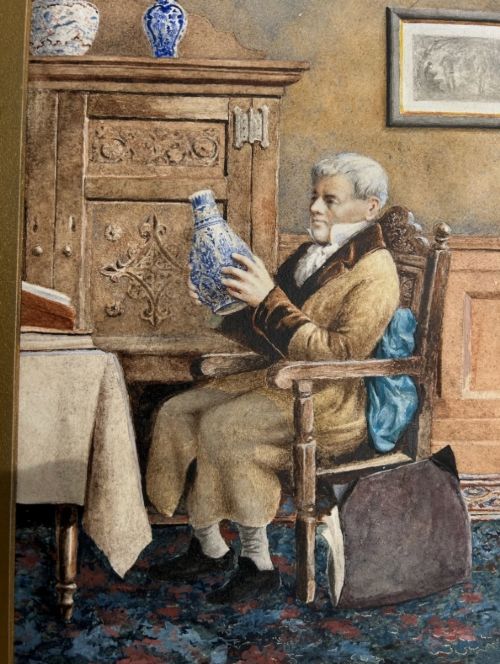
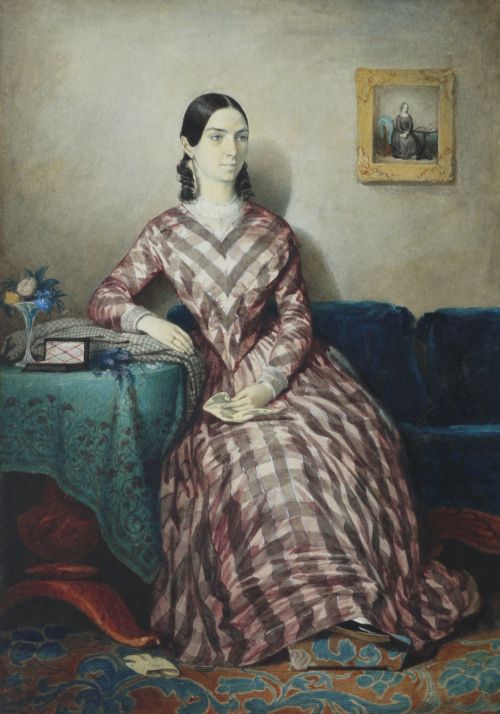
One Victorian gentleman is caught forever examining a blue vase.
The Spectrum of Quality
Quality rests primarily on the draughtsmanship and the expressive capability of the brushwork, distinguishing a master hand from a routine provincial copyist. The subtlety of facial modelling and the preservation of the delicate pigment define the upper tier of works.
The originality of the period framing and the integrity of the paper support also determine value, as intact contemporary mounts and untouched backing boards protect the longevity of the piece.
Guido Bach·William James Hubard·Henri Fradelle·Sir James Dromgole Linton·Edward Bradford·Frederick Tatham·Charles Henry Slater·Philip Richard Morris·Alice Anne Renshaw·Filipo Indoni
The 19th Century Watercolour Portrait Glossary
- Watercolour
- A painting method where finely ground pigments are suspended in a water-soluble binder. It relies on the white of the paper to provide luminosity through translucent washes.
- Gouache
- An opaque water-based paint often combined with watercolour in nineteenth-century works to add highlights and solid areas of colour.
- Portrait Miniature
- A small, highly detailed painting executed on a tiny scale, frequently framed for personal adornment or intimate domestic display.
- Silhouette
- A profile portrait filled in with a solid dark colour or cut from black paper, sometimes enhanced with watercolour details.
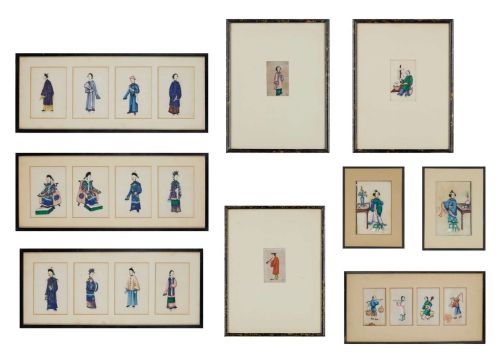
- Pith painting
- Artwork created on thin sheets of pith plant material, notably produced in nineteenth-century China for Western trade.
19th Century Watercolour Portrait: Frequently Asked Questions
How should I display my watercolour portrait safely?
Keep watercolours away from direct sunlight to prevent the delicate pigments from fading permanently over time.
Hang them on interior walls with stable humidity levels, ensuring the protective glass does not trap moisture against the paper.
Are these portraits usually signed by the artist?
Many nineteenth-century works bear monograms, initials, or full signatures in the lower corners, often accompanied by a date.
However, a significant portion of portraits, particularly folk art and miniature pieces, remain anonymous while still displaying distinct regional characteristics.
What is the difference between a miniature and a standard portrait?
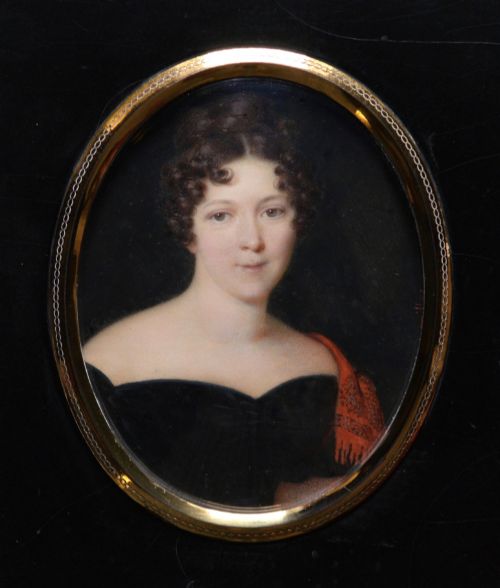
Miniatures are executed on a remarkably small scale, designed to be held in the hand or worn as personal keepsakes.
Standard watercolours occupy larger paper sheets intended for wall display within parlours and sitting rooms.
How do I identify a Regency period piece?
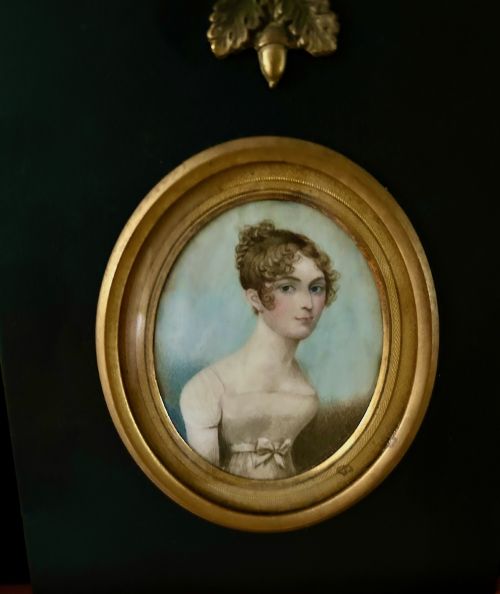
Regency portraits typically feature specific costume details such as high-waisted dresses for women and tailored cravats for men, reflecting the fashion of the early decades of the century.
The framing and paper types often corroborate this earlier timeline compared to later Victorian productions.