



Maple Framed Watercolour Portrait
A maple framed watercolour portrait brings warmth to a wall, offering delicate painted likenesses held in rich, figured timber.
Maple Framed Watercolour Portrait
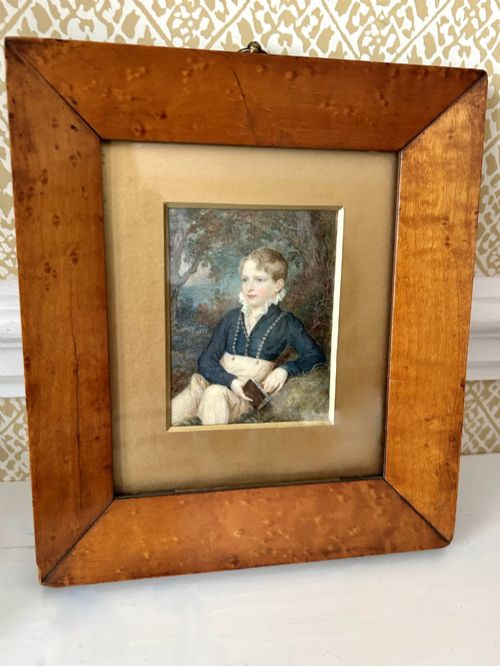
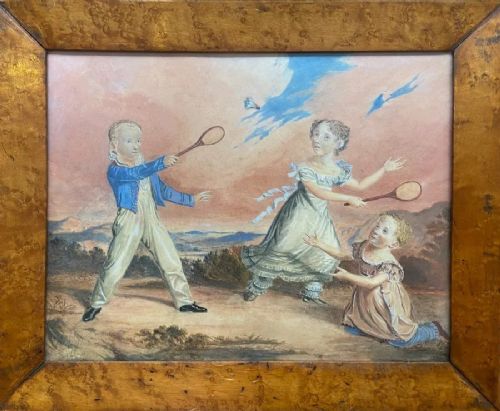
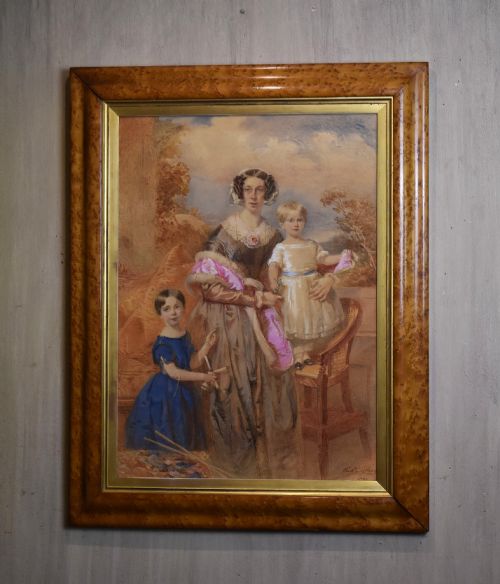
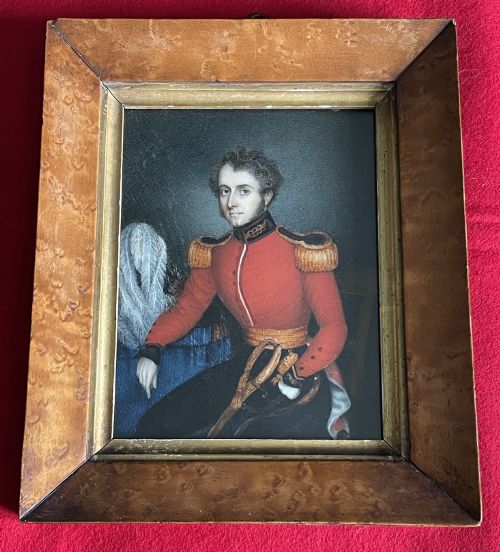
A maple framed watercolour portrait captures sitters from the Georgian, Regency, and Victorian eras, rendered in fine pigments on paper. These works range from intimate miniature portrait miniatures to larger framed paintings depicting officers, ladies, and children.
The most common version met on this page is the nineteenth century piece, often presented in its original birdseye maple or standard maple veneer frame. Examples span professional signed works by named artists to anonymous Victorian folk art and naive interior scenes.
How they were made
Artists painted directly onto paper using water-soluble pigments, sometimes incorporating gold leaf highlights to catch the light within the composition. These fragile works required protection behind glass from an early date to prevent fading and moisture damage.
Framers selected timber with distinctive figuring, particularly birds eye maple and maple veneer, often pairing the warm wood tones with gilt or gold leaf inner slips. The resulting frames highlight the natural grain while framing the delicate watercolour within.
Maple Framed Watercolour Portrait Retail Price Guide 2026
Typical asking prices for maple framed watercolour portrait among the pieces listed under this phrase on Sellingantiques today, from the lower quarter to the upper quarter. They describe what is for sale here now, not the wider market.
What varies in quality
The sophistication of the brushwork and the precision of the sitter's likeness set the finer artistic achievements apart from simpler naive or folk art pieces. Masterful handling of watercolour creates depth in fabric and expression that lesser hands miss.
The condition and character of the surrounding timber frame play a large role in the overall appeal, with original maple veneers and intact gilt slips commanding greater visual harmony than later replacements.
Henry Travis·Frederick Tatham·J F Marie Huet Villiers·Edward Smyth
The Maple Framed Watercolour Portrait Glossary
- Birds Eye Maple
- A figure in maple wood where the grain swirls in small circular patterns resembling tiny eyes. This decorative wood was highly favoured for nineteenth century picture frames.
- Watercolour
- A painting method where natural pigments are suspended in a water-based solution. It allows for translucent washes of colour on paper.
- Miniature Portrait
- A small-scale painting capturing a person's likeness with high detail. These works were often housed in compact frames for intimate viewing.
- Regency
- A period in British history spanning the early nineteenth century known for distinct neoclassical aesthetics in art and framing. Pieces from this era often feature clean lines and refined proportions.
- Gilt Slip
- A thin, gold-leafed wooden moulding placed inside the main frame border. It acts as a visual buffer between the dark maple wood and the paper artwork.
Maple Framed Watercolour Portrait: Frequently Asked Questions
How do I date a watercolour portrait?
Dating relies primarily on the sitter's costume, hair style, and any visible signatures or inscriptions on the paper. The construction style of the maple frame and backing boards also offers helpful chronological clues.
Comparing the painting technique to known works from periods like the Regency or Victorian era helps narrow the timeframe further.
Are these portraits always in original frames?
Many retain their period maple frames, but some watercolours have been reframed over the decades to suit changing tastes. Surviving in an original birdseye maple frame adds notable historical integrity to the piece.
Examining the fit and joinery at the back of the frame helps determine if the artwork and surround have remained together since creation.
How should I hang a watercolour portrait?
Watercolours are sensitive to strong sunlight and humidity, so they require placement away from direct rays and damp walls. Conservation glass or careful positioning preserves the delicate pigments over time.
Ensure the wall fixings match the weight of the timber frame to hang the piece securely without strain.
What is the difference between academic and naive portraits?
Academic portraits reflect formal training in anatomy, proportion, and shading, often executed by professional artists who captured realistic likenesses. Naive works, such as Victorian folk art pieces, possess a charming flatness and directness.
Both styles hold distinct appeal for collectors depending on whether they prefer refined draughtsmanship or expressive simplicity.