


Framed Equestrian Watercolour
A framed equestrian watercolour brings the movement and character of horses and riders into a room through delicate pigment on paper.
Framed Equestrian Watercolour
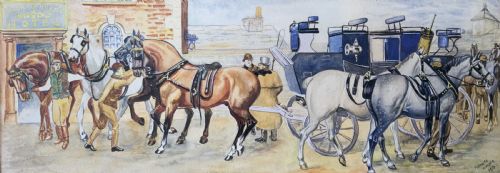
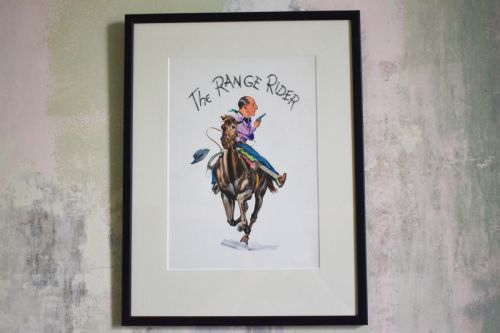
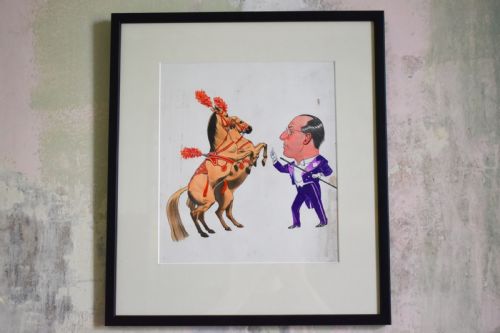
A framed equestrian watercolour focuses on horses, hunting scenes, racing, and rural working animals captured in water-soluble media. Buyers encounter works ranging from nineteenth-century studies to early twentieth-century British sporting art and illustration.
The subjects span formal portraits of single horses, lively hunting sequences, cavalry depictions, and bustling horse fairs. Many pieces arrive housed in period wooden or gilt frames ready to hang.
Materials and technique
Artists painted primarily with watercolour and bodycolour or gouache on paper, sometimes incorporating ink for definition. Applied wet, the pigment creates translucent washes that capture light and atmosphere across the paper surface.
Protection comes from glass set within wooden frames, frequently finished with gilt moulding or oak joinery. This combination shields the delicate paper and water-soluble pigments from environmental moisture and handling.
Listings feature paper support protected by glass within oak, wood, and gilt frames across periods spanning the eighteenth to the mid-twentieth century.
Quality factors
Mastery shows in the vitality of the drawing and the sureness of the brushwork, particularly in the anatomy and movement of the horse. Strong compositions convey speed and weight without hesitation or overworking.
The condition of the paper and the vibrancy of the pigments determine preservation. Fine examples retain their original colour beneath glass, supported by framing that complements the period of the work.
Herman S Melville·John Rattenbury Skeaping·Basil Nightingale·John Augustus Atkinson·Helena Maguire·John Atkinson·Thomas Mackay·Adrian Jones·John Sanderson Wells·Charles Johnson Payne Snaffles·Johan Noah Bemmel·George Cattermole·Frank Dadd·Charles James Adams·George Soper
The Framed Equestrian Watercolour Glossary
- Watercolour
- A paint consisting of colour suspended in a water-soluble binder, used to create transparent washes on paper.
- Gouache
- An opaque watercolour paint containing white pigment added to create denser, solid colour areas.
- Gilt
- A thin layer of gold leaf applied to wood frames to provide a reflective, decorative surface.
- Sporting art
- Depictions of rural pastimes, hunting, racing, and animals, which form a major genre in British painting.
- Provenance
- The documented history of a work, establishing its origin and past attribution.
Framed Equestrian Watercolour: Frequently Asked Questions
How should I hang my framed equestrian watercolour?
Keep watercolours away from direct sunlight to prevent the pigments from fading over time. Position the frame at eye level on an interior wall where room temperature remains stable.
Ensure the hanging wire and wall fixings are secure, as older wooden frames carry significant weight from glass and timber.
What periods do these watercolours come from?
The selection spans from the eighteenth century through the Victorian and Edwardian eras into the mid-twentieth century. Early works often depict military subjects or detailed animal portraits, while later pieces capture hunting scenes and rural work.
Dates are typically identified through signatures, artist lifespans, and the construction methods of the original frames.
What frames typically accompany these pieces?
Many watercolours retain their period oak or moulded wooden frames, sometimes accented with gilt slip or decorative corners. These surrounds were chosen to complement the artistic style of the era in which the picture was created.
Glass protects the fragile paper surface beneath, sealing the painting against dust and atmospheric debris.