


Horse Drawn Carriage Art
Horse drawn carriage art captures the motion and tradition of nineteenth and early twentieth-century coaching scenes, offering collectors a direct window into historical transport through paintings and scale models.
Horse Drawn Carriage Art
Horse drawn carriage art encompasses paintings, watercolours, chalk drawings, and scratch-built wooden models depicting historical transport and street scenes. The pieces on this page span from the nineteenth century through the Edwardian period and into the nineteen thirties, featuring works created in oil, watercolour, ink, and glass.
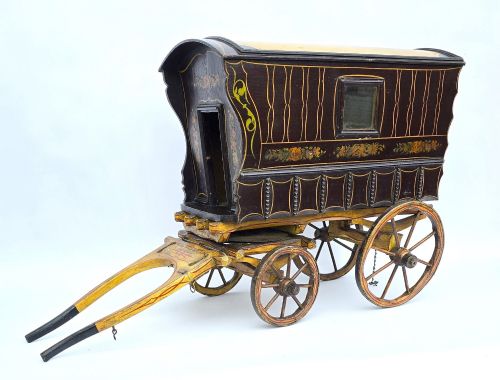
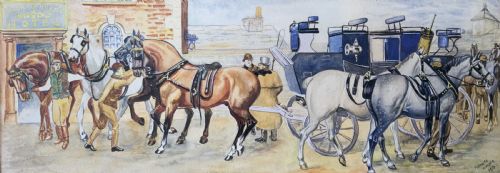
Collectors encounter framed artworks ranging from detailed oils of Royal Mail coaches in winter snowstorms to delicate watercolours of Paris cabs and London streets. Folk art models of caravans and horse-drawn carriages provide tangible, three-dimensional representations of the same era.
Materials and techniques
Artists utilised oil on canvas and watercolour on paper to capture light and movement in coaching and street scenes. Chalk drawings on paper and ink works also appear alongside physical models constructed from wood and metal.
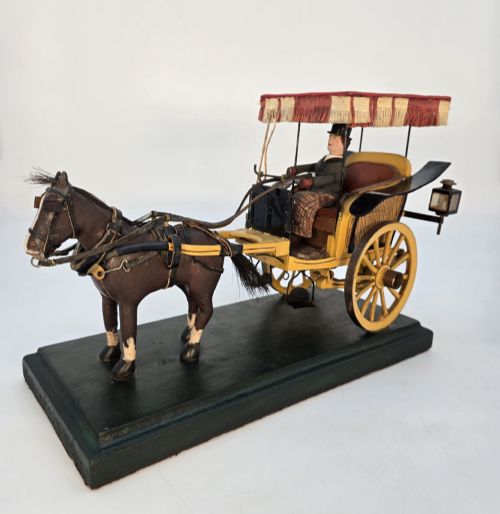
Makers of the three-dimensional pieces employed scratch-built techniques using wood, paint, and glass to replicate carriages, horses, and drivers in miniature. Framing often utilised oak or walnut to house the paintings and drawings.
One model maker went to the trouble of carving a tiny horse, driver, and Paris chaise from wood, preserving a snapshot of street life from nineteen twenty-eight.
Quality and execution
Quality rests upon the artist's ability to render the anatomy and dynamic motion of horses alongside the precise mechanical details of stagecoaches, traps, and carriages. Finer works display controlled brushwork in oils or precise washes in watercolours that establish atmospheric depth, particularly in complex snow or moonlight scenes.
In physical models, distinction lies in the complexity of the scratch-built construction and the fine detail applied to the horse, driver, and carriage components. Signed pieces by documented makers carry greater conviction through their demonstrated provenance and skilled execution.
R D Roberts·Albert Ludovici Jnr·Cecil Charles Windsor Aldin·Charles James Lauder·Samuel Henry Alken·Eduard Leon Cortes·John Charles Maggs·John Richard Worsdale
The Horse Drawn Carriage Art Glossary
- Folk art
- Objects created by self-taught or traditional craftsmen rather than academy-trained artists. These pieces often include scratch-built models and vernacular paintings.
- Watercolour
- A painting method where fine pigment is suspended in a water-based solution on paper. It allows for transparent washes that capture light effectively.
- Oil on canvas
- A traditional painting medium utilising pigments bound in a drying oil applied to stretched fabric. This technique offers rich colour depth and durability.
- Chalk drawing
- An artwork produced using dry, powdered pigments pressed into sticks. It creates textured, immediate lines often preserved behind glass.
Horse Drawn Carriage Art: Frequently Asked Questions
What periods do these pieces represent?
The works span the nineteenth century, the Edwardian era, and into the early twentieth century up to the nineteen thirties. They reflect the prevalent artistic styles of those decades.
Creators captured changing transport methods, street life, and rural coaching routes as horse-drawn vehicles gave way to early motor transport.
How should I display framed paintings?
Paintings and watercolours on paper require placement away from direct sunlight to prevent fading of pigments and degradation of the paper support. Stable indoor humidity protects both the canvas and the original wooden frames.
Wall mirrors and framed drawings benefit from secure fixings that support their weight without straining historical timber mouldings.
What subjects are most common?
Common subjects include Royal Mail coaches navigating winter snowstorms, street scenes in London and Paris, and individual horse-drawn traps in motion. Artists focused on the interaction between horses, drivers, and the elements.
Both rural coaching journeys and urban cab scenes feature heavily across the paintings and drawings.