




Impressionist Street Scene Painting
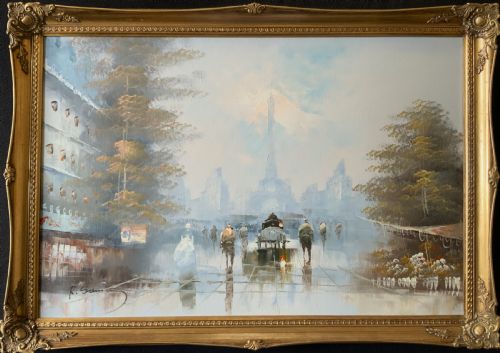
An impressionist street scene painting captures the kinetic energy of urban life through loose brushwork and vibrant light.
Impressionist Street Scene Painting
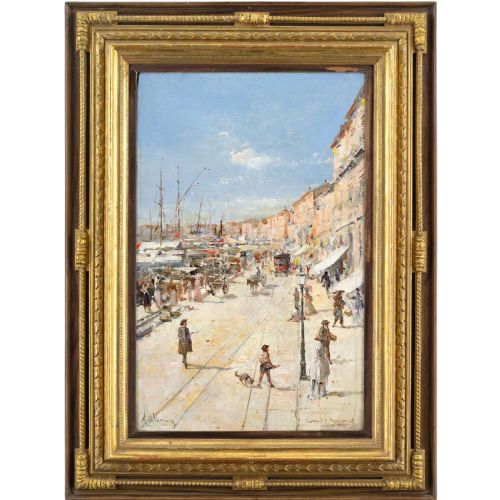
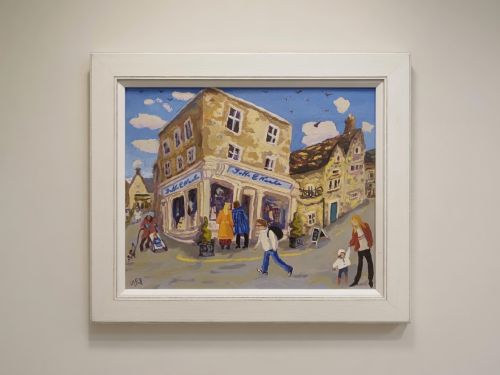
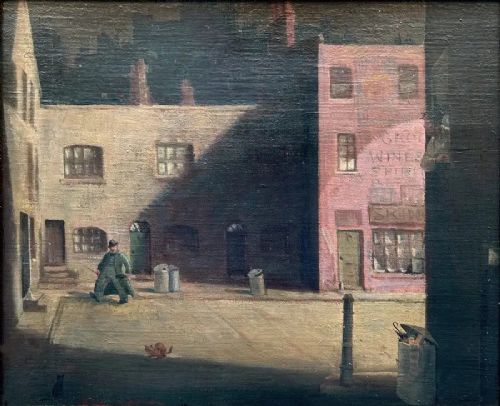
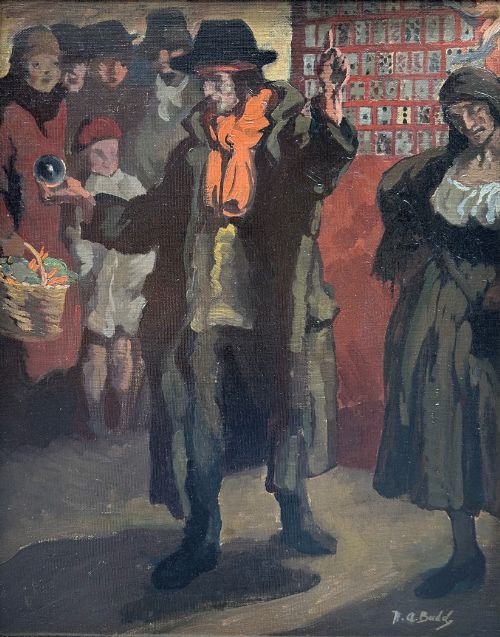
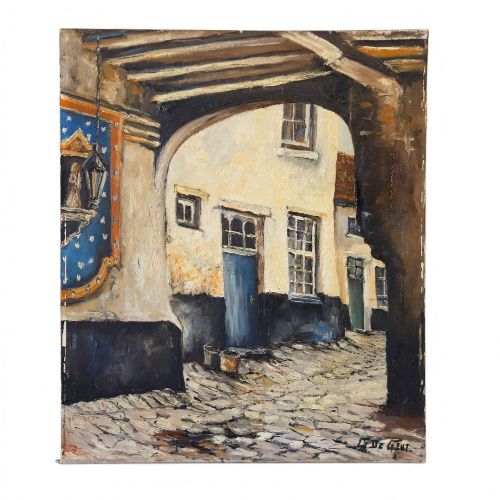
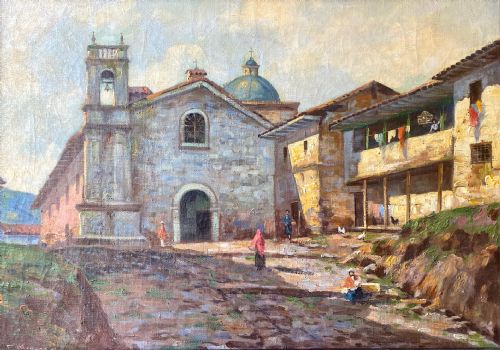
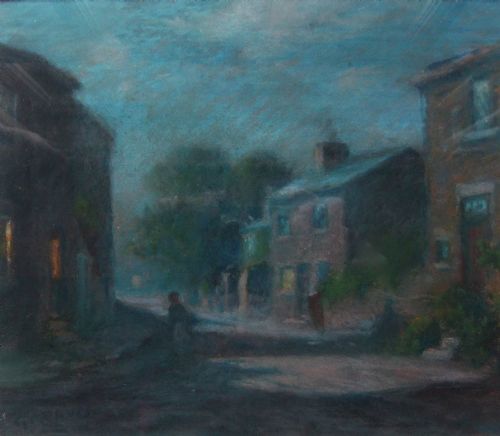
An impressionist street scene painting records the atmosphere and movement of town and city life through rapid brushwork and a focus on natural light. These works range from late nineteenth century European compositions to mid-century British and Latin American townscapes.
The version most commonly met on this page is the oil on canvas cityscape depicting Parisian boulevards, regional town squares, or provincial markets. Such pieces often measure on a large scale and arrive housed in vintage gilt wood frames.
How They Were Made
Artists apply oil paint directly to canvas, wood panels, or heavy paper support using visible, expressive strokes that prioritise light and mood over strict architectural detail. Pastels and watercolours also appear, capturing similar transient effects on paper.
Surviving works frequently retain their original frames constructed from gilded wood or carved wood, which complement the tonal palette of the painted surface.
Listings feature works spanning from the nineteenth century through the mid-twentieth century, executed in oil, watercolour, and pastel.
What Varies In Quality
Quality rests upon the artist's handling of light and the convincing illusion of movement within the urban crowd. Stronger examples integrate figures and architecture harmoniously, whereas weaker works rely on rigid repetition.
The integration of the frame also matters, as period gilt wood mouldings selected by the artist or contemporary to the canvas enhance the visual depth of the scene.
Augusto Alberici·Lucy Pratt·Francisco Sancha·Herbert Ashwin Budd·L. De Gent·Albert Ludovici Jnr·Caroline Burnett·William Greaves·Victor Gabriel Gilbert·Merio Ameglio·Cecil R. Doyly-John·Eduard Leon Cortes·Rowland Henry Hill·V. Zirakian·Donald Mcintyre·Cuthbert Crossley·Donald Wood·Paul Paul·Matthew Hale·Christiaan Pieter Snyders·Letitia Marion Hamilton
The Impressionist Street Scene Painting Glossary
- Canvas
- A heavy woven fabric stretched across a wooden frame to serve as the primary support for oil paint. It provides a textured surface that holds thick pigment.
- Impressionism
- A nineteenth-century painting style characterised by relatively small, thin yet visible brush strokes and an emphasis on accurate depiction of light. Artists working in this manner often painted outdoors to capture shifting atmospheric conditions.
- Post-Impressionism
- A predominantly French art movement that developed from impressionism, extending its limitations while retaining its use of vivid colours and thick application of paint. Painters explored structural form and expressive content.
- Gilt Wood
- Wood carved and coated with a thin layer of gold leaf or metallic gold paint. This material frames many traditional and mid-century paintings.
- Genre Painting
- Pictorial representation of scenes from everyday life, involving ordinary people engaged in common activities. These works frequently depict markets, street cabs, and public squares.
Impressionist Street Scene Painting: Frequently Asked Questions
What is an impressionist street scene painting?
An impressionist street scene painting is an artwork that portrays public squares, boulevards, and town markets with an emphasis on changing light and atmospheric effects.
These compositions usually feature loose brushwork and capture the hustle and bustle of everyday urban life.
Where were these paintings made?
The pieces originate from various European and international art hubs, with strong representation from French, British, and Latin American locations.
Artists frequently painted scenes in cities like Paris and London, alongside regional towns in France, Italy, and Britain.
How do I date an oil painting?
Dating relies on stylistic evidence, artist lifespans, framing materials, and inscriptions left on the reverse of the canvas or board.
Mid-century works often display different framing techniques and colour palettes compared to late nineteenth-century productions.
How should I display an antique painting?
Antique paintings on canvas require stable indoor environments away from direct sunlight and extreme temperature fluctuations.
Displaying them in their original wood or gilt frames maintains the historical context of the artwork.