


British Realism Artwork
British realism artwork captures everyday life and landscape with sincerity, ranging from Victorian social commentary to mid-century regional views.
British Realism Artwork
When you search for british realism artwork, you encounter oil paintings spanning the Victorian period through to works later than nineteen sixty. The subjects bridge domestic scenes, rural toil, and urban streets, recorded with direct observation.
Victorian social realism and later modern interpretations dominate the pieces available here. The form is predominantly oil on canvas or board, framed in gold leaf wood.
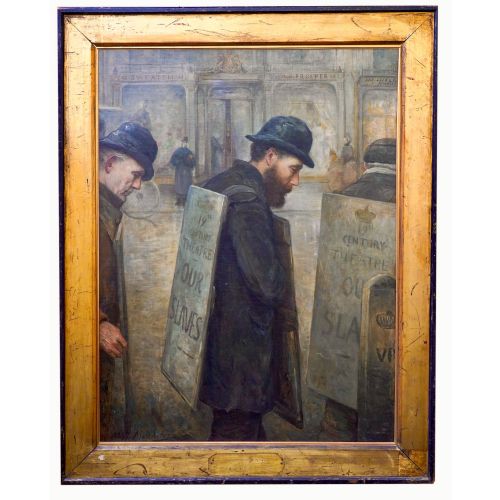
Works stretch from nineteenth century genre paintings depicting street sellers and readers to twentieth century northern school landscapes and portraits.
Materials and construction
Artists painted in oil upon prepared canvas stretched across wood or mounted to sturdy board. Pigments were applied to build up texture and light in these realist compositions.
Many of the canvases sit within period gold leaf wood frames that complement the depth of the oil paint. Wood stretchers provide the structural support behind the fabric.
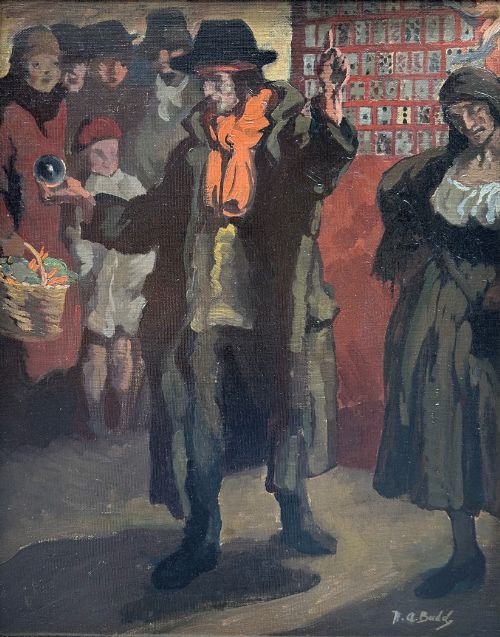
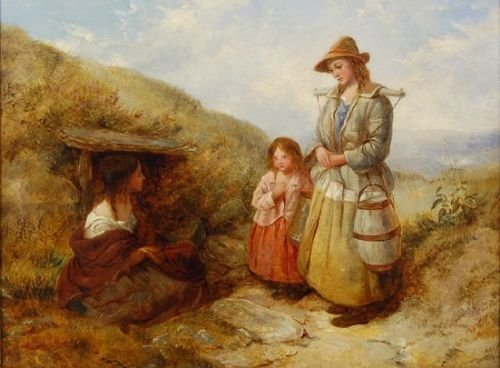
Several milkmaids and a fortune teller populate these canvases, proving everyday errands made prime material for Victorian painters.
Assessing quality
Quality rests in the handling of light, brushwork, and the conviction of the narrative captured in the paint. Works that convey psychological depth or precise social observation stand apart.
The integrity of the original canvas support and the harmony of the framing contribute to the enduring presentation of the piece.
Felix Stone Moscheles·Herbert Ashwin Budd·Peter Newcombe·Ralph Hedley·Peter Jackson·Frank Shenton·Arthur Spooner·Edward John Cobbett·George Harcourt Sephton
The British Realism Artwork Glossary
- Social realism
- Art depicting the everyday conditions of the working classes and poor, aiming to draw attention to social and political issues. This approach defines several key Victorian pieces.
- Genre painting
- The pictorial representation of scenes from everyday life, typically involving ordinary people in domestic or public settings. These form a major part of the realist tradition.
- Stretcher
- A wooden framework upon which canvas is fastened to keep it taut for painting. It sits unseen behind the edge of the artwork.
- Northern school
- A grouping of artists associated with the industrial and urban landscapes of northern England. Their work captures regional life with direct honesty.
British Realism Artwork: Frequently Asked Questions
What subjects appear in these paintings?
The subjects range from Victorian street sellers and domestic reading scenes to northern school landscapes and rural field work. Figures and everyday settings form the core of the imagery.
Industrial towns and quiet meadows also feature, reflecting the varied regional focus of British artists across different decades.
How do I date a piece?
Dating relies on recorded artist lifespans, inscribed years on the canvas, and stylistic markers tied to specific periods. Victorian pieces often carry narrative weight and detailed figural work.
Later mid-century works shift towards broader brushwork and regional landscape views, aligning with twentieth century modern movements.
What surfaces were used?
Artists used oil paint applied to canvas or board. The fabric was typically secured over a wood stretcher to maintain tension.
Gold leaf wood frames frequently accompany these works, providing a finished boundary that often dates alongside the painting.
Where were these artists active?
Makers worked across various regions of Britain, from urban centres to rural hamlets and northern industrial towns. Their surroundings dictated the specific character of their realist scenes.
Local industries, street life, and nearby countryside provided the primary inspiration for their compositions.