
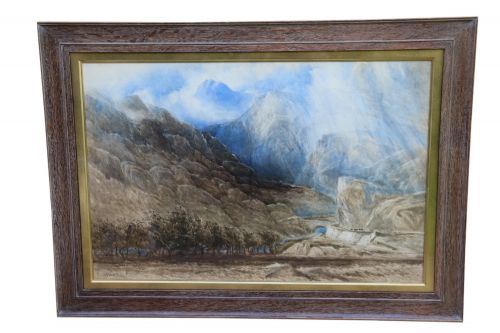


Oak Framed Watercolour
An oak framed watercolour brings together transparent pigment, paper, and timber moulding to create a wall piece that has survived from the nineteenth or twentieth century.
Oak Framed Watercolour
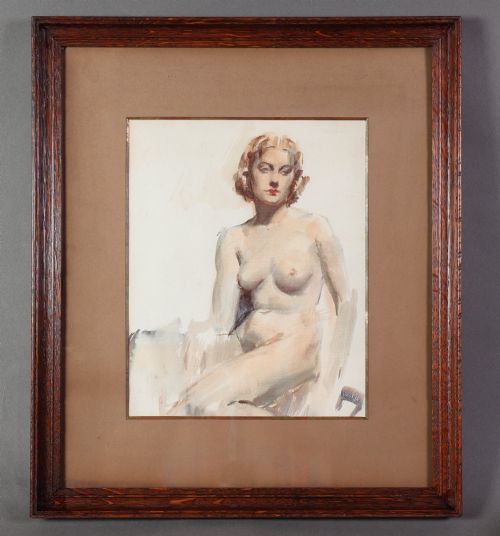
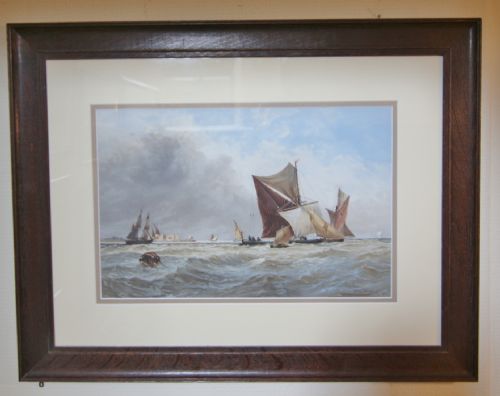
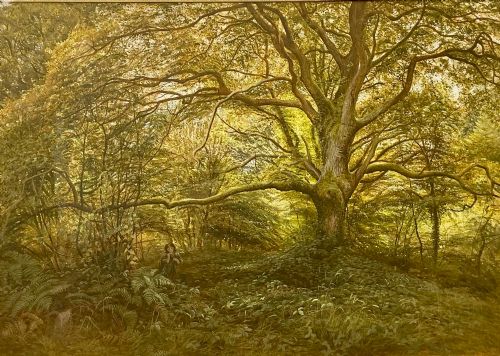
When you search for an oak framed watercolour, you encounter original paintings executed on paper using water-soluble media, preserved within wooden housings. The examples found here span the nineteenth century, the Edwardian era, and the mid-twentieth century, encompassing genres from marine scenes and rural landscapes to portraits and botanical studies.
The format pairs delicate works on paper with robust wooden mouldings that protect the margins and complement the subject matter. Most pieces arrive ready to hang, retaining glass and backing boards that have guarded the pigment against moisture and handling over decades.
How they were made
Artists painted on paper support using watercolour, gouache, or a combination of both mediums to achieve varying degrees of opacity and fine detail. These works were then protected beneath glass and mounted within timber frames constructed predominantly from oak.
Makers shaped the timber to suit the aesthetic of the period, sometimes pairing the wooden border with an inner giltwood mount or retaining the natural grain of the oak to frame the maritime or pastoral scene.
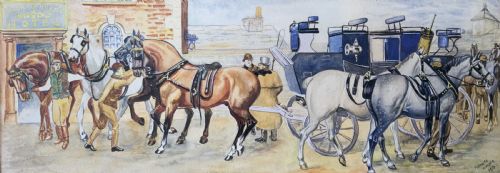
One gentleman is recorded with a wooden leg, immortalised in nineteenth-century naivety.
What varies in quality
Quality rests upon the skill of the hand that laid the pigment and the clarity of the composition, distinguishing works by named artists from anonymous studio productions. The handling of light, the precision of architectural or botanical forms, and the preservation of the paper support dictate the standing of an individual piece.
The integrity of the frame and mount also plays a part, as period mouldings that complement the painting without replacement indicate a cohesive, well-preserved survival from the era of its creation.
TB Hardy·Henry Martin Pope·Charles Gregory·Henry Charles Fox·Harry Wanless·Charles F Tunnicliffe·John Atkinson·Margaret Laing·Charles Johnson Payne Snaffles·AJ Thornton·Henry Birtles
The Oak Framed Watercolour Glossary
- Watercolour
- A painting method in which the paints are made of pigments suspended in a water-based solution. It relies on the white of the paper to provide luminosity through transparent washes.
- Gouache
- An opaque water-based paint that includes a white pigment filler, producing a heavier, denser finish than traditional watercolour. It often appears in highlights or details on nineteenth and twentieth-century sheets.
- Mount
- A cardboard or paper border placed inside the frame around the picture. It separates the paper from the glass to prevent moisture damage and guides the eye toward the artwork.
- Ebonised
- Wood finished to resemble ebony through a staining or painting process. This dark treatment creates a sharp contrast against gilt mounts or pale watercolours.
Oak Framed Watercolour: Frequently Asked Questions
Can I hang them in direct sunlight?
Keep watercolours away from direct sunlight to prevent the pigments from fading and the paper from yellowing over time.
Choosing a wall with indirect light ensures the delicate washes and gouache highlights retain their original tone and intensity.
Are the frames original?
Many pieces retain their period frames, particularly those featuring oak mouldings or ebonised finishes paired with gilt mounts from the nineteenth and early twentieth centuries.
Examining the fixings, backing boards, and corner joints helps determine whether the housing dates to the same period as the painting.
How are they secured inside?
Historic works are typically held within the wooden rebate by small panel pins or glazier's points, backed by card or thin timber boards.
Opening or altering these old fixings should be avoided unless necessary for conservation, as original seals protect the paper from dust and atmospheric pollutants.