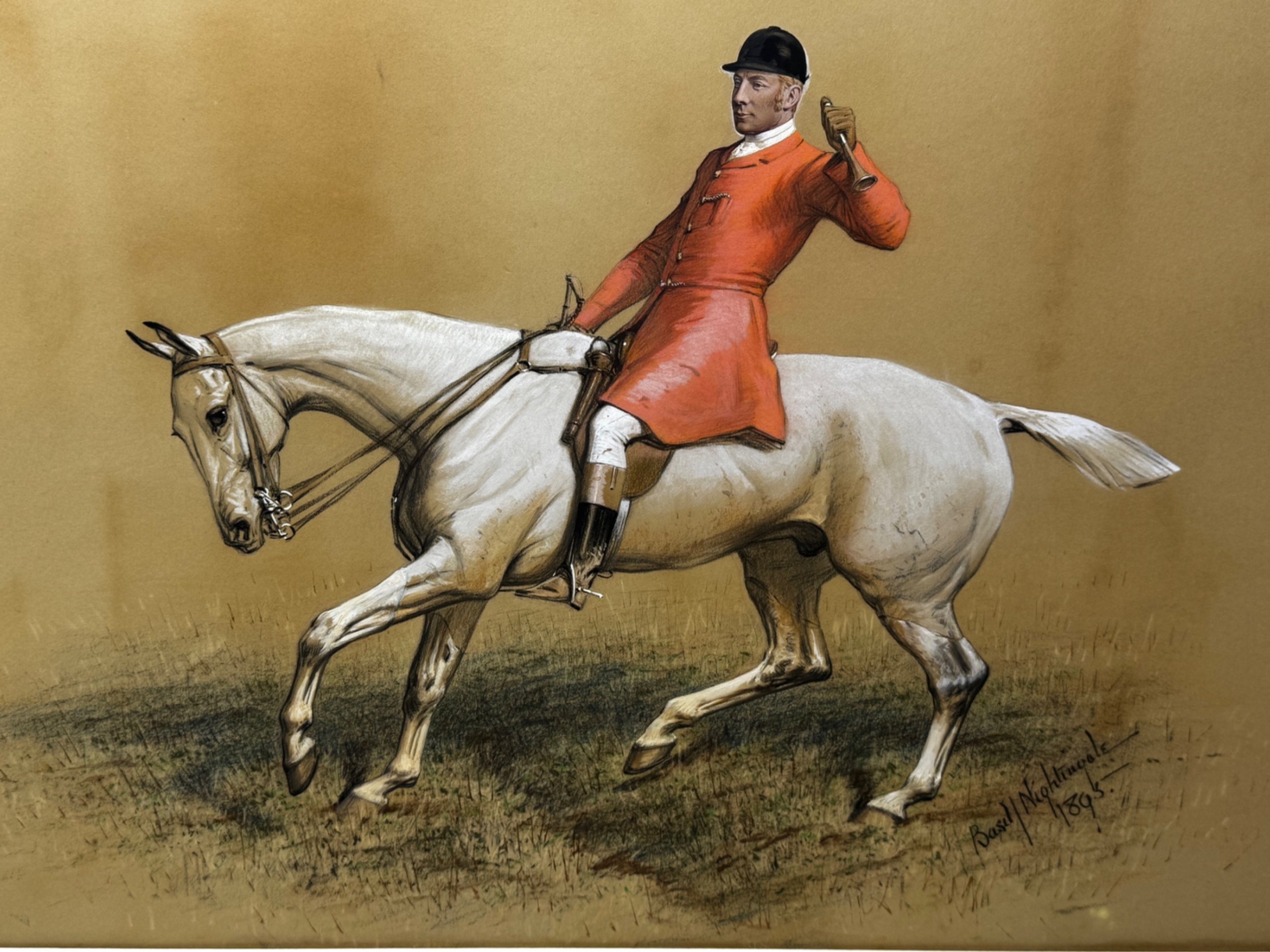
Cheshire Antiques Consultant Ltd has dated this Antique Equestrian Hunting Painting to the Victorian era.
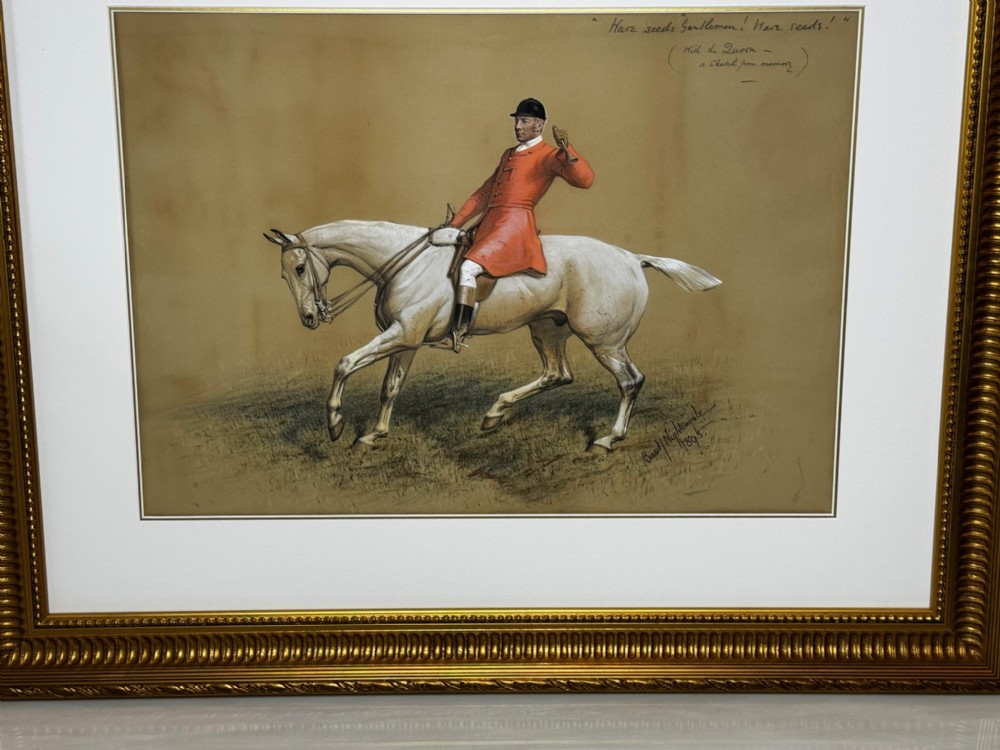
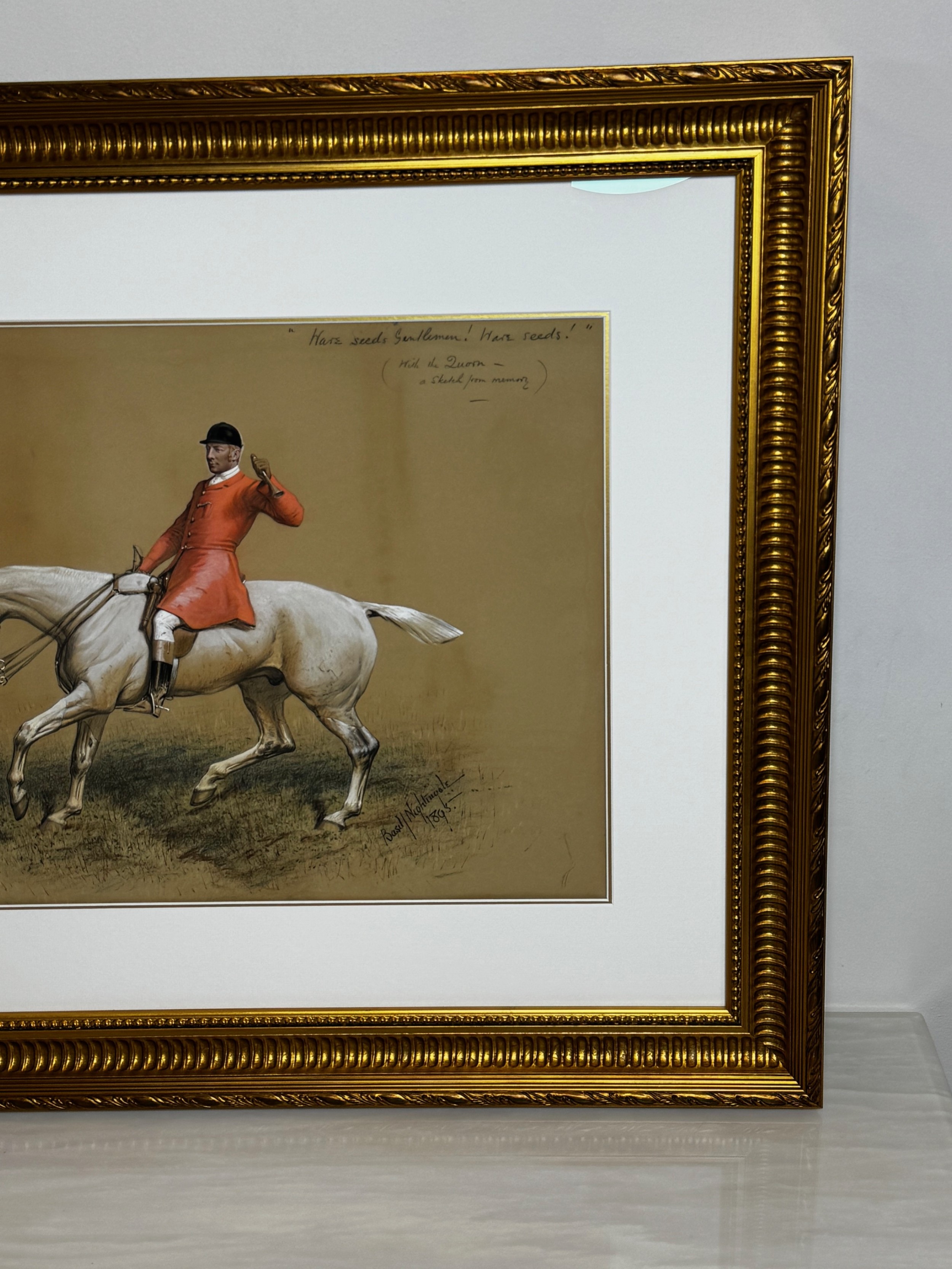
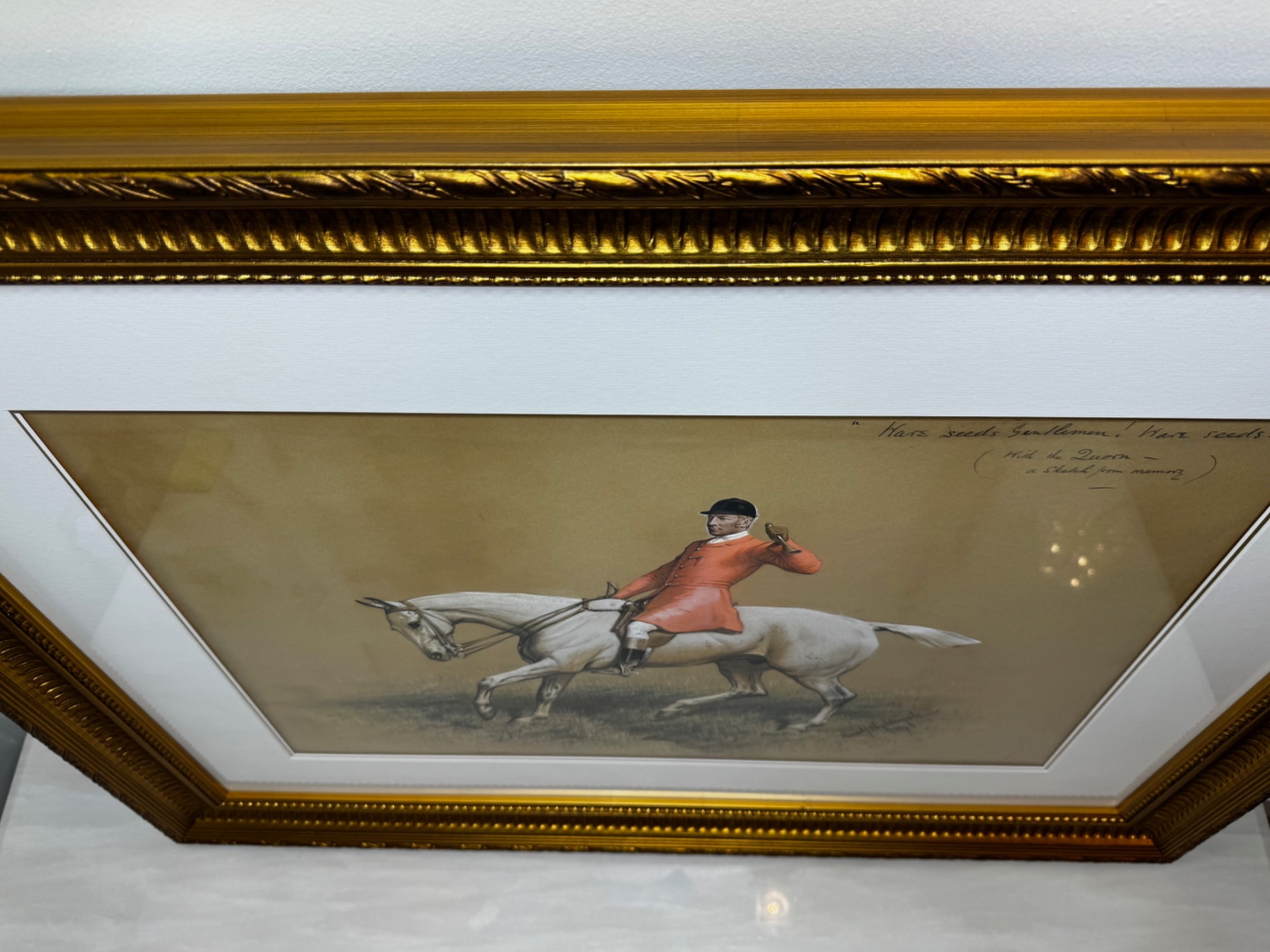
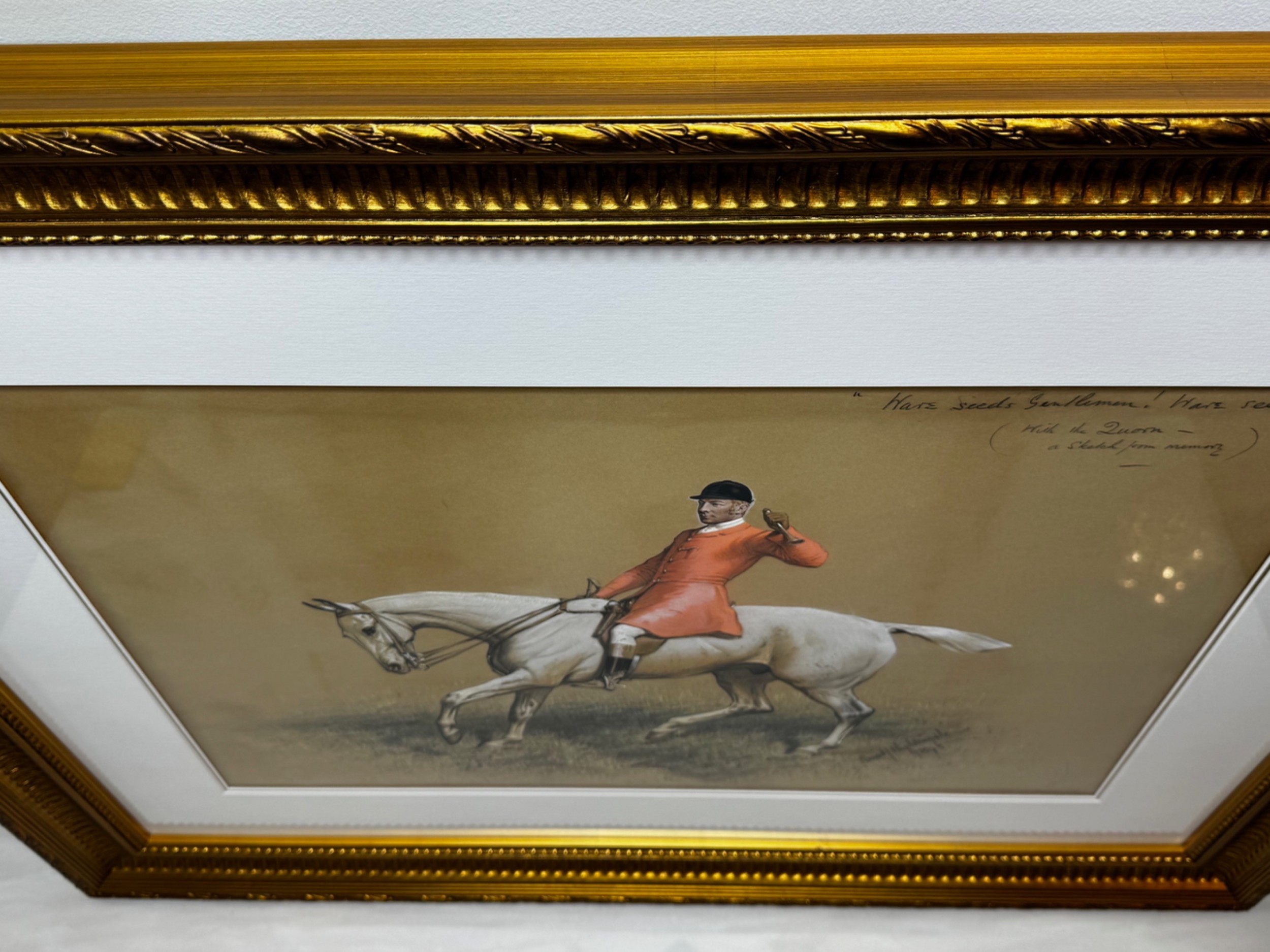
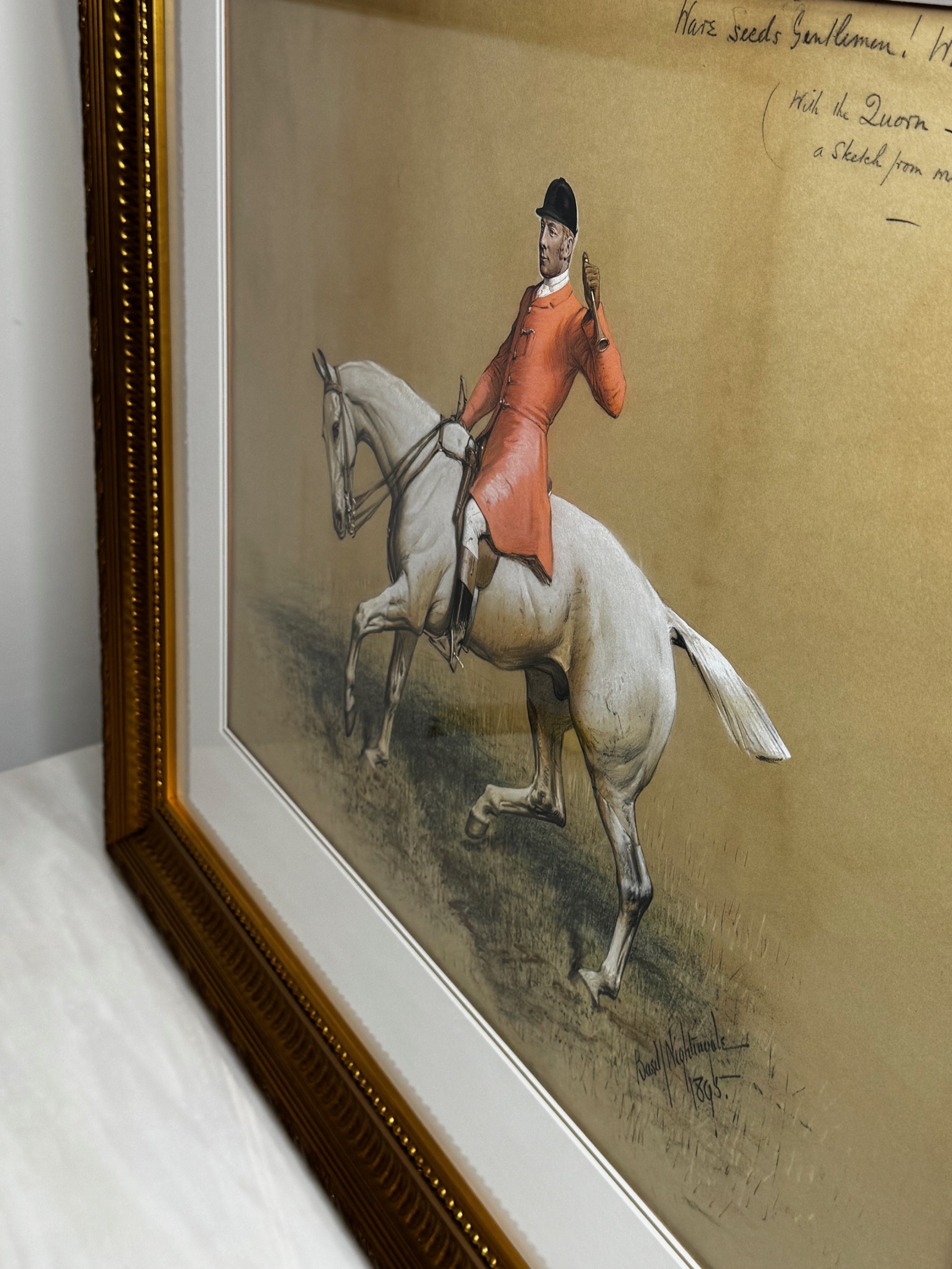
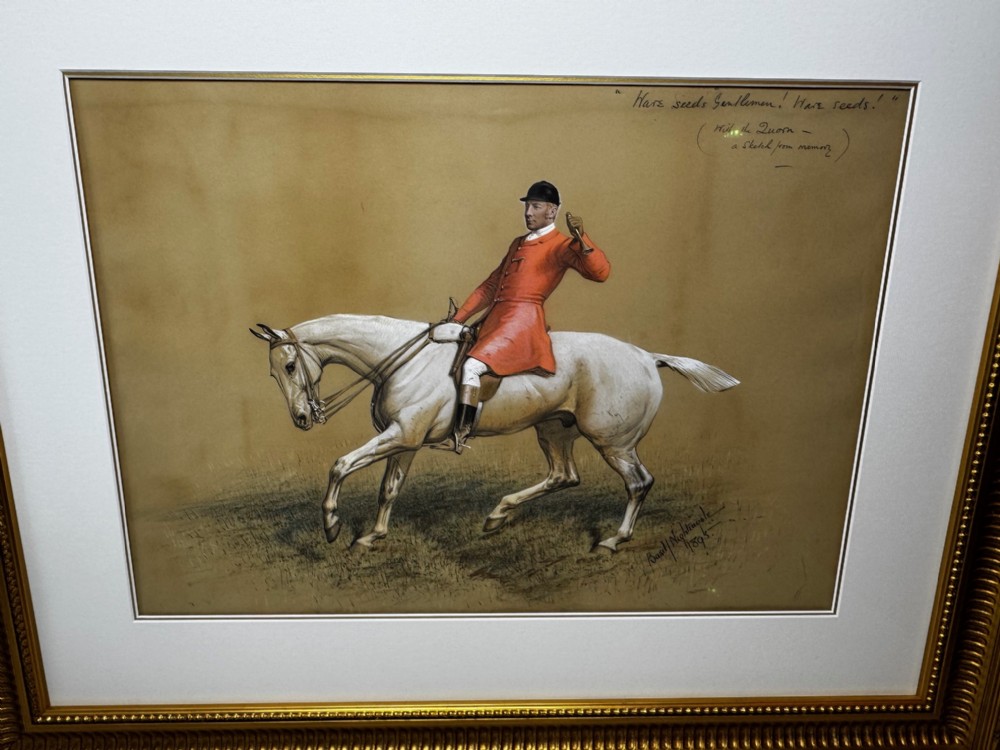
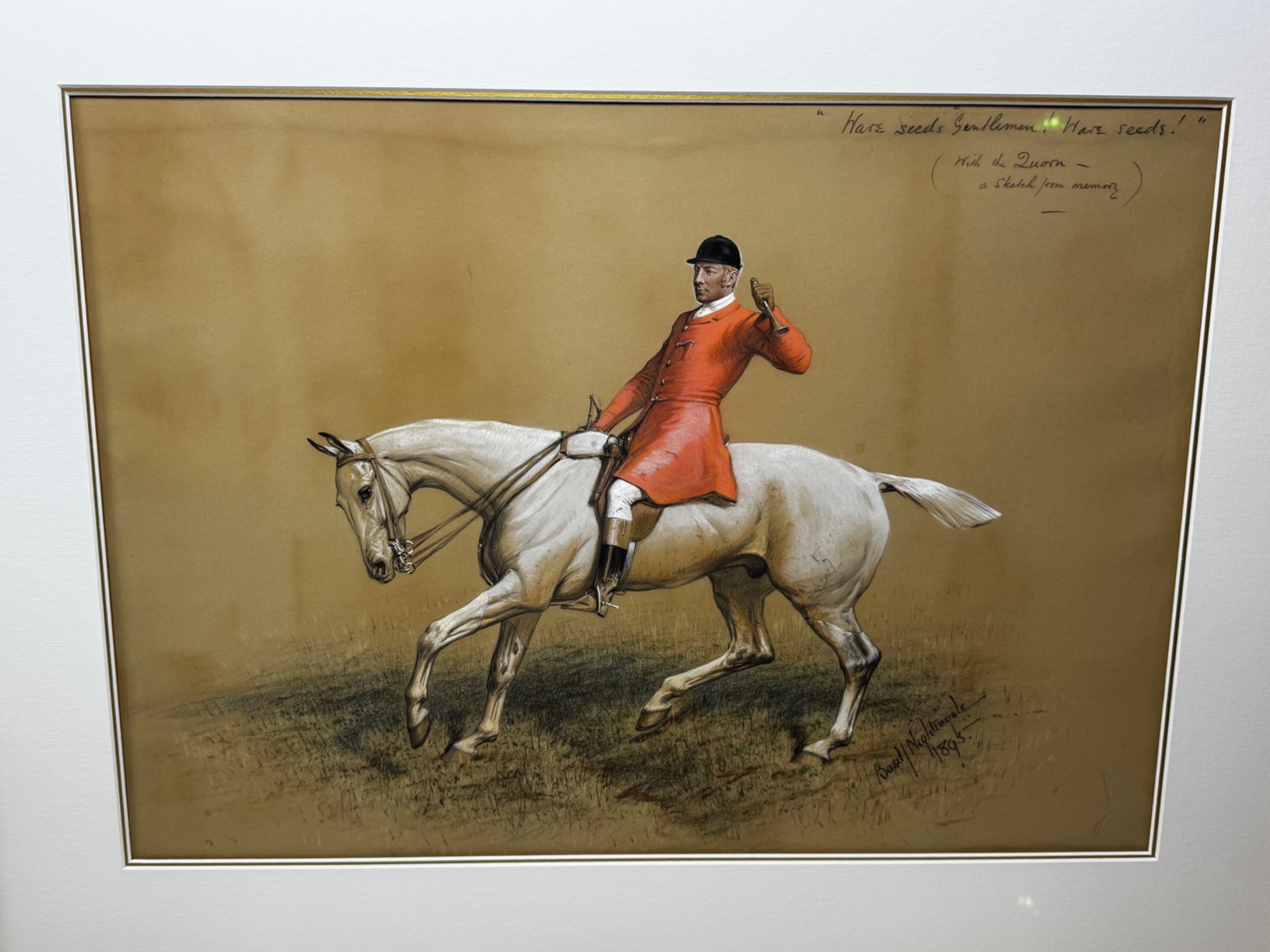
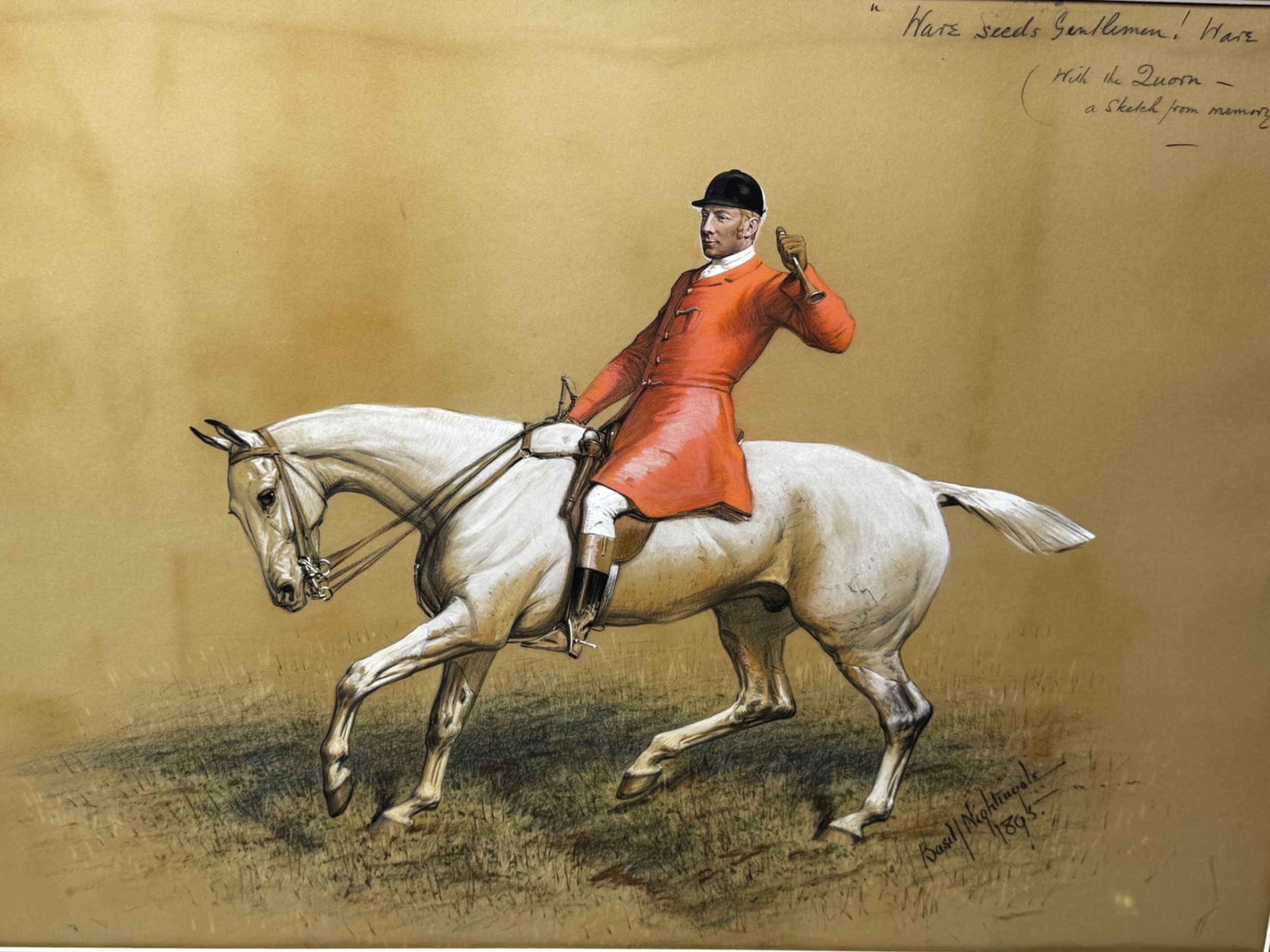
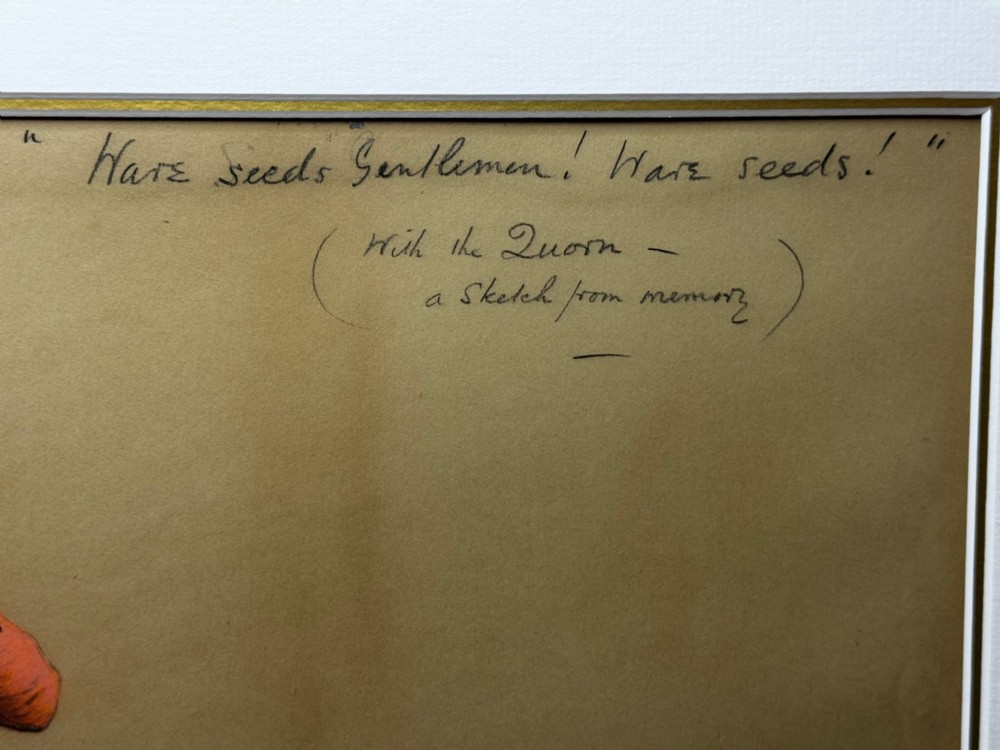
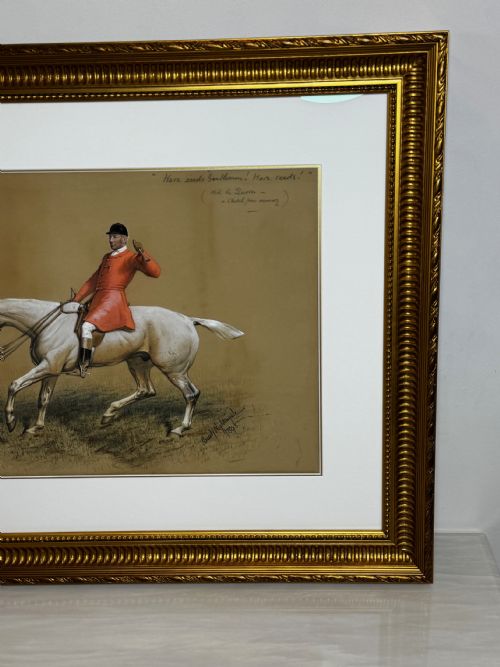
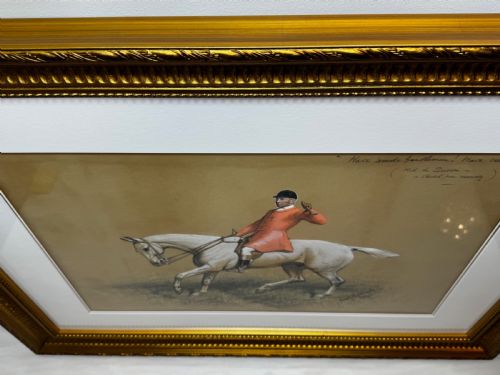
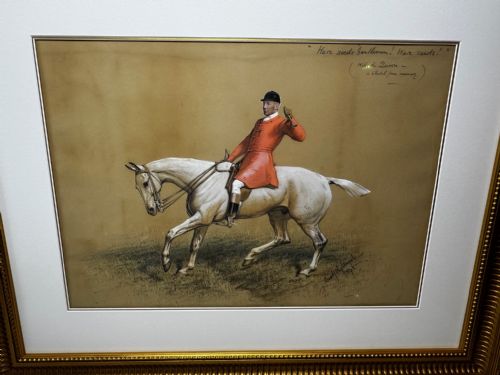
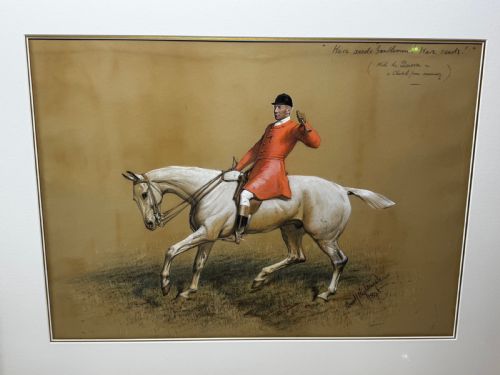
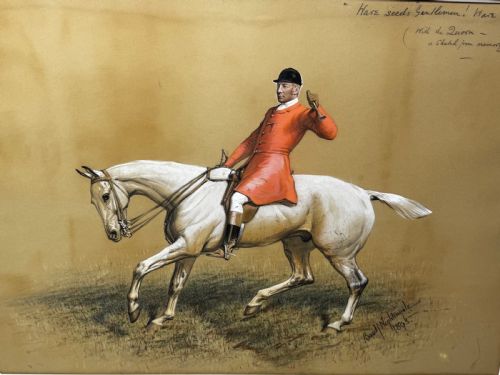
“Hare Seeds Gentlemen! Hare Seeds — With The Quorn Hunt”
Believed to Depict Tom Firr Up Grey Hunter Horse
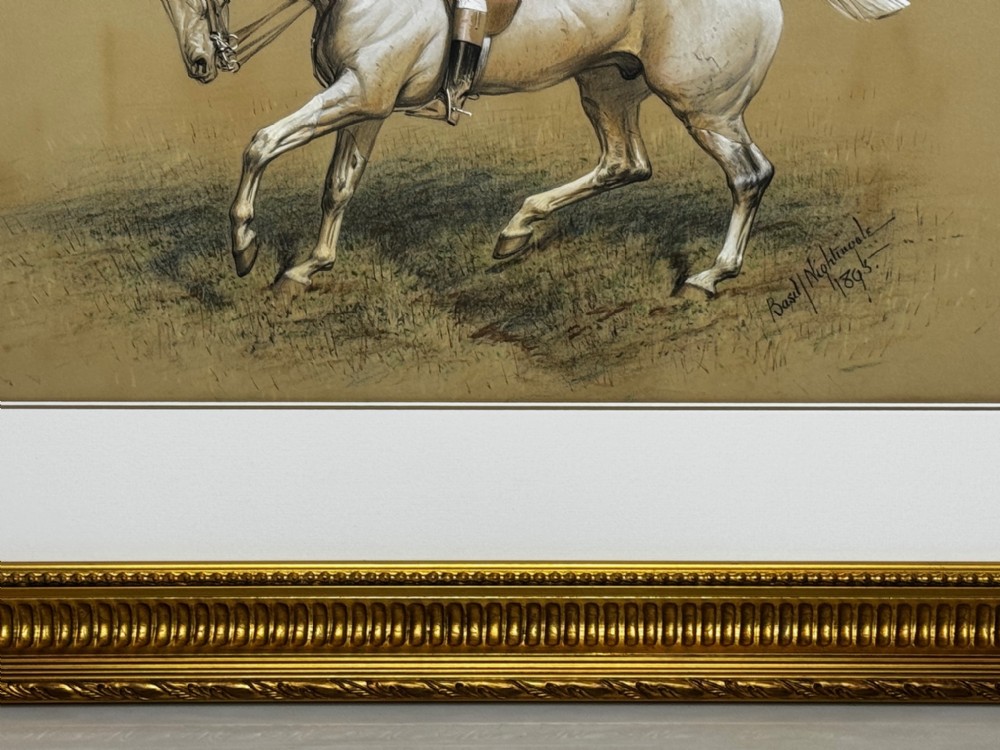
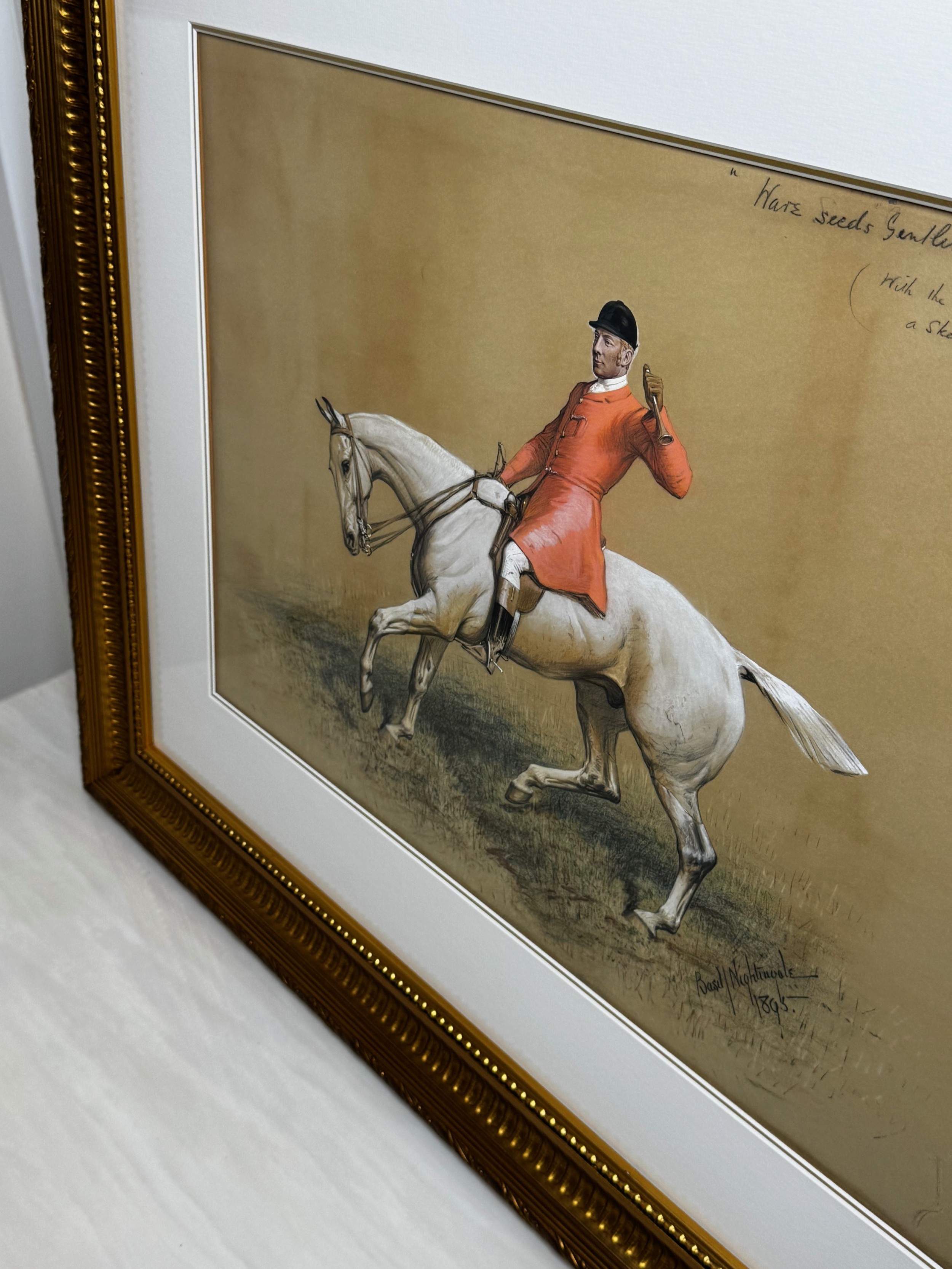
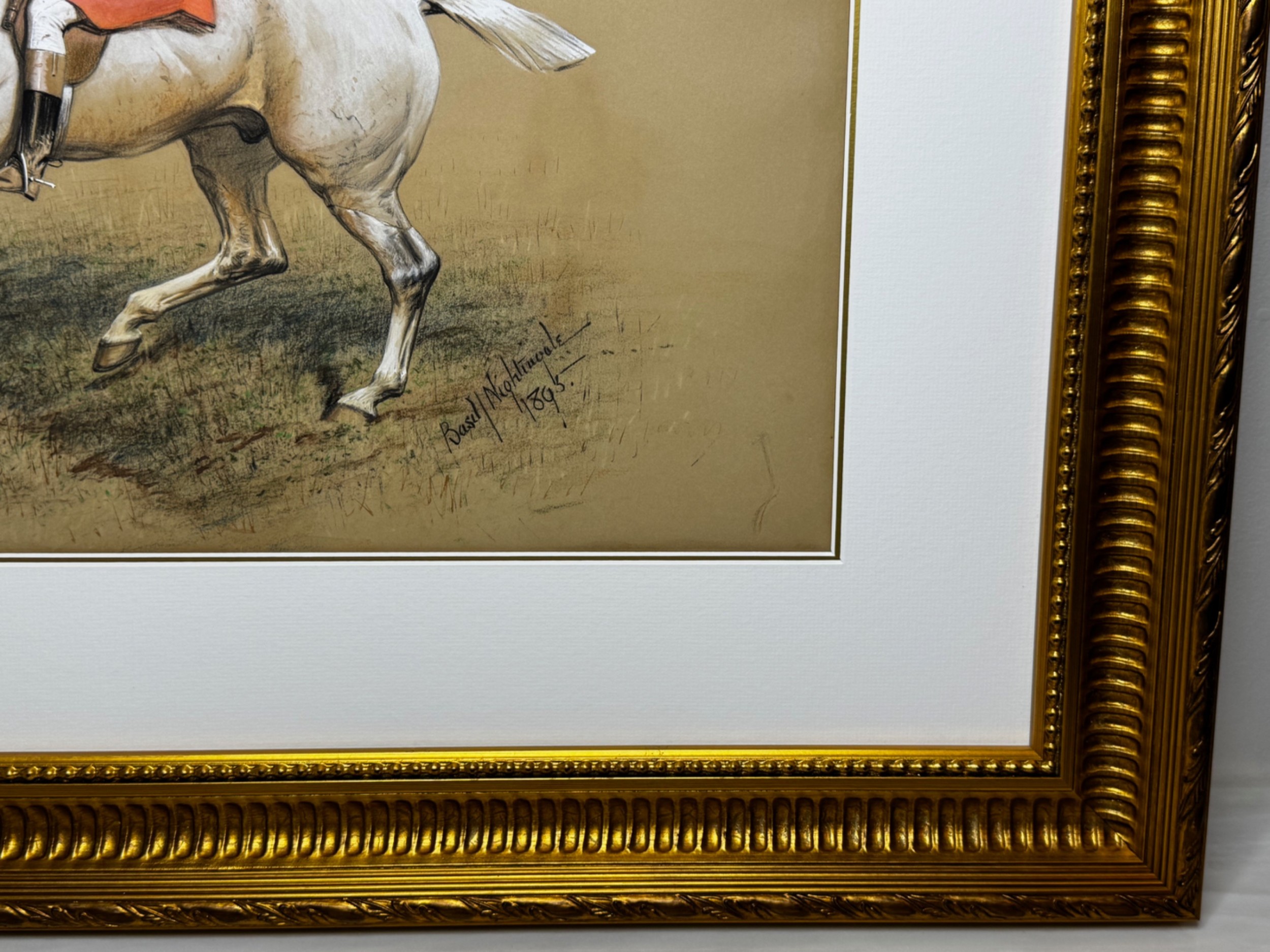
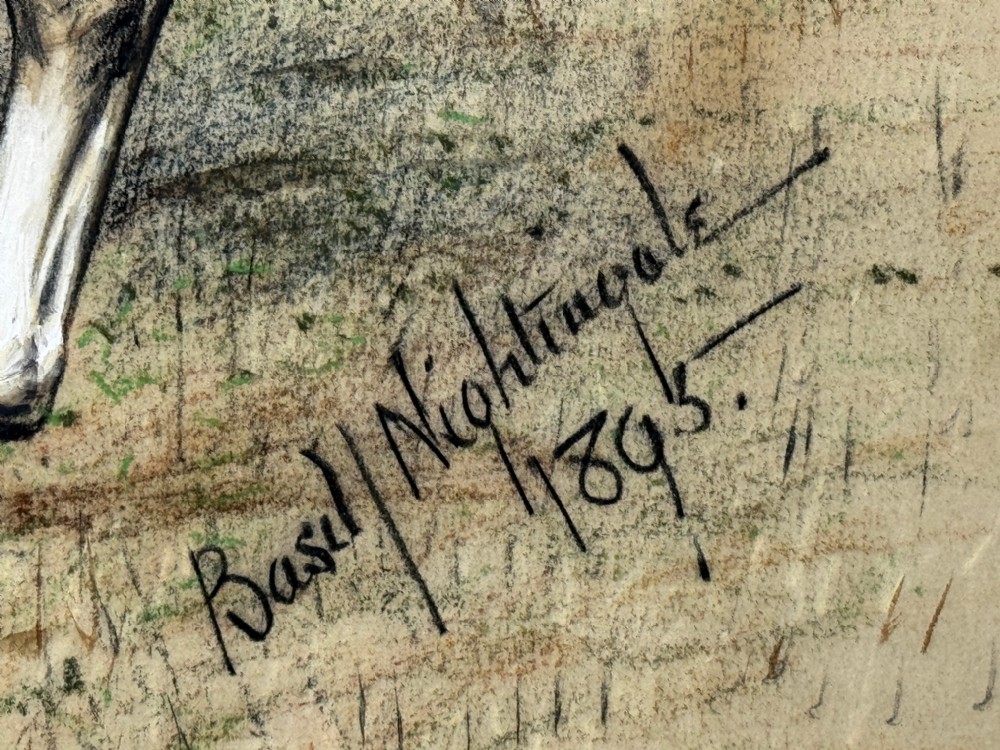
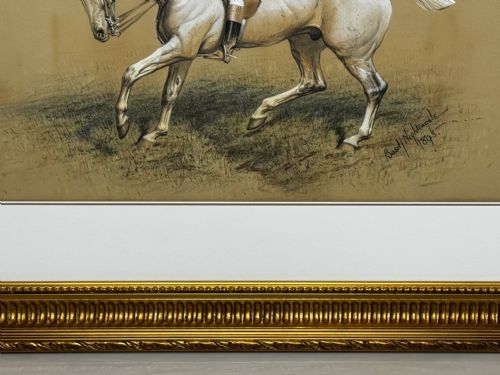
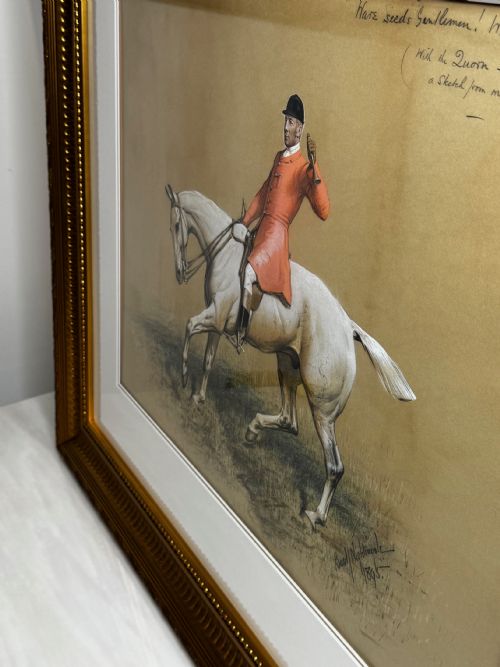
Basil Nightingale, signed and dated 1895
Subject & Medium
Watercolour, gouache and bodycolour heightened with white on paper.
Inscribed upper right:
“Hare Seeds Gentleman! Hare seeds!”
(With the Quorn — a sketch from memory)
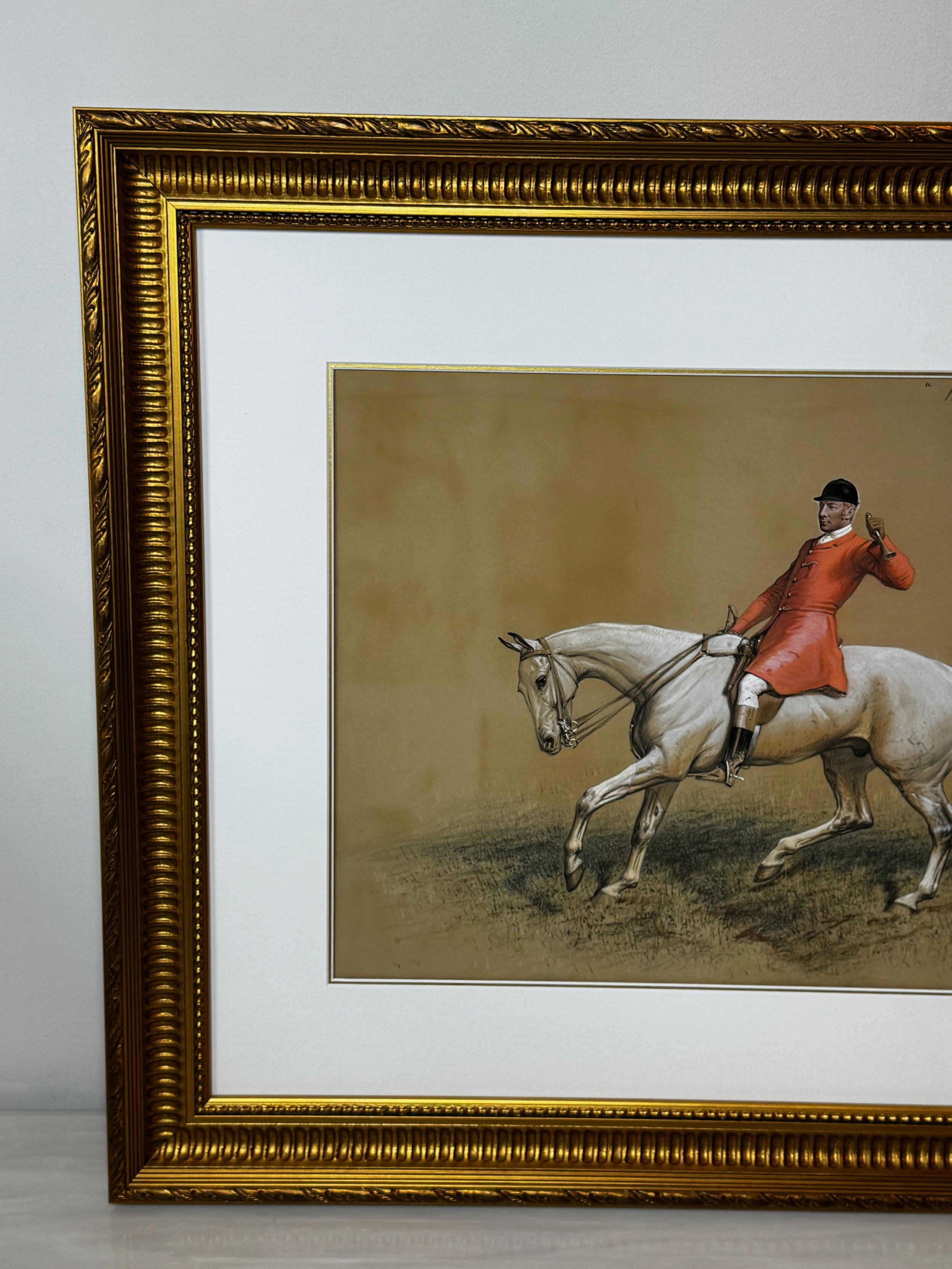
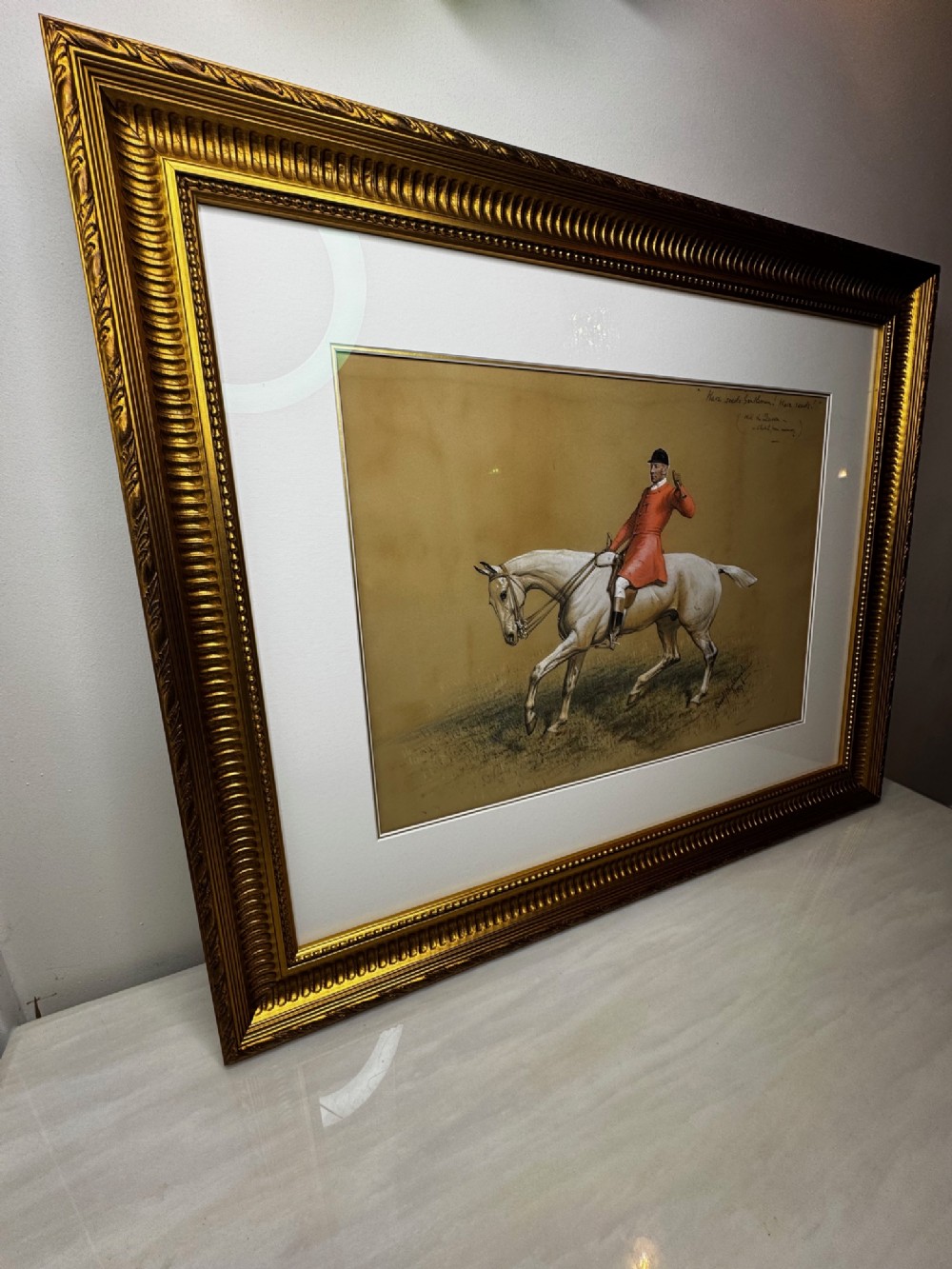
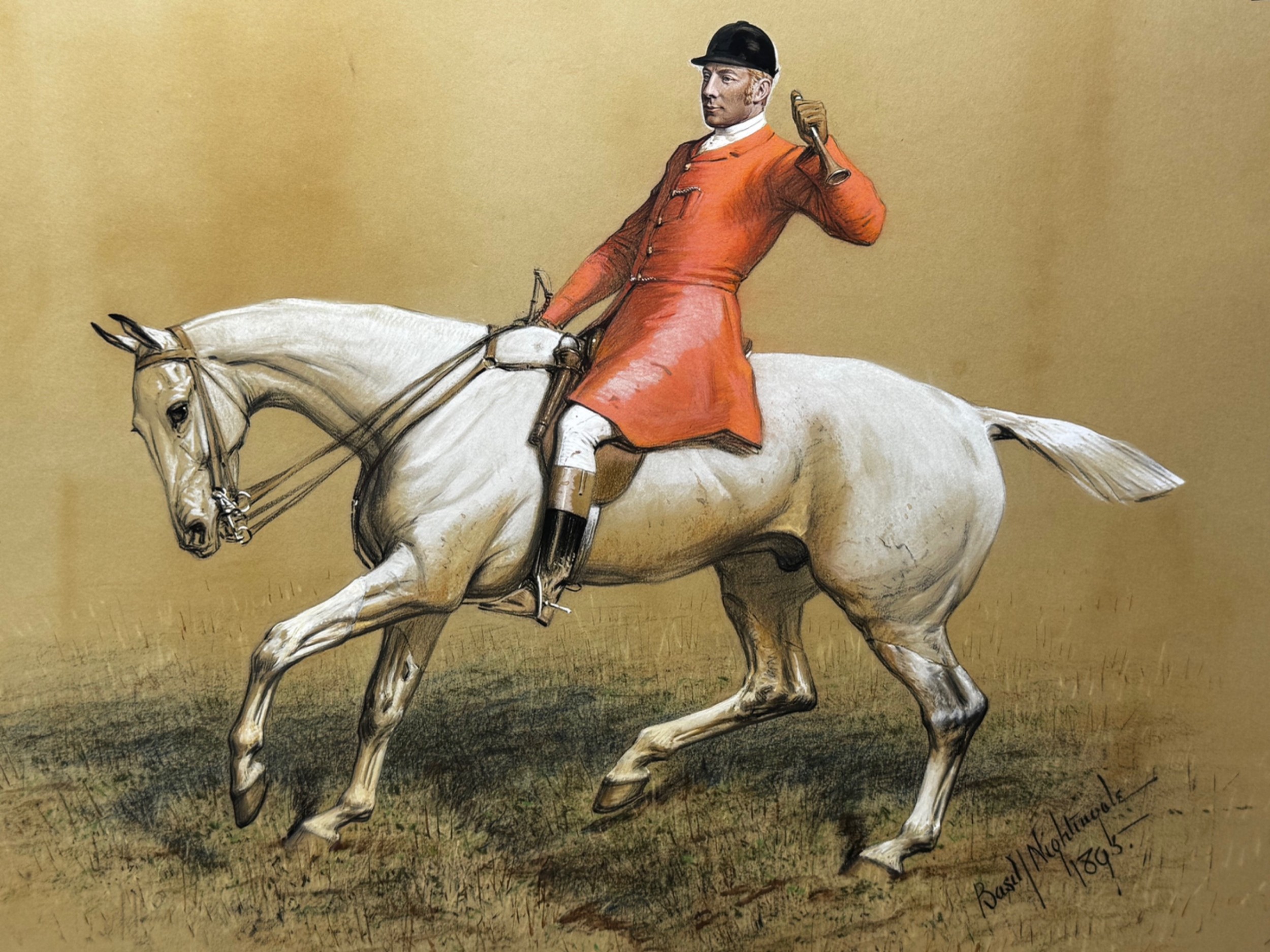
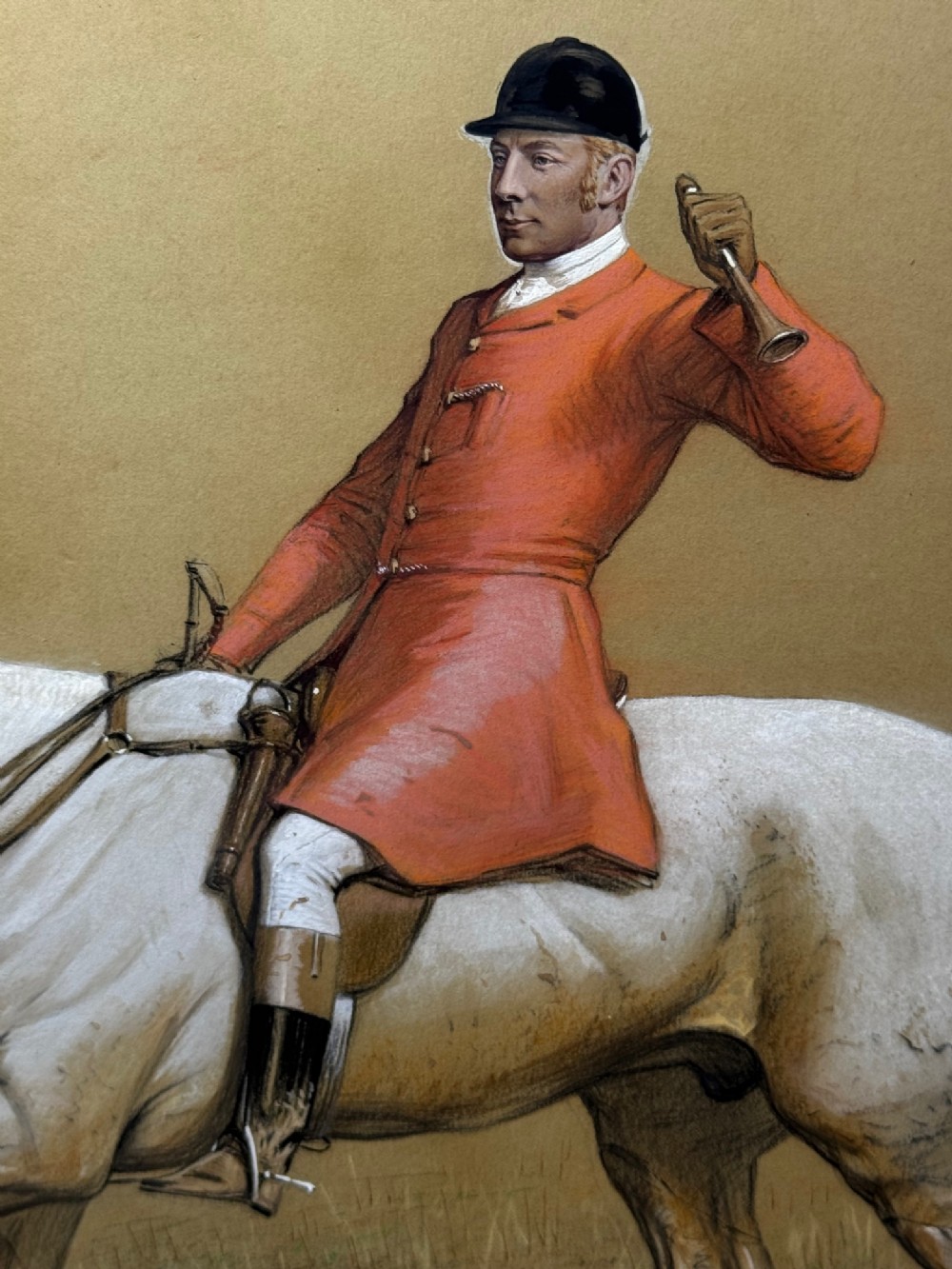
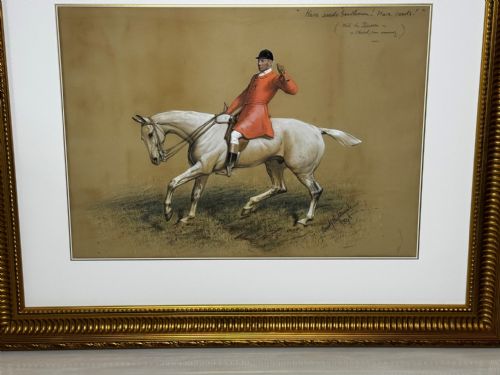
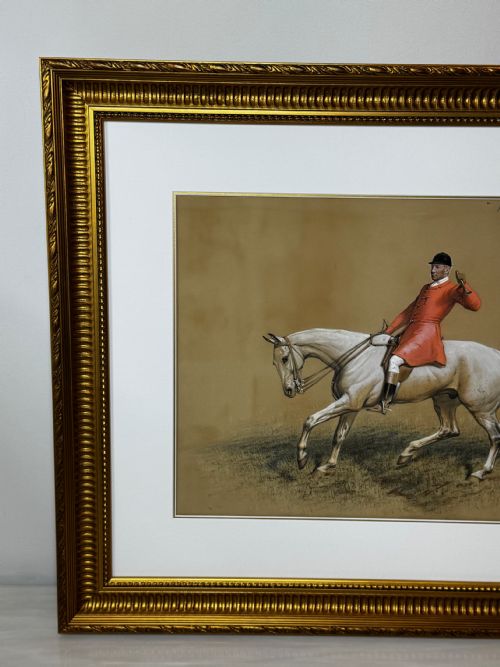
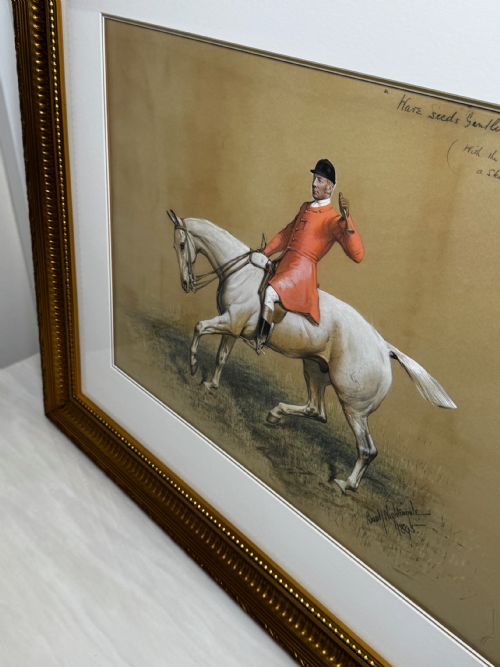
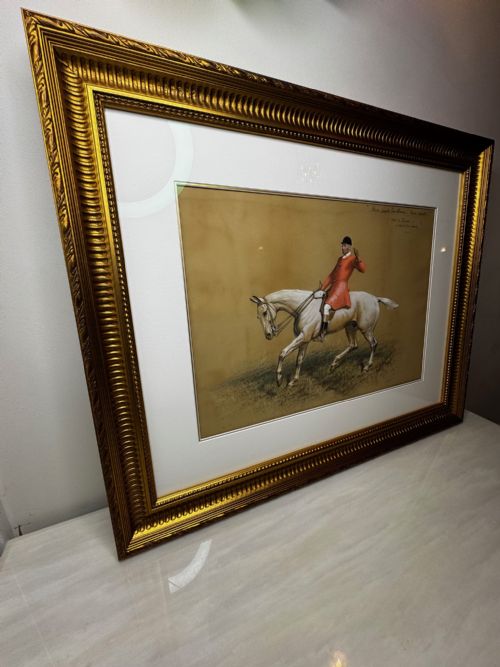
This finely executed composition depicts the mounted professional huntsman of the Quorn Hunt sounding his horn mid-call while seated upon a powerful grey hunter. The inscription records the traditional cry indicating that the hounds have briefly taken the scent of a hare rather than a fox — a subtle but telling interruption within the disciplined order of a fox hunt.
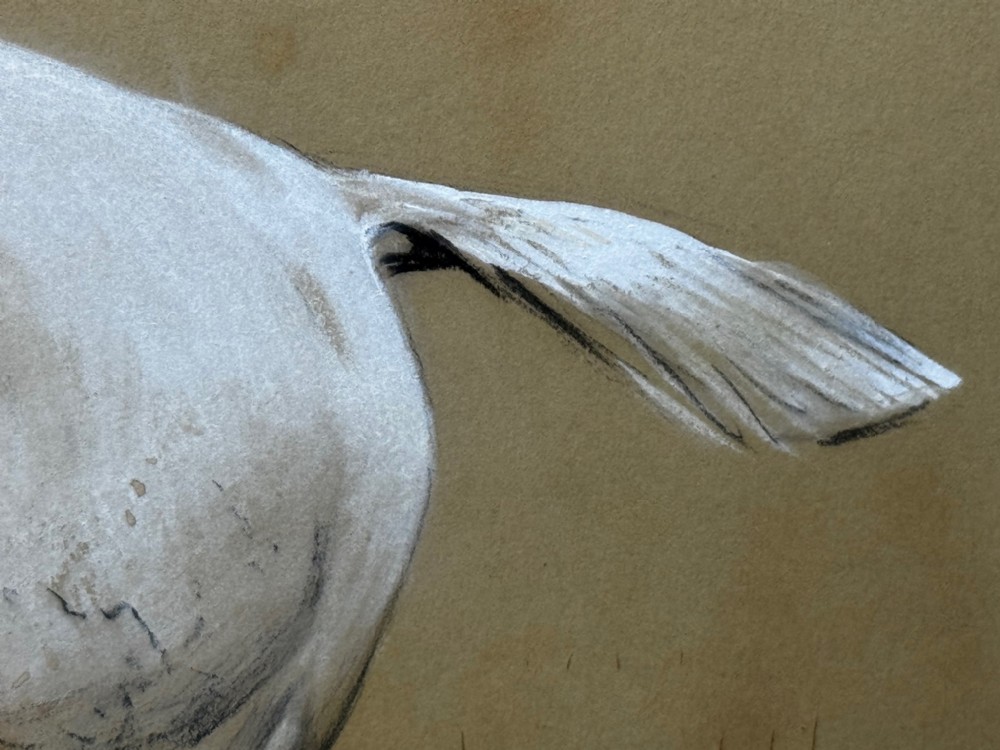
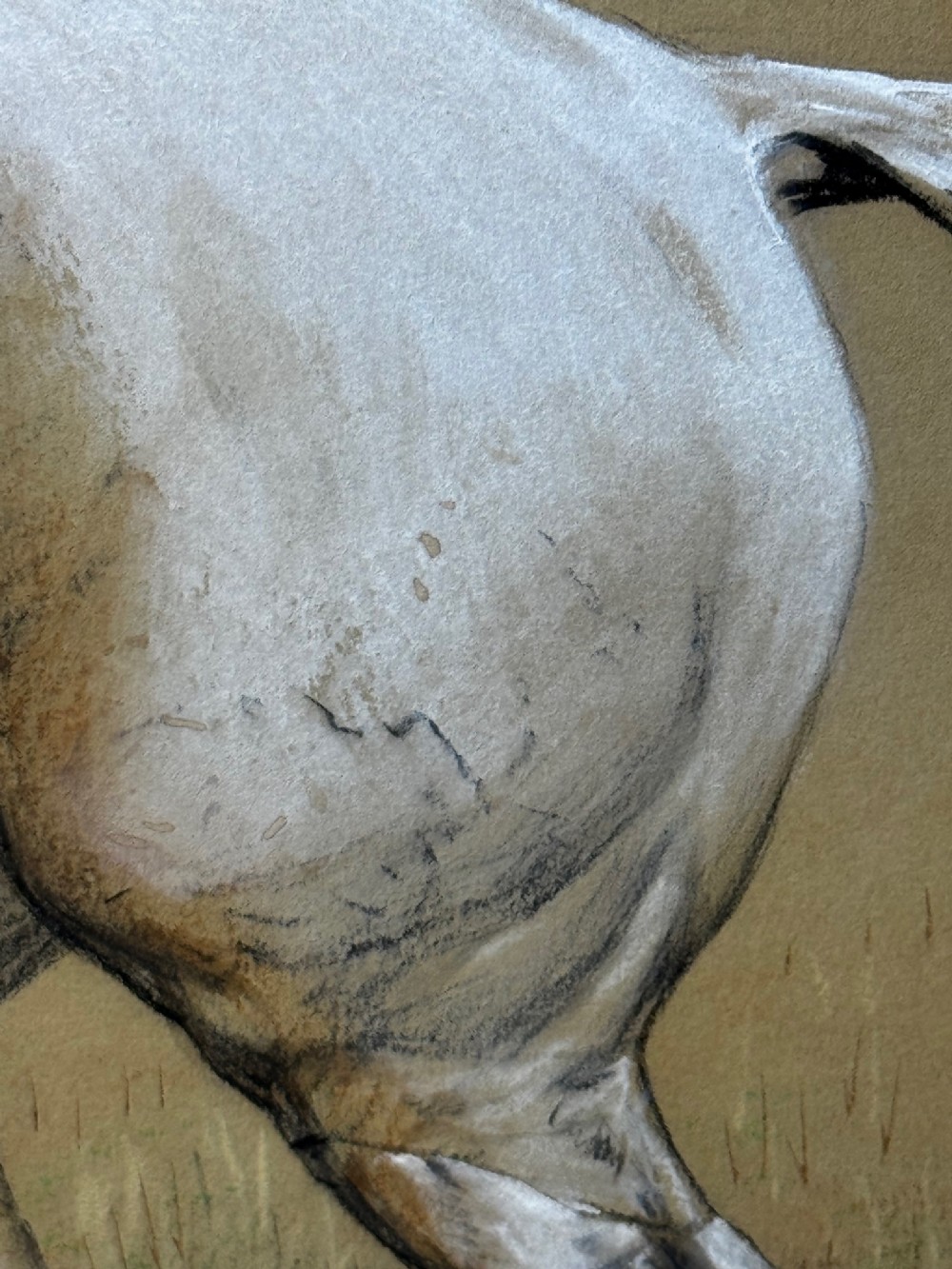
Executed with a combination of transparent watercolour and opaque gouache, heightened with white, the work achieves both luminosity and sculptural modelling rarely encountered in sporting works on paper.
Composition & Technique
The composition is architecturally balanced, with the rider occupying the central axis — a deliberate assertion of hierarchy consistent with the huntsman’s authority in the field.
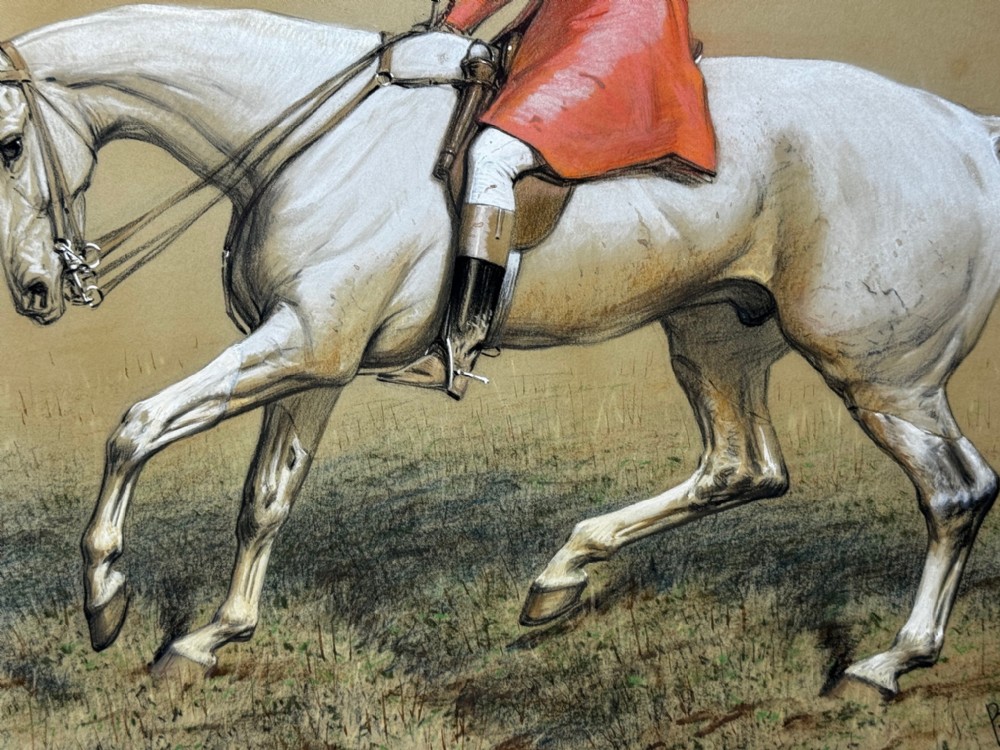
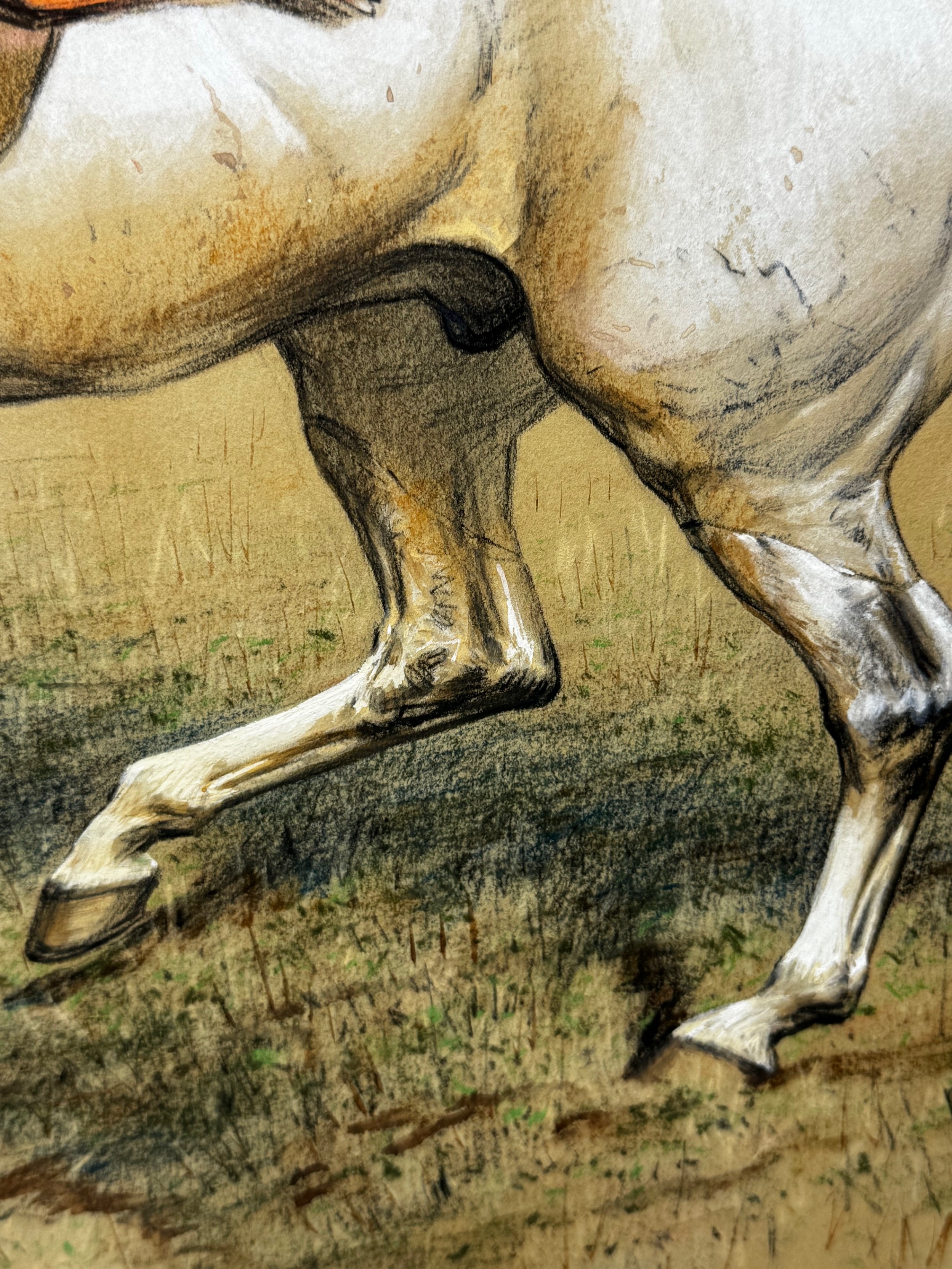
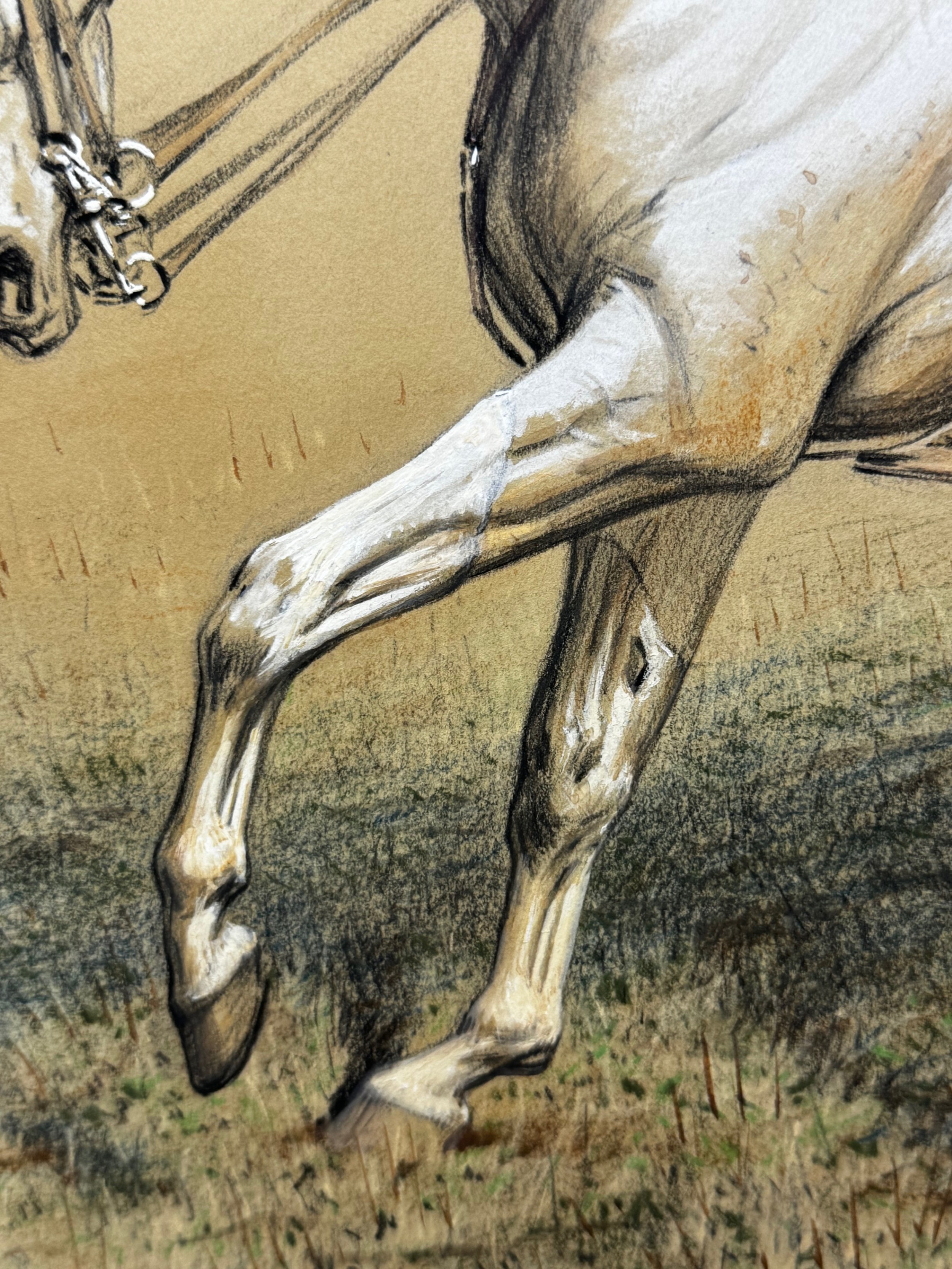
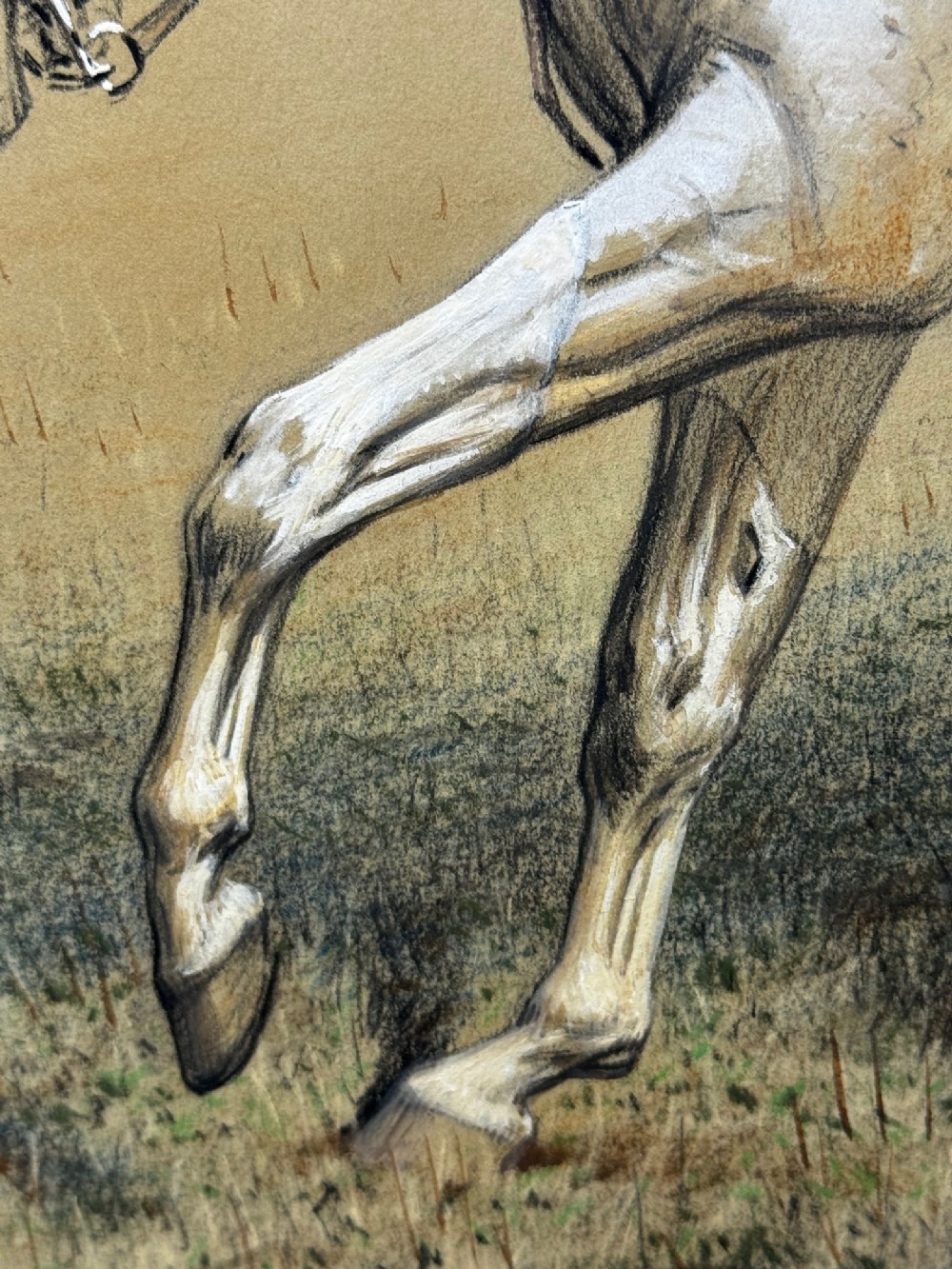
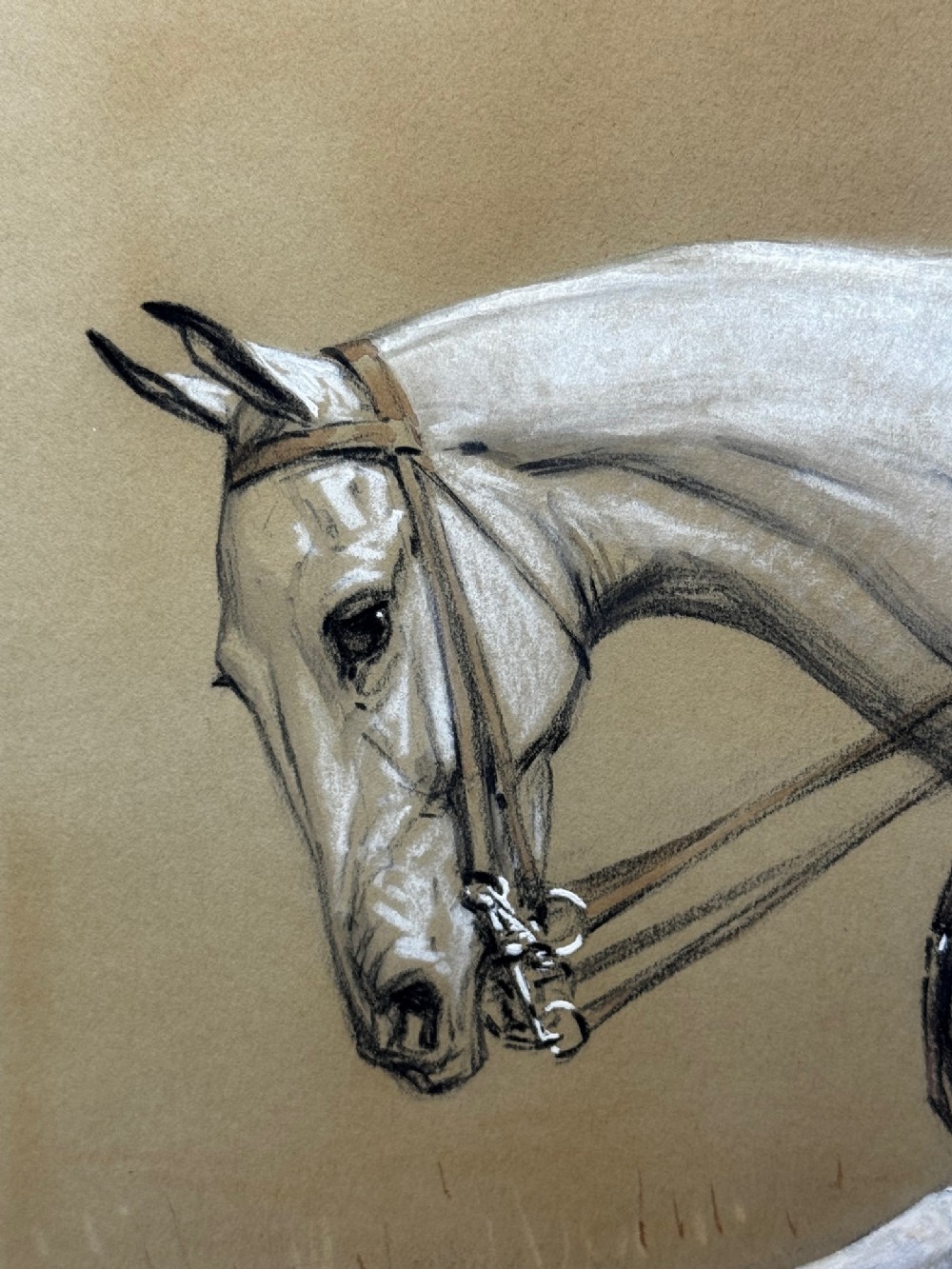
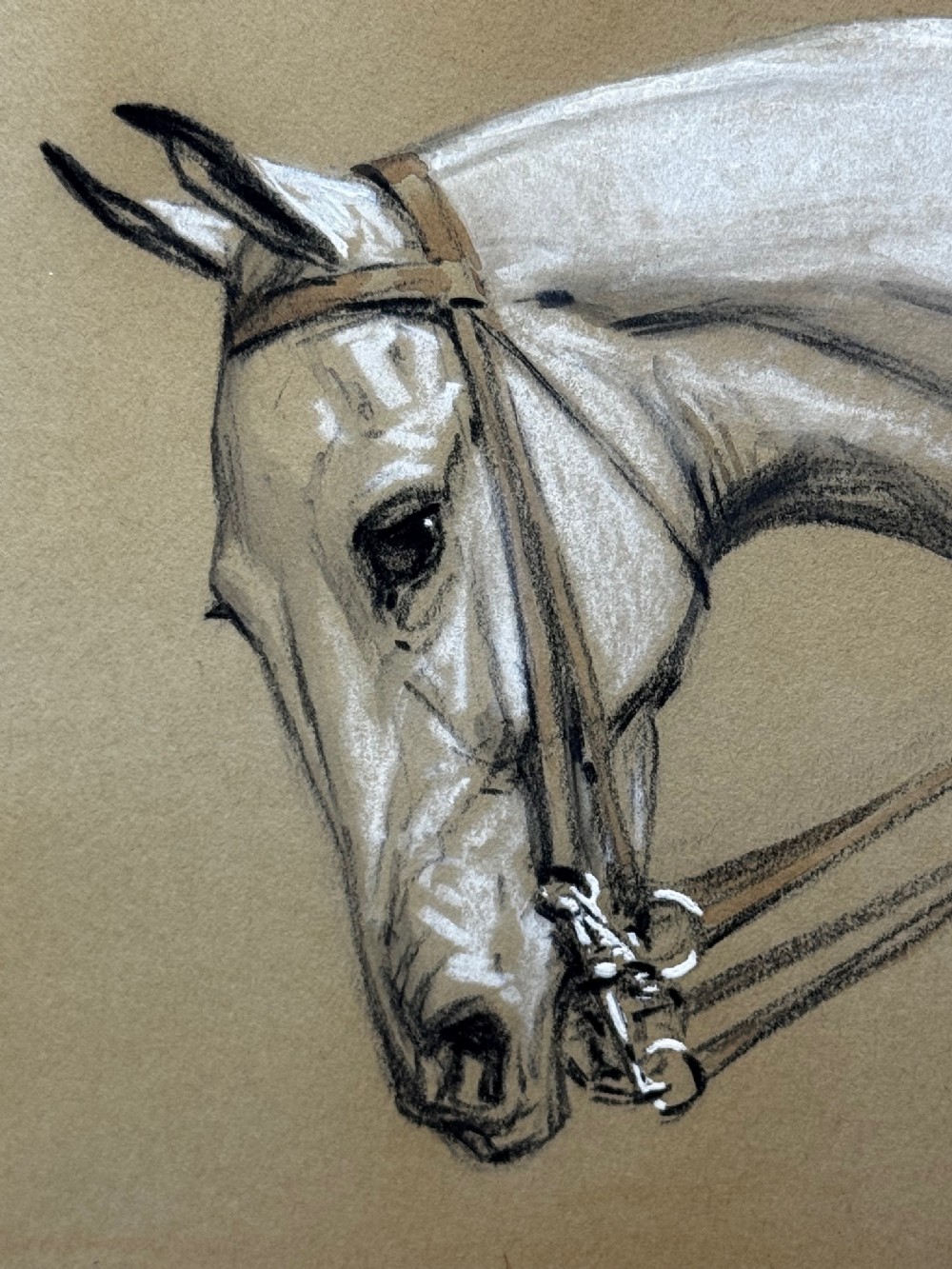
The grey hunter advances in controlled, collected movement, rendered with notable anatomical accuracy:
Strong shoulder articulation
Depth through the girth
Clean cannons and defined hocks
Controlled flexion at the poll
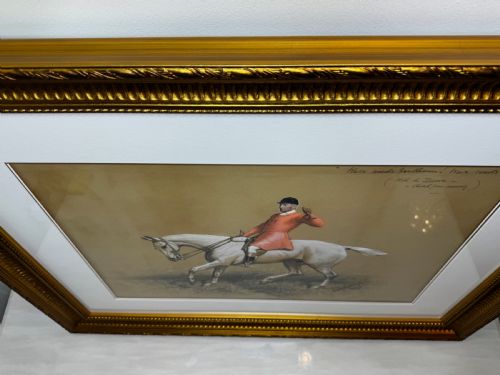
A restrained ochre ground acts as a tonal stage, allowing the saturated scarlet coat to command immediate visual attention. Heightened white bodycolour across the horse and rider creates dimensional relief, suggesting natural light across open Leicestershire pasture.
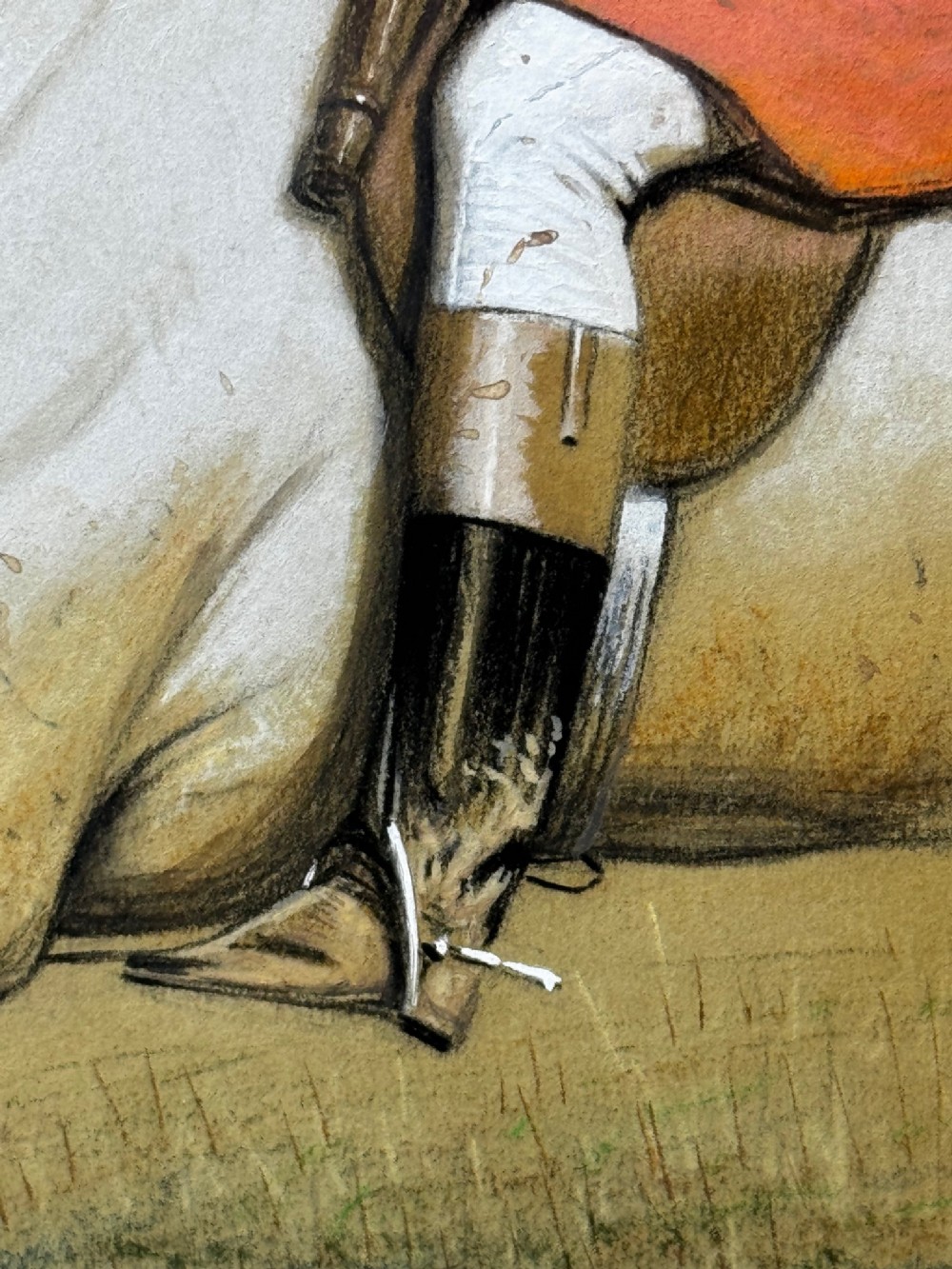
Brushwork alternates between fine linear precision in tack and bridle and broader, confident handling in the ground plane, reinforcing movement without sacrificing clarity.
At nearly one metre wide in its framed presentation, the work carries significant decorative and visual impact.
The Rider
The figure is possible believed to represent Tom (Thomas) Firr (1847–1910), the renowned professional huntsman of the Quorn Hunt.
Firr was celebrated for:
Exceptional command of hounds
Technical horsemanship across demanding pasture
Calm and disciplined field authority
Grey horses were favoured in Leicestershire for their visibility across hedged pasture.
The raised horn, erect posture, and compositional dominance are consistent with iconography of the professional huntsman rather than a gentleman rider. While not explicitly named in the inscription, contextual evidence strongly supports this identification.
Historical Significance
The Quorn Hunt, established in 1696, is widely regarded as the pinnacle of English fox hunting. By 1895, under the Mastership of the 6th Duke of Rutland, it was at the height of its prestige.
Leicestershire’s pasture country served as a proving ground for aristocracy, cavalry officers, and sporting elites. Hunting functioned not only as sport but as a demonstration of hierarchy, breeding, and discipline.
The phrase “Hare Seeds Gentlemen!” captures a fleeting but authentic disruption — hounds diverting to hare scent. The note “a sketch from memory” suggests direct observation, elevating the work from decorative study to recorded sporting moment.
Works depicting named hunts, identifiable figures, and specific field incidents are particularly sought after in the British sporting art market.
The Artist
Basil Nightingale was a British painter and illustrator active in the late nineteenth and early twentieth centuries, specialising in equestrian, military, and sporting subjects.
His professional record includes:
Contributions to The Gra
Cheshire Antiques Consultant Ltd has dated this Antique Equestrian Hunting Painting to the Victorian era.
Source the historic in 17th, 18th, 19th & 20th century fine arts, painting, sculptures & collectibles
You can view the stock and full dealer information on the Cheshire Antiques Consultant Ltd Profile Page

Painting the Quorn Hunt Tom Firr Up Grey Horse Signed Basil Nightingale