


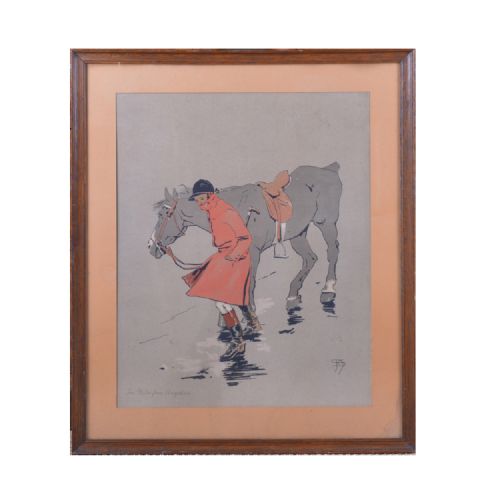
Grey Horse Sporting Art
Grey horse sporting art captures the energy of the hunt, the turf and the stable through Victorian and Regency works.
Grey Horse Sporting Art
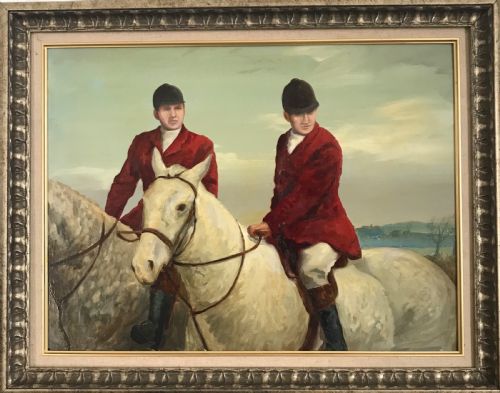
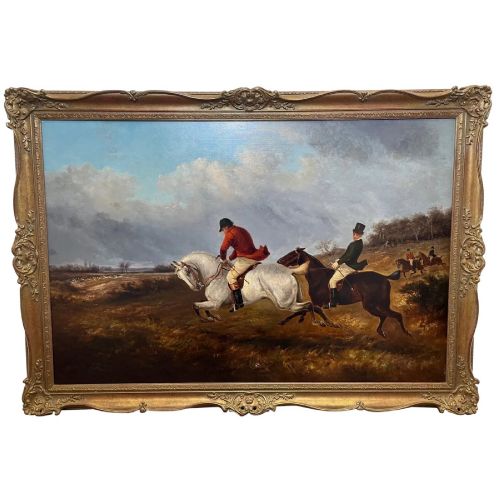
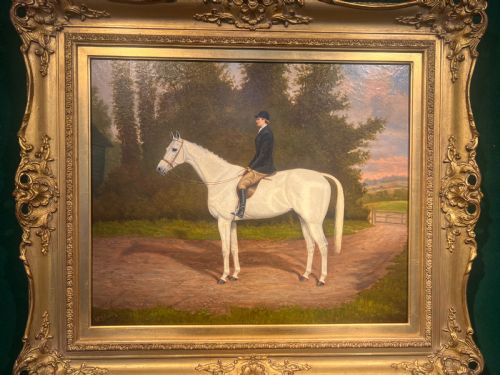
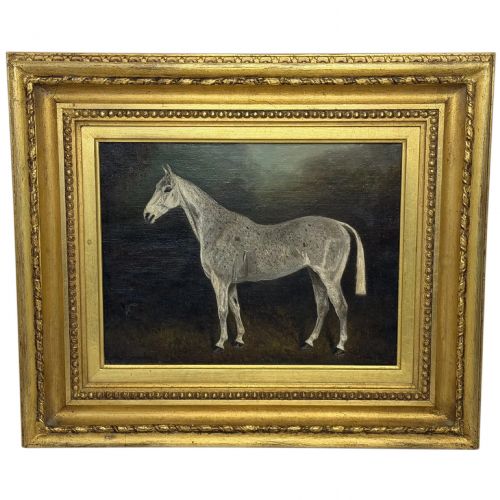
These works focus on equestrian subjects, specifically featuring grey horses within traditional British sporting art and Victorian contexts. Buyers search for these pieces to bring historical racing, hunting and pastoral scenes into domestic spaces.
The selections on this page span oil paintings, watercolours, framed prints and pastels across the Regency, Victorian and mid-century periods. You will encounter framed art ranging from detailed landscape portraits with grooms to dynamic hunting scenes involving notable hounds and riders.
How these works were made
Artists employed oil on canvas or oil paint to build rich textures in traditional sporting scenes, often utilising wooden frames and glass for protection. Watercolours and pastels on paper also capture finer linear details in works by figures such as John Rattenbury Skeaping and William J Hodgson.
Framing frequently incorporates traditional wood and giltwood surrounds that complement the palette of nineteenth-century and twentieth-century equestrian subjects.
Listings include oil on canvas, watercolour, and pastel on paper, housed in wood and giltwood frames.
What varies in quality
Quality rests in the anatomical accuracy of the horse, the fluidity of movement in galloping or jumping scenes and the handling of light across the grey coat. Superior examples demonstrate a confident mastery of perspective in landscape integration and animal form.
The distinction between a standard print and an original hand-painted oil or watercolour alters the depth of the piece. Masterful brushwork by documented artists elevates the historical and artistic merit above decorative reproductions.
Thomas Smythe·William Albert Clarke·John Rattenbury Skeaping·Basil Nightingale·Edwin Frederic Holt·Clifton Tomson·William J Hodgson·John Nost Sartorius·Frank Algernon Stewart
The Grey Horse Sporting Art Glossary
- Chromolithograph
- A multicolor print produced through lithography, allowing for rich reproduction of original watercolours and paintings. This technique was widely utilised in the late nineteenth and early twentieth centuries for sporting prints.
- Giltwood
- Wood that has been treated with gold leaf or a gold-coloured finish. It frequently surrounds nineteenth-century frames.
- Pastel
- A dry medium made of powdered pigment and a binder, applied to paper. John Rattenbury Skeaping utilised pastel on coloured paper for dynamic racing drawings.
- Grisette
- A term occasionally used in titles to denote a specific grey mare or coat variation within equine portraiture. It helps identify particular subjects in regional collections.
Grey Horse Sporting Art: Frequently Asked Questions
What periods do these pieces date from?
The works span from the Regency era through the Victorian period and into the mid-twentieth century.
They reflect shifting artistic approaches to equestrian subjects over more than a century of British sporting art.
Are these works original?
The selection includes original oil paintings, watercolours and pastels alongside period prints.
Each listing specifies the exact medium and whether the work is an original painting or a chromolithograph.
How should I frame these pieces?
Many works retain their period wooden or giltwood frames, which match the aesthetic of the artwork.
Ensure that any framing protects works on paper behind glass from direct sunlight and environmental moisture.