


Military History Artwork
Military history artwork captures centuries of conflict, portraiture and naval battles through period oils, watercolours and prints.
Military History Artwork
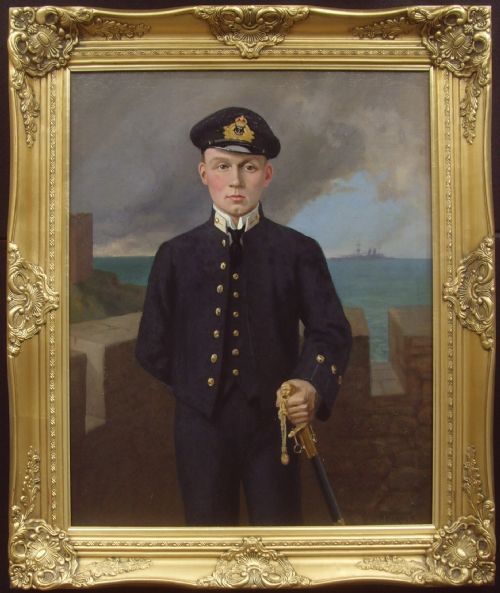
Military history artwork encompasses oil paintings, watercolours, lithographs and framed prints depicting soldiers, officers, naval commanders and historical campaigns. These pieces document armed conflicts and military personnel from the eighteenth, nineteenth and early twentieth centuries.
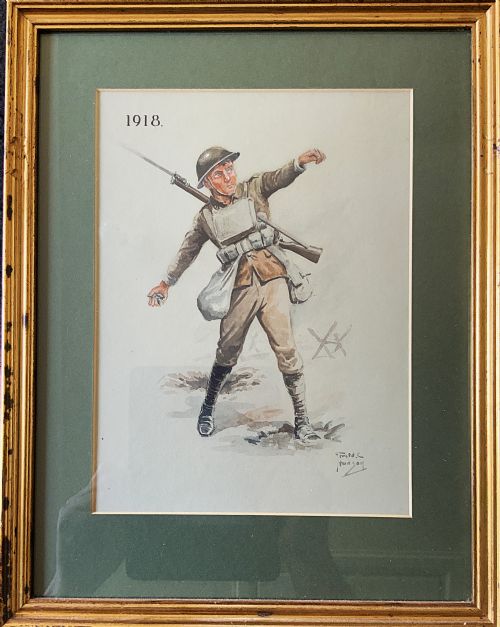
Works range from detailed watercolours and wash studies of individual soldiers to large canvas oil paintings of sea battles. Each piece offers a visual record of military personnel and historic events across different eras.
Materials and methods
Artists painted on canvas, wood and paper using oil paint, watercolour and wash. Framed works often feature giltwood and gold leaf surrounds that complement the period.
Graphic works utilise lithography and printmaking techniques to reproduce historical scenes and portraits. Pigments and inks are applied to paper supports within period frames containing glass.
Makers constructed traditional wooden frames to house the paintings and prints. Gilding techniques applied gold leaf to wooden mouldings, framing the historical artwork securely.
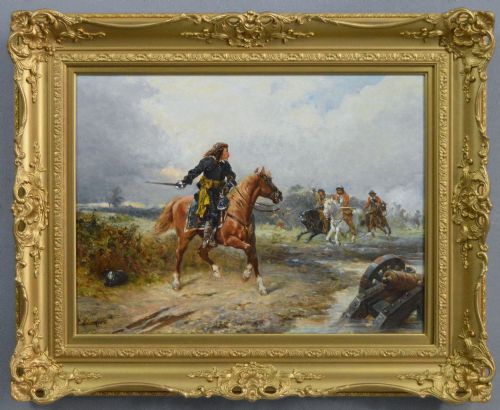
Princes wear poppies and soldiers chase Roundheads across these historic canvases.
Assessing quality
Skill in portraiture and composition separates standard historical records from superior artistic works. Master painters capture the likeness and uniform details with precision.
The preservation of the original medium, whether oil paint on canvas or watercolour on paper, influences the visual impact. High quality framing and the survival of the original giltwood enhance the piece.
Provenance and documented attribution to known artists elevate the standing of a military artwork. Pieces that retain their original mountings and period framing demonstrate greater historical integrity.
The Military History Artwork Glossary
- Lithograph
- A print made from a drawing on stone or metal plate. This technique allows for the faithful reproduction of war art and topographical scenes.
- Giltwood
- Wood that has been treated with gold leaf or gold paint. It frequently appears on the decorative frames enclosing period paintings.
- Watercolour
- A paint consisting of pigment suspended in a water-based solution. Artists use this medium on paper for detailed studies and portraits.
- Oil paint
- A slow-drying paint made with pigments suspended in a drying oil. It provides rich colour depth on canvas and wooden panels.
- Wash
- A thin, transparent layer of diluted watercolour or ink. It creates soft tonal variations in historical portrait drawings.
Military History Artwork: Frequently Asked Questions
What periods do these artworks cover?
The pieces span from the Georgian and Regency eras through the Victorian period and into the early twentieth century, including the First World War.
These dates reflect the eras of the depicted subjects, uniforms and the active working periods of the artists.
How were military portraits originally displayed?
Officers and regiments displayed portraits in messes, gentlemen's clubs and private family homes to commemorate service and rank.
These artworks served as tangible records of military achievement and lineage within domestic and institutional settings.
How do I identify a naval painting?
Naval paintings typically feature historical warships, sea battles, oceans and portraits of admirals or naval captains in uniform.
Clues include sailing ships, flags, cannons and maritime backgrounds associated with naval history.
Are these works original period pieces?
The inventory comprises original period oil paintings, watercolours and vintage prints created during the eras they depict.
Materials such as aged canvas, traditional wood frames and period paper indicate the authentic age of each item.