


British Army Watercolour Painting
A british army watercolour painting captures the regiment and the rank with remarkable precision, offering a direct record of military history.
British Army Watercolour Painting
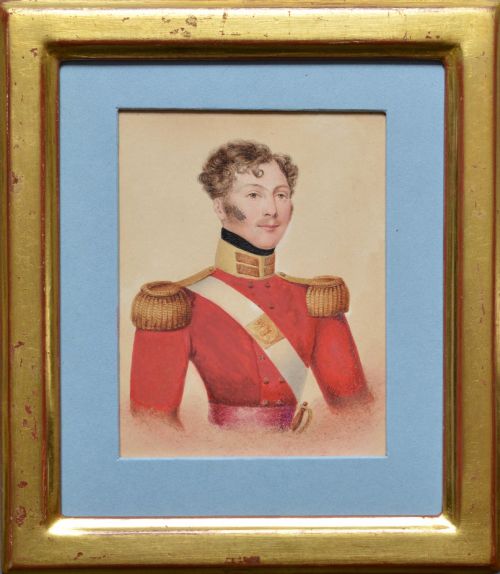
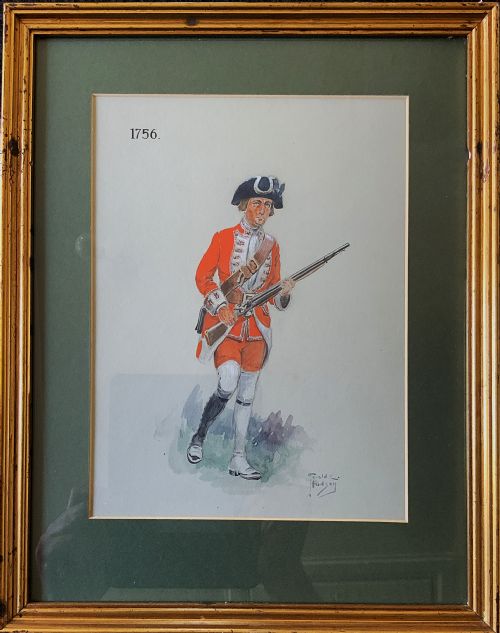
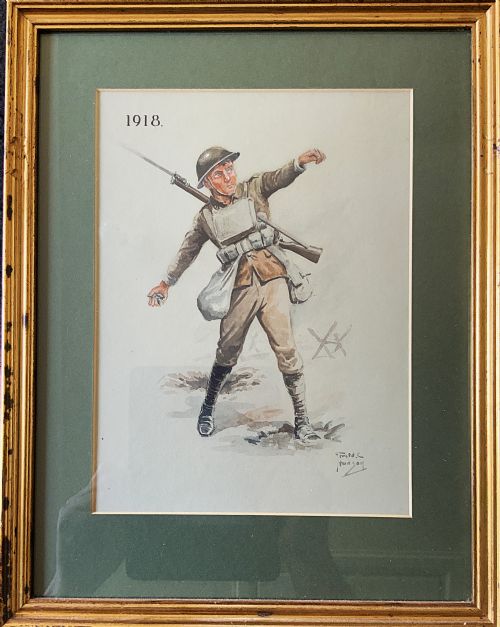
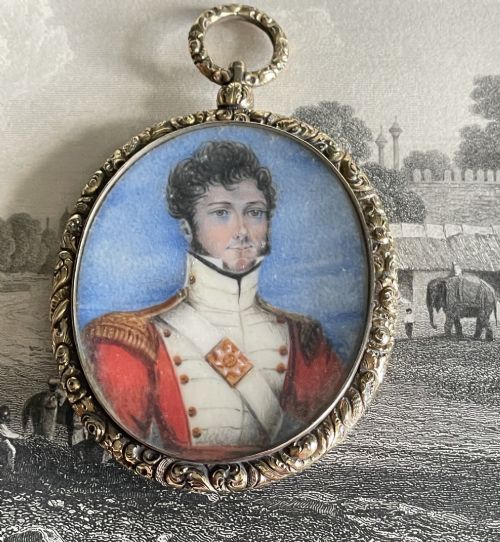
A british army watercolour painting depicts military personnel, ranging from individual officers and soldiers of specific regiments to prominent commanders like Earl Roberts. These works span several eras, including the eighteenth century, the regency period, and the first world war.
The physical forms include framed artworks and intimate portrait miniatures executed on paper. Works associated with named regiments or historical figures appear alongside broader military portraiture.
Makers include known artists such as Snaffles and Leslie Moore, alongside pieces attributed simply to the British School. The styles stretch from Georgian and Victorian aesthetics to early twentieth-century interpretations.
Materials and Technique
Framing materials commonly include wood, giltwood, and gilt metal, often protected beneath glass. Portrait miniatures sometimes incorporate delicate ivory as a base for the painted surface.
Snaffles captured garrison life with such dry wit that even the horses look like they need a stiff drink.
Judging Quality and Execution
The standard of a british army watercolour painting rests on the precision of uniform depiction and the fidelity of the portrait. Master painters render lace, buttons, and insignia with exact botanical and sartorial accuracy.
Condition of the paper and the preservation of pigment under glass determine the visual strength of the piece. Fading from light exposure diminishes the contrast between the uniform and the background.
Snaffles·Leslie Moore
The British Army Watercolour Painting Glossary
- Watercolour
- A painting method in which the paints are made of pigments suspended in a water-based solution. This technique allows for delicate washes and translucent layers on paper.
- Portrait miniature
- A small, highly detailed painting, often executed on ivory or vellum. These intimate works demand immense skill from the artist due to their restricted scale.
- Giltwood
- Wood that has been treated with gold leaf or a gold-coloured metallic finish. It frequently frames nineteenth-century military artworks.
- Regiment
- A permanent unit of an army typically commanded by a colonel. Military watercolours often identify the sitter's specific regiment through uniform details.
British Army Watercolour Painting: Frequently Asked Questions
What periods do these paintings cover?
The works span from the eighteenth century through the Victorian era and into the twentieth century, capturing various historical campaigns.
Specific dates or estimated periods often appear in the title or attribution provided by the artist or school.
How were these watercolours originally displayed?
Many pieces are housed in period frames made of wood, giltwood, or gilt metal designed to protect the paper under glass.
Smaller portrait miniatures were often kept in private quarters or carried by family members.
Are all the sitters identified?
Some works name specific officers, captains, and generals, such as Captain Richard Hamilton or Earl Roberts. Others depict unnamed soldiers from particular regiments without recording an individual identity.
What materials support the paint?
Paper serves as the primary ground for the watercolours and washes, while select miniature portraits utilise ivory.
Protective glass shields these delicate organic materials from atmospheric damage.