



Historical Battle Artwork
Historical battle artwork records pivotal military engagements through paintings, drawings and prints from the eighteenth and nineteenth centuries.
Historical Battle Artwork
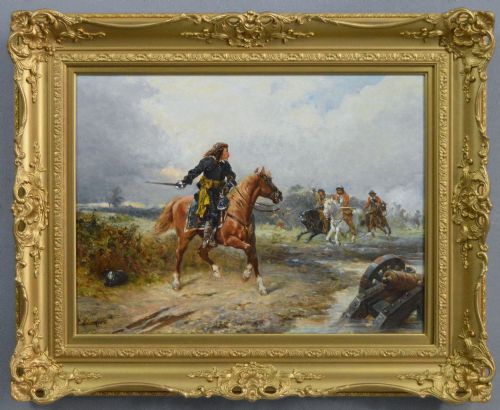
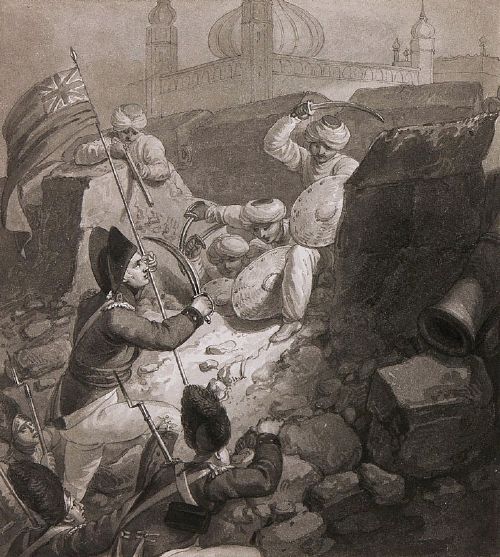
Historical battle artwork depicts significant naval engagements, cavalry skirmishes and military formations across various centuries. These pieces document conflicts from the Napoleonic Wars and the 2nd Afghan War to earlier maritime battles.
The selections on this page consist predominantly of oil paintings on canvas, pen and wash drawings, watercolours and framed engravings. Buyers encounter works ranging from naive portraits and early prints to large oil paintings by named artists.
Origins span British, Dutch and Italian schools, encompassing periods such as the Regency, Victorian era and Georgian times. Each piece captures specific tactical moments or the aftermath of combat on sea and land.
Materials and Techniques
Painters utilised oil on canvas to build rich coastal scenes and sea battles, often applying pigment over primed cloth. Draughtsmen employed pen, ink and watercolour on paper to capture detailed cavalry movements and military portraits.
Listings feature paper, oil on canvas, wood, glass, giltwood, ink and canvas across eighteenth and nineteenth-century items.
Quality and Execution
The skill of the draughtsman or painter dictates the clarity of troop movements, vessel rigging and human anatomy. Finer works display precise handling of light on smoke and water, whereas simpler examples rely on naive charm.
The preservation of the paper support in watercolours and drawings influences the overall standard, alongside the survival of original framing materials. Depth of pigment and complexity of composition separate standard prints from masterwork paintings.
William McAlpine·William Marshall Craig·Le Brun·Jean Sobieski·Antonio Tempesta·Richard Brydges Beechey·Francis Russell Flint·George Cattermole·James Hardy·Abraham Storck
The Historical Battle Artwork Glossary
- Pen and wash
- A drawing technique combining ink lines with diluted watercolour or ink applied with a brush. This method provides tonal depth to historical battle scenes.
- Engraving
- A printmaking process where an image is incised into a metal plate. It allows multiple crisp impressions of military formations and portraits to be produced.
- Giltwood
- Wood carved and covered with a thin layer of gold leaf. It is commonly found on the frames surrounding nineteenth-century oil paintings.
- Marine painting
- Artwork focusing primarily on the sea, ships and naval engagements. These pieces frequently depict warships with raised sails and cannon fire.
- Naive art
- Artwork created by an artist without formal academic training, characterising works with simplified perspective and direct expression.
Historical Battle Artwork: Frequently Asked Questions
What periods do these battle artworks cover?
The listings encompass works stretching from the seventeenth century through to the mid-twentieth century. Major representation occurs from the Georgian, Regency and Victorian eras.
Pieces reflect the artistic styles of their respective decades, including French Baroque, Italian School and mid-century realism. Each era brings distinct uniforms, vessel designs and artistic techniques to the depiction of war.
How were sea battles depicted?
Artists utilised oil on canvas to render smoke, cannon fire and rigging on warships. Painters often focused on specific historical vessels and named commanders during engagements.
Compositions typically show galleons or ships at sea with raised sails amidst coastal backgrounds. Followers of established marine artists reproduced these naval tactics with varying degrees of scale.
Are these works original paintings or prints?
The selection includes a mixture of unique original artworks and period prints. Buyers find oil paintings alongside pen and ink drawings and watercolours.
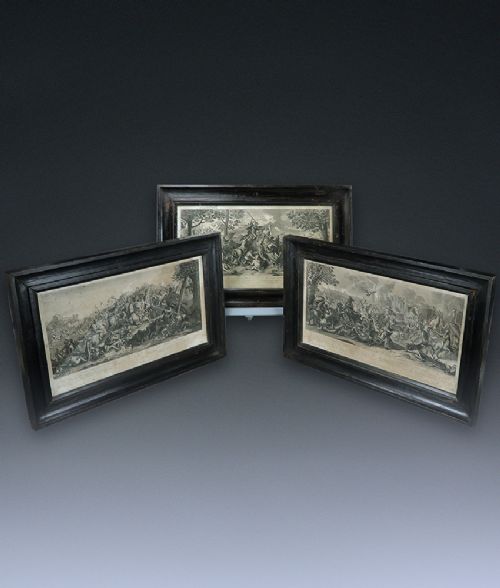
Engravings and sets of prints offer alternative ways to acquire military history imagery. Each listing specifies whether the piece is an oil on canvas, drawing or engraving.
How do I identify a naive battle artwork?
Naive pieces display simplified perspectives and less rigid adherence to academic proportion. The portrait of Robert Spearman Swinburne provides an example of this distinct style.
These works possess a direct charm while documenting military subjects. They stand apart from the formal military formations rendered by trained academic painters.