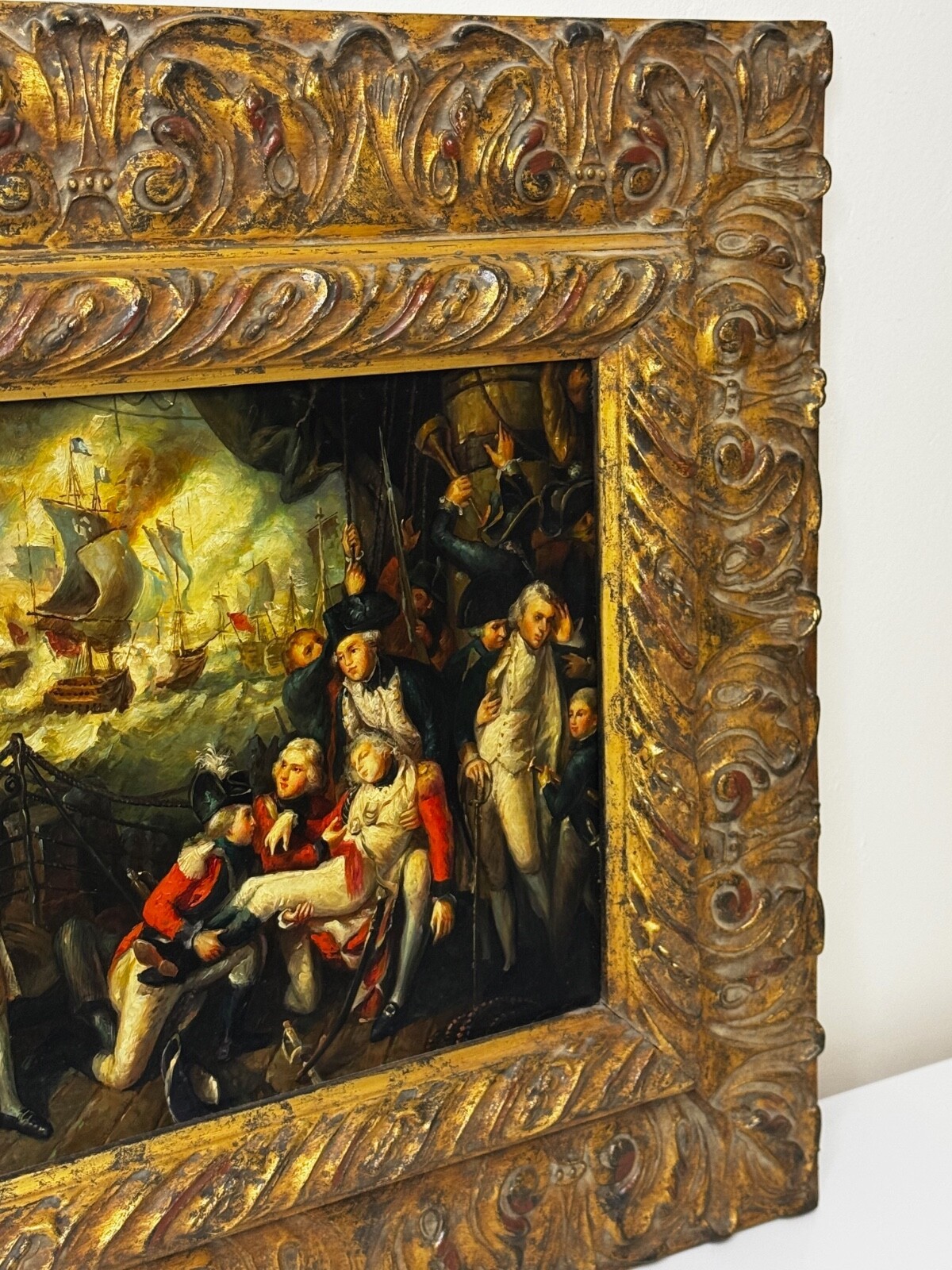
Cheshire Antiques Consultant Ltd has dated this Victorian Naval Oil Painting to the 19th Century.
This is an independent date and photo anotation report compiled by Sellingantiques using its own proprietary system. The process uses the photographs shown on this page. The system is never told the date the dealer has declared. This report shows that the two dates corroborate.
After Mather Brown (1761-1831).
Highlights
Original British School oil on metal panel, circa 1850. Historic Royal Navy battle scene after Mather Brown. Original composition held by the National Maritime Museum, Greenwich. Historic Winsor and Newton label, provisional identification. Private Conwy collection provenance. Decorative gilt frame.
Introduction
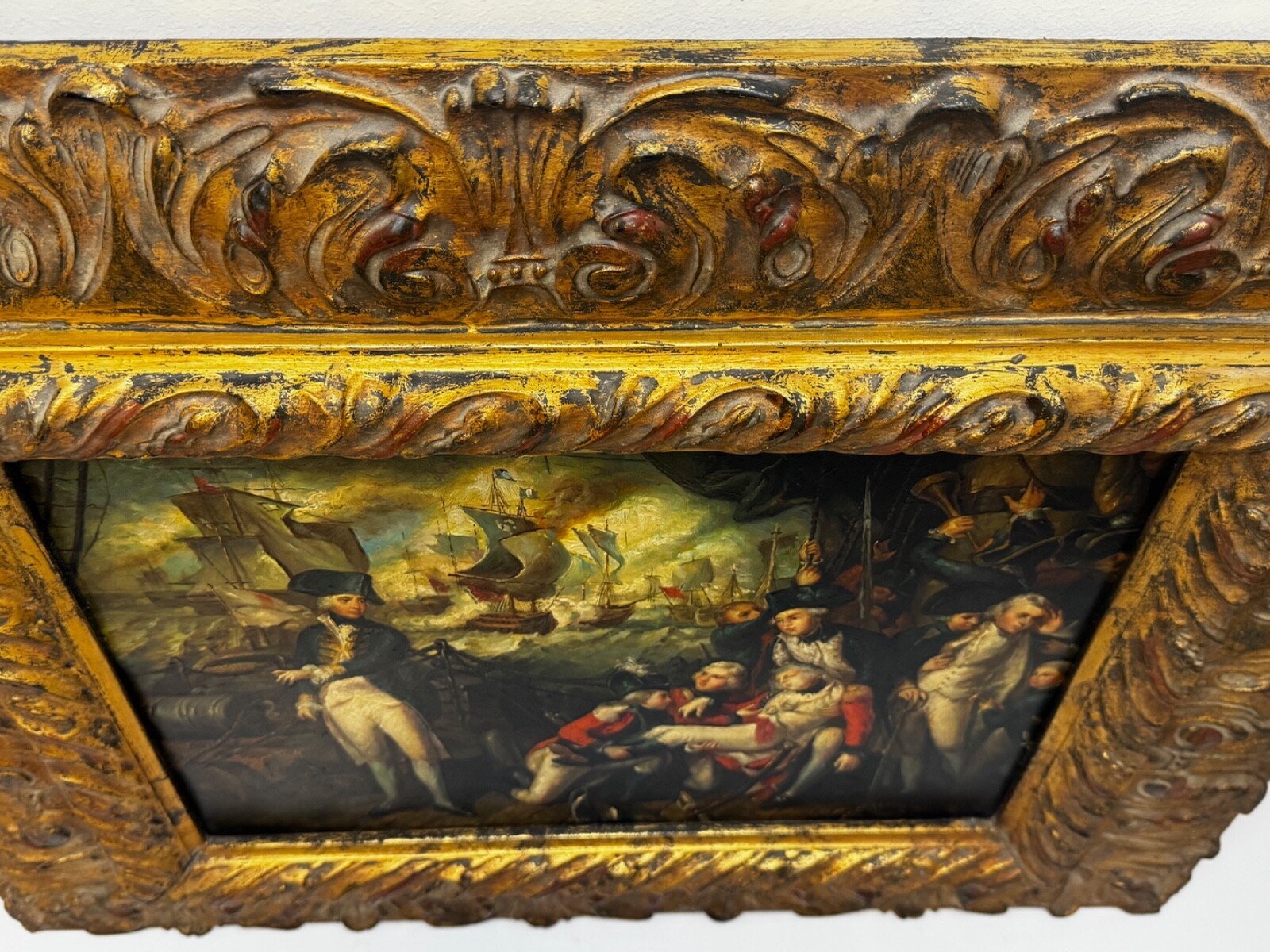
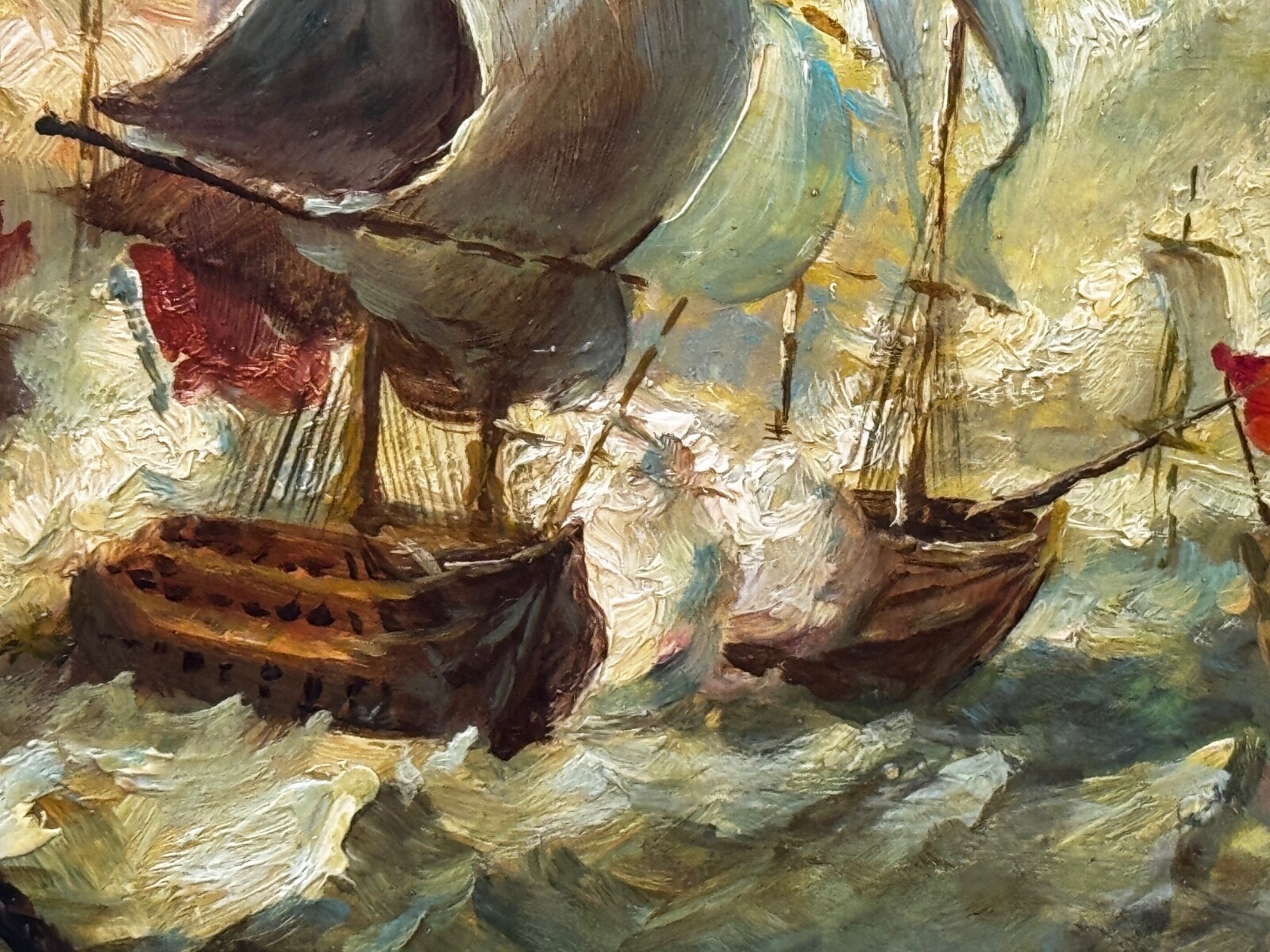
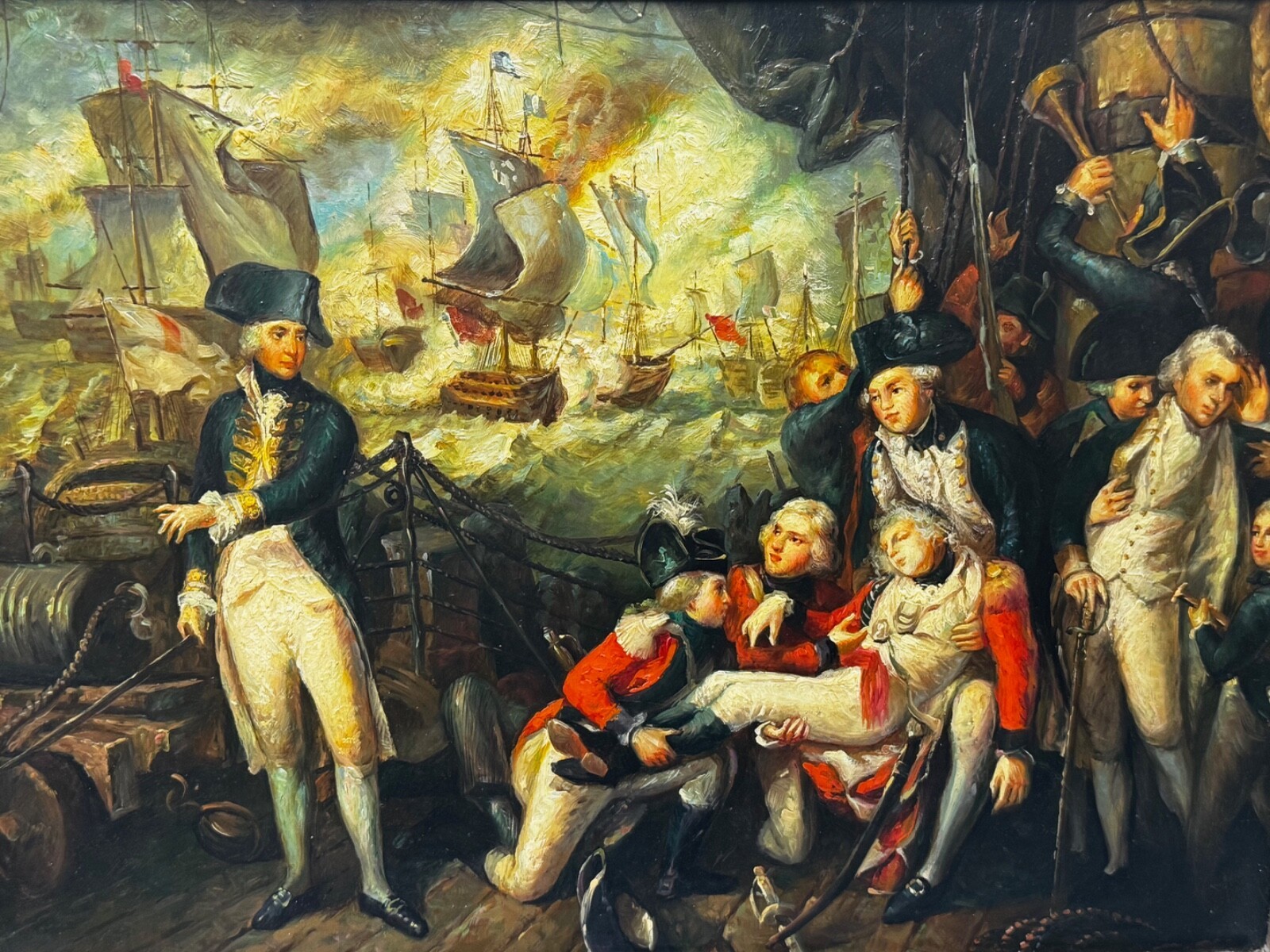
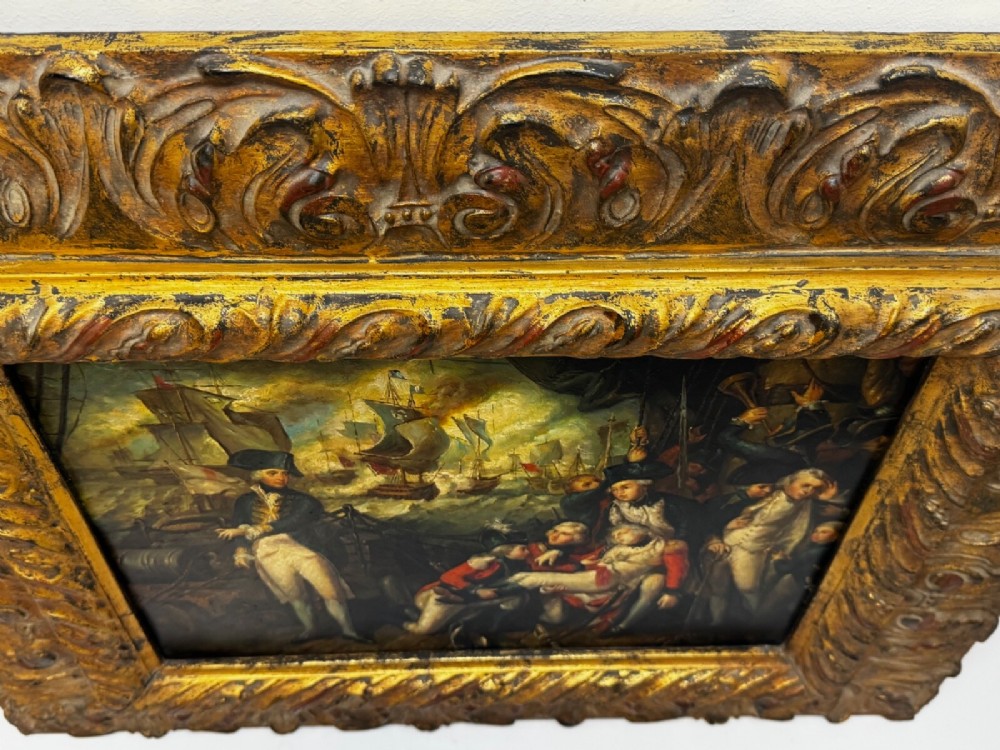
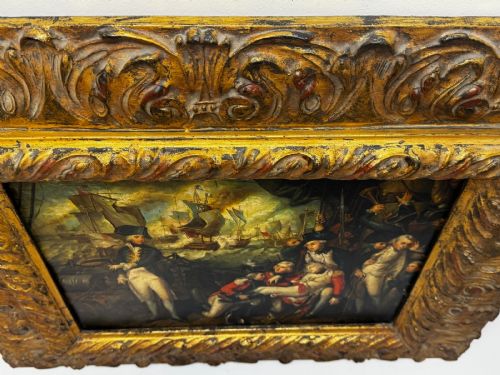
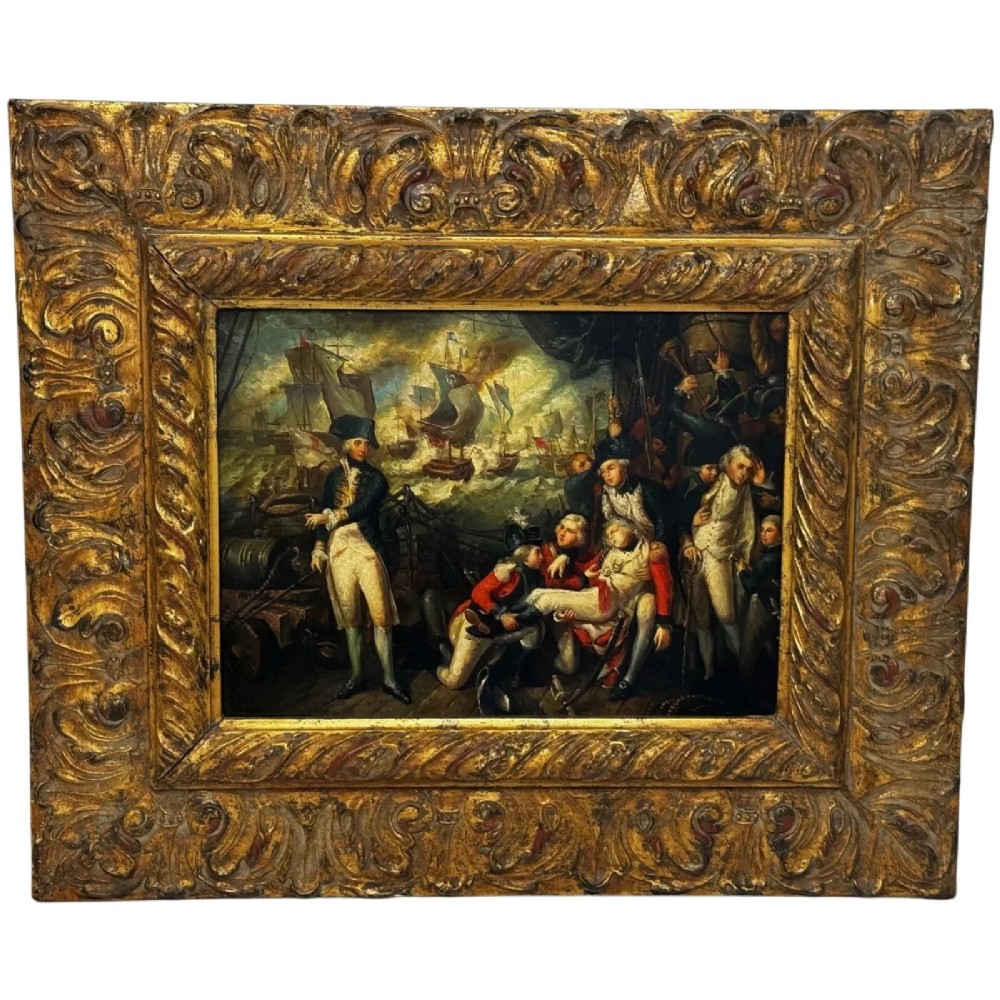
An atmospheric Victorian naval painting commemorating Admiral Richard Howe's victory over the French fleet on 1 June 1794.
The composition follows Mather Brown's celebrated original, now preserved at the National Maritime Museum, Greenwich.
Catalogue Details
Artist: British School, after Mather Brown.
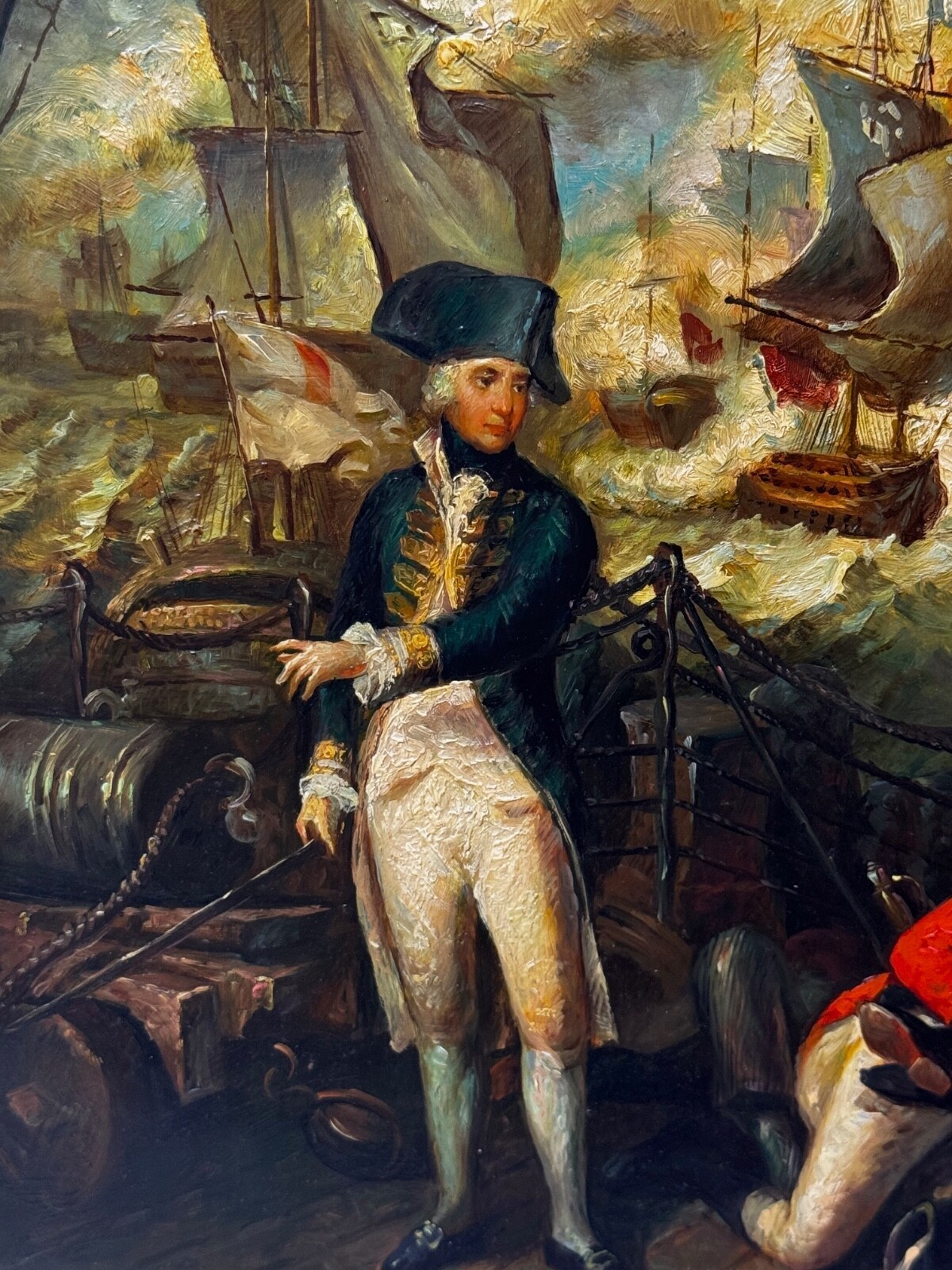
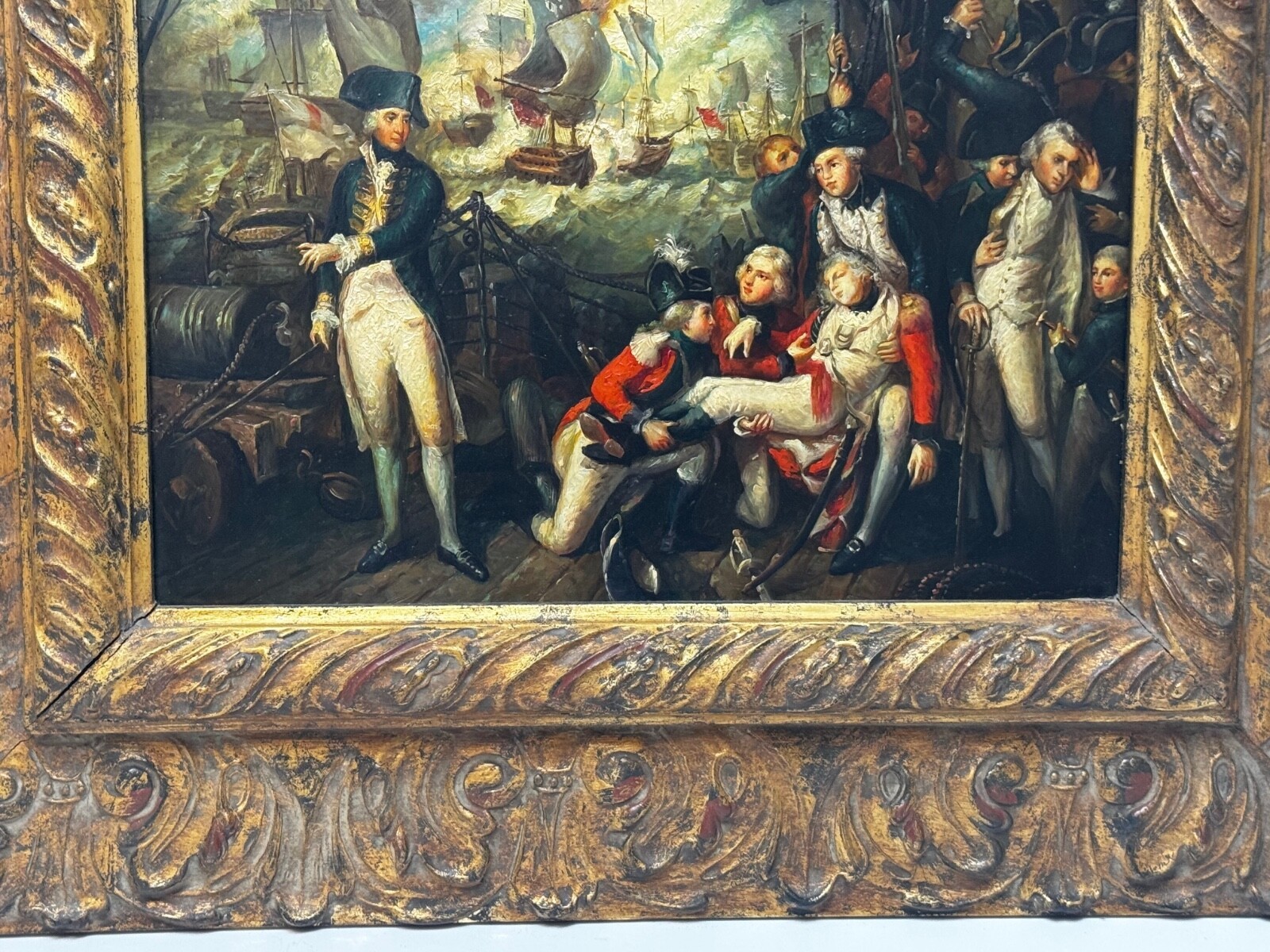
Title: Lord Howe on HMS Queen Charlotte.
Date: Circa 1850.
Origin: Britain.
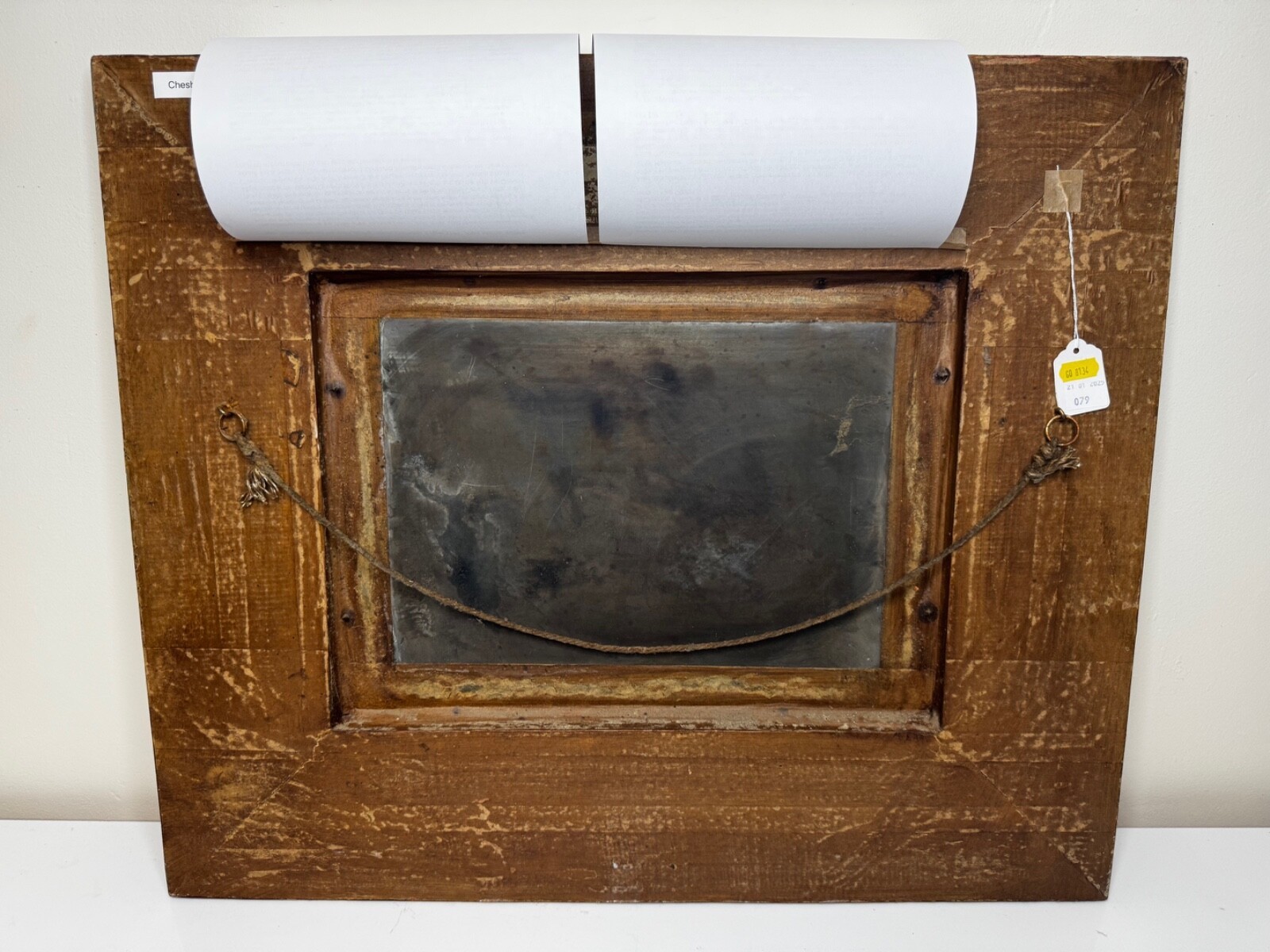
Medium: Oil on metal panel.
Signature: Unsigned.
Catalogue Note
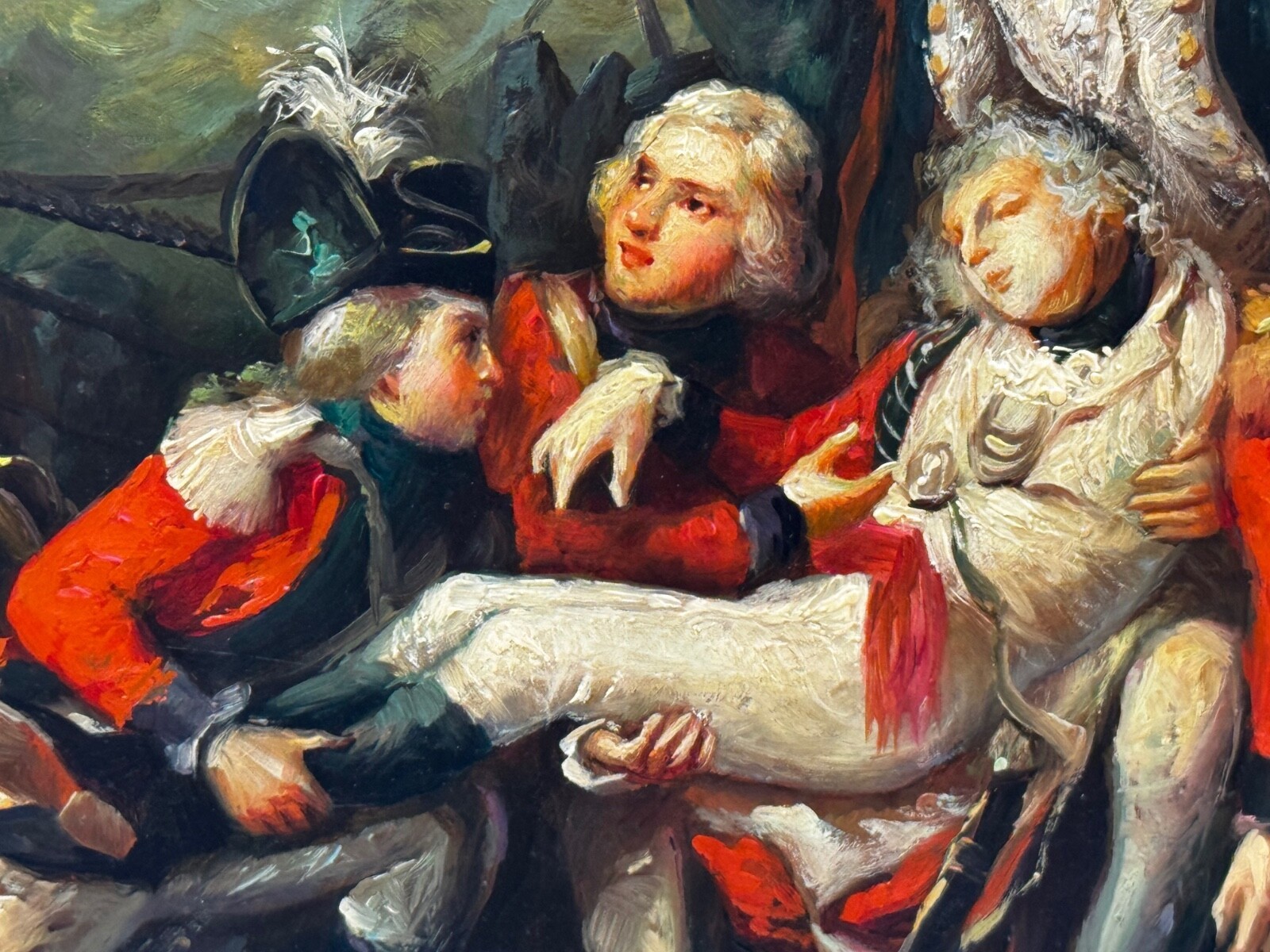
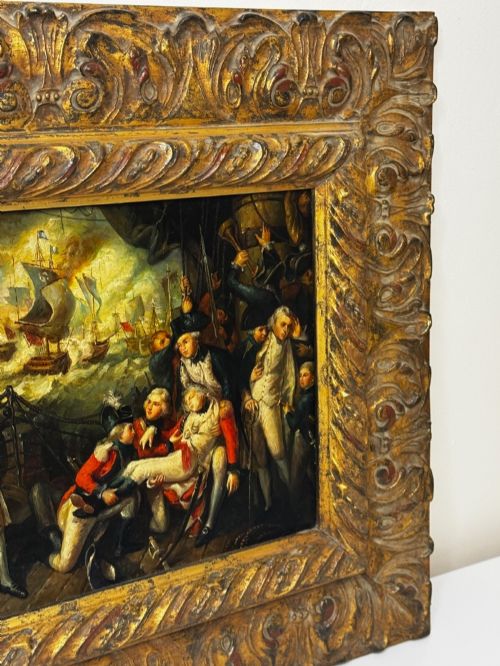
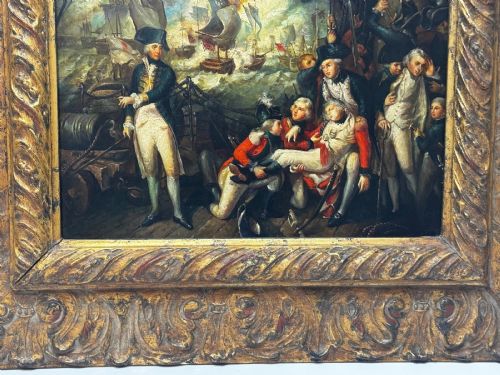
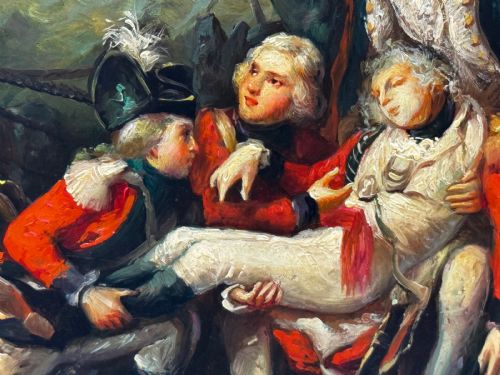
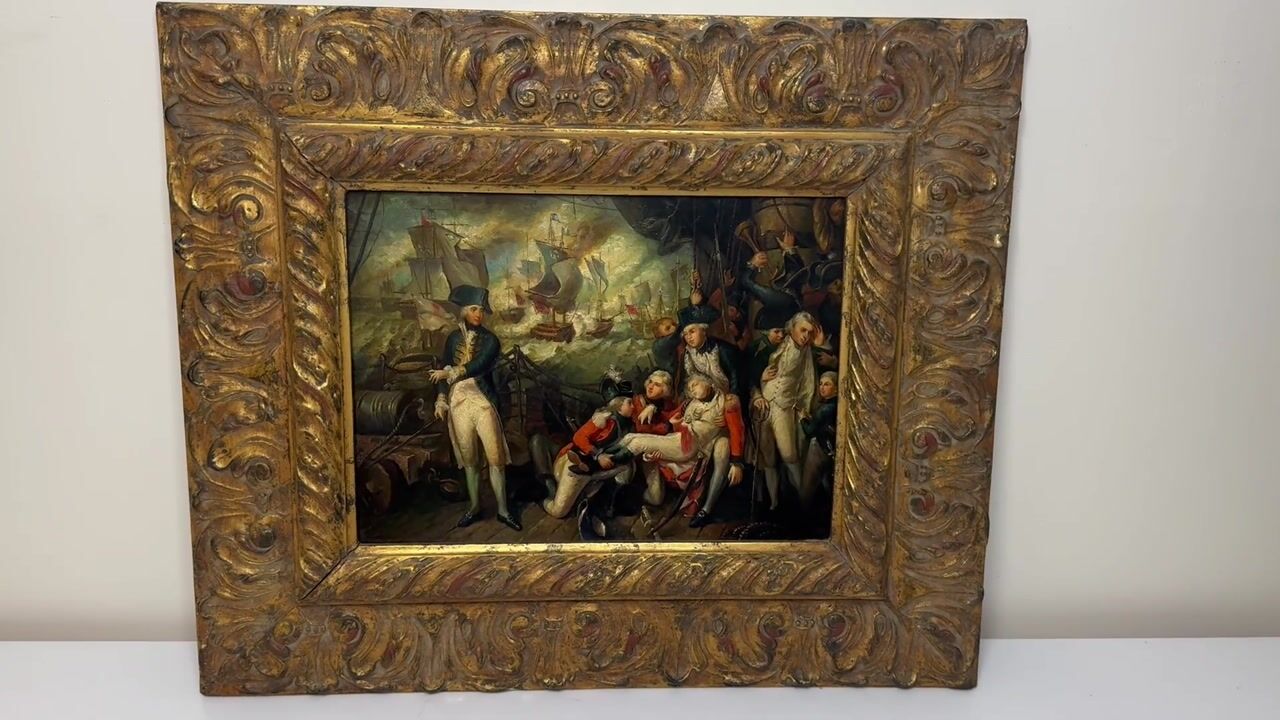
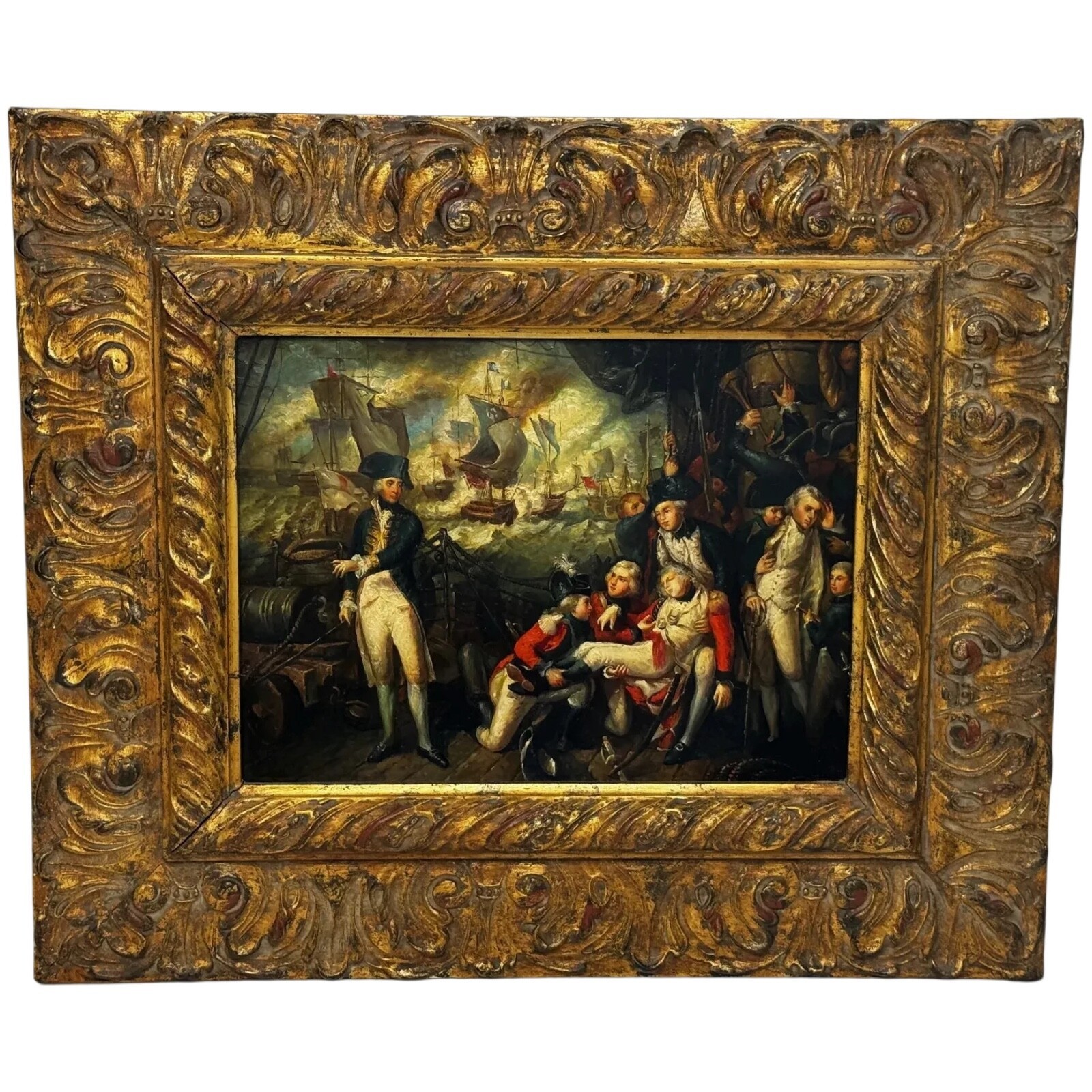
Admiral Howe stands among naval officers aboard HMS Queen Charlotte. The central group attends the mortally wounded Lieutenant Nevile of the Queen's Regiment.
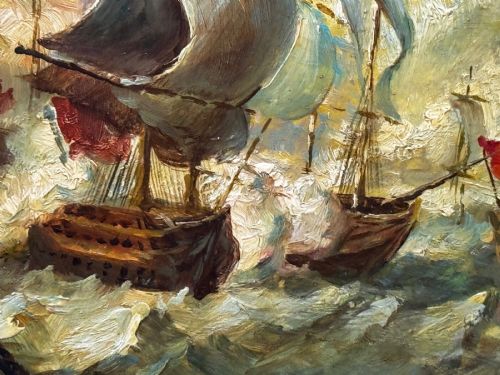
Sir Roger Curtis and Sir Andrew Snape Douglas are among the historical officers represented in Brown's original composition. Warships and cannon smoke fill the background.
The Artist - After Mather Brown
Mather Brown (1761-1831) was an American-born artist working in Britain. He studied in the circle of Benjamin West and entered the Royal Academy Schools in 1782.
His original naval painting was exhibited in London in 1795.
Historical Context - The Glorious First of June
Admiral Howe commanded the British Channel Fleet against Revolutionary France. Britain captured six French ships and sank another, although the French grain convoy reached safety.
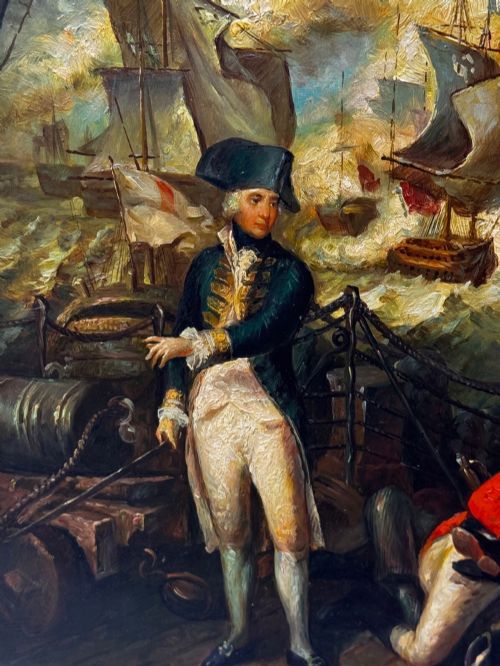
HMS Queen Charlotte - Admiral Howe's Flagship
Launched in 1790, HMS Queen Charlotte was a 100-gun first-rate Royal Navy warship.
Lieutenant Nevile and the Queen's Royal Regiment
Lieutenant Nevile was mortally wounded during the battle. His death forms the emotional centre of Brown's historical composition.
Admiral Richard Howe (1726-1799)
Howe relieved Gibraltar in 1782 and achieved his celebrated naval victory in 1794. He became Admiral of the Fleet in 1796.
The Original Mather Brown Painting
National Maritime Museum, Greenwich, BHC2740. Oil on canvas, circa 1794. The original was later cut down on all four sides.
Daniel Orme's Historic Engraving of 1795
Daniel Orme published an engraving after Brown on 1 October 1795. Royal Museums Greenwich references PAH7879 and PAI6371.
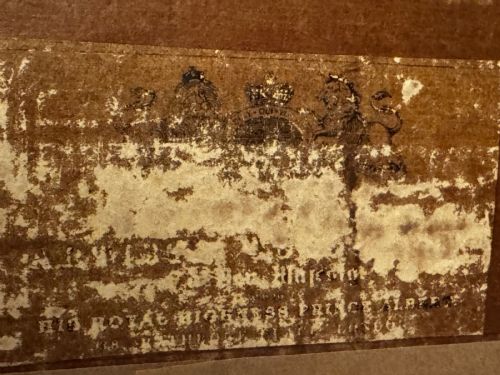
The Historic Winsor and Newton Label
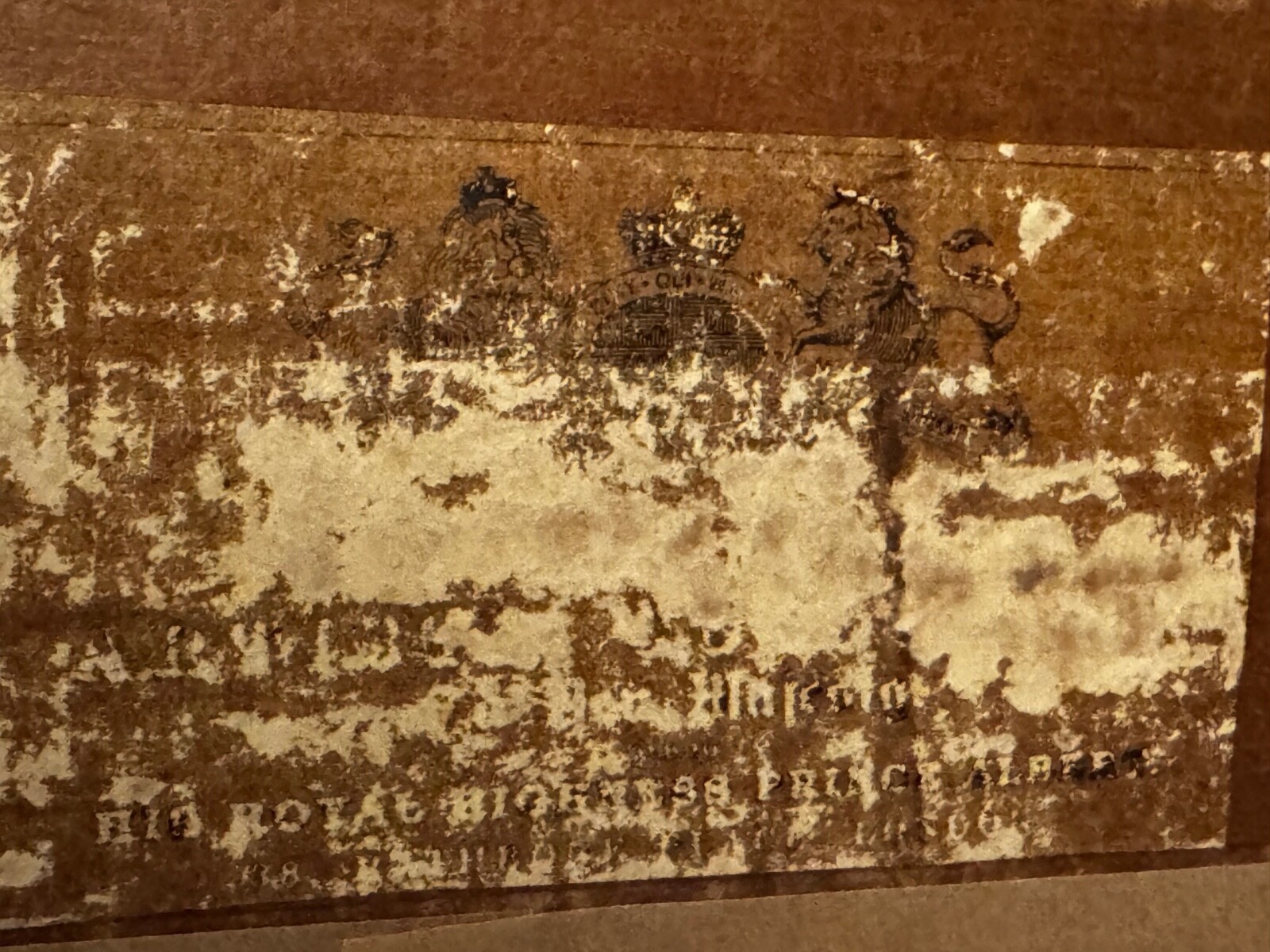
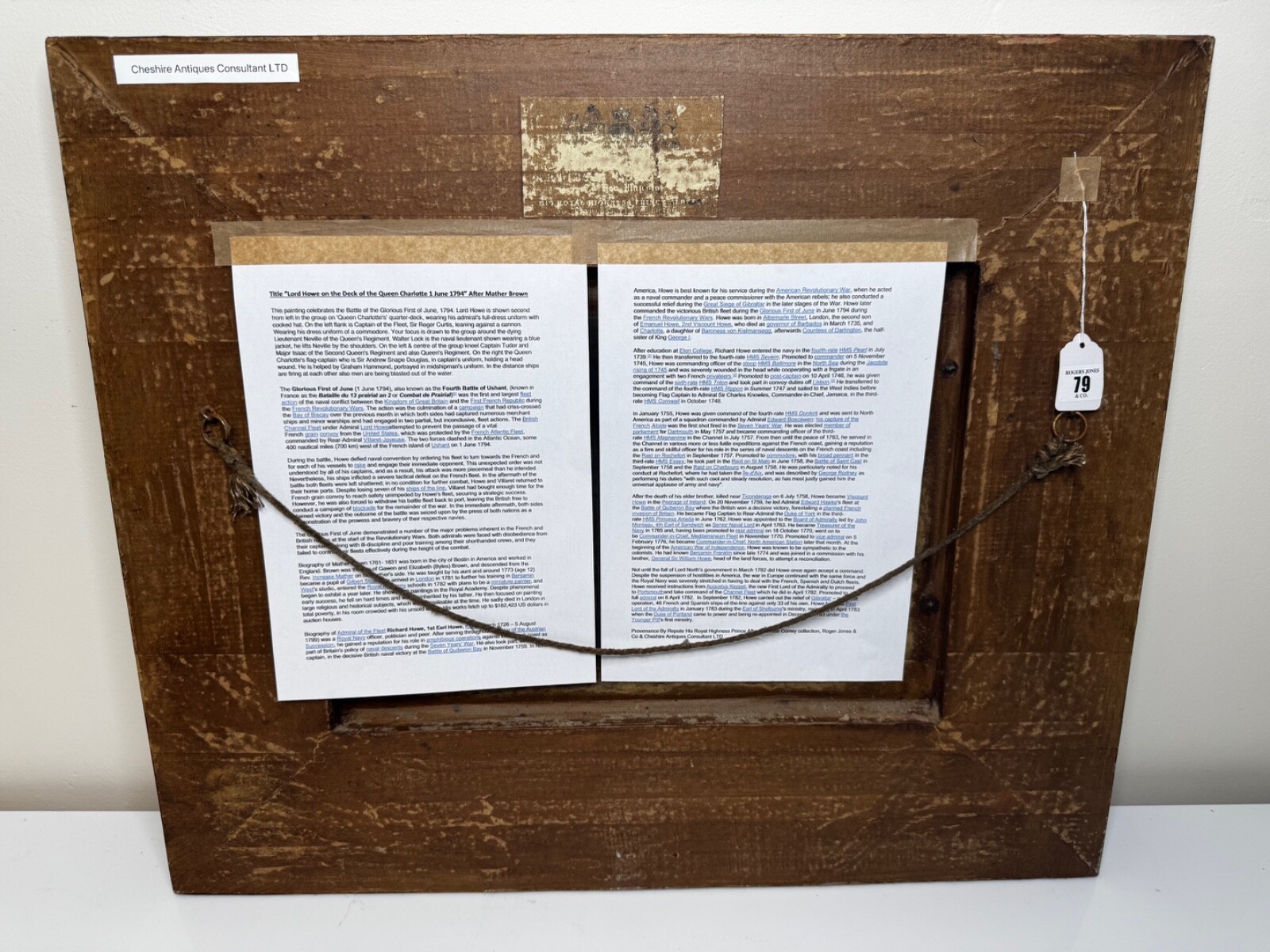
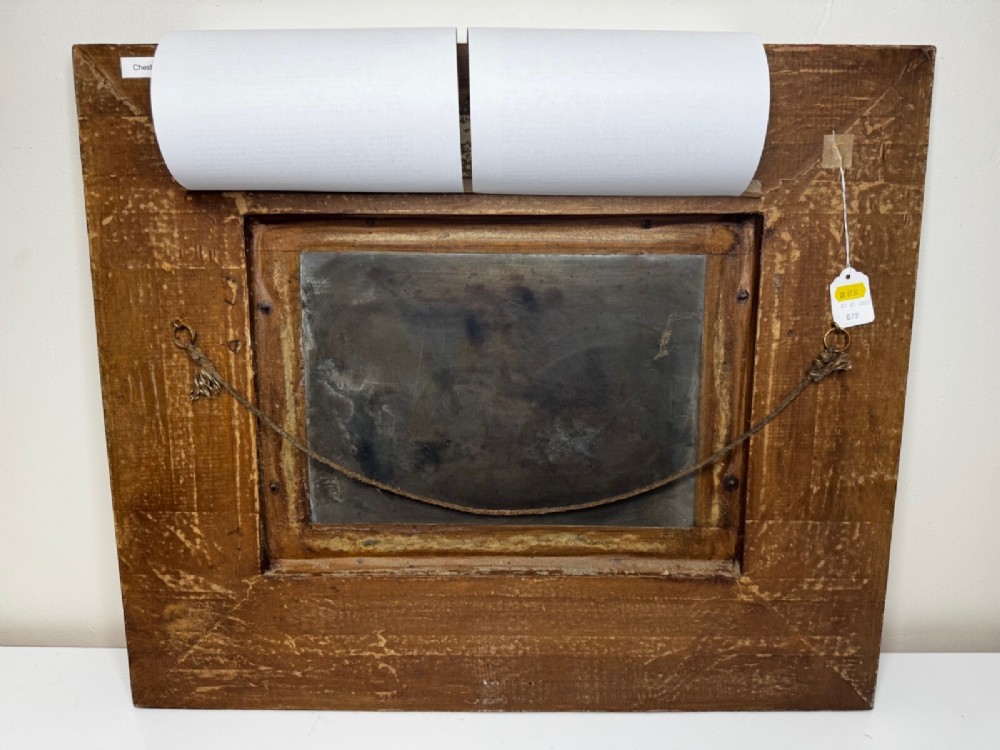
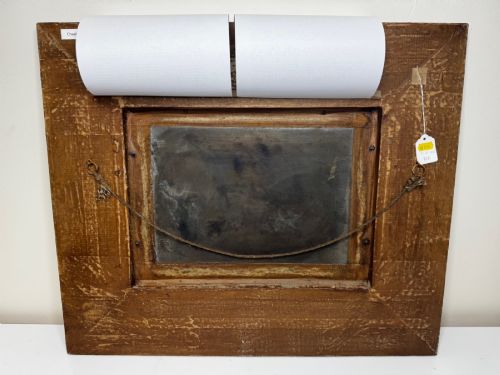
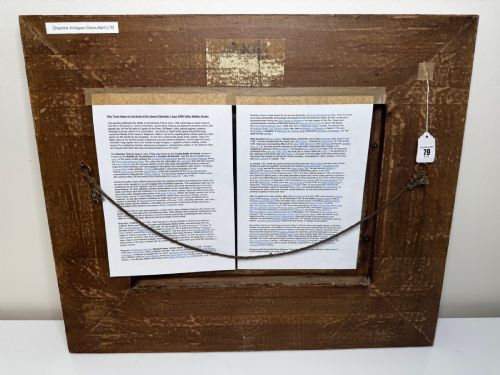
A damaged label verso is provisionally identified as Winsor and Newton. It bears the British Royal Arms and apparent royal warrant wording. This does not establish royal ownership.
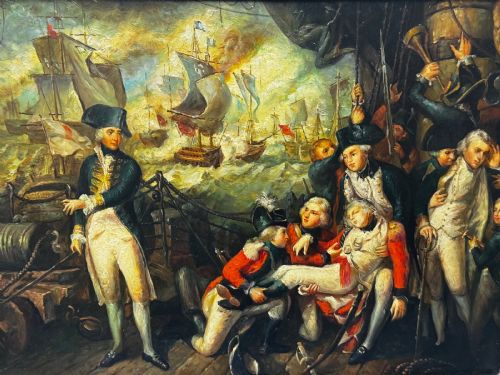
Dating
Circa 1850, based on stylistic and material evidence. Exact dating remains unconfirmed.
Comparable Works
Mather Brown, National Maritime Museum, BHC2740. Daniel Orme, 1795 engraving, PAH7879.
Historical Auction Identification
Rogers Jones and Co, Colwyn Bay, 21 January 2025, Lot 79.
Provenance
Private collection, Conwy, North Wales. Rogers Jones and Co, Lot 79, 2025. Acquired by Cheshire Antiques Consultant LTD. Invoice 16171.
Dimensions
Frame: 66.5 cm wide x 56.5 cm high x 4.5cm
Cheshire Antiques Consultant Ltd has dated this Victorian Naval Oil Painting to the 19th Century.
This is an independent date report produced by Sellingantiques using its own proprietary system. The process uses the photographs shown on this page. The system is never told the date the dealer has declared. This report shows that the two dates corroborate.
Source the historic in 17th, 18th, 19th & 20th century fine arts, painting, sculptures & collectibles
You can view the stock and full dealer information on the Cheshire Antiques Consultant Ltd Profile Page
Victorian Naval Oil Painting Lord Howe Hms Queen Charlotte After Mather Brown