Cheshire Antiques Consultant Ltd has dated this Military Battle Oil Painting to the 1950s.
This is an independent date report produced by Sellingantiques using its own proprietary system. The process uses the photographs shown on this page. The system is never told the date the dealer has declared. This report shows that the two dates corroborate.
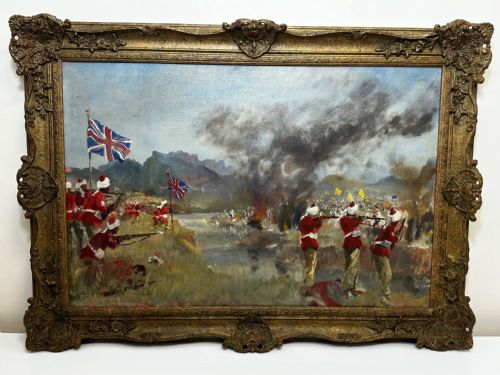
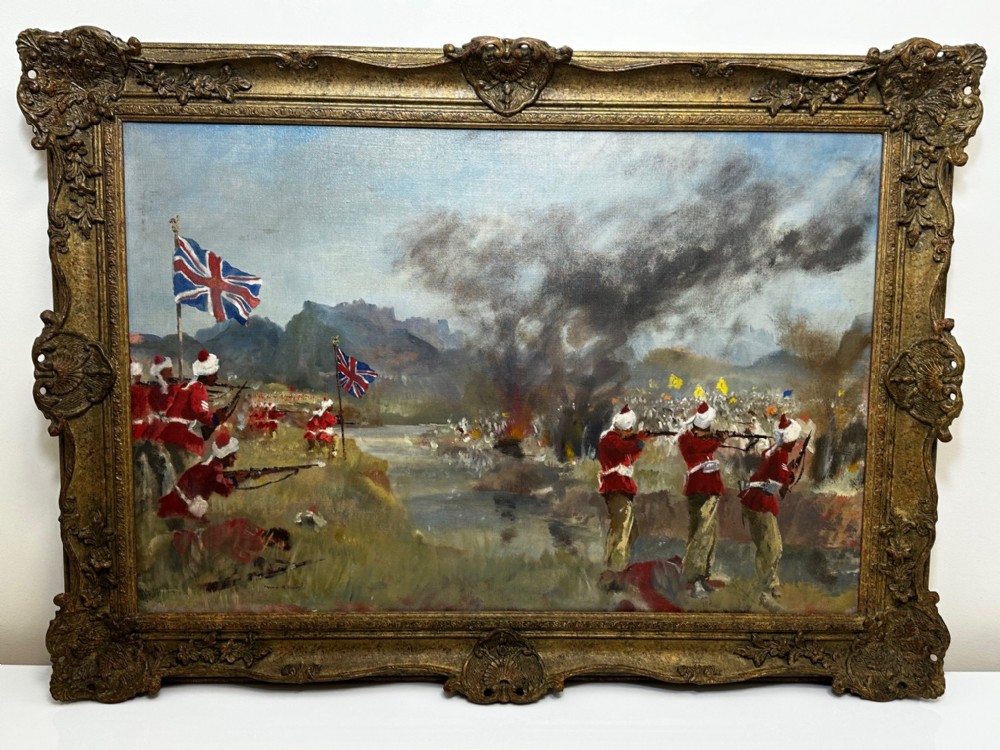
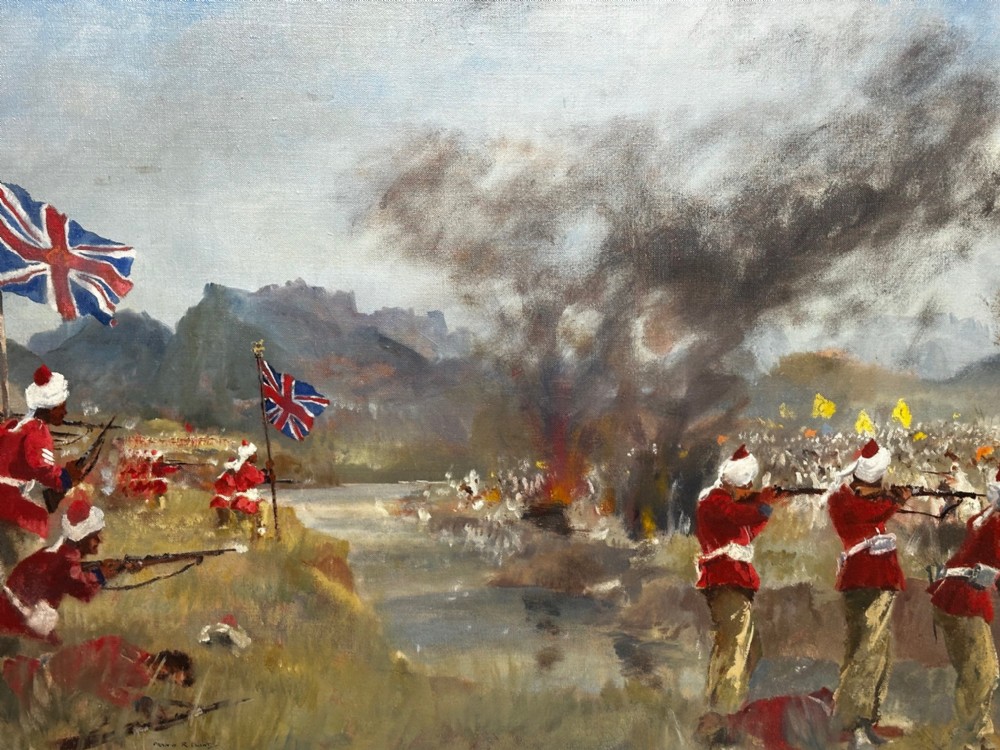
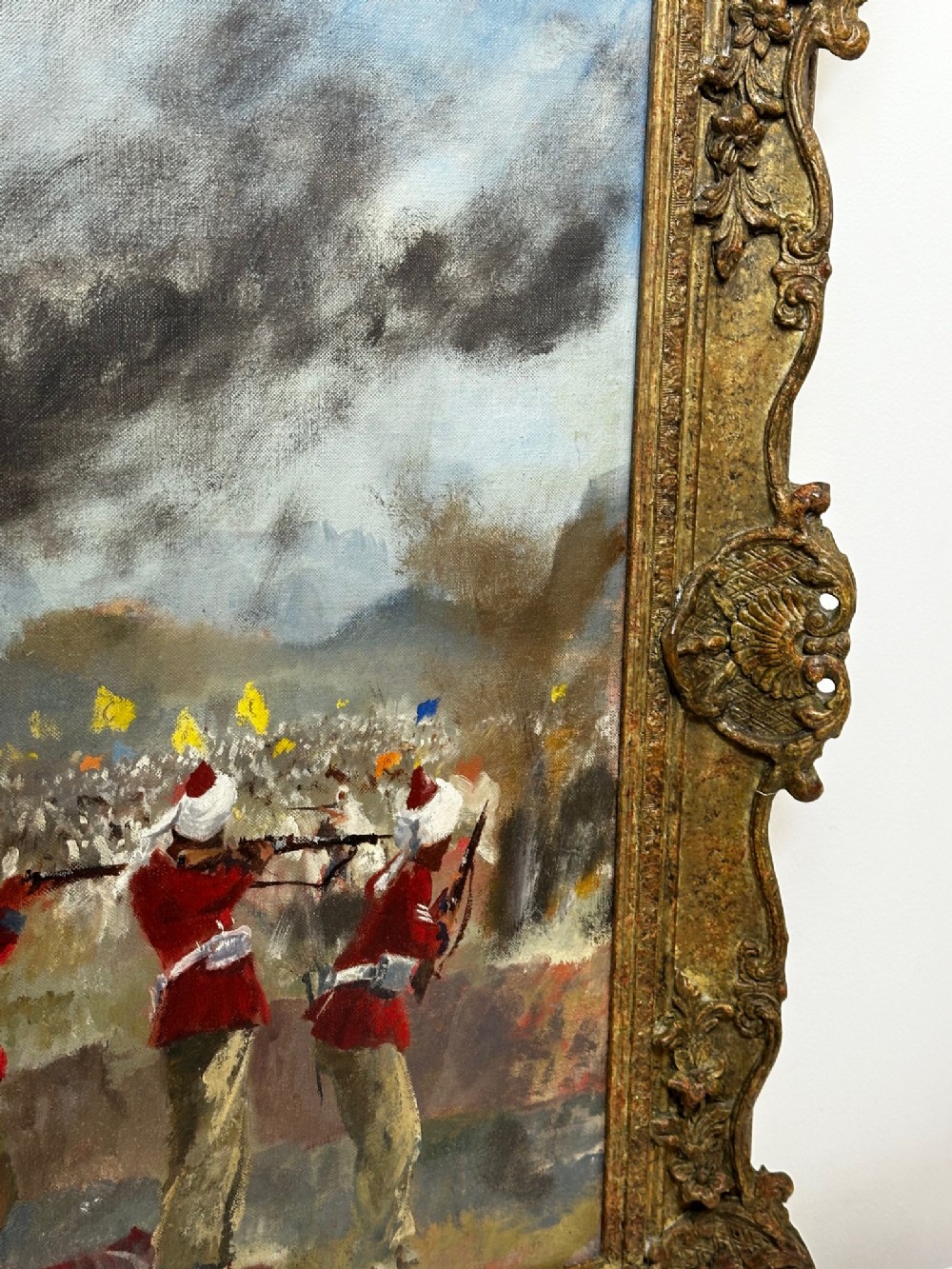
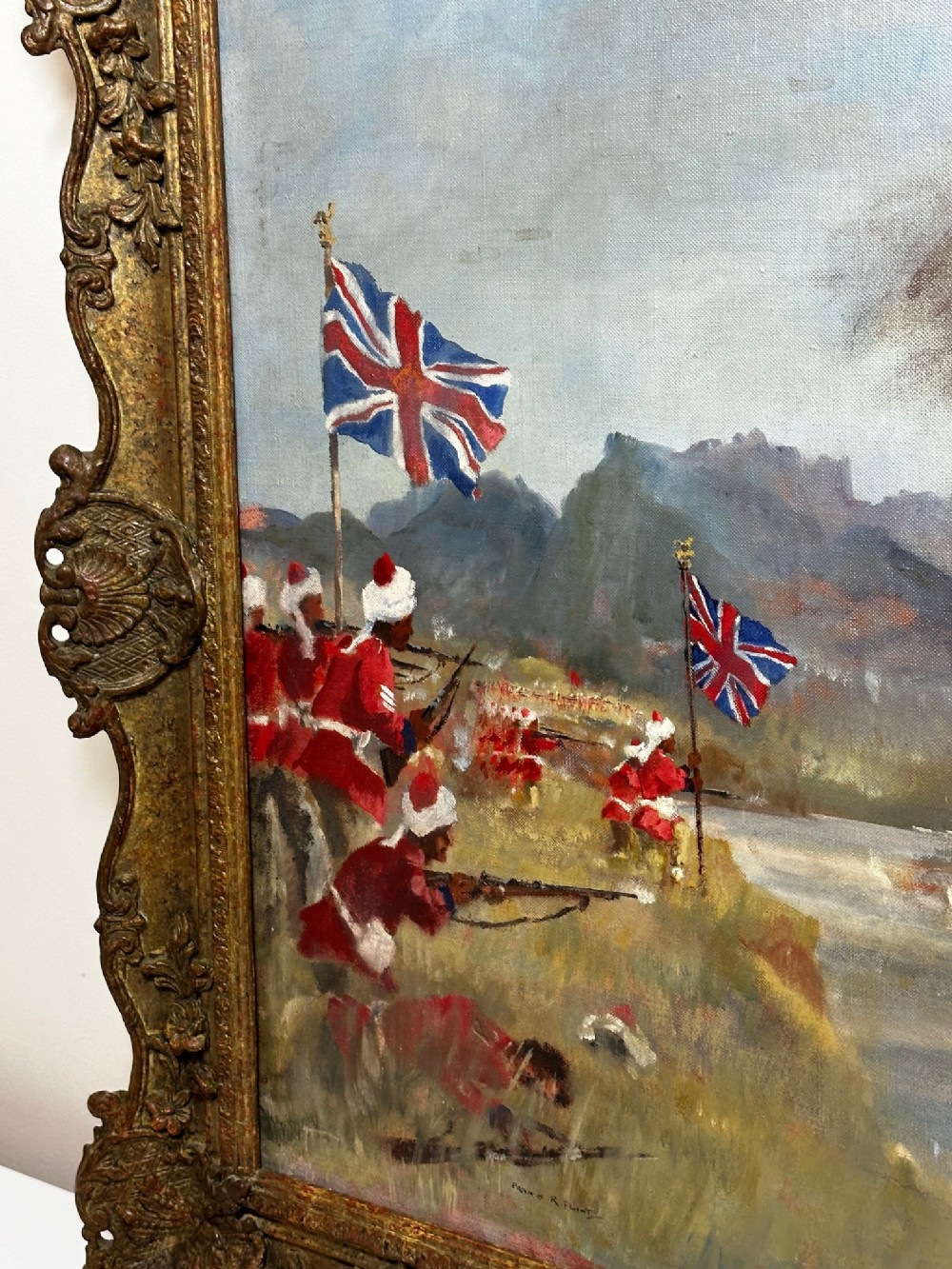
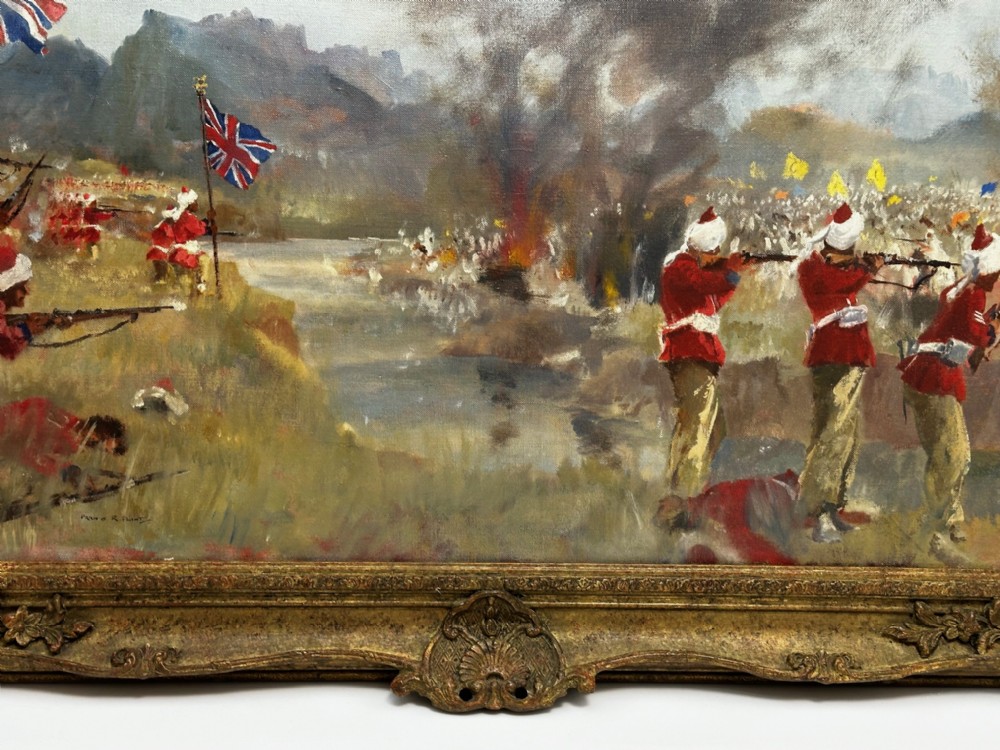
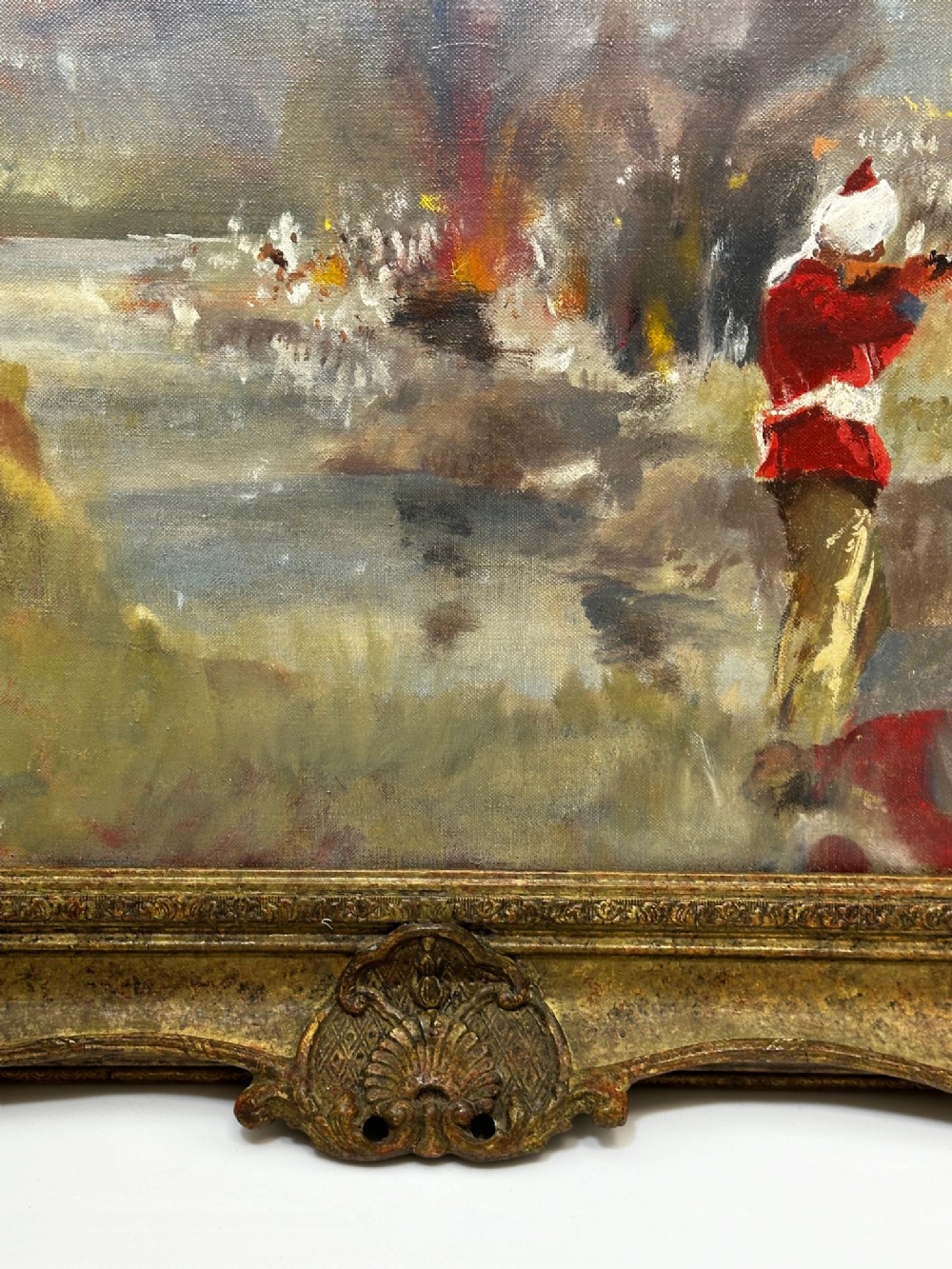
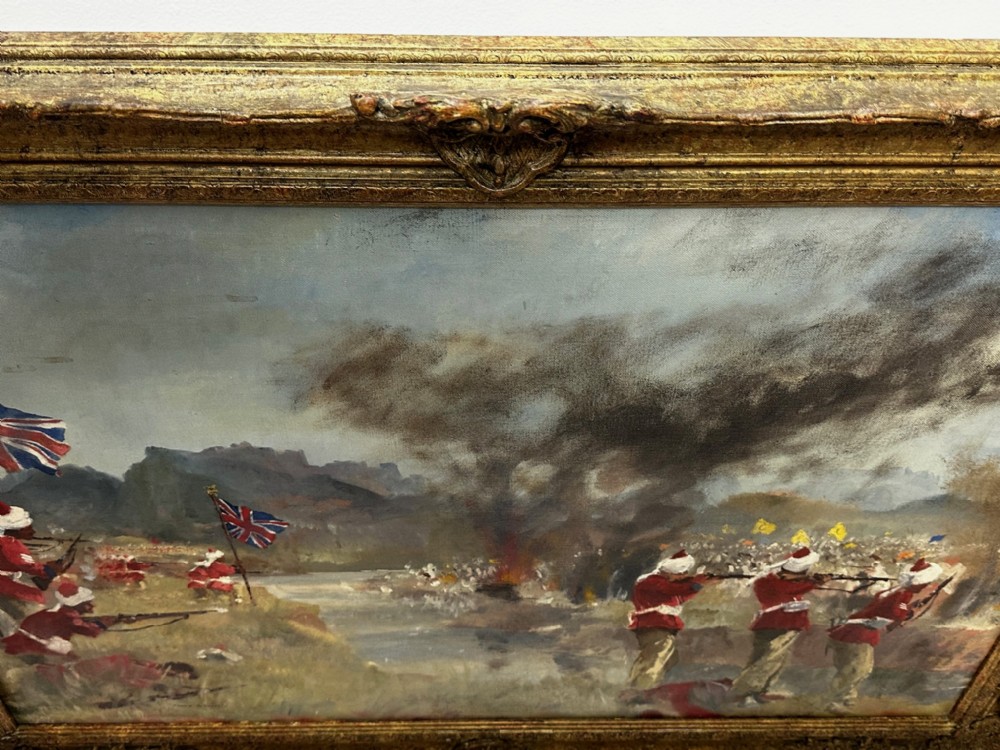
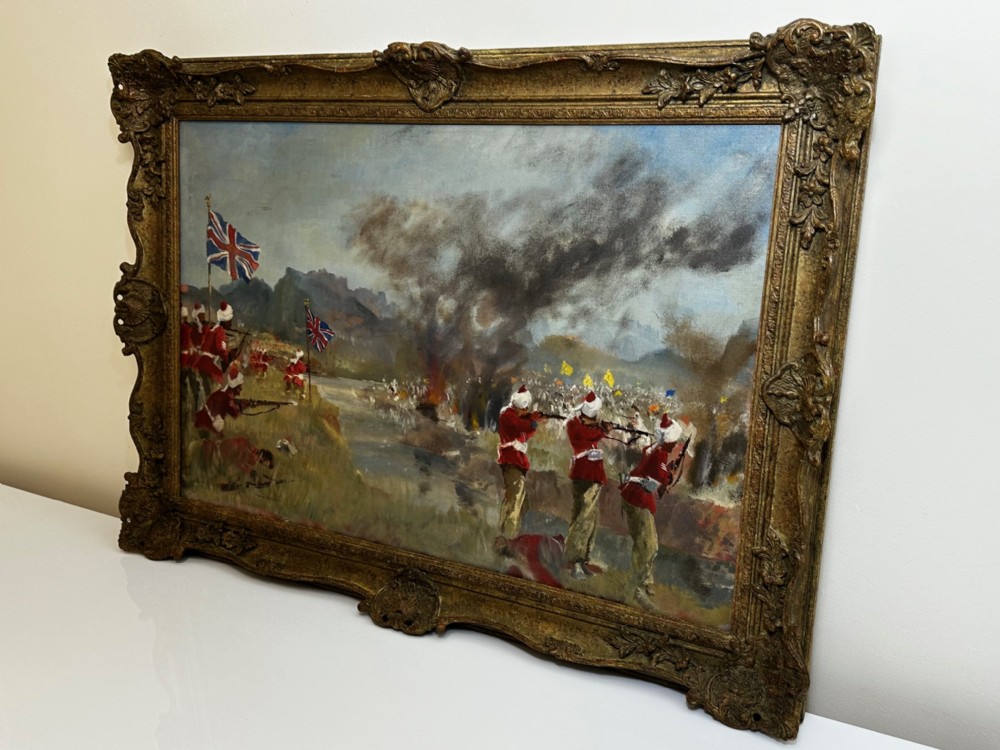
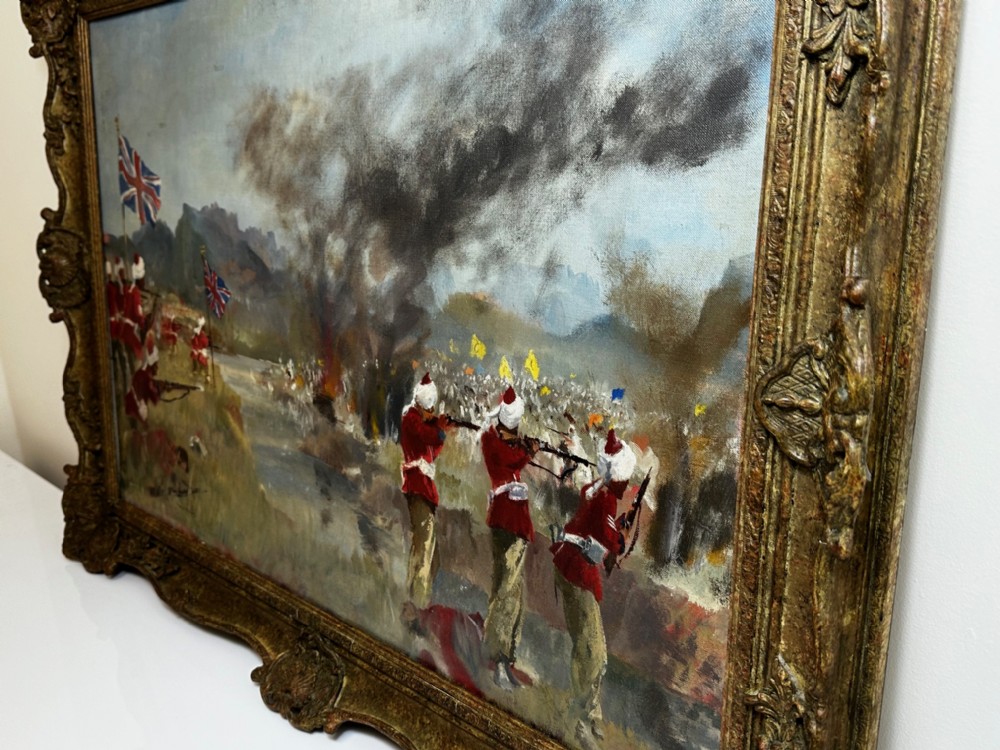
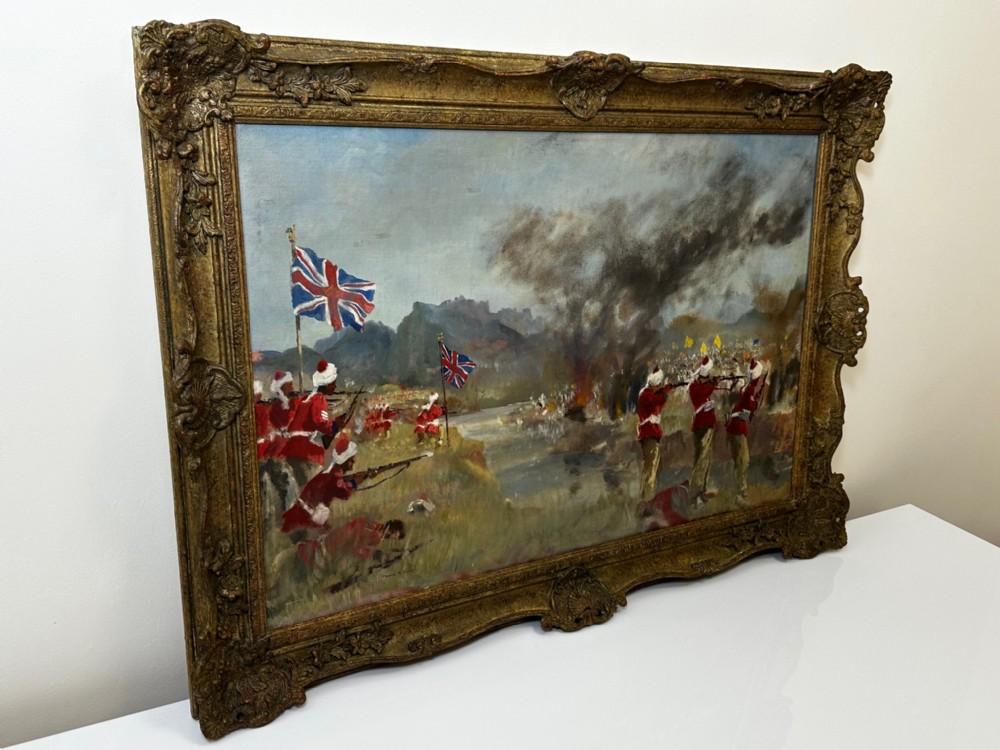
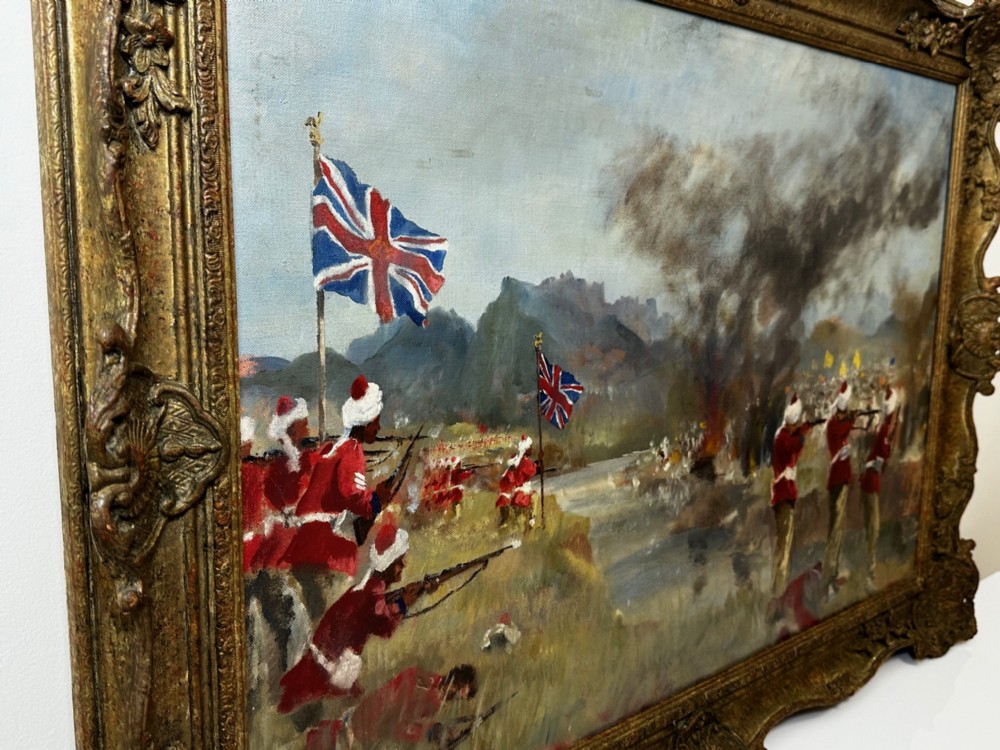
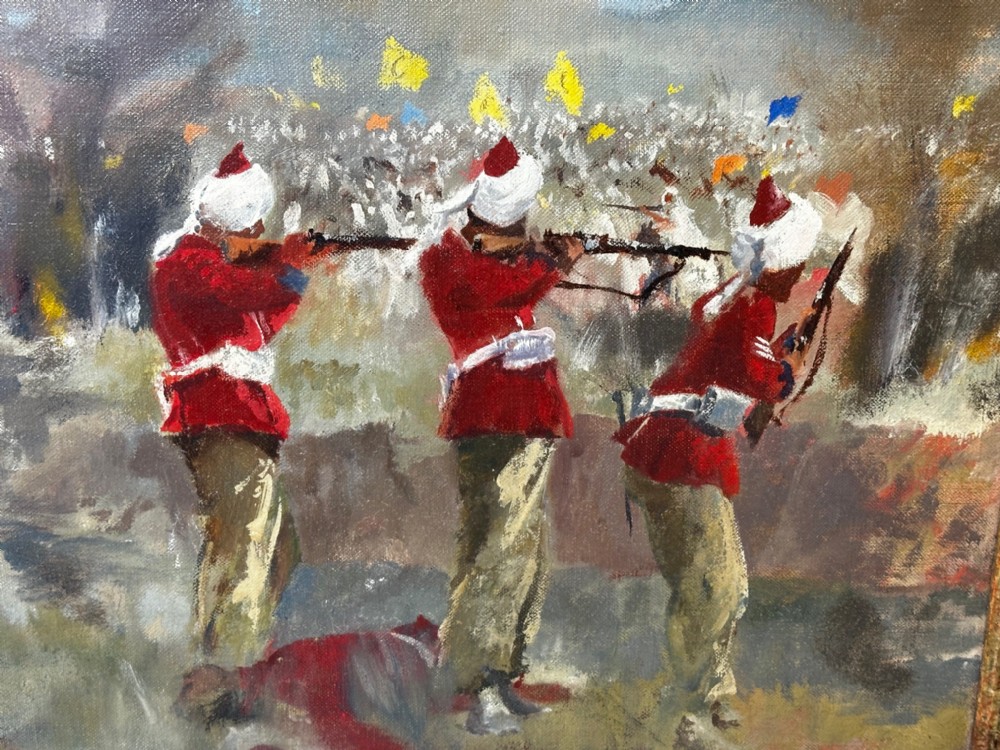
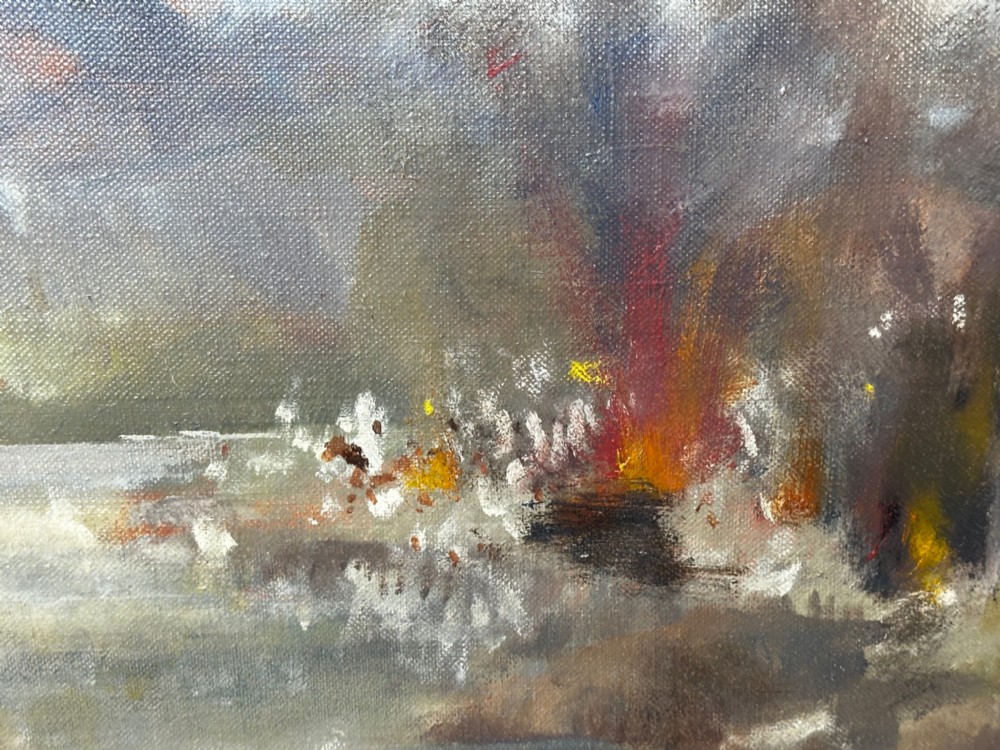
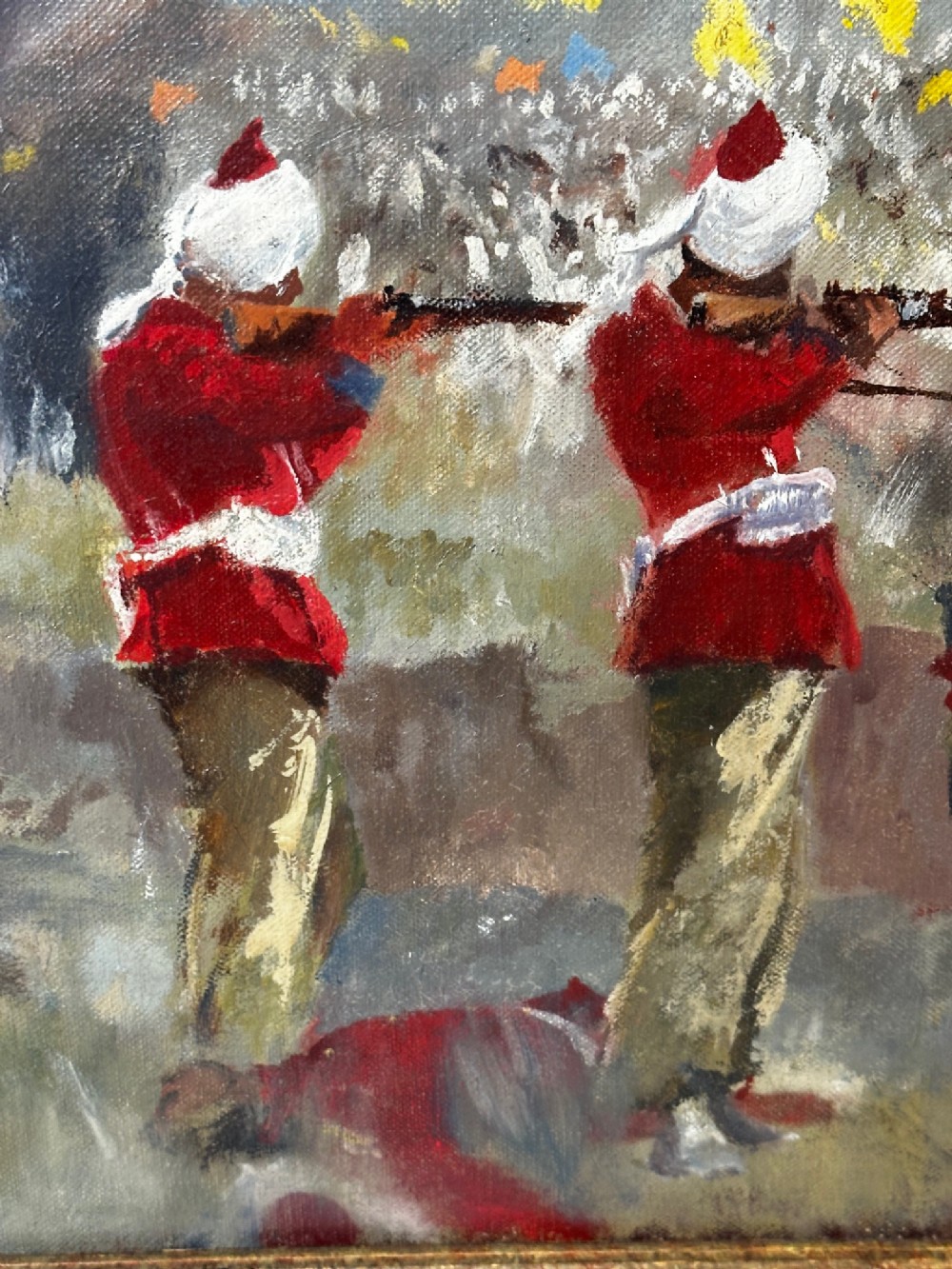
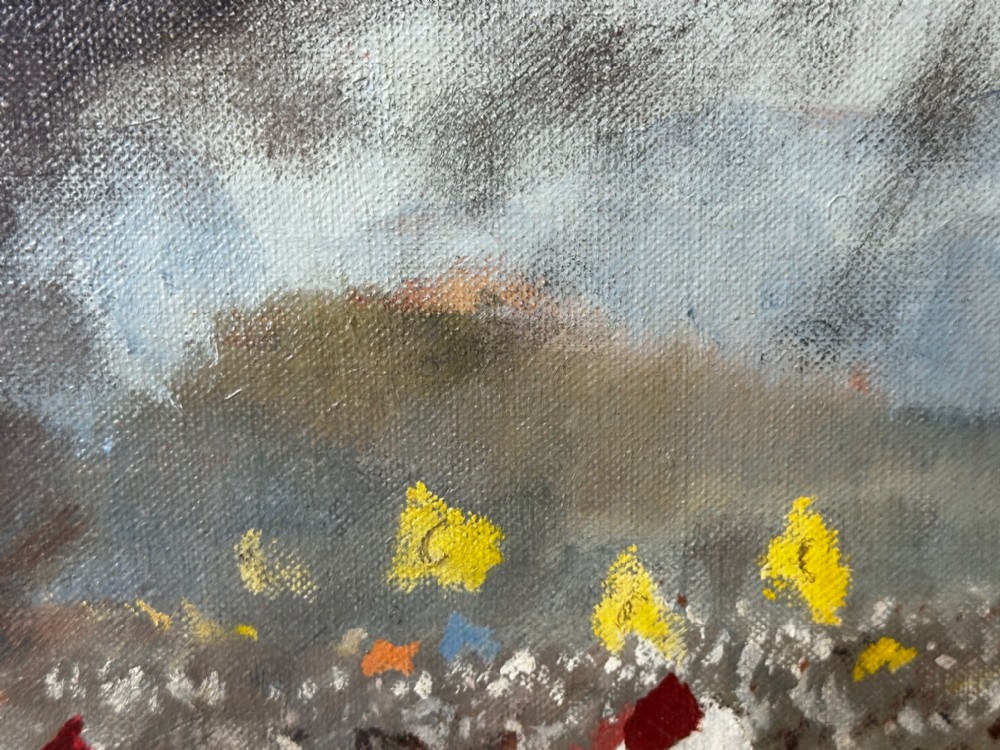
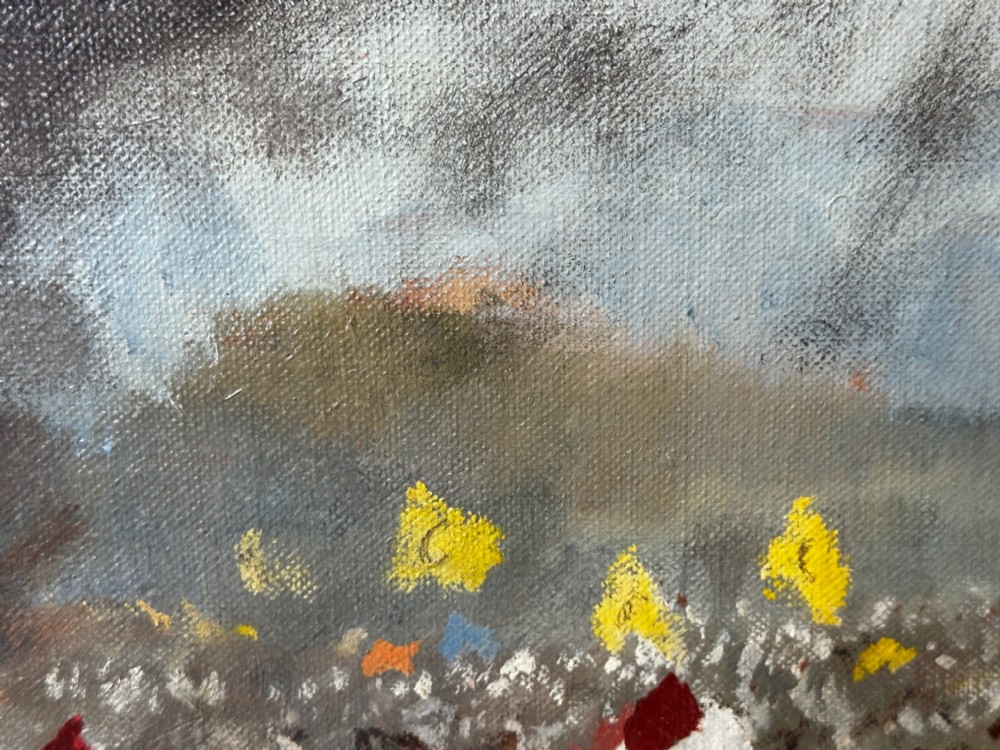
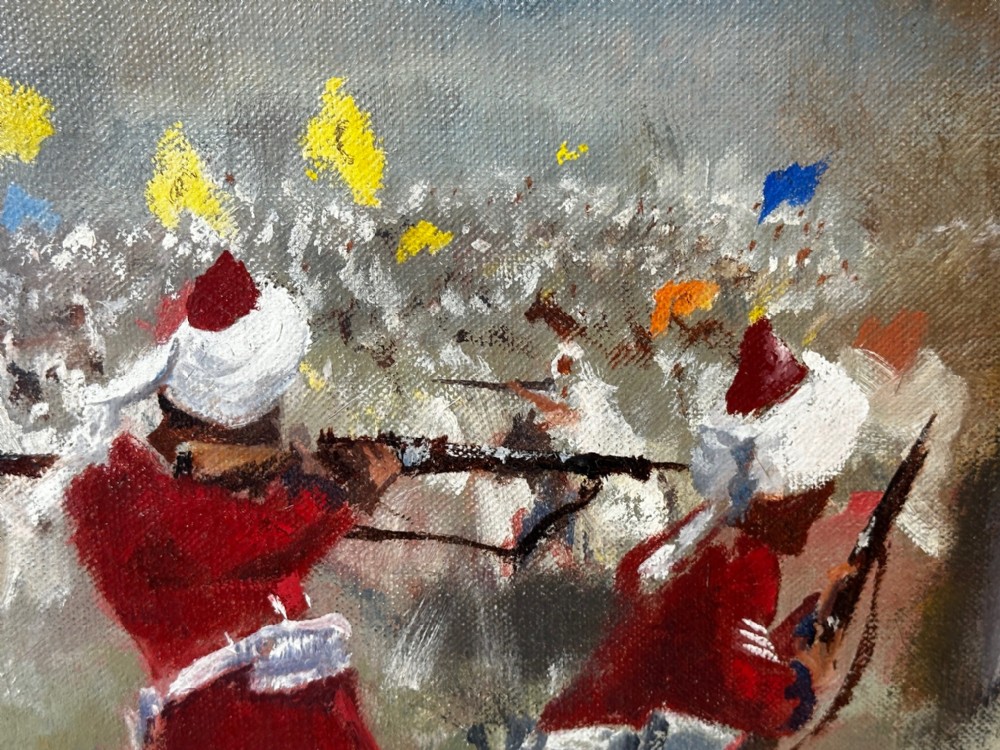
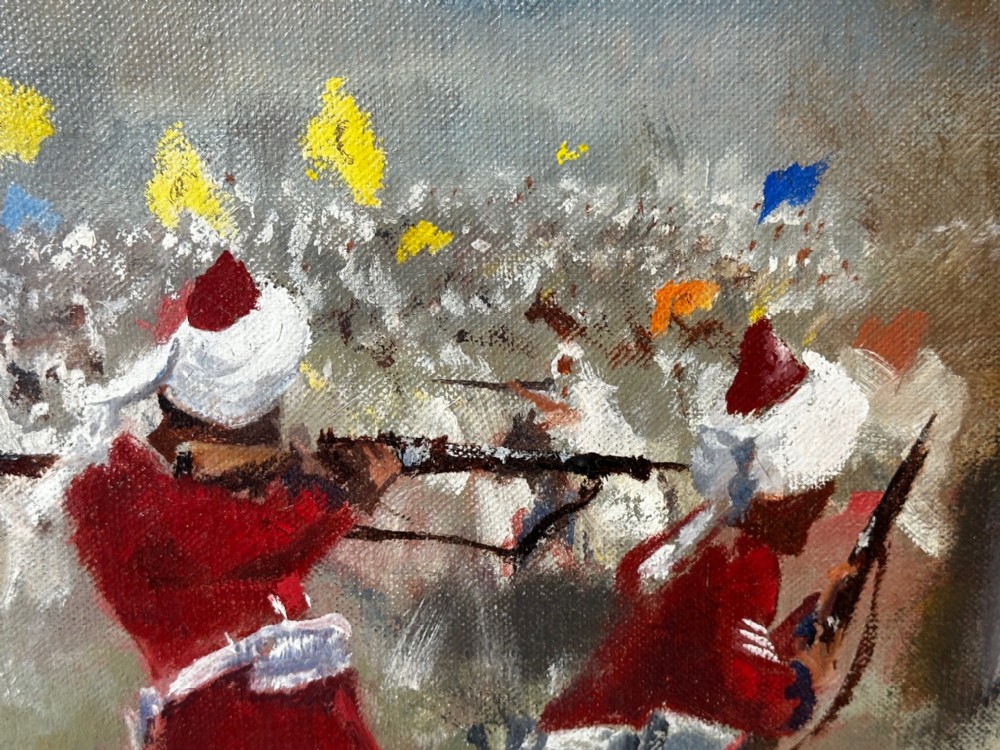
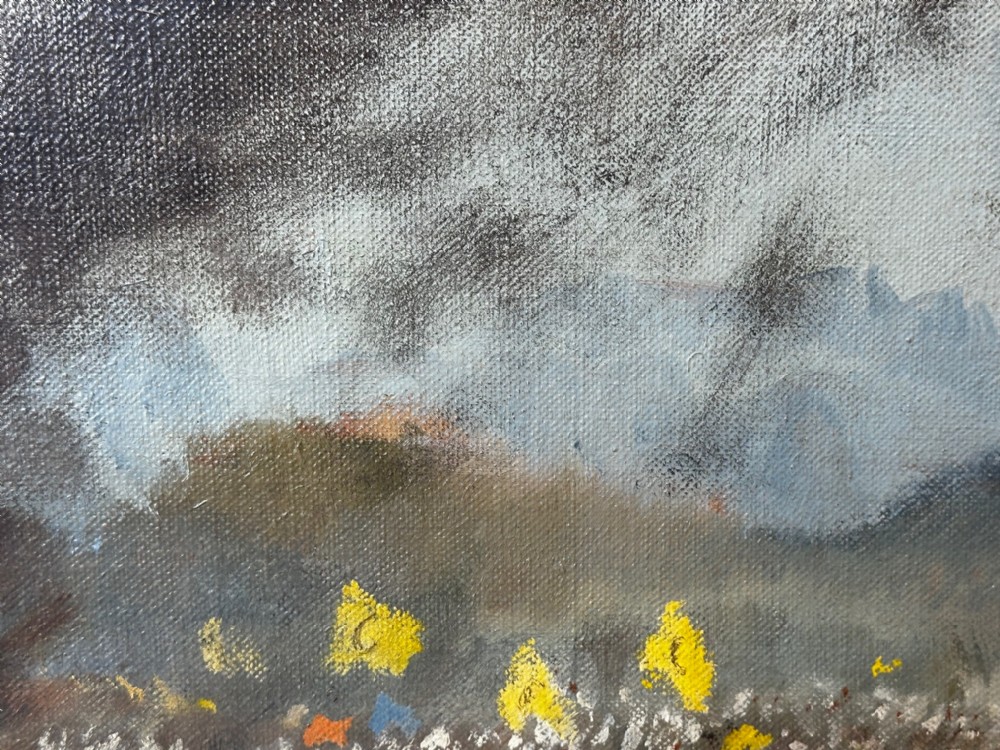
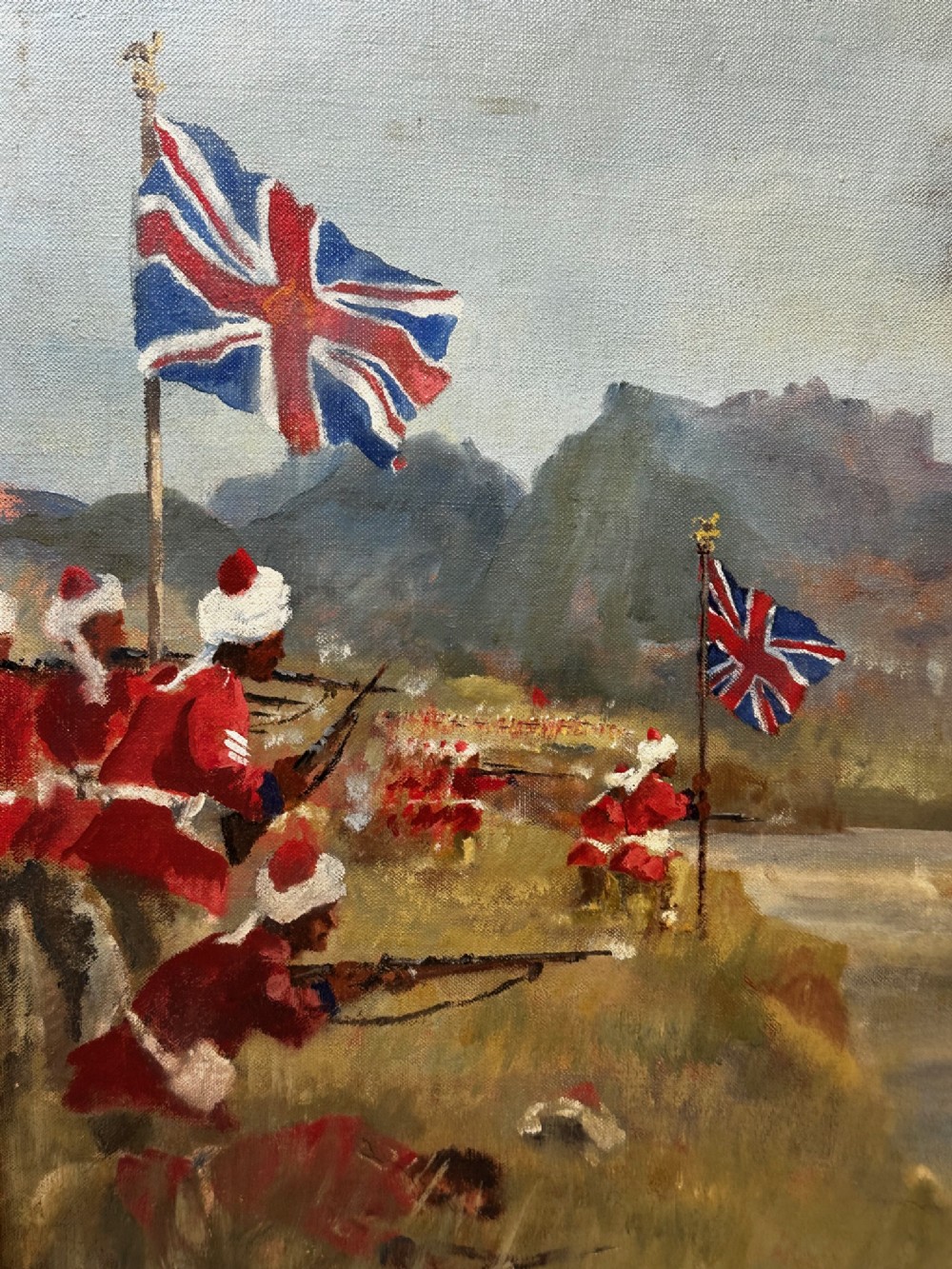
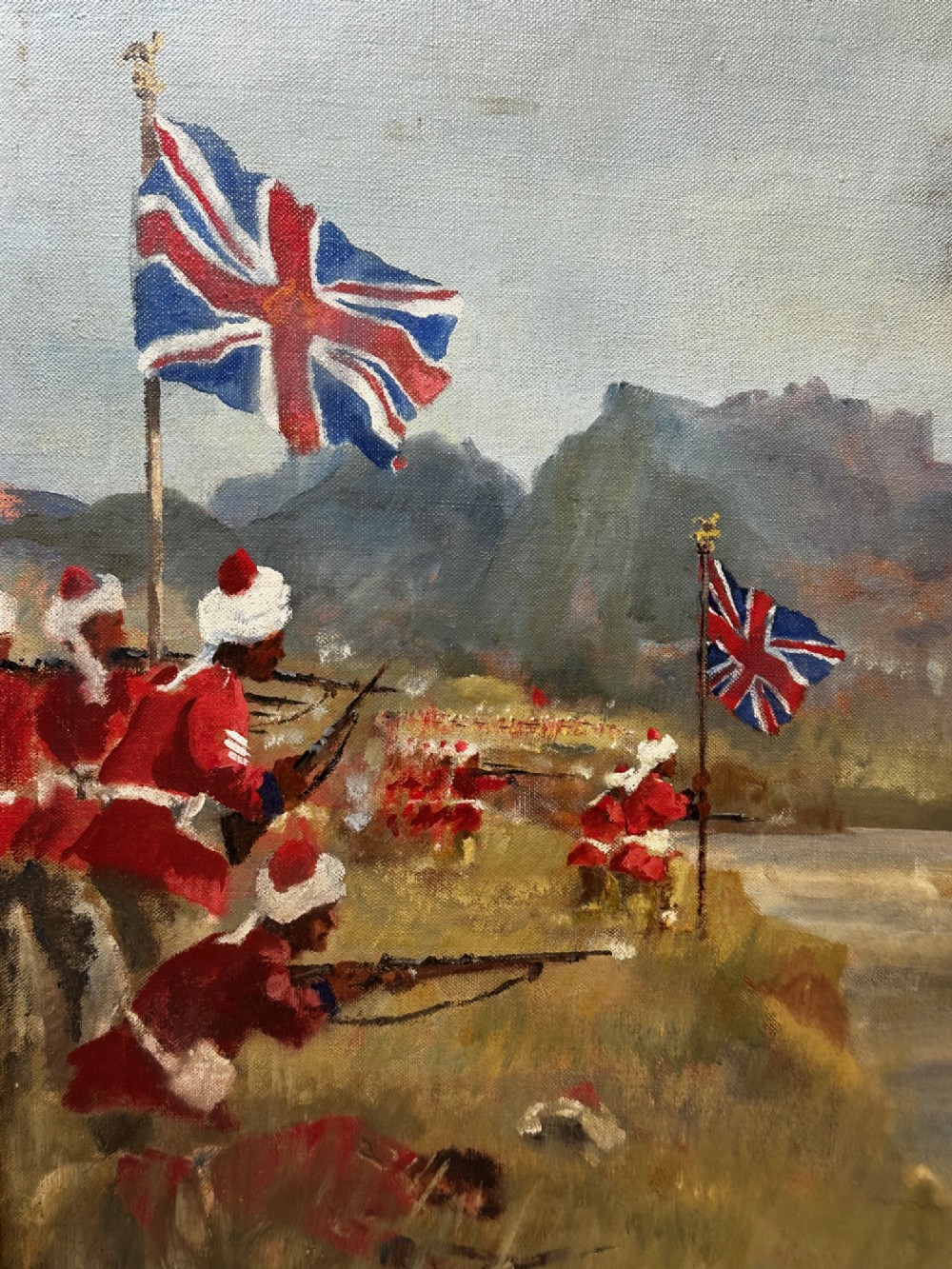
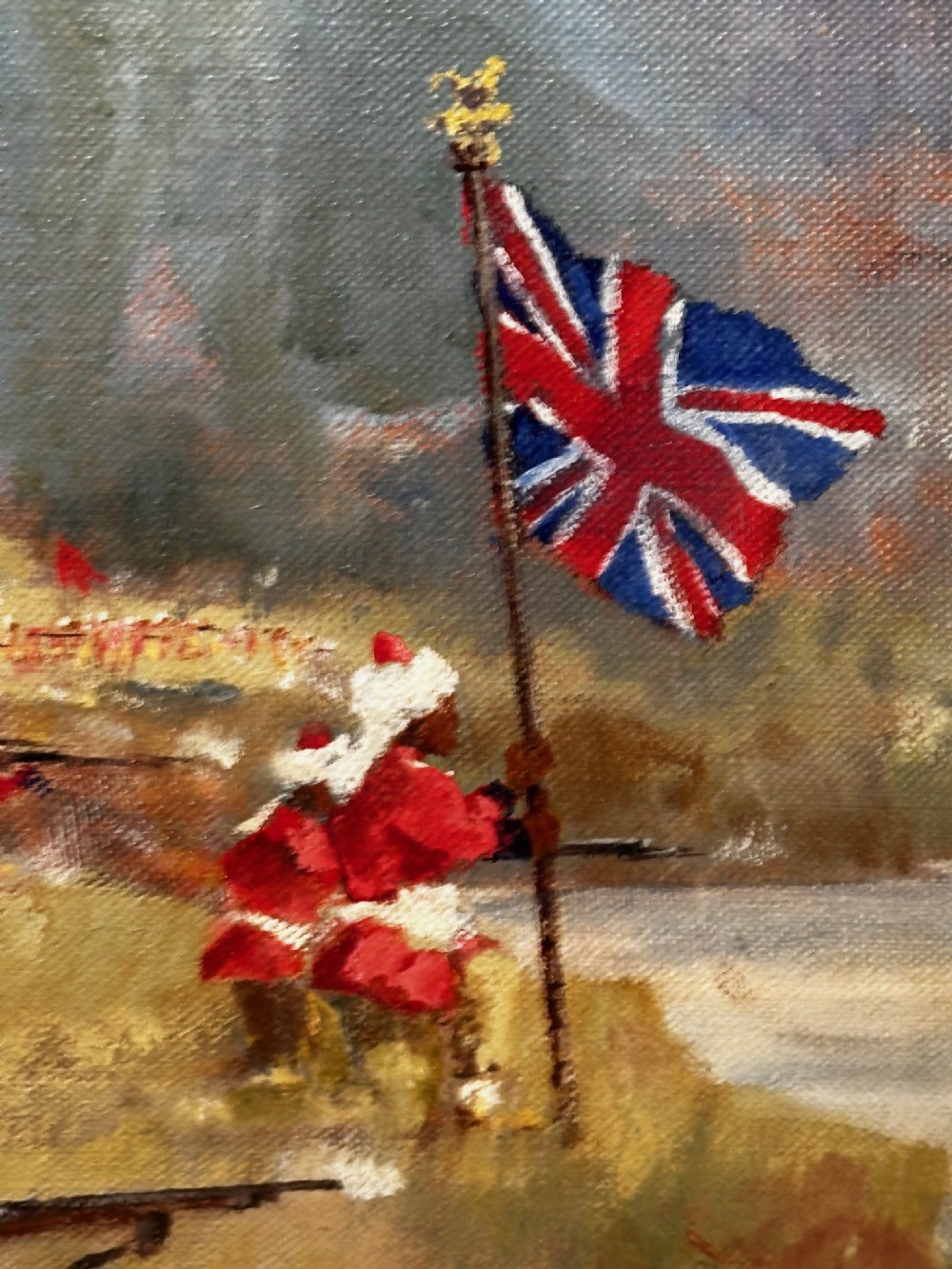
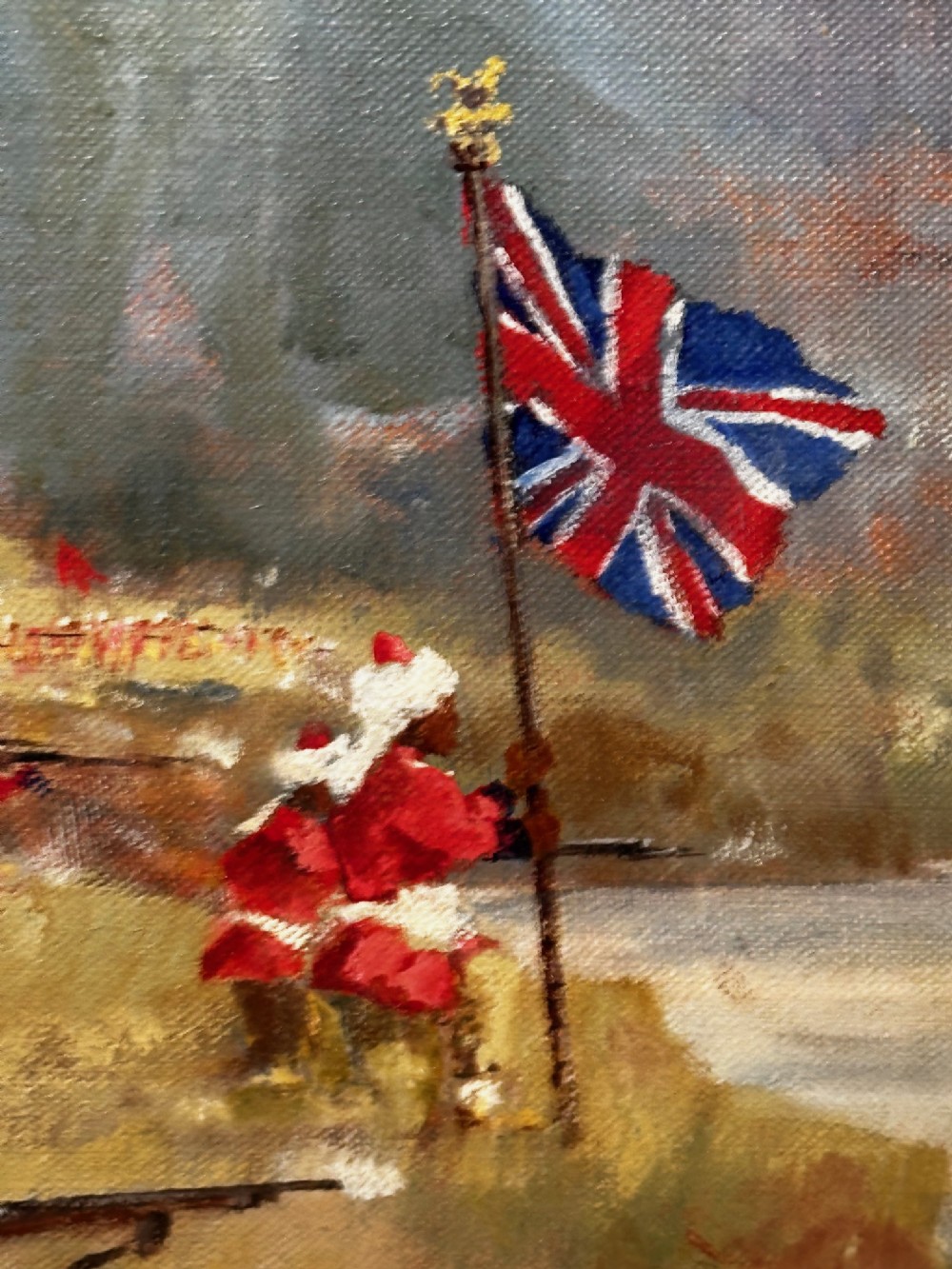
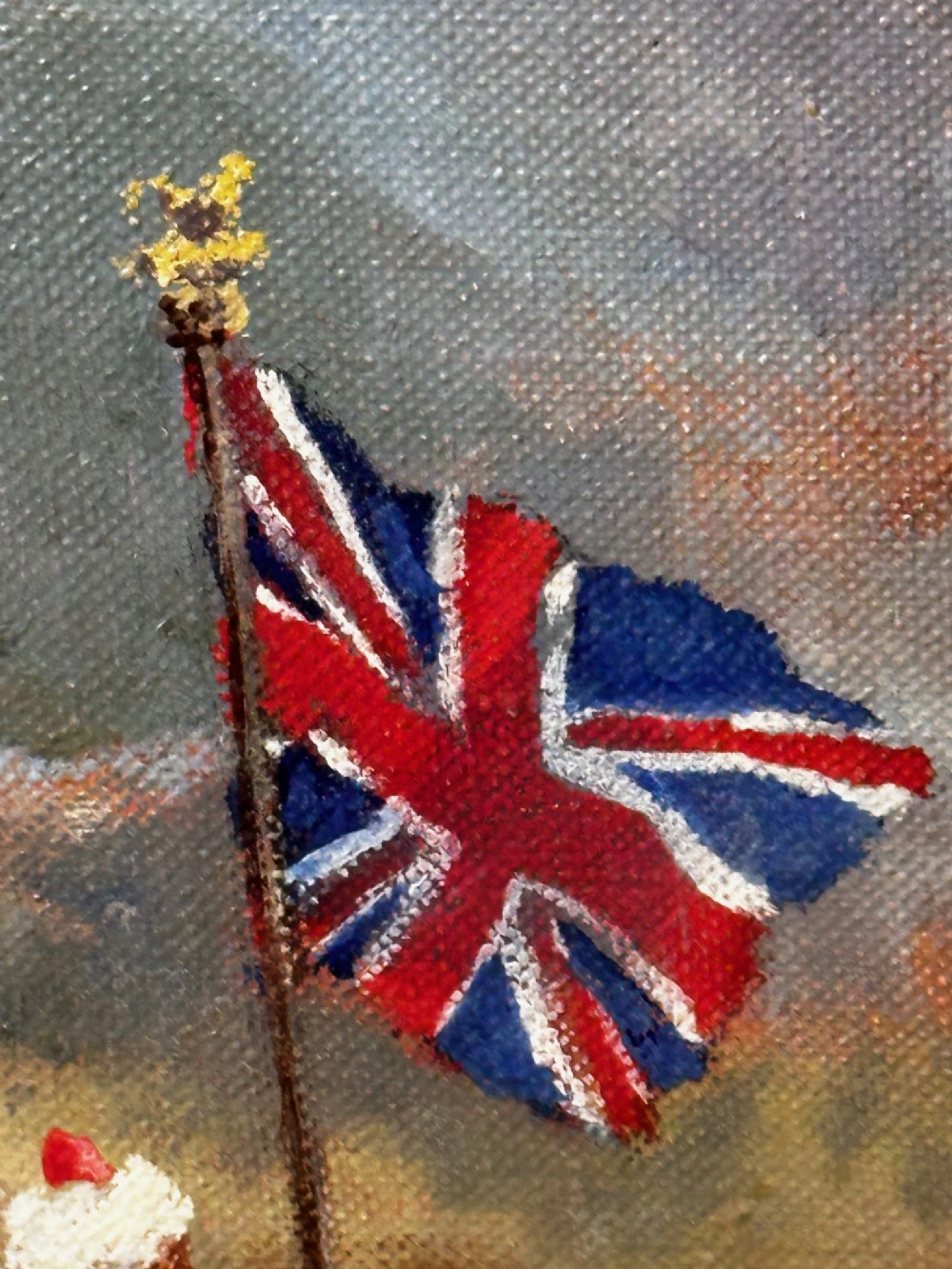
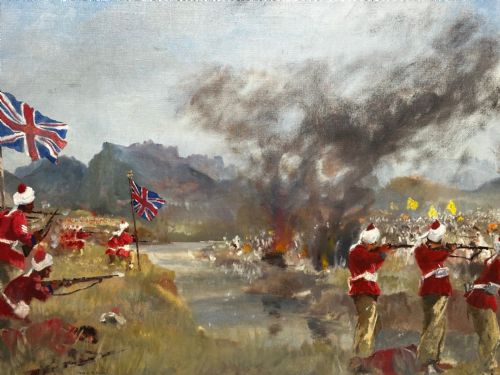
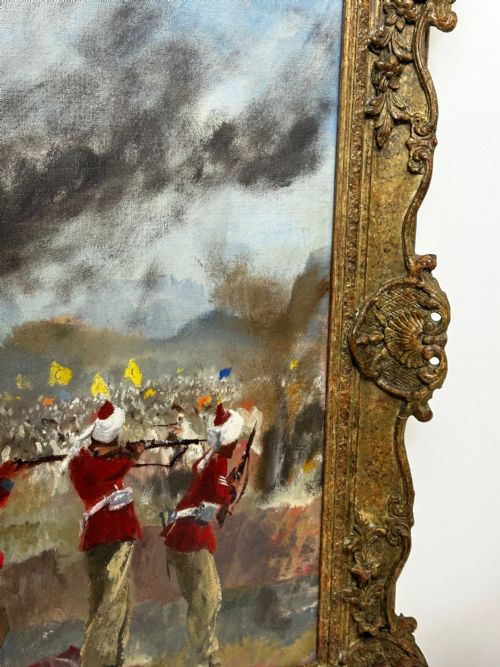
Subject depicting the late 19th century British Anglo Indian military battle war against the Afghans. This is such a thrilling exciting fascinating scene the colour hues are so vibrant. Your focus is drawn to the action with smoke and fire burning on the edge of the river bank, you can witness the Anglo Punjab regiment fighting a rearguard action holding there lines fighting and shooting at the large mass of brave Afghan warrior forces who are charging on horseback towards the red coat positions, on the right flank the Anglo British forces in position & holding the Union Jack flags aloft, below a dead red coat soldier, further back with infantry lines crouching in firing line position, in the distant background views of hills and mountains, above a mix of overcast sky with blue shining through.
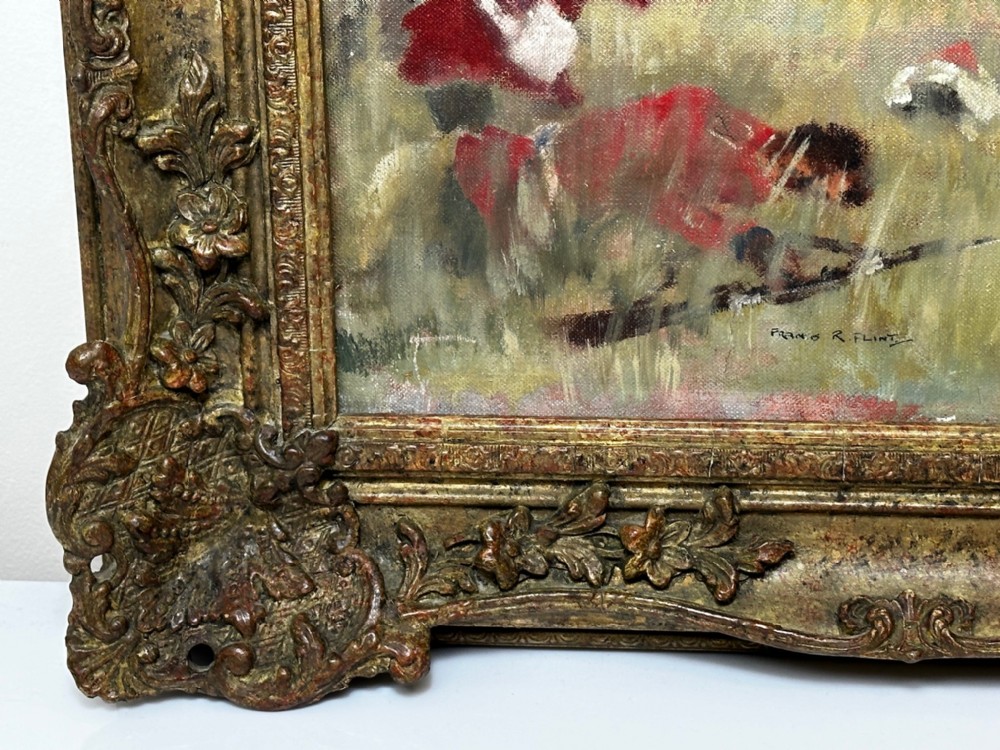
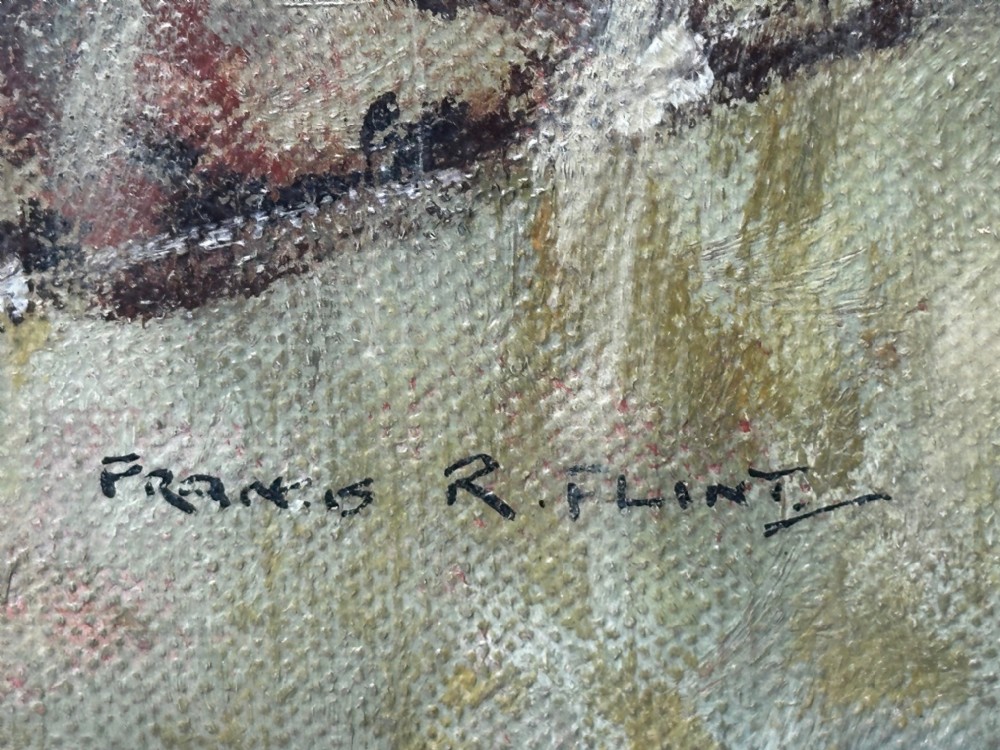
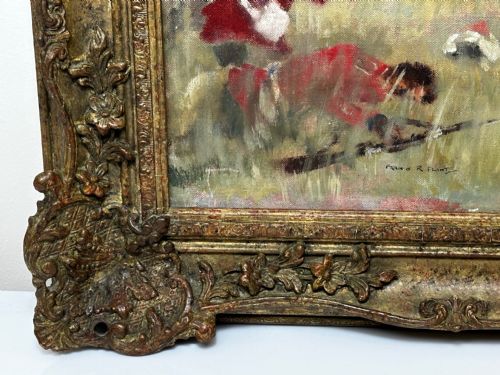
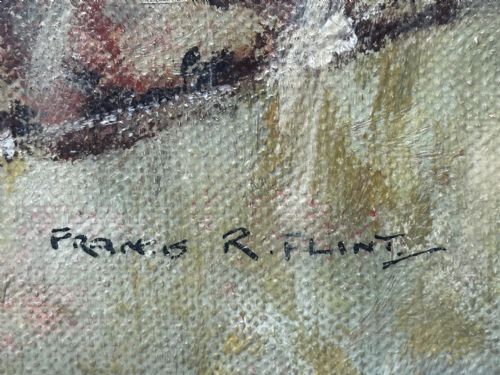
Signed in the bottom area by the known artist Francis Russell Flint.
In our opinion this one of his finest works.
Circa mid 20th century post war late 1940s.
Medium oil on canvas
Frame is an impressive size being 91 cm wide and 66 cm high.
Having beautiful highly detailed perspective.
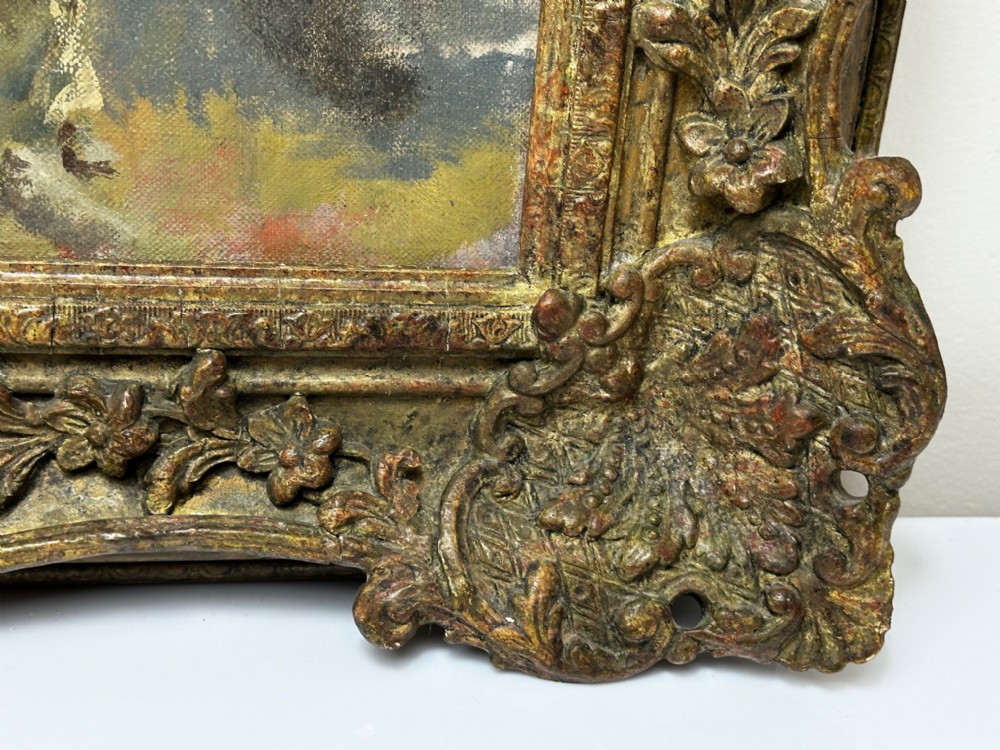
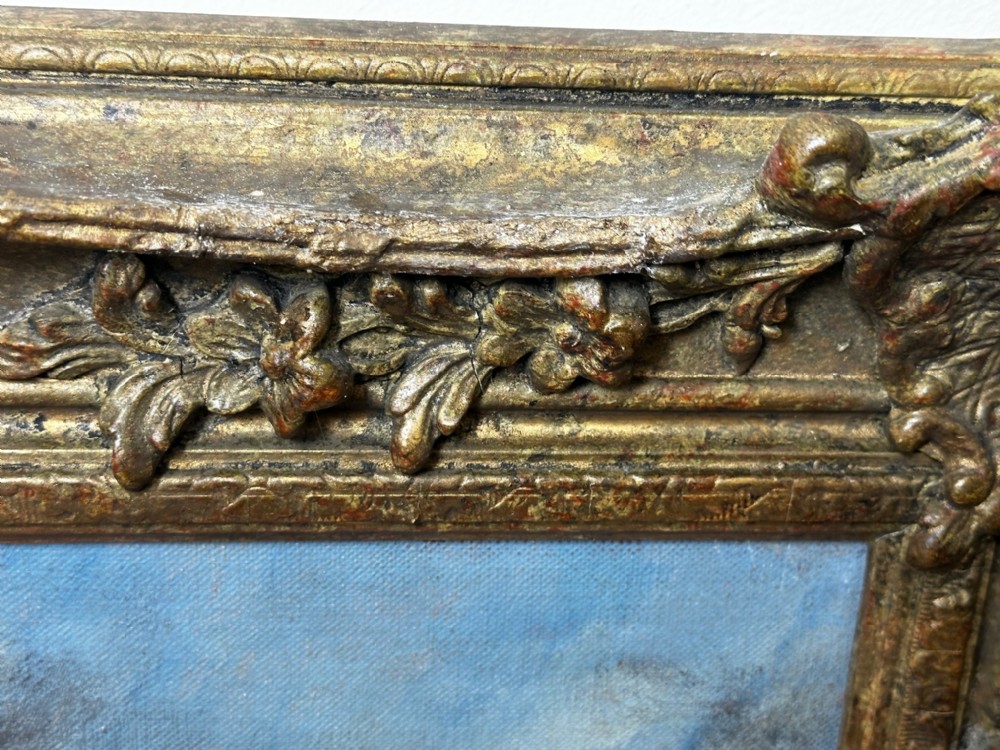
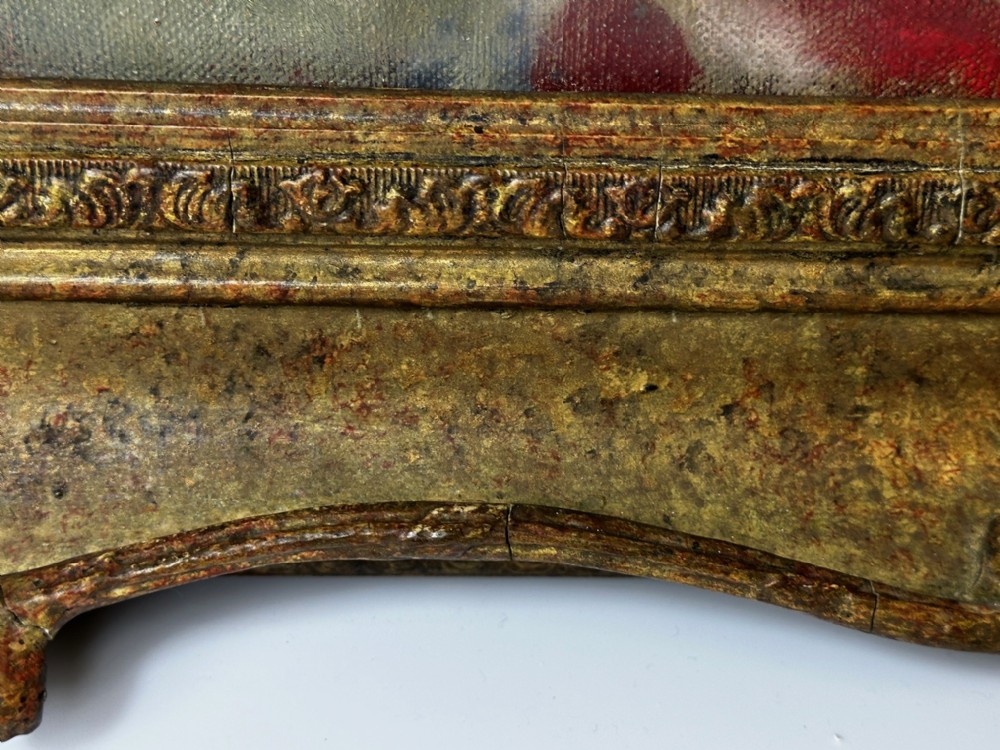
Set in a fine gilt frame.
Artist biography Francis Russell Flint a British artist born in the year 1915, he was the son of the known painter Sir William Russell Flint. He had his early childhood being brought up in London by his mother & father, mainly in Kensington. painted in oil & also in watercolour, he was known to have been educated at the Grosvenor School of Modern Art, Royal Academy School also having a period studying in Paris France. He also served in the merchant navy. He shown at the Royal Academy also in the Royal Watercolour Society, Royal Society of Marine Artists, Imperial War Museum and he was the official war admiralty artist in World war 2. Many of his works have been featured in Royal Academy Illustrated and in the Sketch also Tatler & in the Illustrated London News. Flint was also known to have written for the Artist and the Studio along with writing books about watercolour painting. He lived at Burgess Hill in Sussex in Southern England. He died in at the age of 62 in 1977 due to an accident whilst he was abroad. His works have sold at auctions around the world.
The Second Anglo-Afghan War was a military conflict fought between the British Raj and the Emirate of Afghanistan from 1878 to 1880, when the latter was ruled by Sher Ali Khan, Khan, Khan of the Barakzai dynasty, the son of former Emir Dost Mohammed Khan. The war was part of the Great Game between the British and Russian empires. The war was split into two campaigns – the first began in November 1878 with the British invasion of Afghanistan from India. The British were quickly victorious and forced the Amir – Sher Ali Khan to flee.
Ali's successor Mohammed Yaqub Khan immediately sued for peace and the Treaty of Gandamak was then signed on 26 May 1879. The British sent an envoy and mission led by Sir Louis Cavagnari to Kabul, but on 3 September this mission was massacred and the conflict was reignited by Ayub Khan which led to the abdication of his brother Yaqub. The second campaign ended in September 1880 when the British decisively defeated Ayub Khan outside Kandahar. Abdur Rahman Khan who had been an opponent of the British, was invited to be the new Amir and accepted. He ratified and confirmed the Gandamak treaty once more. Having created the buffer the British wanted between the Raj and the Russian Empire, British and Indian soldiers then withdrew from Afghanistan.
The Battle of Kam Dakka was fought on 22 April 1879 between British forces under Captain O’ Moore Creagh and Afghan forces, mainly Mohmand tribesmen, during the Second Anglo Afg
Cheshire Antiques Consultant Ltd has dated this Military Battle Oil Painting to the 1950s.
This is an independent date report produced by Sellingantiques using its own proprietary system. The process uses the photographs shown on this page. The system is never told the date the dealer has declared. This report shows that the two dates corroborate.
Source the historic in 17th, 18th, 19th & 20th century fine arts, painting, sculptures & collectibles
You can view the stock and full dealer information on the Cheshire Antiques Consultant Ltd Profile Page
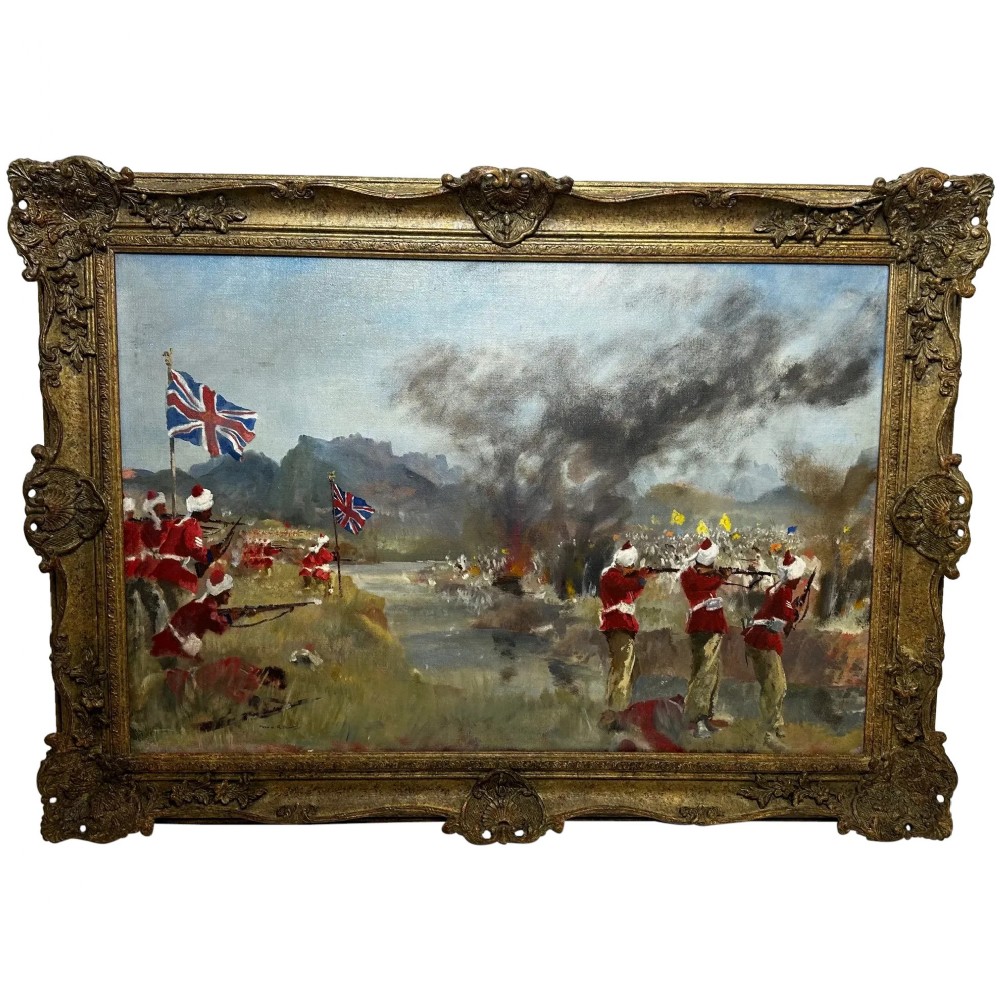
Oil Painting Military Battle 2nd Afghan War by Francis Russell Flint