



Ebonised Framed Glass Art
These ebonised framed glass art pieces combine delicate reverse painting, mezzotints, and silhouettes within dark wooden surrounds.
Ebonised Framed Glass Art
When you search for ebonised framed glass art, you encounter a specialised selection of wall pieces, portrait miniatures, and reverse glass prints housed in dark, treated wooden frames. These works span the seventeenth, eighteenth, and nineteenth centuries, offering a glimpse into historical portraiture and decorative scenes.
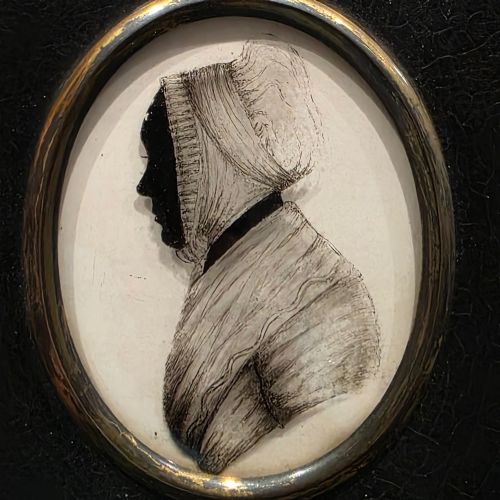
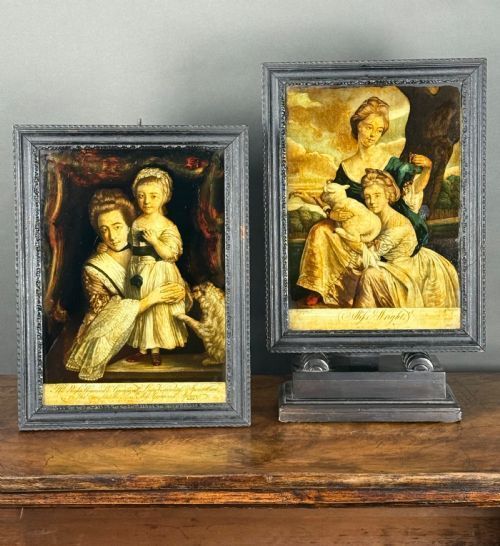
The objects most frequently met on this page include Georgian and Regency reverse glass prints, silhouette portraits, and detailed mezzotints. Makers applied their chosen imagery directly to the glass or framed delicate paper silhouettes behind protective glazing.
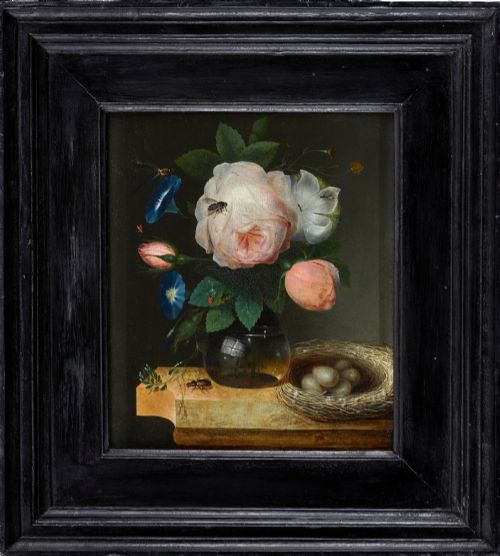
Originating across British, European, and Chinese export traditions, these items range from intimate miniature portraits of figures like Queen Caroline to larger floral still lifes and allegorical scenes. The dark ebonised frames provide a sharp contrast that draws the eye toward the illuminated details beneath the glass.
Judging quality in ebonised framed glass art
The fineness of the brushwork and the clarity of the reverse painted details separate standard examples from superior pieces. Skilled hands achieved subtle facial expressions and tonal gradations that remain crisp behind the glass.
The preservation of the original ebonised frame and the stability of the pigment beneath the glass dictate the overall integrity of the piece. Intact surfaces without excessive flaking or crude later retouching indicate a well-preserved survival from the period.
Listings feature works from the seventeenth century onwards, incorporating Georgian and Regency reverse glass prints and silhouette portraits.
Fletcher·Sebastiaan Vrancx·Gaspar Peeter Verbruggen·W Bishop·John Miers
The Ebonised Framed Glass Art Glossary
- Ebonised
- Wood treated with a dark stain or finish to resemble genuine ebony wood. This dark border creates a stark visual boundary for the glass artwork within.
- Reverse glass painting
- An artistic technique where the image is painted on the back of a glass sheet and viewed from the front. The technique demands that the artist paints background details before foreground elements.
- Mezzotint
- A printmaking process where the copper plate is roughened to achieve rich tonal variations in dark and light. When combined with glass prints, this method produces velvety shadows.
- Silhouette
- A portrait profile filled in with a solid dark colour, often cut from paper or painted. These profiles frequently appear set against a pale background behind glass.
- Micromosaic
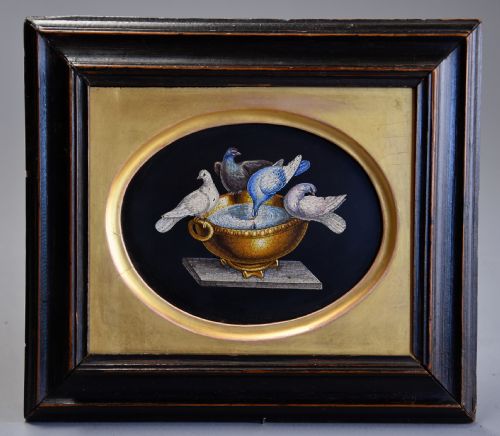
- Tiny coloured glass tesserae assembled into intricate pictorial plaques. These detailed panels are occasionally mounted directly into ebonised frames.
Ebonised Framed Glass Art: Frequently Asked Questions
What is ebonised framed glass art?
These pieces consist of historical artworks created on glass, such as reverse paintings, mezzotints, and silhouettes, housed within dark wood frames. They primarily date from the Georgian and Regency eras.
The ebonising process gives the wooden frame a deep, dark finish that accentuates the illuminated colours and delicate lines of the glass panel held inside.
How were reverse glass prints made?
Artists painted or printed directly onto the reverse side of a glass sheet, meaning every detail had to be executed in reverse order. Foreground elements went down before the background.
When turned over and viewed through the front, the glass protected the pigments from dust and air while imparting a glossy sheen to the finished image.
Where should I hang these pieces?
Because glass and painted surfaces are sensitive to strong sunlight and moisture, these artworks require stable indoor environments away from direct windows. A position on an interior wall suits them best.
Their dark frames pair well with neutral walls where the contrast of the ebonised wood and the illuminated glass can be fully appreciated.
How do I identify a Georgian piece?
Georgian examples often feature specific portrait subjects like King George III or Queen Caroline, alongside characteristic typography and clothing styles of the late eighteenth and early nineteenth centuries. The construction of the ebonised frame also offers clues to the period.
Examining the backboards, fixings, and the type of glass used helps confirm the age of the piece alongside the stylistic traits of the painted subject.