


Framed Botanical Watercolour
Framed botanical watercolour pieces bring the quiet detail of garden studies into interior spaces through hand-painted works on paper.
Framed Botanical Watercolour
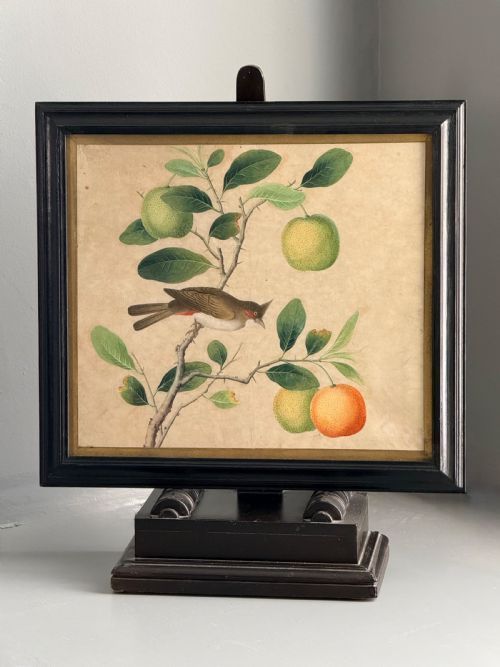
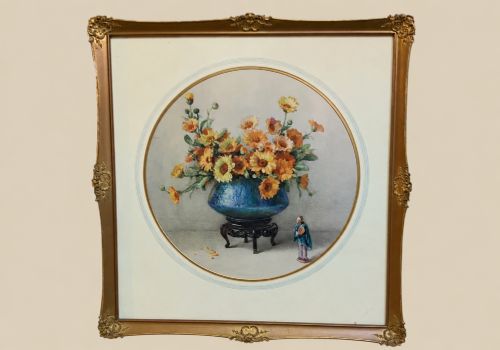
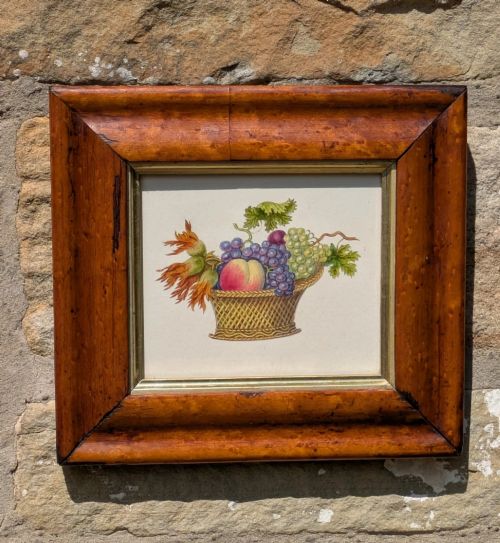
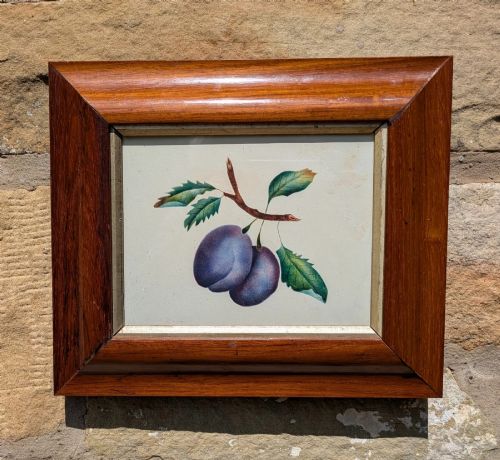
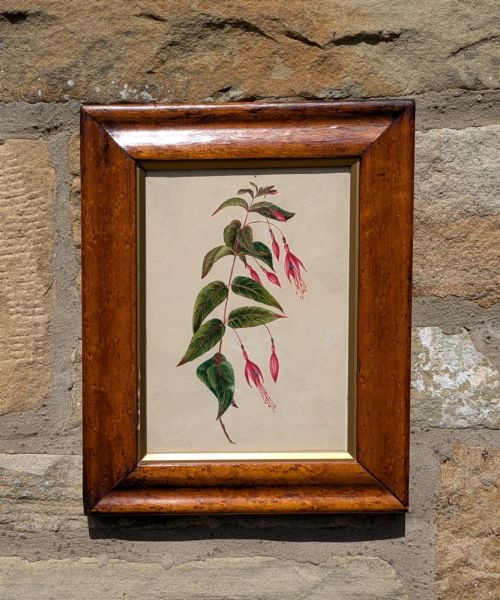
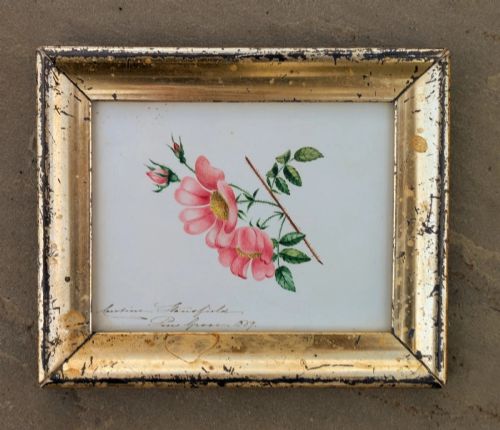
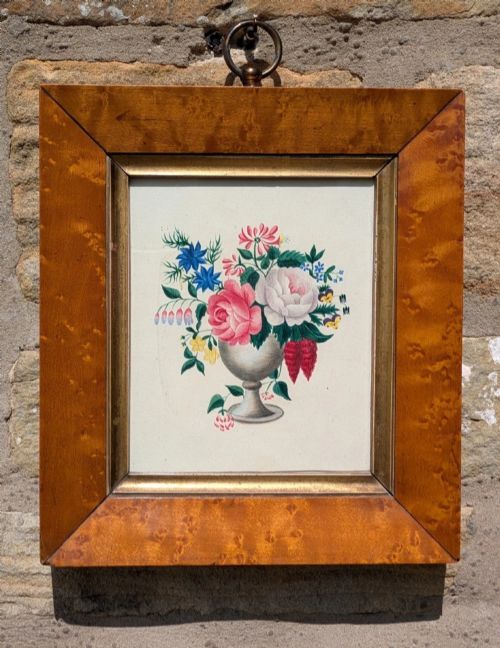
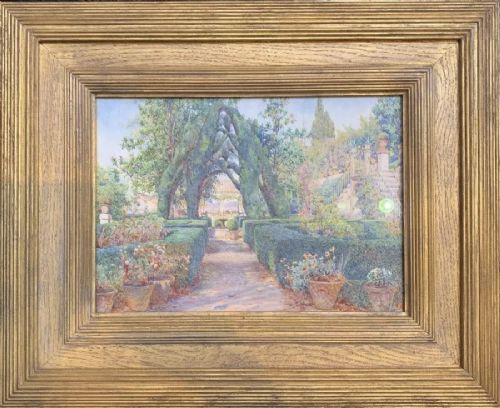
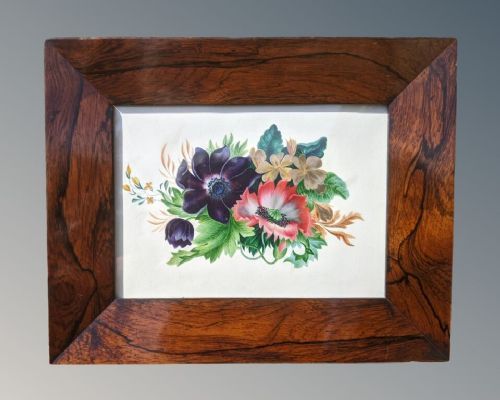
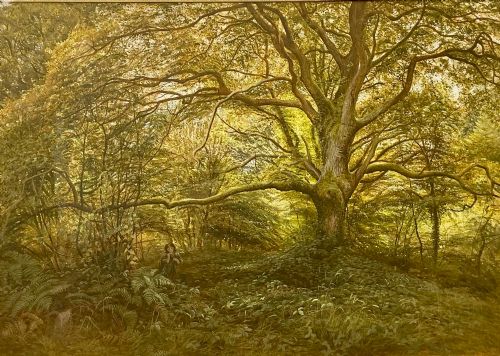
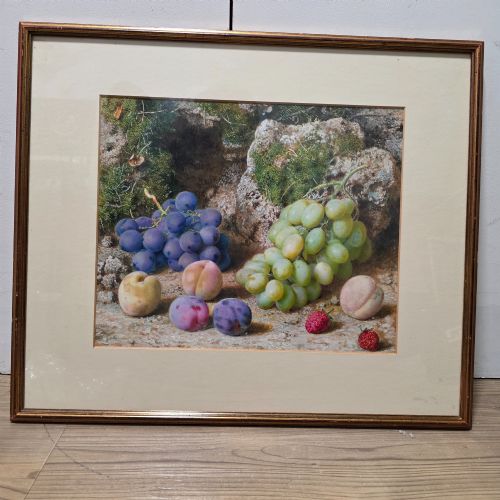
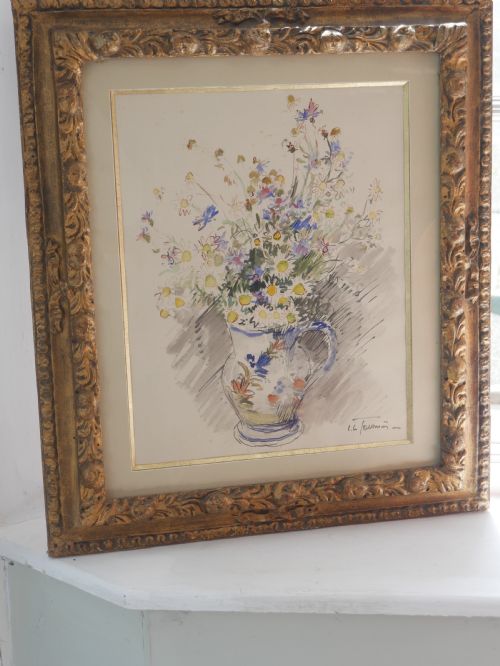
A framed botanical watercolour represents a focused study of plants, flowers, or fruit rendered in water-soluble pigments on paper. These works capture precise botanical forms, from single stems of plums and roses to elaborate arrangements in jugs and baskets. Buyers encounter pieces ranging from Regency and Victorian depictions to mid-century examples.
The nineteenth-century examples often display meticulous attention to petal structure and leaf venation, reflecting an era of intense interest in natural history. Many of these historical sheets arrive mounted behind glass within period wood frames, such as rosewood or gilt moulding.
Paper, Pigment, and Frame
Artists executed these works primarily using watercolour pigment and gouache on paper, occasionally incorporating pencil underdrawing to establish delicate outlines. Some early sheets utilise pith paper as a unique painting surface, which imparts a distinct texture to the pigment layer.
Framing typically involves wood mouldings, protected by a sheet of glass to shield the paper and water-soluble colours from environmental moisture and light. Common frame constructions include gilt wood, rosewood, and period pewter designs.
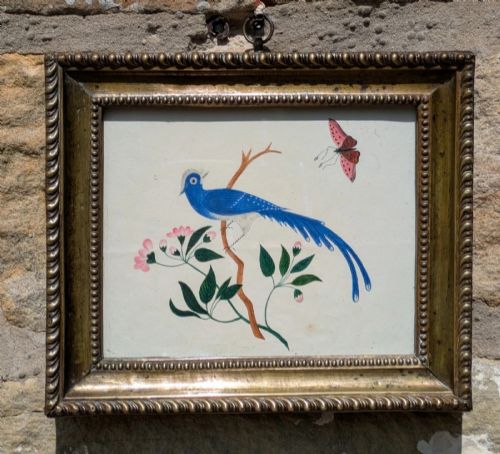
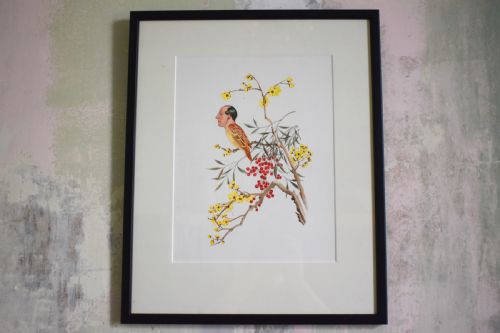
Several artists clearly spent long hours watching garden birds, capturing blue tits and exotic parrots right beside their botanical studies.
Draftsmanship and Preservation
Quality rests primarily upon the precision of the draftsmanship and the artist's ability to render botanical accuracy with fluid brushwork. Superior examples demonstrate a careful balance of colour and light, capturing the translucent qualities of petals and foliage without heavy reworking.
The preservation of the paper support and the vibrancy of the original pigments also determine the standing of a piece. Works that retain their original glass and contemporary frames without excessive fading or paper discolouration command greater attention.
Ernest Arthur Rowe·John Sherrin·James Tower·William Edward Fox·Lilian Stannard
The Framed Botanical Watercolour Glossary
- Gouache
- An opaque watercolour paint mixed with a white pigment to create a heavier, solid layer on the paper. This medium allows for vivid highlights and dense areas of colour.
- Pith paper
- A delicate material formed from the pith of the rice paper plant, used as a painting surface in certain historical works. It absorbs water-soluble pigments with a soft texture.
- Watercolour pigment
- Finely ground colour particles suspended in a water-soluble binder, applied to paper with water. It yields translucent washes that let the paper surface show through.
- Aesthetic Movement
- A late nineteenth-century design style emphasising visual beauty over narrative content. Frames and compositions from this period often reflect distinct artistic philosophies.
Framed Botanical Watercolour: Frequently Asked Questions
How should I hang these watercolours?
Keep these framed works away from direct sunlight to prevent the pigments from fading over time. Direct exposure to intense natural light degrades paper and water-soluble colours permanently.
Position them on interior walls where room temperature and humidity remain relatively stable. Avoid damp spaces such as unheated hallways or bathrooms.
Are these works original paintings?
Every piece recorded here is an original hand-painted study executed directly on paper by an artist. They are distinct from printed reproductions or mass-produced book illustrations.
Close inspection under magnification reveals individual brushstrokes and the physical texture of pigment resting on the paper surface.
How can I identify the period?
Dating relies heavily on the style of the frame, the framing materials used, and the mounting techniques visible from the reverse. Rosewood frames and specific gilt moulding profiles often point toward the nineteenth century.
Artist signatures, inscriptions on the backing paper, and the type of paper stock also offer reliable clues to the era of creation.
What subjects are most common?
Floral still lifes featuring roses, pansies, and garden flowers dominate the available studies. Artists frequently arranged these blooms in ceramic jugs, baskets, or decorative bowls.
Other recurring subjects include detailed studies of individual fruit, such as plums and apples, alongside occasional depictions of birds.