
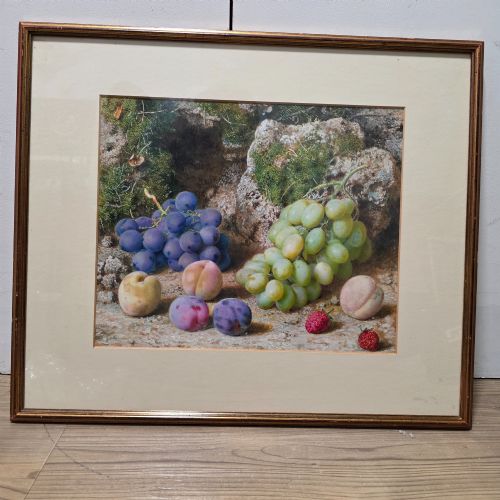
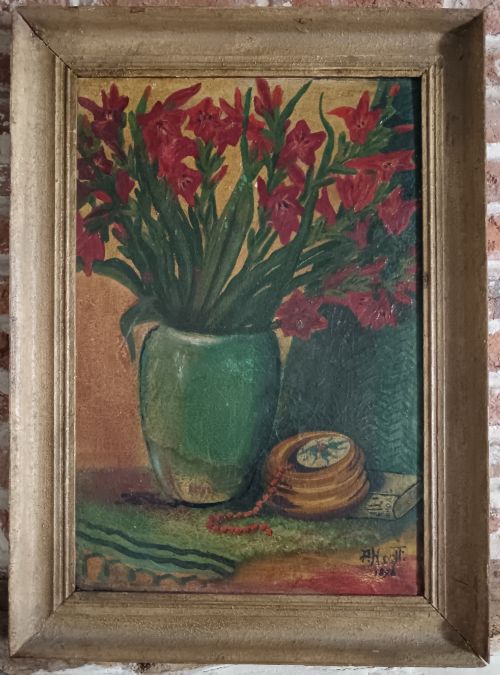


Victorian Still Life
These Victorian still life pieces capture nineteenth-century studies of fruit, flowers, and objects in oil and watercolour.
Victorian still life
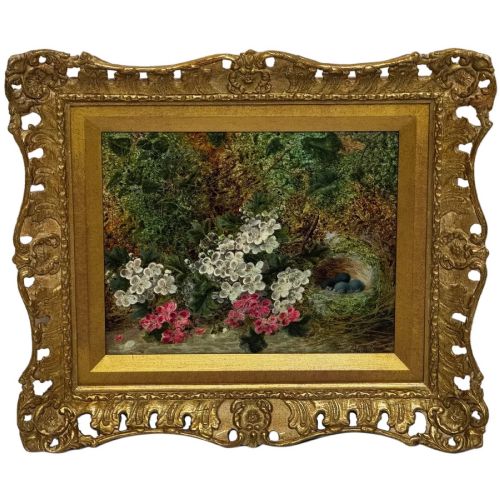
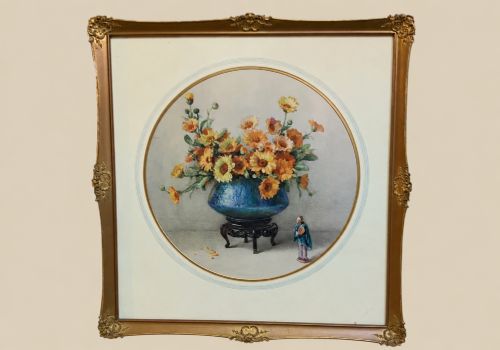
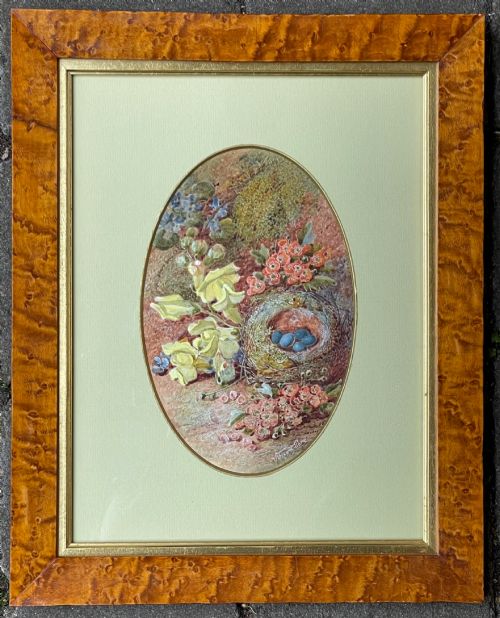
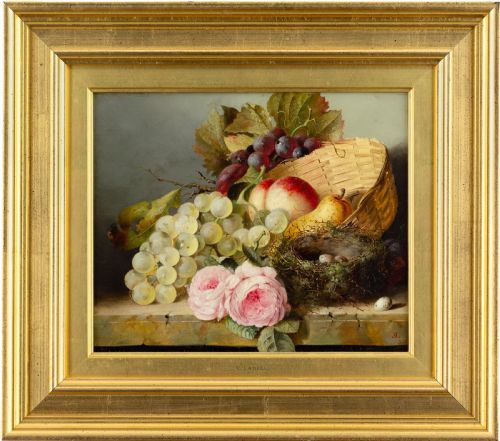
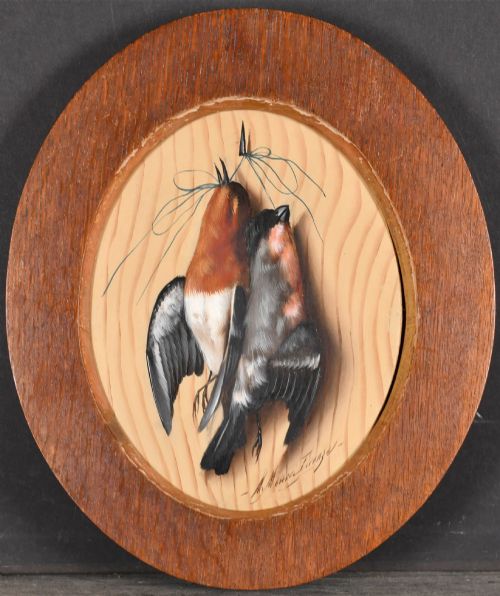
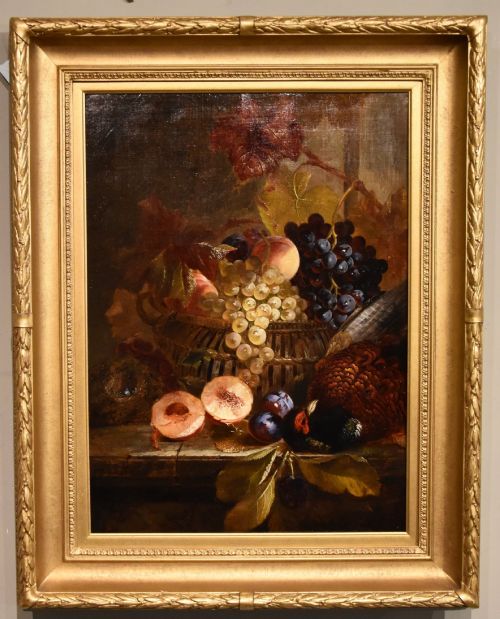
A Victorian still life brings domestic and natural subjects into nineteenth-century interiors through careful observation of flora and fauna. These works record the physical textures of fruit, birds' nests, and arranged flowers in domestic settings.
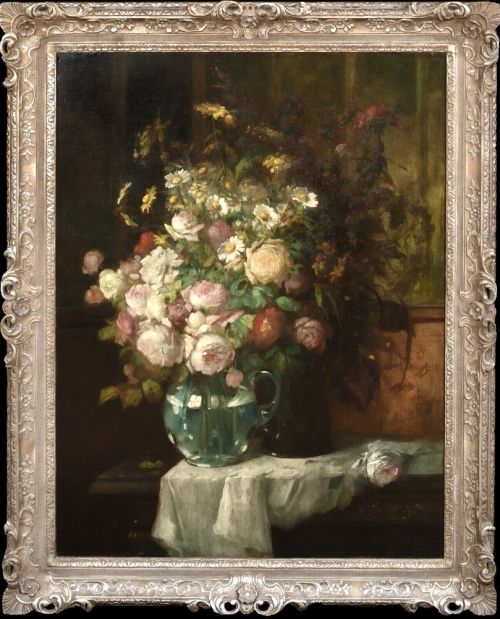
Oil paintings on canvas and board dominate the selection, often housed in heavy gilt frames. Watercolours on paper offer a more intimate scale, frequently mounted under glass.
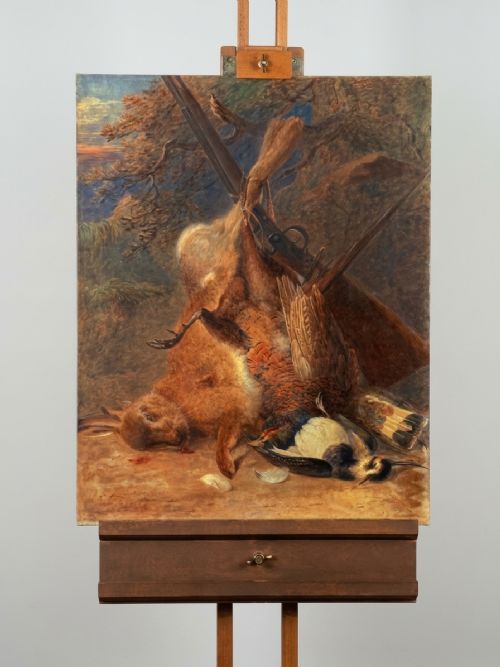
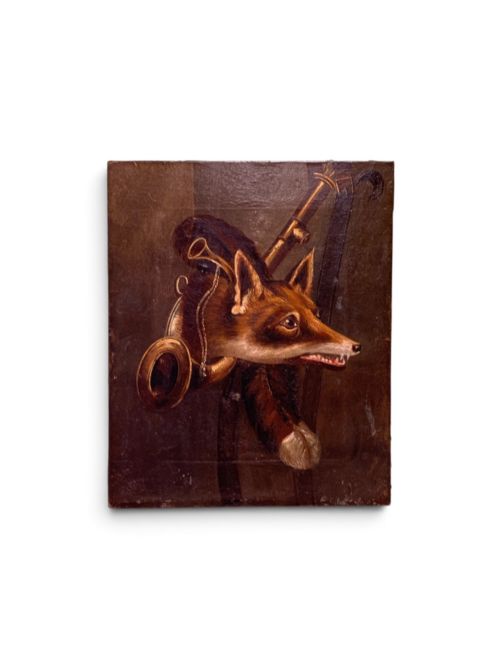
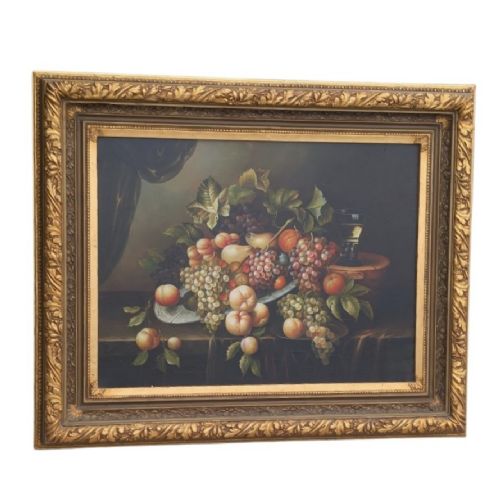
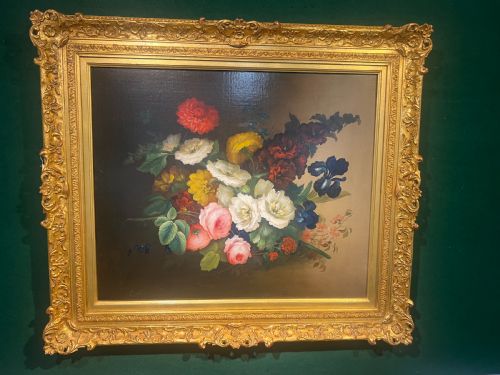
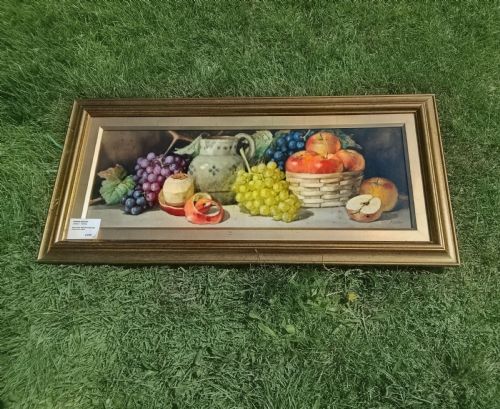
The nineteenth-century pieces range from naive studies to detailed botanical compositions. Floral arrangements of roses and pelargoniums appear alongside compositions featuring grapes, peaches, and larder scenes.
Materials and construction
Artists painted primarily with oil paint on canvas, board, and convex glass, or applied watercolour and pencil to paper. Needlework pictures also form part of the recorded material range, created with threads on fabric.
Frames combine wood, plaster, and gesso finished with gold leaf to display and protect the paintings. Domed glass covers certain woodwork studies, preserving the delicate surfaces beneath.
Retail Price Guide 2026
Typical UK retail prices for victorian still life, calculated from the Sellingantiques database of over a million retail prices indexed since 2003. This retail price guide relies exclusively on Sellingantiques data; no external sources or auction records are used, so the figures do not describe the wider market.
Recorded materials include oil on canvas, oil on board, watercolour on paper, needlework, and wood.
Distinctions in execution
Skill in handling light, shadow, and material texture separates accomplished works from naive examples. The rendering of soft petals, polished fruit surfaces, and nests requires precise brushwork.
Framing contributes to the character of the piece, with elaborate gesso and gold leaf mouldings providing context for the canvas. The integration of the painted subject with its frame influences the visual impact.
Oliver Clare·William Henry Ward·William Hough·Jabez Bligh·Charles Howson Bennett·James T Clapham·Richard Ansdell·W Vincent·J W Dayson·A Dunnington·Edwin Steele·Vincent Clare·E Vanderman
The Victorian Still Life Glossary
- Oil on canvas
- Pigment mixed with drying oil applied to a woven fabric support. This method allows for rich colour blending and distinct surface textures.
- Watercolour on paper
- Water-soluble pigment suspended in a water-based solution applied to paper. It creates transparent washes of colour that reveal the white paper beneath.
- Gesso
- A paint mixture consisting of a neutral binder mixed with chalk, gypsum, or pigment. It was applied to wood frames to create a smooth surface for gilding.
- Convex glass
- Curved glass panes used to cover and protect certain paintings. This technique adds depth and reflects ambient light across the composition.
Frequently Asked Questions
What subjects appear in these paintings?
The compositions show arrangements of fruit such as grapes, peaches, and apples, alongside vases of roses and pelargoniums. Other subjects include bird's nests and larder scenes.
Artists worked from nature to record these domestic and botanical arrangements with varied levels of botanical accuracy.
How do oil and watercolour works differ?
Oil paintings utilise heavy pigments on canvas or board, often paired with substantial gesso and gold leaf frames. Watercolours use transparent washes on paper and tend to be smaller.
Both mediums capture nineteenth-century domestic tastes but present different visual textures and mounting styles.
What frames accompany the paintings?
Many pieces retain their original wooden frames finished with plaster, gesso, and gold leaf. Some specialised works feature convex glass or protective domes.
These surrounds are integral to the presentation of nineteenth-century decorative art.
Are all these pieces from the nineteenth century?
The recorded items originate from the nineteenth century during the Victorian period. They reflect the artistic techniques and popular motifs of that era.
Makers active in the 1800s produced both signed compositions and unsigned studies.