



Pink Floral Watercolour
Pink floral watercolour paintings bring botanical subjects and garden scenes into a room through delicate pigment on paper.
What pink floral watercolour works are
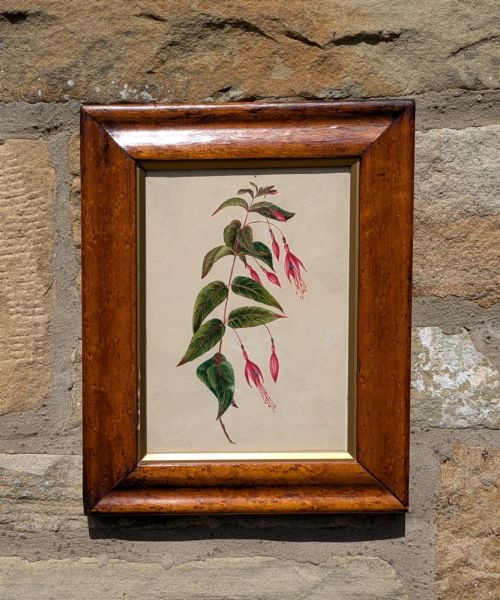
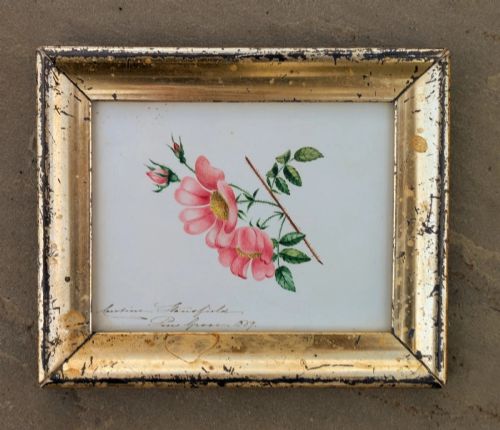
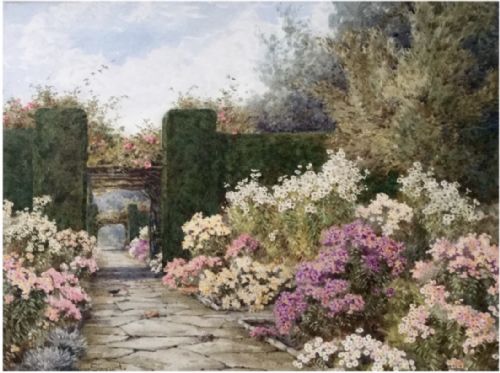
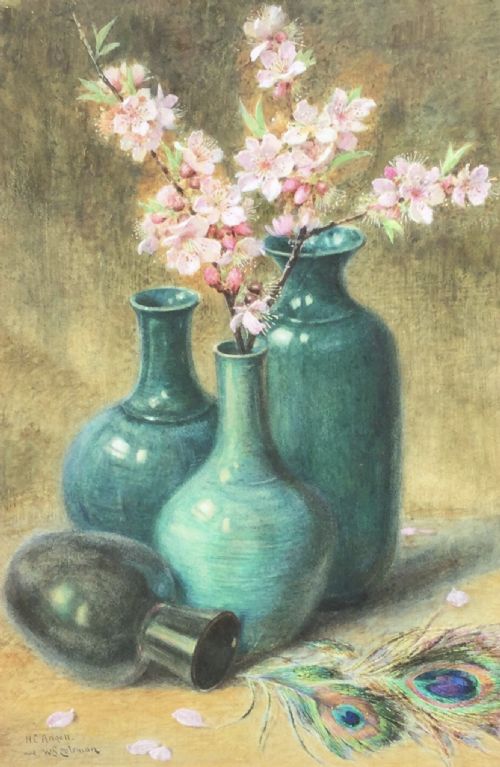
When you search for pink floral watercolour, you find original paintings depicting botanical studies, garden scenes and still-life arrangements. These works capture subjects like fuchsias, roses, pelargoniums, azaleas and garden vistas.
The pieces on this page span the 19th century and the early 20th century, representing Victorian botanical illustration and British Impressionism. Forms include framed paintings on paper with card mounts, wood frames and glass protection.
How they were made
Artists applied watercolour pigment directly onto paper surfaces to build up transparent washes and fine botanical details. Card mounts often frame the composition within wooden enclosures under glass.
The techniques rely on the fluid handling of water-soluble pigments to render the translucent petals of pink roses, pelargoniums and azaleas.
Retail Price Guide 2026
Typical UK retail prices for pink floral watercolour, calculated from the Sellingantiques database of over a million retail prices indexed since 2003. This retail price guide relies exclusively on Sellingantiques data; no external sources or auction records are used, so the figures do not describe the wider market.
Jabez Bligh immortalised pelargoniums inside a decorative jug long before anyone thought to photograph a windowsill.
What varies in quality
Quality rests in the precision of the botanical rendering and the sensitivity of the brushwork, distinguishing careful 19th-century studies from simpler decorative output. The handling of watercolour pigment determines the depth and luminosity of the floral subjects.
The integration of the paper support, card mount and wooden framing contributes to the preservation and overall presentation of the original painting.
William Hough·Jabez Bligh·Owen Bowen·Charlotte Isa James
The Pink Floral Watercolour Glossary
- Watercolour pigment
- The coloured powder bound in a water-soluble medium used to create these paintings on paper. It allows for layered transparent washes.
- Card mount
- A thick paperboard frame placed around the painting inside the glazing. It separates the paper from the glass.
- British Impressionism
- A painting style focusing on light and natural settings, seen in early 20th-century garden scenes. Artists captured outdoor atmosphere with looser brushwork.
- Victorian botanical
- A 19th-century style dedicated to accurate plant illustration. These works record floral specimens like fuchsias and pelargoniums with scientific and artistic precision.
Frequently Asked Questions
What periods do these watercolours come from?
The pieces span the 19th century, including specific dates like 1870, alongside early 20th-century examples from 1910.
These dates align with Victorian botanical traditions and British Impressionism.
What materials were used to create them?
Artists used watercolour pigment on paper supports, often supported by card mounts.
Protective framing involves wood and glass to preserve the delicate works on paper.
How should I hang a watercolour painting?
Keep watercolours away from direct sunlight to prevent the pigment from fading over time.
Ensure the room maintains stable humidity levels to protect the paper and wooden frame.
What subjects do these paintings show?
The works depict botanical studies of flowers such as pink roses, fuchsias, pelargoniums and azaleas.
Other compositions show garden settings, including artist gardens in Yorkshire.