
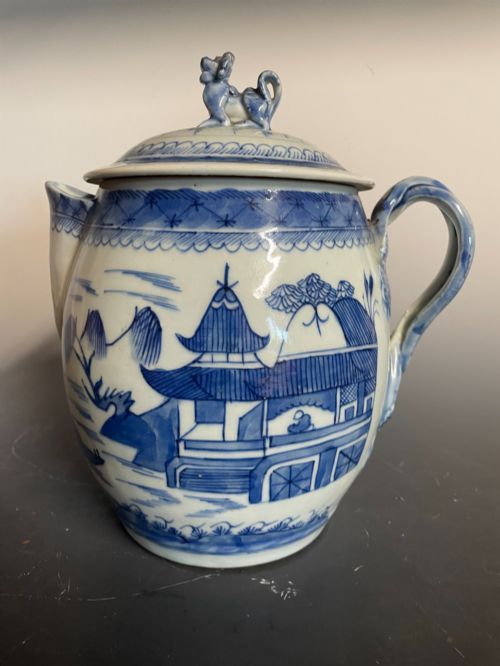
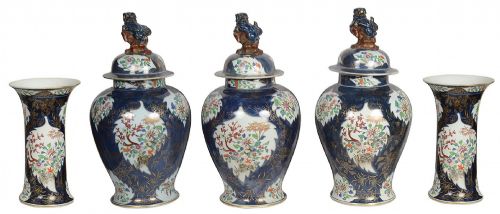


Foo Dog Lidded Jar
A foo dog lidded jar brings mythical protection and vibrant ceramic artistry into a room, combining fierce guardian figures with functional storage.
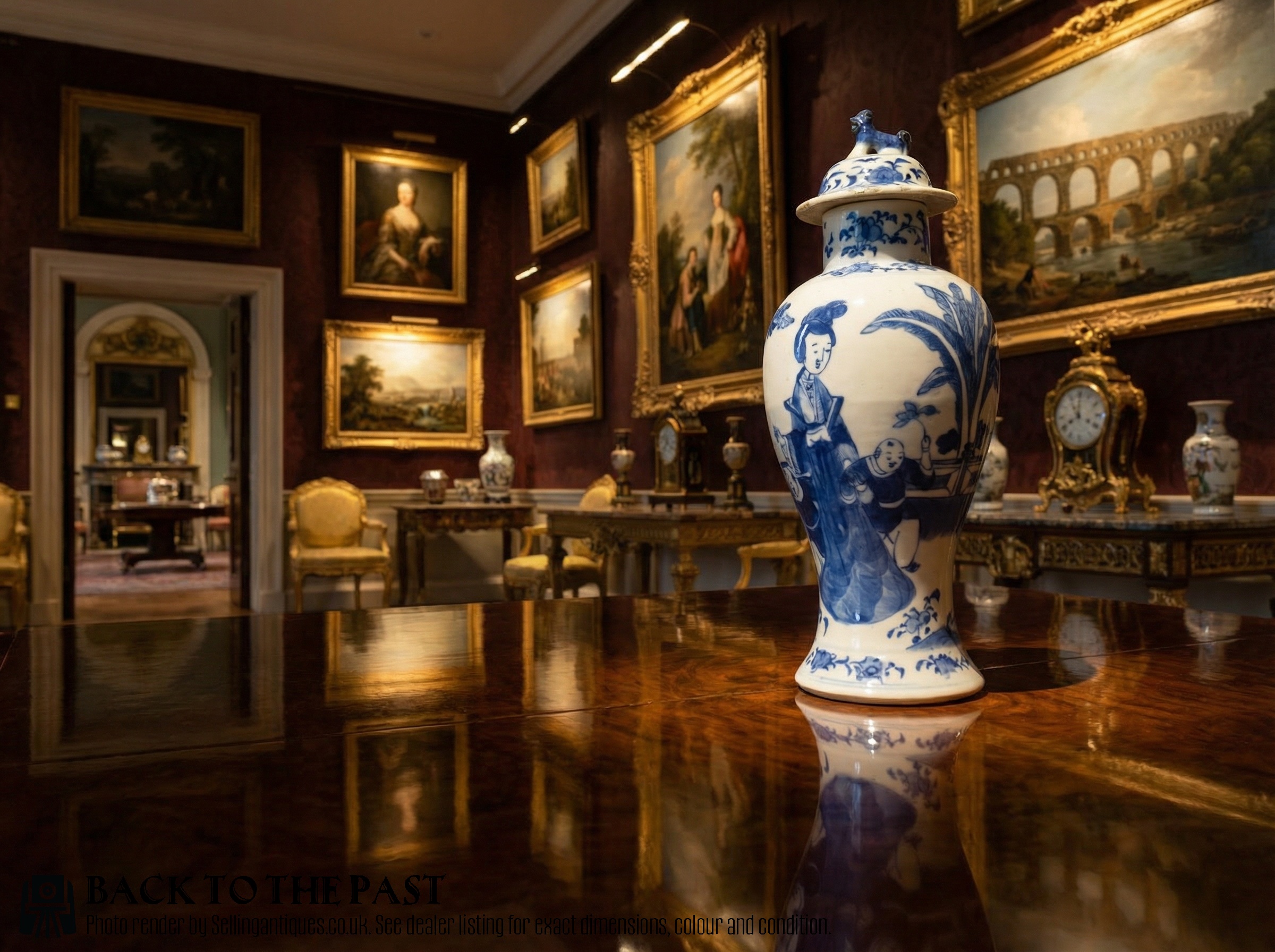
Foo Dog Lidded Jar
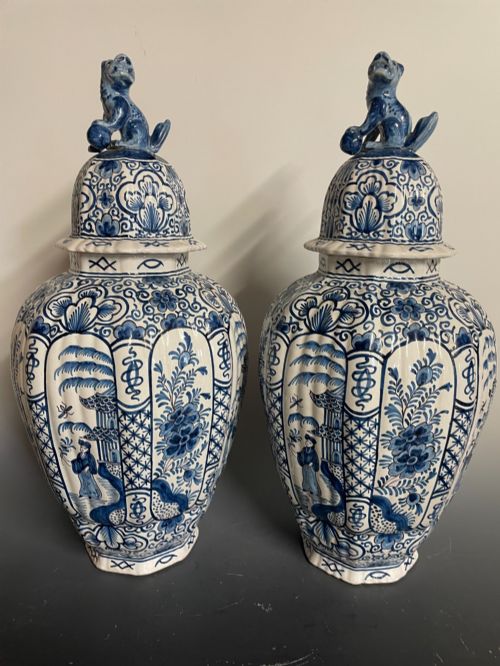
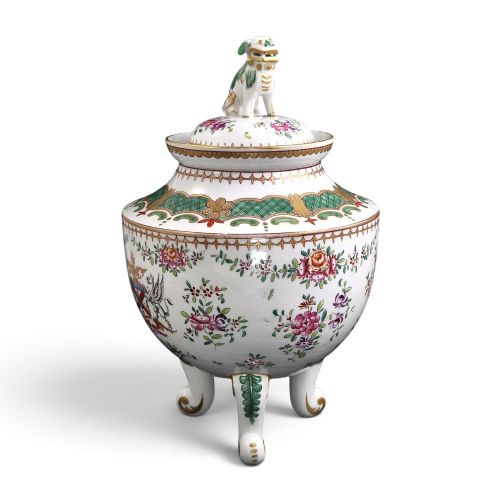
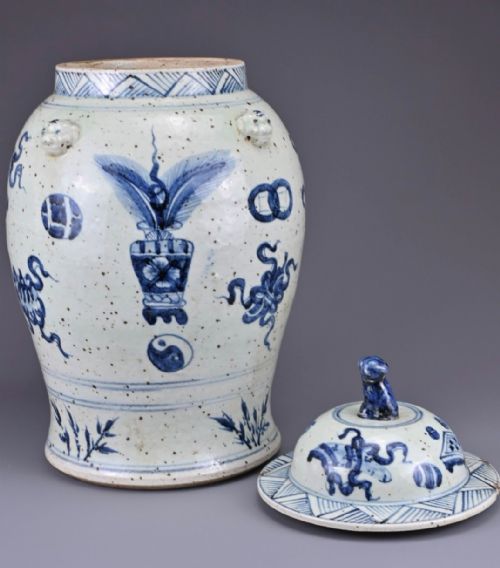
A foo dog lidded jar represents a traditional vessel topped with a guardian lion dog finial, frequently encountered from the nineteenth century in various decorative styles. These pieces range from blue and white porcelain jars to elaborate Imari vessels and Cantonese baluster vases with covers.
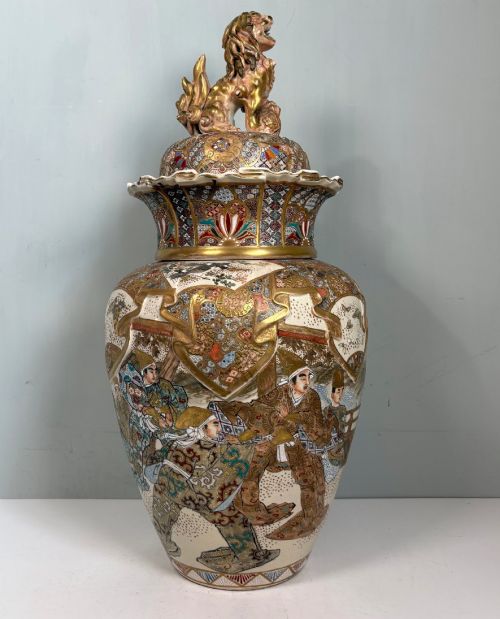
The selections span Chinese Qing Dynasty works and Japanese Meiji period examples, including Satsuma and Kutani wares alongside European interpretations like Samson Paris pieces. Buyers will find lidded jars, temple jars, and koro incense burners serving both decorative and ritual functions.
How they were made
Potters utilised hard-paste porcelain and earthenware as the primary ceramic bodies, shaping them into baluster vases, pots, and jars with fitted covers. Cobalt pigment provided the deep blue underglazes for traditional painted scenes.
Enamel colours, gold leaf, gilding, and gilt highlights were applied over the glaze to enrich the surface decoration, particularly on Famille Rose and Japanese Imari pieces.
Fierce guardian lions sit on lids to watch over your dry goods.
What varies in quality
The distinction between standard production and superior examples lies in the precision of the hand-painted detail and the vibrancy of the enamel palette. Finer pieces display crisp cobalt brushwork, clean gilding, and carefully modelled guardian lion finials.
Overall condition and completeness, particularly the survival of matching covers and undamaged foo dog elements, determine the desirability of each jar within its specific stylistic tradition.
Samson Paris
The Foo Dog Lidded Jar Glossary
- Imari
- A style of Japanese export porcelain characterised by a palette of underglaze blue, iron red, and gold. This decorative approach became widely imitated in Europe during the nineteenth century.
- Koro
- A traditional Japanese incense burner featuring a perforated lid that allows scented smoke to escape. These vessels often take the form of lidded jars supported on small feet.
- Famille rose
- A ceramic palette defined by opaque pink or rose enamel colours introduced during the Qing Dynasty. The style allows for soft shading in floral and figural depictions.
- Baluster
- A jar or vase shape that swells outward near the base and tapers toward the neck. This silhouette provides a stable and balanced form for elaborate surface painting.
Foo Dog Lidded Jar: Frequently Asked Questions
What is a foo dog lidded jar?
A foo dog lidded jar is a ceramic storage vessel or decorative urn featuring a stylized guardian lion, known as a foo dog, perched upon the removable cover.
These pieces were produced across China and Japan, as well as in European imitation workshops, serving both domestic display and export markets during the nineteenth century.
How were these jars used historically?
Historically, these covered vessels functioned primarily as decorative interior ornaments, while larger examples held aromatics, ginger, or dry goods in wealthy households.
Some variants, such as the koro, were specifically designed to burn incense during rituals or to scent reception rooms.
How do I identify a Chinese jar from a Japanese one?
Chinese examples from this era frequently feature deep underglaze cobalt blue painting, intricate green dragon motifs, or opaque Famille Rose enamel palettes.
Japanese counterparts, such as Imari, Satsuma, and Kutani wares, typically incorporate distinct iron red and gilt highlights or characteristic earthenware bodies.
How do I care for antique porcelain?
Antique porcelain and earthenware require gentle handling and should be cleaned using a soft, dry cloth rather than harsh chemical detergents.
Display the jars away from direct sunlight and areas subject to rapid temperature fluctuations to protect surface gilding and enamel details.