




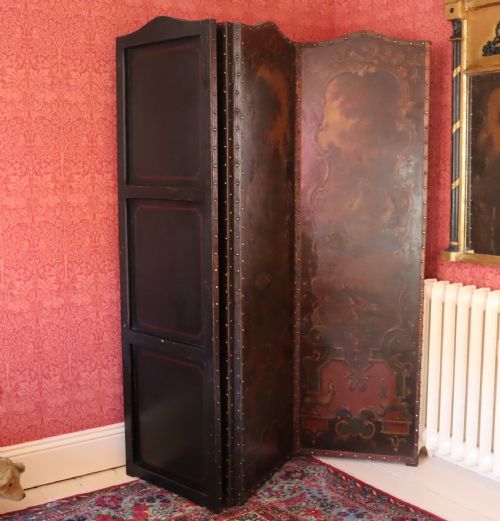


Folding Privacy Screen
A folding privacy screen creates division and shelter in a room, drawing on centuries of craftsmanship in wood, leather, and lacquer.
Folding Privacy Screen
A folding privacy screen serves as a portable partition, historically used to divide large spaces, shield occupants from draughts, or create enclosed dressing areas. When searching for a folding privacy screen, buyers encounter multi-panel designs that fold compactly when not in use.
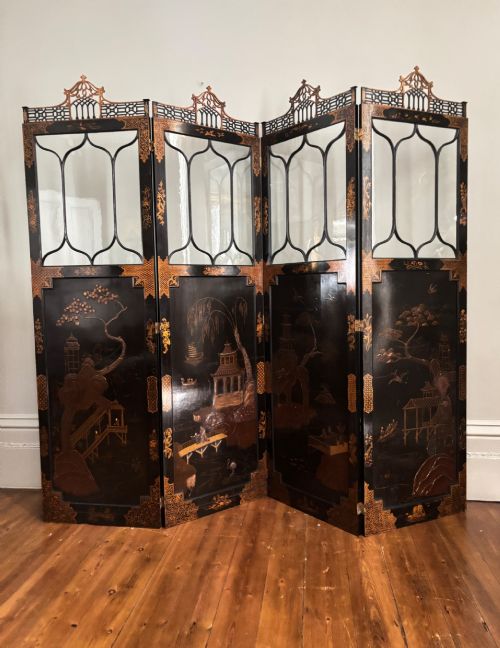
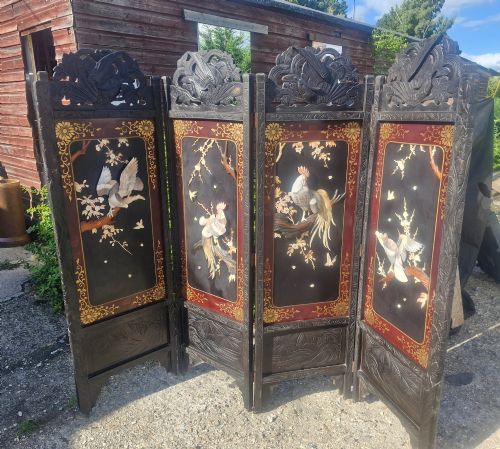
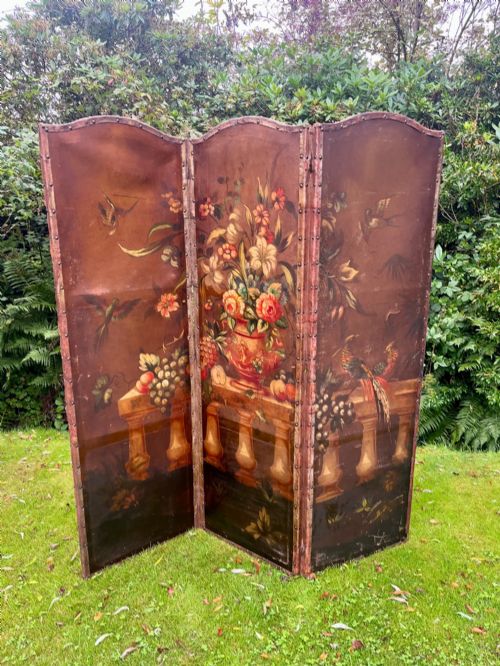
The examples found here span several centuries and global traditions, ranging from European painted leather and walnut frames to Asian lacquered and carved wooden panels. Victorian, Edwardian, and Regency pieces sit alongside Japanese Meiji and Chinese traditional examples.
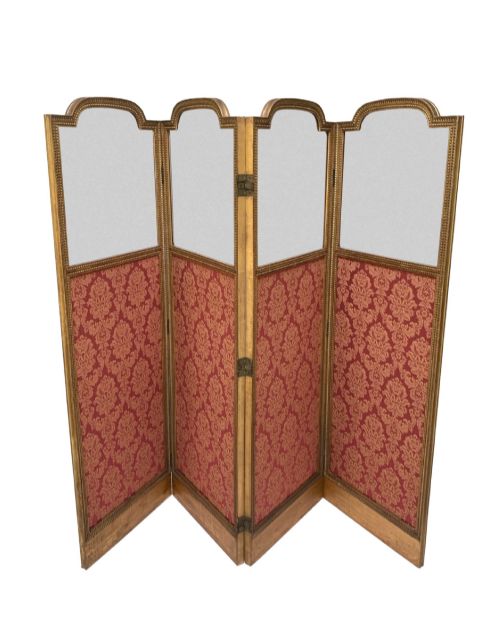
Most pieces on this page are multi-fold wooden frames fitted with hinged panels of canvas, leather, glass, or fabric. They function equally well as decorative backdrops or practical room dividers in modern interiors.
How they were made
Traditional makers built the structural frames from timbers such as mahogany, walnut, oak, and various hardwoods, joining them with sturdy hinges to allow smooth articulation across multiple folds. These wooden skeletons often featured carved details, fretwork, or delicate inlay.
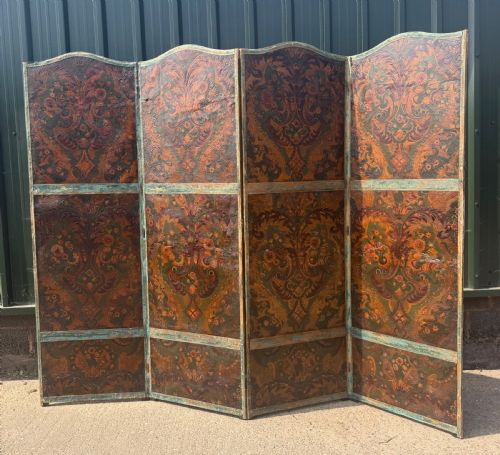
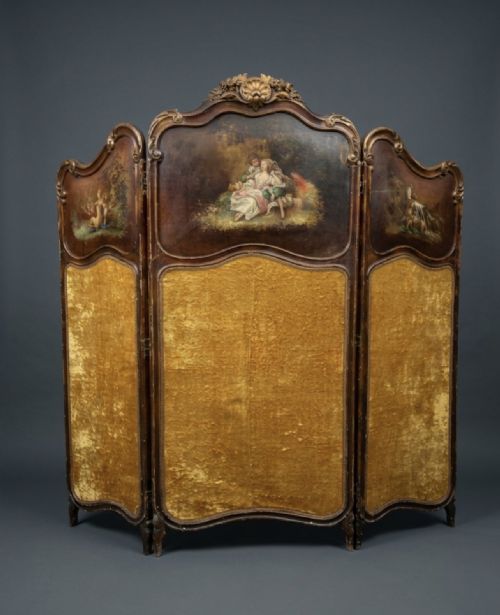
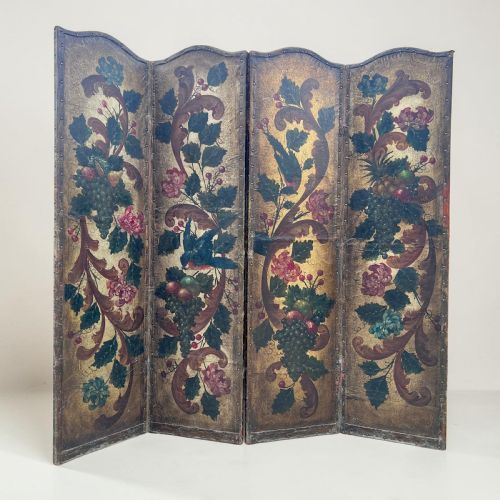
Panel surfaces demanded specialised artisan techniques, utilising oil paint on canvas, hand-tooled and gilded leather, layered black lacquer, and intricate needlepoint or silk textiles. Some pieces incorporated glass panels or carved bone figures mounted directly into the woodwork.
Listings feature woods such as mahogany, walnut, and oak alongside leather, brass, and glass across the nineteenth and twentieth centuries.
What varies in quality
Quality rests primarily on the depth and execution of the artisan work, distinguishing finely hand-painted or deeply carved panels from simpler printed or flat surfaces. The integrity of the original hinges and the stability of the timber frame also determine the lasting character of a piece.
Materials dictate much of the distinction, as heavy gilded leather, thick lacquering, or substantial hardwood frames require advanced craftsmanship that endures through generations of folding and repositioning.
The Folding Privacy Screen Glossary
- Chinoiserie
- European artistic interpretation of Chinese and East Asian motifs, frequently rendered in lacquer and gilt on screens. This style gained immense popularity during the eighteenth and nineteenth centuries.
- Cordoban leather
- Heavily embossed and painted leather originating from Spain, prized for its rich texture and durability on historic panels. Makers often used it to create opulent folding barriers.
- Mashrabiya
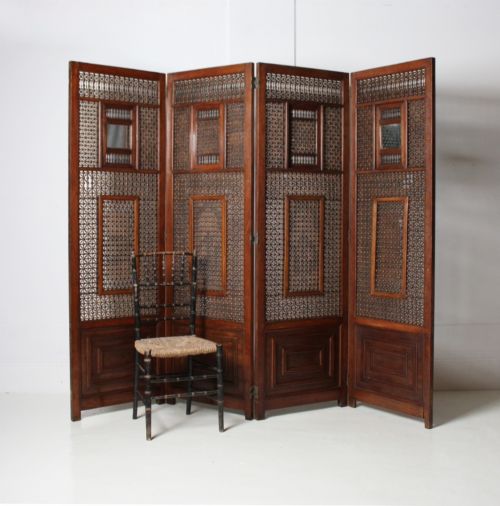
- An architectural element featuring interlaced wooden lattice work, adapted in certain folding screens to filter light and air. This technique originates from traditional Middle Eastern craftsmanship.
- Modesty screen
- A smaller variant of the folding screen designed specifically to shield individuals while dressing or washing. These items often feature lightweight frames and painted panels.
Folding Privacy Screen: Frequently Asked Questions
How do I use a folding privacy screen?
Position the panels in a zig-zag configuration to ensure the screen stands stable on a flat floor without tipping.
They work effectively to zone open-plan areas, conceal storage, or create a private backdrop behind furniture.
How do I clean antique leather panels?
Dust the surface gently with a dry, soft cloth to remove loose particles without disturbing old paint or gilt.
Avoid liquid cleaners and excessive moisture, which can damage historic leather and traditional hand-painted finishes.
Are these screens heavy to move?
Weight depends entirely on the materials used, with solid mahogany, brass, and glass frames requiring two people to reposition safely.
Lighter frames made from papier-mâché, fabric, or thin wood panels can be adjusted easily by one person.
How do I identify the period of a screen?
Examine the construction of the hinges, the joinery of the wooden frame, and the materials used for the panels.
Stylistic markers such as Regency proportions, Victorian needlepoint, or Art Nouveau curves also point towards specific manufacturing eras.