
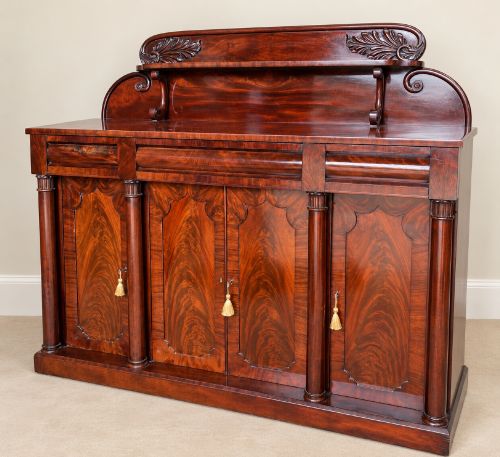
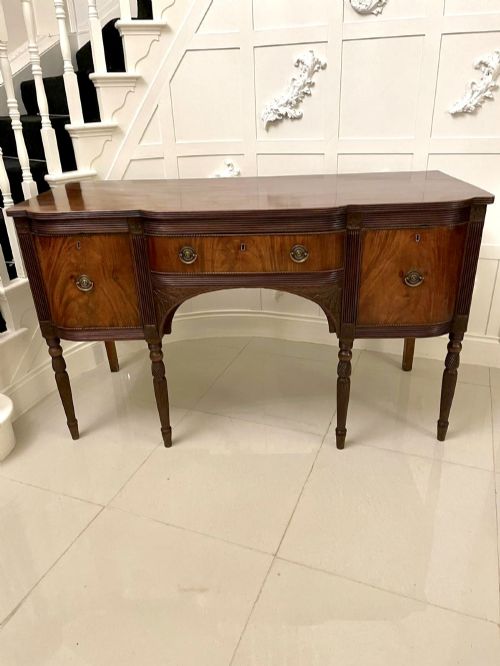
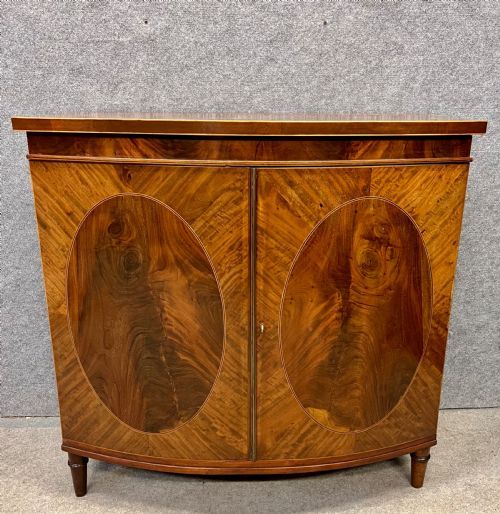
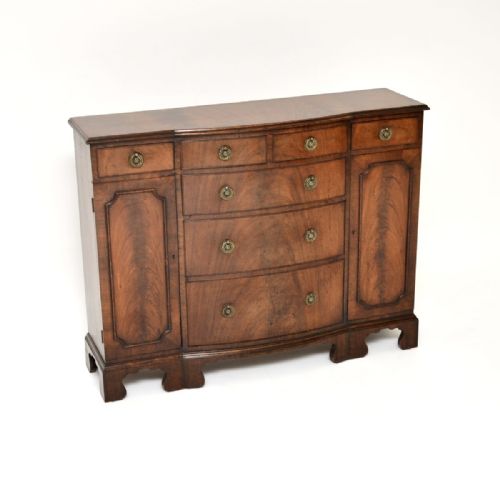



Flame Mahogany Sideboard Table
A flame mahogany sideboard table brings dramatic figured timber and practical dining room storage into the home.
Flame Mahogany Sideboard Table
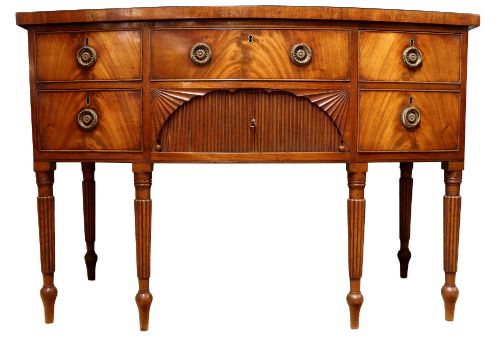
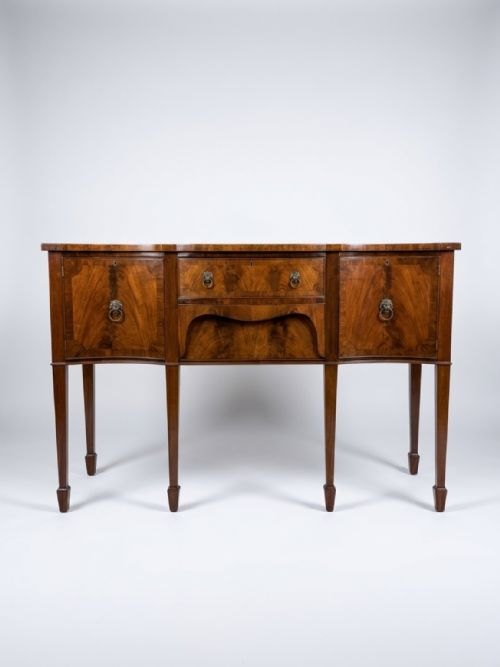
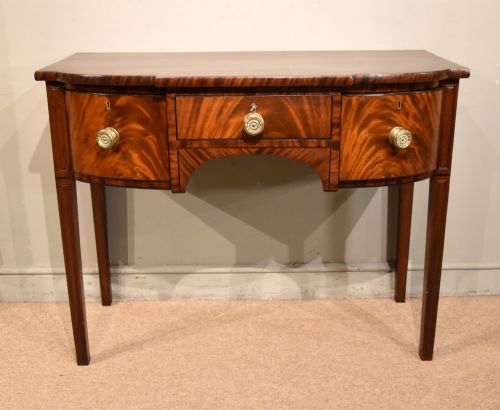
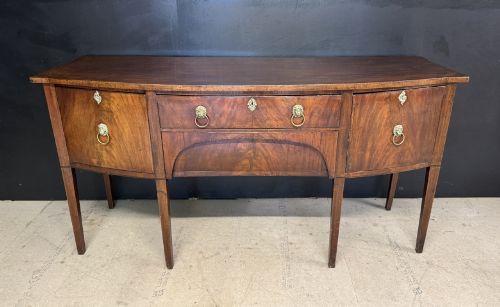
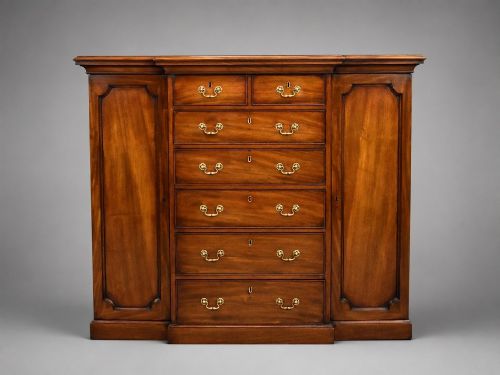
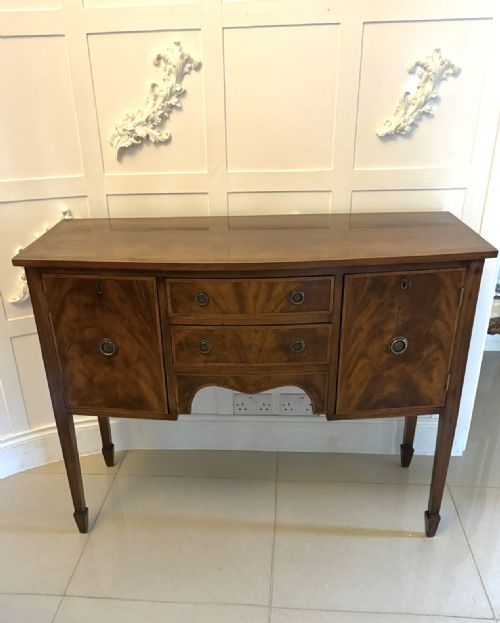
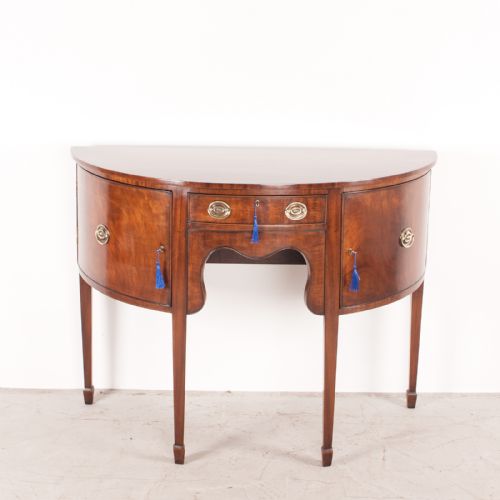
A flame mahogany sideboard table combines the sturdy storage functions of a serving surface with the rich grain patterns typical of late Georgian, Regency and Victorian cabinet making. When exploring flame mahogany sideboard table options, buyers encounter bow front, serpentine and breakfront shapes designed to fit dining spaces.
The pieces on this page span Georgian, Regency, Victorian and Edwardian periods, alongside revival eras from 1890 to 1920. Most examples take the form of sideboards, serving tables, console tables or pedestals, often featuring boxwood and satinwood inlay.
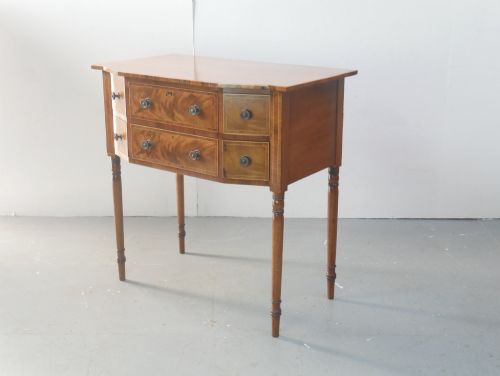
Makers utilised solid timbers alongside veneers to create curved fronts and architectural pedestals. Smaller proportions and brass galleries appear frequently among the surviving furniture.
How they were made
Cabinet makers constructed these pieces using solid mahogany frameworks applied with choice flame mahogany veneer to achieve striking wood grain patterns across the drawer fronts and doors. Inlayers added decorative contrast using boxwood and satinwood stringing or motifs.
Structural elements incorporated brass details, such as gallery rails, handles and drop rings, which complemented the deep reddish brown tones of the polished timber. Joinery methods relied on hand cut dovetails for drawers and pegged framing for carcases.
Materials span solid mahogany, flame mahogany veneer, boxwood inlay and brass hardware.
What varies in quality
Quality rests upon the selection and matching of the flame veneer across the front elevation, where symmetrical grain patterns denote superior craftsmanship. The crispness of the boxwood and satinwood inlay further distinguishes standard workshop output from finer productions.
Proportion and architectural detailing dictate the standing of a piece, with smaller dimensions or complex serpentine and bow front shapes requiring higher joinery skill. Original brass hardware and intact gallery fittings preserve the integrity of the design.
Gillows
The Flame Mahogany Sideboard Table Glossary
- Flame mahogany
- A veneer cut from the branch forks of the mahogany tree, displaying a distinctive feather or flame pattern. This highly figured timber forms the visual centrepiece of high grade cabinet work.
- Serpentine
- A front profile shaped with a convex centre flanked by concave curves. This undulating outline demands precise woodworking skill.
- Bow front
- A convex curved front that swells outward from the corners. The style gained popularity during the Georgian and Regency periods.
- Breakfront
- A piece of furniture where the central section projects forward from the flanking outer wings. This layout creates depth and shadow on large sideboards.
- Stringing
- Thin bands of contrasting wood inlay used to outline drawers and panels. Boxwood and satinwood frequently serve this decorative purpose.
Flame Mahogany Sideboard Table: Frequently Asked Questions
Where did people use these sideboards?
Dining rooms served as the primary location for these items, where servants prepared dishes and displayed silver service.
Halls and large reception rooms also accommodated console and serving tables for decorative display.
How do I identify a Regency period piece?
Regency items often display classical architectural influences, bold brass mounts and rich mahogany veneers.
Cleaner lines and specific proportions set these pieces apart from ornate Victorian variations.
What is the difference between a sideboard and a serving table?
Serving tables generally offer open frames beneath the top surface without enclosed cupboards or drawers.
Sideboards incorporate built in storage compartments, drawers and pedestals for dining utensils.
How should I care for flame mahogany wood?
Keep the wood away from direct sunlight and heat sources to prevent the veneer from drying or fading.
Apply high quality beeswax periodically to nourish the surface and maintain the natural sheen.