
Vintage Mahogany Dining Sideboard
A vintage mahogany dining sideboard anchors a room with rich timber, standing ready to serve silver and linen through decades of family meals.
Vintage Mahogany Dining Sideboard
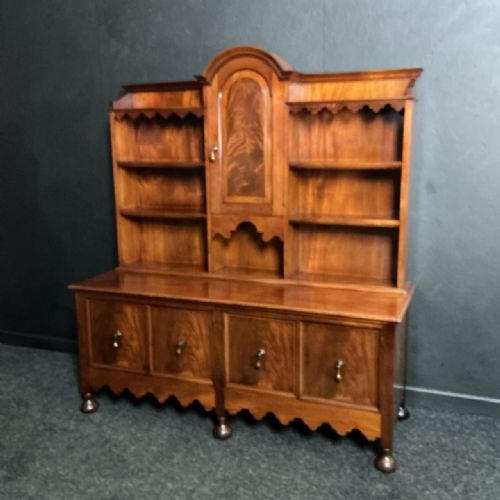
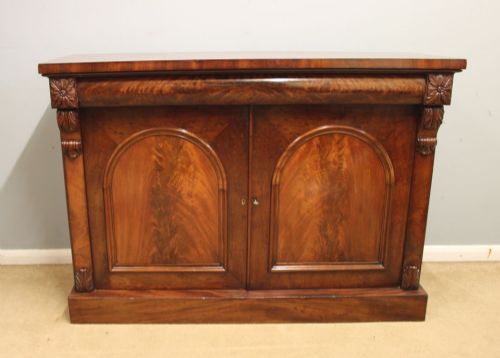
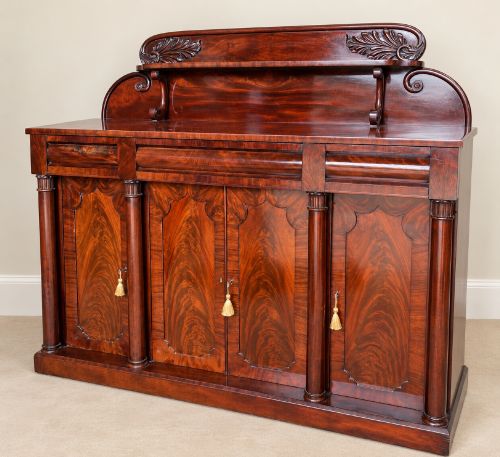
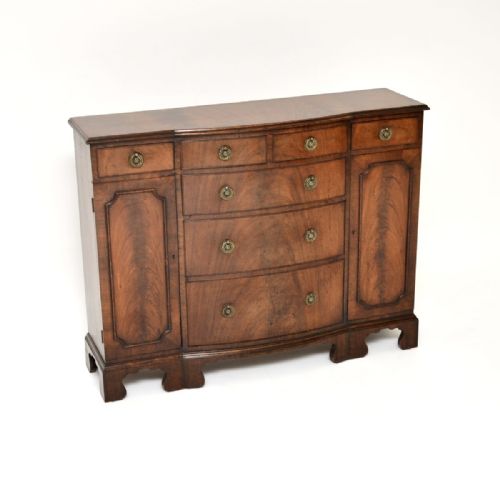
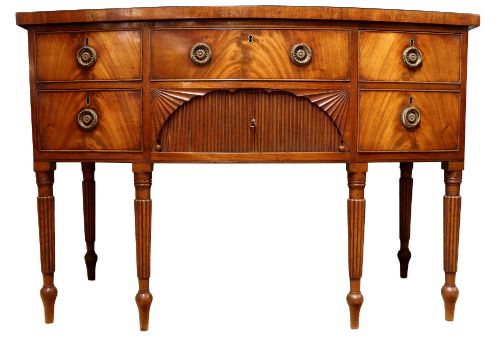
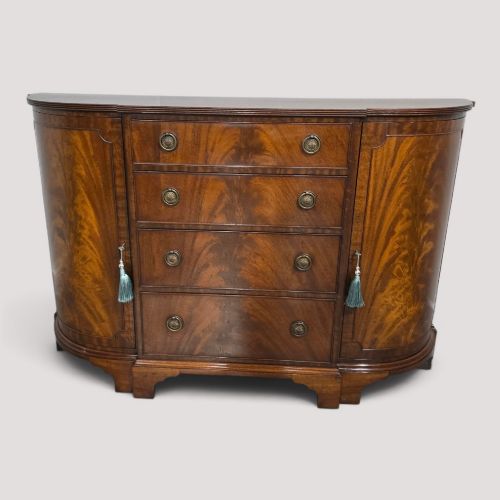
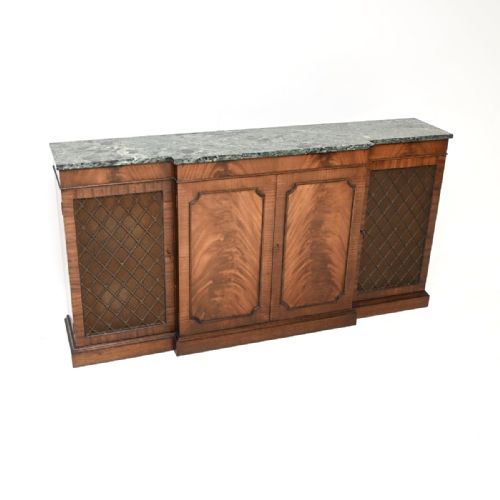
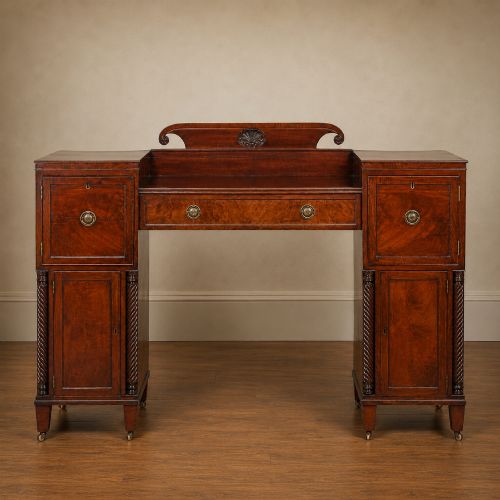
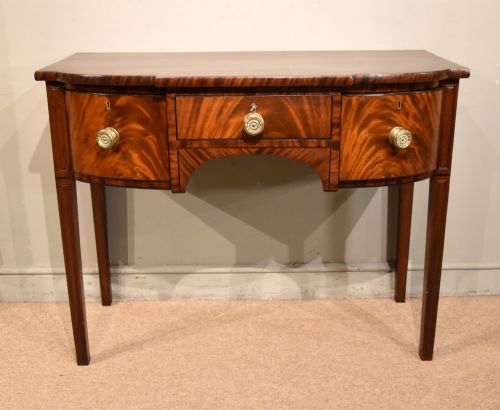
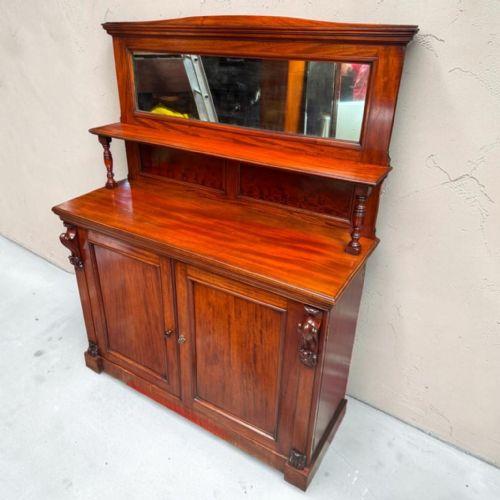
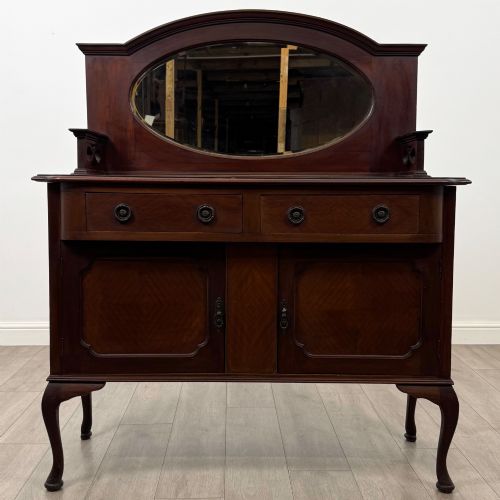
A vintage mahogany dining sideboard is a substantial timber storage piece designed for the dining room to hold tableware, serving dishes, and cutlery. Buyers searching for a vintage mahogany dining sideboard encounter various forms on this page, ranging from Georgian and Regency originals to Edwardian revivals and early twentieth-century cupboards.
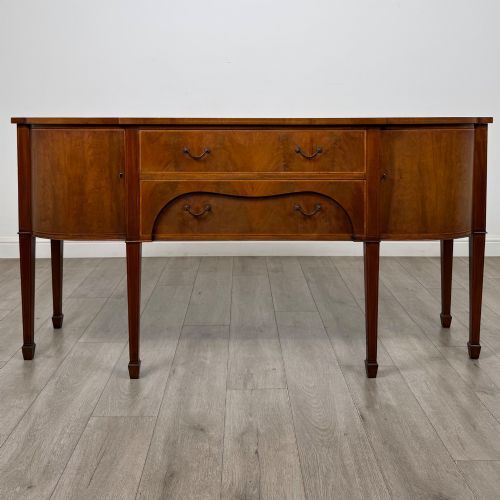
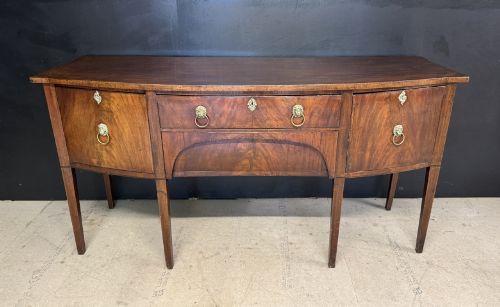
The most common versions met here span the Victorian, Edwardian, and Regency periods, often exhibiting bow fronts, breakfront layouts, or flat surfaces suited to serving. These items draw collectors through their deep red-brown timber and functional cupboards, drawers, and cellarets.
What varies in quality
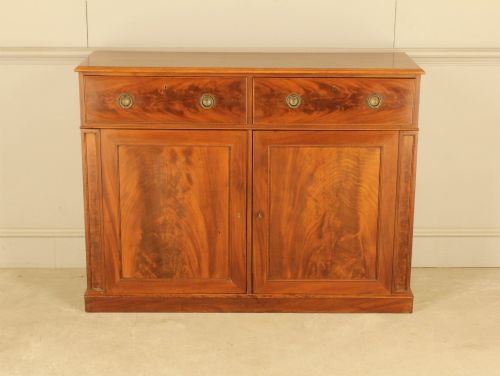
Quality in these sideboards rests primarily on the choice of timber and the dexterity of the cabinet maker. Pieces utilising highly figured flame mahogany veneer or intricate satinwood inlay command greater visual presence than plain timber surfaces.
The refinement of proportion and the crispness of inlaid borders dictate the overall standard. Superior examples display balanced symmetry across bow fronts and breakfronts, paired with original brass hardware and well-fitted internal drawers.
Materials across the inventory include solid mahogany, flame mahogany veneer, satinwood inlay, boxwood, glass, and brass.
M. D. Miller & Sons
The Vintage Mahogany Dining Sideboard Glossary
- Bow front
- A convex curved cabinet front that projects outward in a smooth curve. This shape gained popularity during the late eighteenth and nineteenth centuries.
- Flame mahogany
- A veneer cut from timber where the branch meets the trunk, producing a rippling, flame-like pattern. It is highly valued for decorative drawer fronts.
- Breakfront
- A large piece of furniture where the central section projects forward further than the flanking wings. This architectural layout creates depth in dining rooms.
- Chiffonier
- A compact sideboard or low cupboard equipped with drawers and shelves, often featuring a mirror back or small superstructure. They served smaller dining spaces.
- Inlay
- A technique where contrasting woods like satinwood or boxwood are inserted into recesses carved in the mahogany. This creates geometric or floral borders.
Vintage Mahogany Dining Sideboard: Frequently Asked Questions
What is a vintage mahogany dining sideboard used for?
These sideboards serve as practical storage units in dining rooms for table linen, cutlery, and serving platters. Their wide top surfaces additionally function as serving stations during meals.
Historically, specific compartments were built to hold wine bottles or keep dishes warm. Today they provide foundational storage while displaying decorative objects or lamps.
How do I identify a Regency period sideboard?
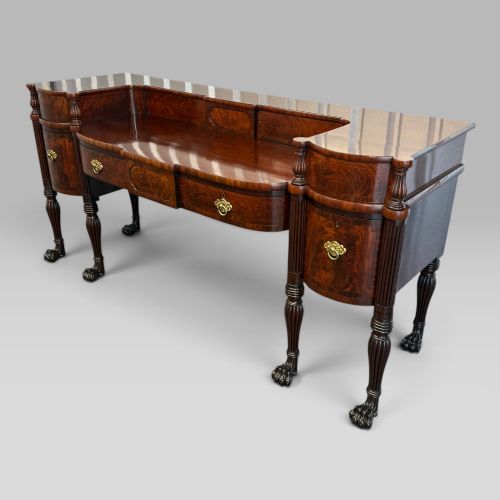
Regency pieces often feature classical architectural motifs, bold brass lion paw feet, and rich figured mahogany veneers. Their lines tend to be clean and heavily influenced by classical antiquity.
Many examples incorporate brass gallery rails on the top surface or elaborate cellaret drawers built into the pedestals. They generally date from the early nineteenth century.
What is Sheraton Revival furniture?
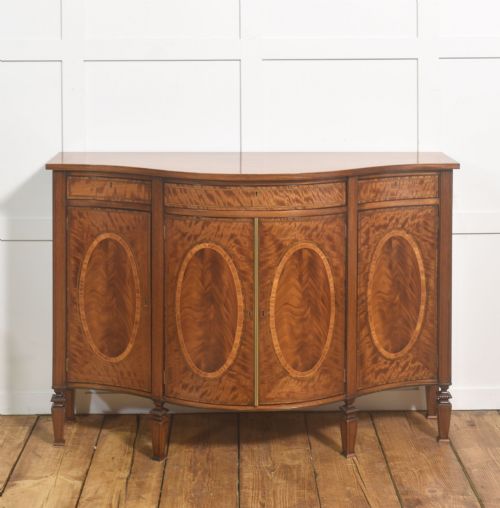
Sheraton Revival pieces are late nineteenth and early twentieth-century interpretations of the delicate designs created by Thomas Sheraton in the Georgian era. They are characterised by satinwood inlay and tapered legs.
Makers of this period combined light woods with dark mahogany to achieve an elegant, refined aesthetic. These items bring a formal eighteenth-century look to Edwardian interiors.
How do I care for mahogany timber?
Mahogany benefits from regular dusting with a soft, dry cloth and occasional treatment with a quality beeswax to nourish the grain. Direct sunlight should be avoided to prevent the timber from fading.
Keeping the sideboard away from direct heat sources prevents the solid wood and veneers from drying out and splitting over time.