
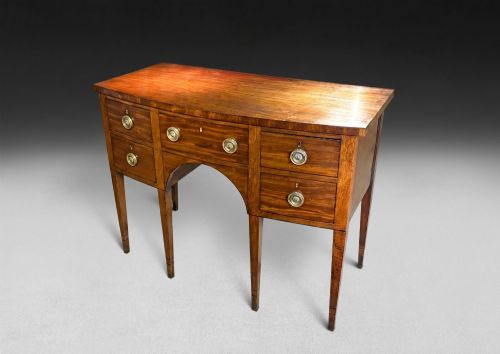
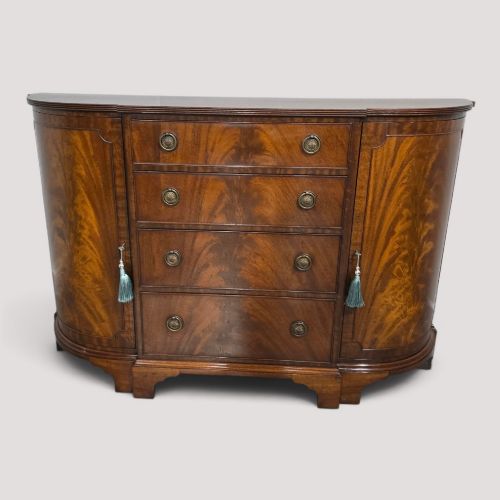
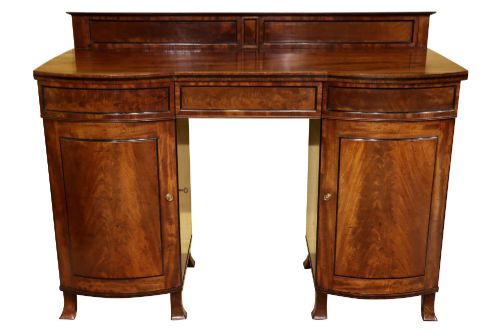
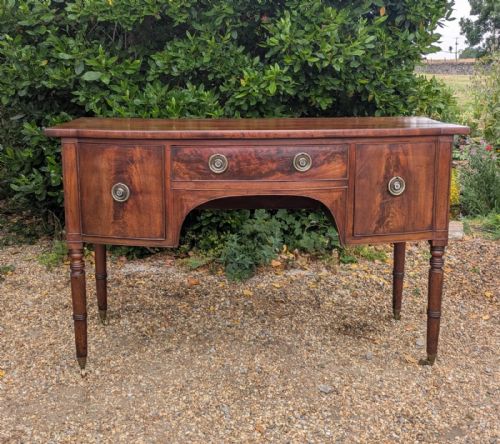
Mahogany Bow Front Credenza
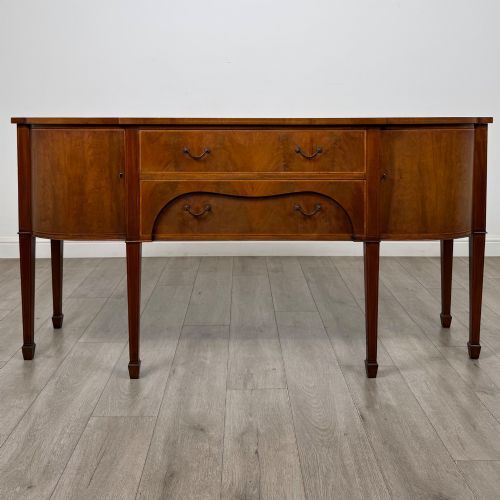
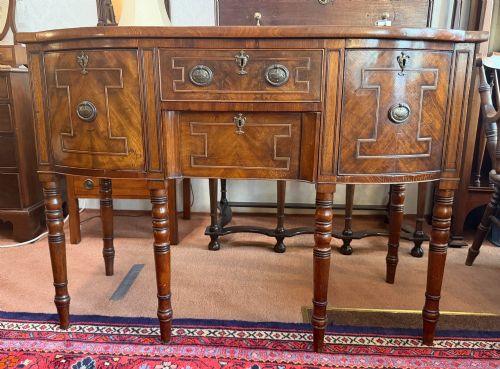
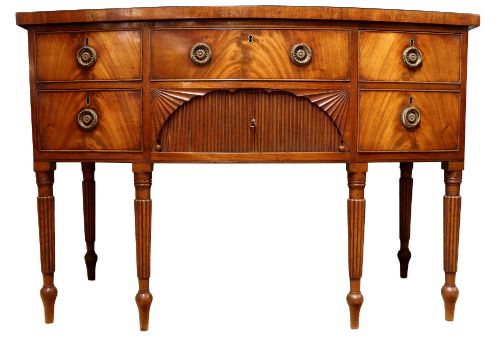
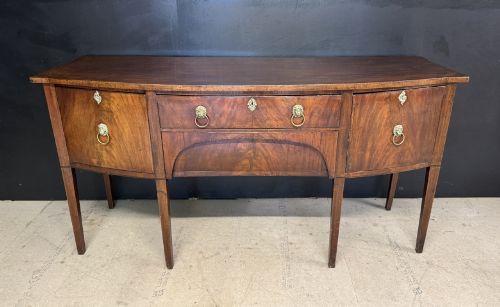
A mahogany bow front credenza offers sweeping curved storage rooted in Georgian and Regency dining rooms.
Mahogany Bow Front Credenza
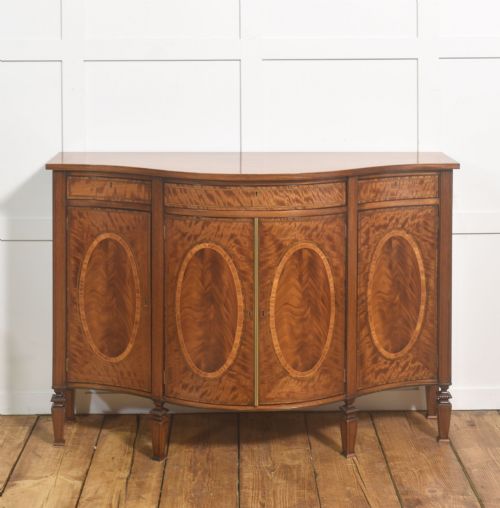
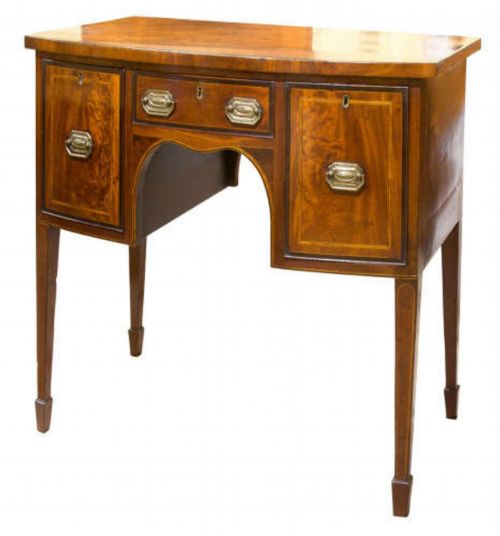
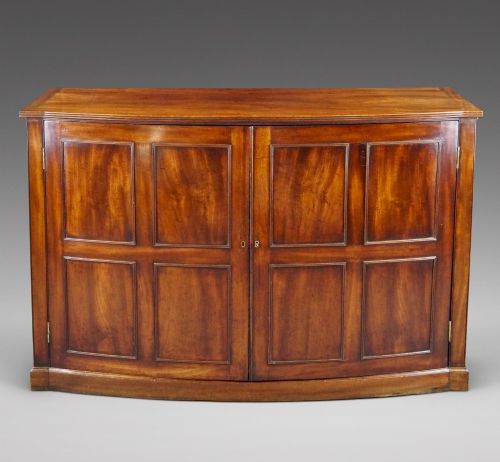
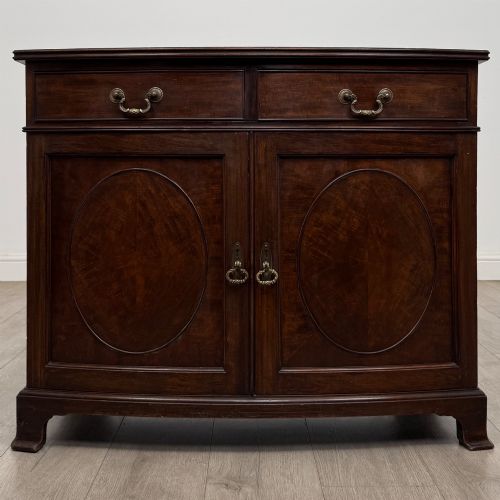
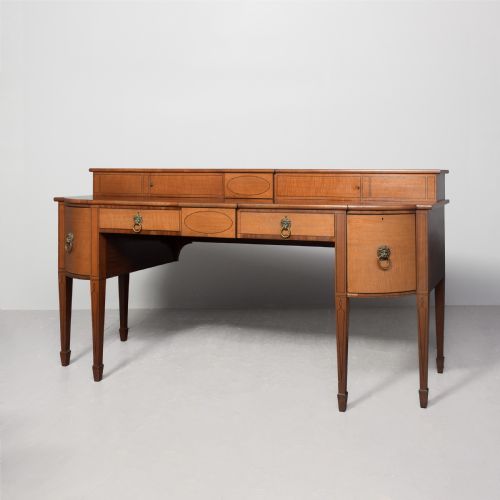
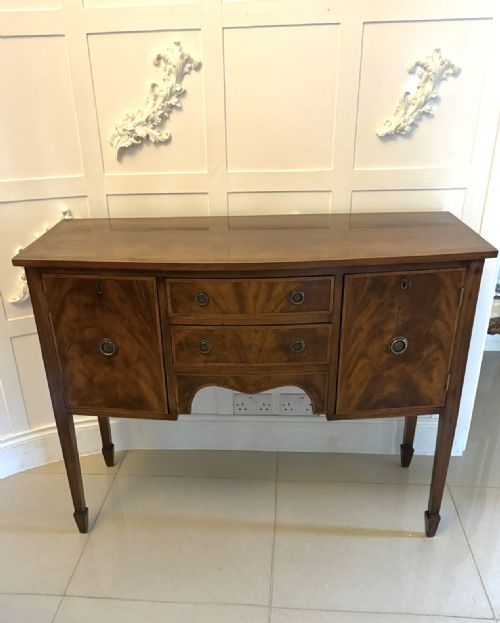
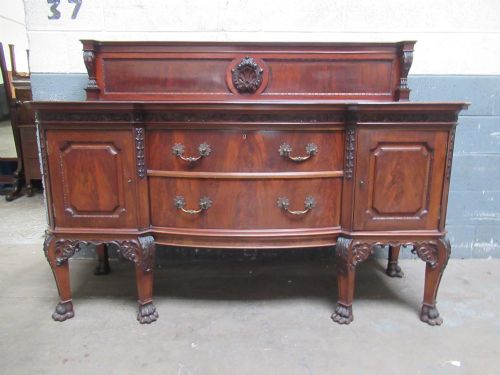
When buyers search for a mahogany bow front credenza, they encounter case pieces functioning primarily as sideboards, side cabinets, and storage cupboards. These items originate from periods spanning the eighteenth century through the Edwardian era, with Georgian and nineteenth-century examples forming the core of the selection.
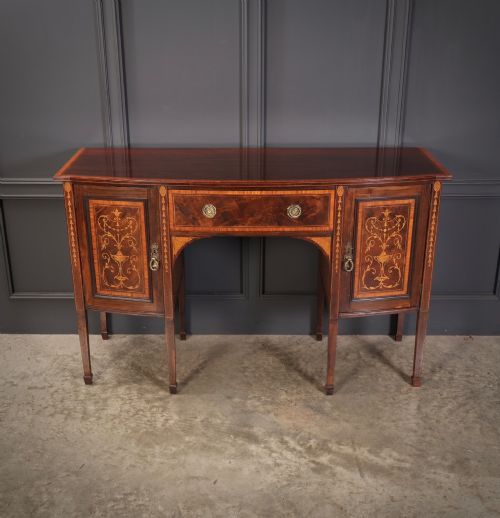
The dominant form on this page is the bow-fronted sideboard, alongside side cabinets and storage cupboards sharing the characteristic curved front. Pieces appear from diverse design traditions including Regency, Sheraton Revival, and Edwardian styles.
Origins range from eighteenth-century workshops to twentieth-century revivals, encompassing regional British pieces such as Scottish stage-back variants as well as Italian marquetry cabinets.
How they were made
Cabinetmakers constructed these pieces using solid timber and veneers of mahogany, frequently incorporating flame mahogany figures to accentuate the curved drawer and door fronts. Secondary structural woods such as oak appear in internal framing and drawer linings.
Listings feature mahogany, satinwood, boxwood, and oak across Georgian, Regency, and Edwardian periods.
What varies in quality
The standard of timber selection marks the primary distinction across pieces, ranging from plain mahogany boards to highly figured flame veneer matched symmetrically across the curved front. Finer examples display meticulous boxwood or satinwood stringing and inlay work that follows the intricate sweep of the bow.
Proportion and scale dictate the desirability of a piece, with smaller dimensions or substantial pedestal formats commanding specific interest. The integration of secondary timbers and the precision of the curved drawer construction reflect the original maker's skill.
Edwards and Roberts
The Mahogany Bow Front Credenza Glossary
- Bow front
- A convex curved front projecting outward in a smooth arc. This shape softens the rectangular geometry typical of standard dining room storage furniture.
- Flame mahogany
- A veneer cut from the branch junction of the mahogany tree, producing a distinctive flame-like pattern. Cabinetmakers reserved this timber for principal visual surfaces.
- Stringing
- Thin inlay lines of contrasting wood set flush into the surface of the primary timber. Boxwood and satinwood provide the pale contrast against dark mahogany.
- Marquetry
- Decorative patterns formed by fitting together pieces of veneer onto a structural surface. Italian and revival pieces frequently employ this technique for floral or geometric designs.
- Pedestal sideboard
- A form featuring central drawer sections flanked by distinct pedestal cupboards. Regency makers popularised this grand architectural layout for dining rooms.
Mahogany Bow Front Credenza: Frequently Asked Questions
What rooms suit a bow front cabinet?
These pieces serve dining rooms, hallways, and living spaces as storage cabinets or sideboards. Their curved profile allows them to project less sharply into a room than rectangular furniture while providing generous interior capacity.
Selecting a smaller sideboard or cupboard enables placement in narrower circulation spaces or drawing rooms without dominating the floor plan.
What is the difference between a sideboard and a credenza?
While modern terminology blurs these categories, historical listings group bow-fronted storage under sideboards, side cabinets, and cupboards. Sideboards traditionally supported dining room service, whereas credenzas evolved from serving tables into enclosed cabinets.
Both forms on this page share the defining convex curve and mahogany construction suited to display and storage.
How do I care for antique mahogany timber?
Maintaining antique mahogany involves keeping pieces away from direct heat sources and strong sunlight that can fade the polished surface. Regular dusting with a dry lint-free cloth preserves the sheen of the timber and veneer.
Occasional application of appropriate wax feeds the wood without building up heavy residues that obscure the grain and inlay.