
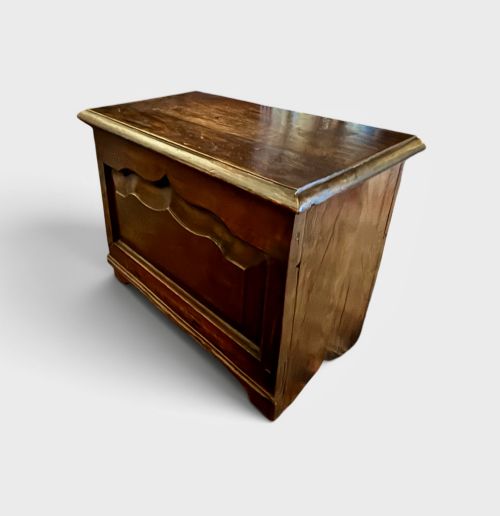
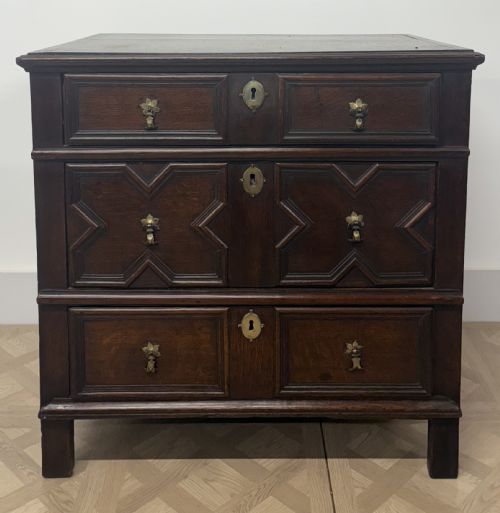
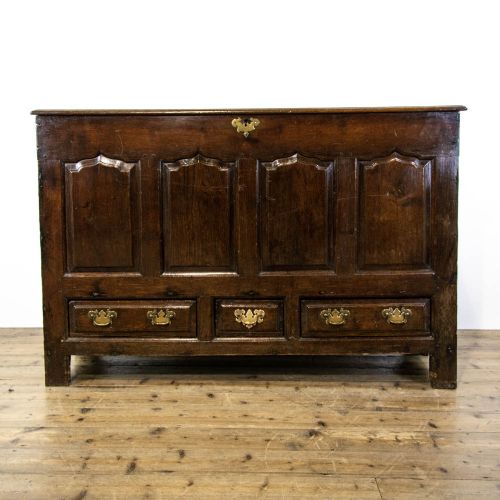
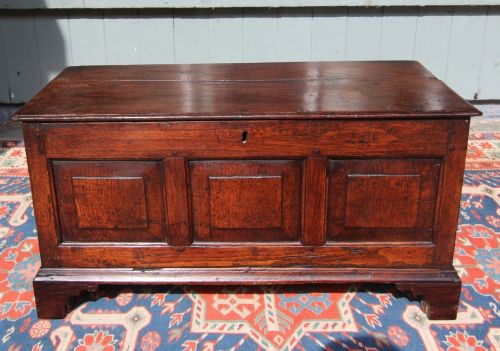


Fielded Panel Coffer
A fielded panel coffer brings honest timber and centuries of domestic storage right into a modern room.
Fielded Panel Coffer
When you search for a fielded panel coffer, you are looking for robust wooden storage pieces designed to hold blankets, linen, and personal belongings. These forms include mule chests, coffers, and coffer bachs originating from English and Welsh country traditions.
You are most likely to meet oak examples on this page, spanning from the seventeenth century through the Georgian period and into the nineteenth century. Many pieces feature drawers beneath the main compartment or take the form of press cupboards and housekeeping cupboards.
The regional diversity ranges from rustic English country workshops to Welsh vernacular pieces, showing how families stored their valuables before fitted wardrobes existed.
Materials and construction
Joiners built these chests primarily using solid oak, chosen for its durability and abundant local supply across English and Welsh counties. Panels were rebated and fitted into grooved frames to allow the timber to move naturally with changes in humidity.
Metalwork played a functional role in construction, with iron hinges and brasses securing lids, drawers, and doors. The structural joinery relied on pegged mortise and tenon joints rather than modern adhesives.
Materials recorded across the inventory are strictly traditional, featuring solid oak alongside functional iron and brass hardware.
Judging quality and proportion
Quality rests in the crispness of the panel work and the balance of proportions between the upper chest and any lower drawers. Finer examples show careful selection of grain matching across the front facade.
The integrity of the original timber framing and the presence of period brass or iron hardware distinguish superior survivals from heavily altered pieces.
The Fielded Panel Coffer Glossary
- Coffer
- A heavy wooden chest used for storing valuables, linen, or documents. Most feature a hinged lid and robust boarded or panelled construction.
- Mule chest
- A storage chest fitted with one or more drawers at the base beneath the main compartment. This form bridges the traditional coffer and the chest of drawers.
- Fielded panel
- A wooden panel with bevelled edges that sit proud of or recede into the surrounding frame. This technique adds depth and decorative shadow lines to furniture fronts.
- Vernacular
- Furniture made by regional craftsmen using local traditions and materials rather than following metropolitan academic designs. These pieces reflect the specific domestic needs of their home counties.
Fielded Panel Coffer: Frequently Asked Questions
What is a mule chest?
A mule chest is a traditional storage chest that incorporates one or more drawers at the base beneath the main lift-top compartment. This hybrid design emerged when makers realised adding drawers improved accessibility without sacrificing top storage.
They served as versatile furniture in country houses for holding blankets, clothing, and household linens.
How do I date an oak coffer?
Dating relies on examining construction methods, tool marks, timber characteristics, and style markers. Seventeenth-century pieces often display heavier framing and Charles II period details, while Georgian examples show more refined proportions.
Changes in hinge types, lock mechanisms, and drawer construction also help narrow down the century of manufacture.
Where were these pieces made?
The pieces originate primarily from English and Welsh rural workshops, reflecting distinct regional building traditions. Welsh vernacular pieces often feature specific local timber selections and decorative flourishes unique to the principality.
English country makers produced robust oak furniture tailored to the requirements of local farms and manor houses.
How do I care for antique oak?
Antique oak benefits from stable room temperatures away from direct heat sources and strong sunlight, which dry out the timber. Regular dusting with a soft, dry cloth maintains the surface.
Applying a traditional beeswax polish occasionally helps nourish the wood and preserves the natural lustre built up over centuries.