
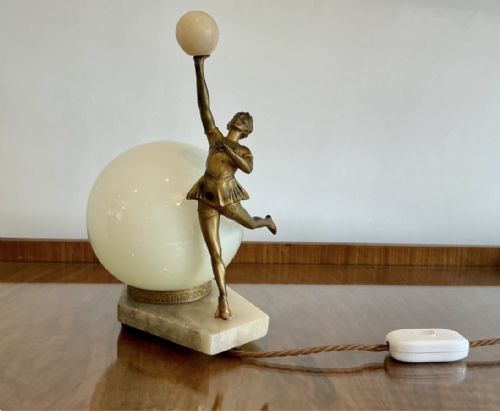
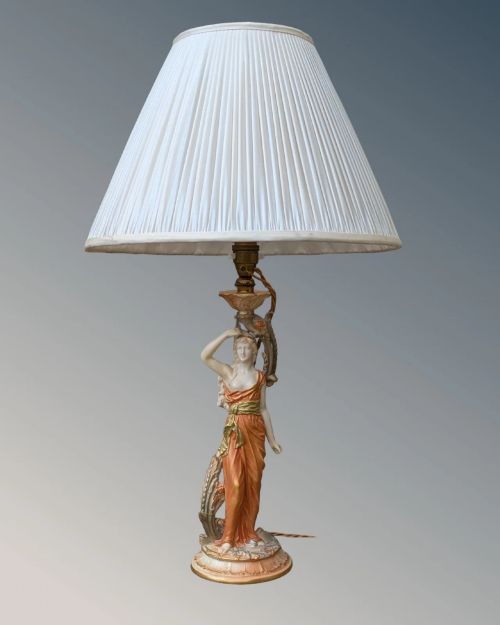




Female Figure Table Lamp
A female figure table lamp brings sculptural presence to a room, combining figural art with functional illumination from the Victorian period through to the mid-twentieth century.
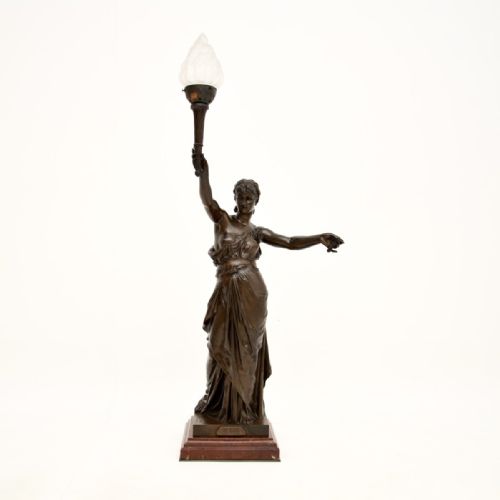
Female Figure Table Lamp
A female figure table lamp combines sculptural form with domestic lighting, taking inspiration from classical, neoclassical, and later twentieth-century aesthetics. These pieces range from substantial bronze and spelter figures to delicate porcelain and glass creations designed to sit on desks, tables, or sideboards.
The selection here draws heavily on the Art Deco and Art Nouveau movements, alongside Victorian and earlier classical influences. Figures stand alone, hold torchere shades, or balance upon spheres, reflecting the distinct artistic movements of their respective decades.
Materials and construction methods
Metal fabrication forms a core part of these items, utilising bronze, spelter, brass, silver plate, and chrome. Artisans employed casting techniques to shape figures like nudes and caryatids, occasionally applying cold painting or silvering to the metallic surfaces.
Other examples utilise carved alabaster, marble bases, and moulded glass, including frosted glass and porcelain. Fabric components frequently complete the lamps as shades, paired with structural elements in oak or metal.
The inventory spans multiple decades, moving from seventeenth-century oak caryatids through Victorian bronze to 1930s Art Deco chrome.
Assessing quality in figural lamps
Material selection dictates much of the physical presence, with solid bronze, carved alabaster, and hand-painted porcelain representing higher tiers of craftsmanship than plated or simpler metal alloys.
Royal Worcester·Jean-Jules Cambos·Auguste Moreau
The Female Figure Table Lamp Glossary
- Spelter
- A zinc alloy commonly used as a less costly alternative to bronze for figural castings. It is often painted or plated to imitate heavier metals.
- Caryatid
- A sculpted female figure serving as an architectural support or pillar. In lighting, these figures integrate structural weight with classical form.
- Cold painted
- A method of painting metal sculptures with oil or enamel paints without firing. This finish is susceptible to flaking if handled improperly over time.
- Torchere
- A tall stand or ornamental lamp holding a light source aloft. In these pieces, the female figure frequently holds the torchere shade.
- Alabaster
- A fine-grained stone used for carving bases and sculptural elements. Its translucent quality diffuses light effectively.
Female Figure Table Lamp: Frequently Asked Questions
How do I clean an antique metal lamp?
Dust the surface gently with a soft, dry cloth to protect delicate finishes like cold painting or silvering.
Avoid chemical polishes and abrasive materials that can strip historic patinas and damage the underlying metal.
Are these lamps safe to use today?
Many older pieces retain original wiring that may not meet modern safety standards. Have a qualified electrician inspect the internal components before regular use.
Rewiring can usually be done without altering or damaging the historic figural base.
What is the difference between bronze and spelter?
Bronze is a heavy copper alloy valued for its durability and rich patination over centuries. Spelter is a softer zinc alloy that feels lighter and requires surface plating or paint to resemble bronze.
Examining the underside or worn areas often reveals the lighter grey metal beneath spelter finishes.