

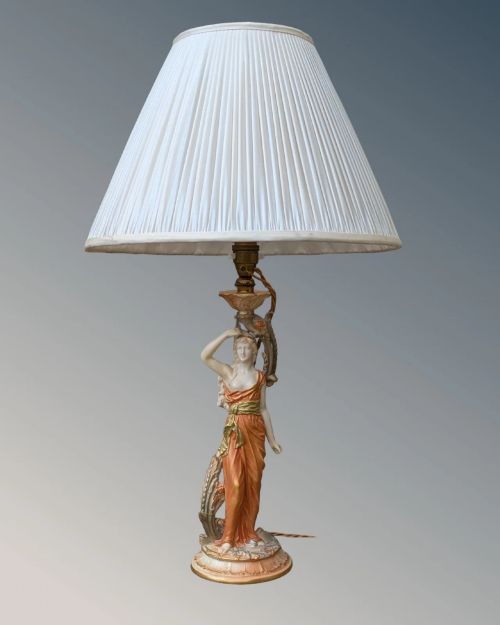


Decorative Porcelain Lighting
These decorative porcelain lighting pieces bring tactile ceramic texture and period warmth to a room.
Decorative Porcelain Lighting
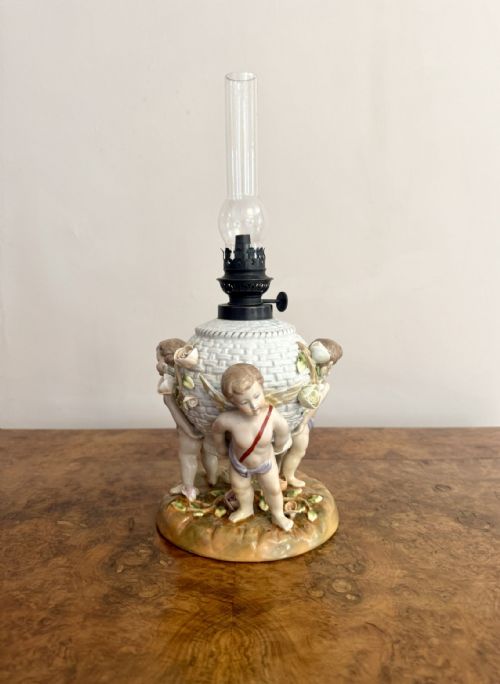
Decorative porcelain lighting gathers together ceramic lamps, oil burners, and converted vases from the eighteenth century up to the 1930s. Buyers look for these items to introduce colour, pattern, and sculptural form into domestic interiors through functional objects.
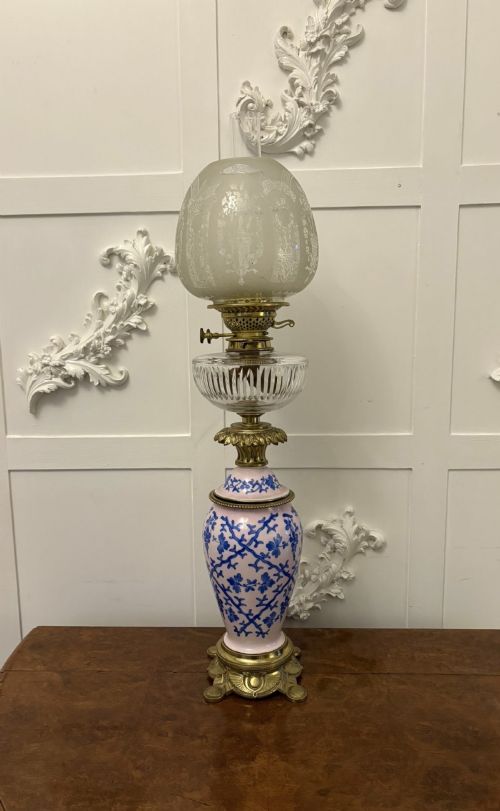
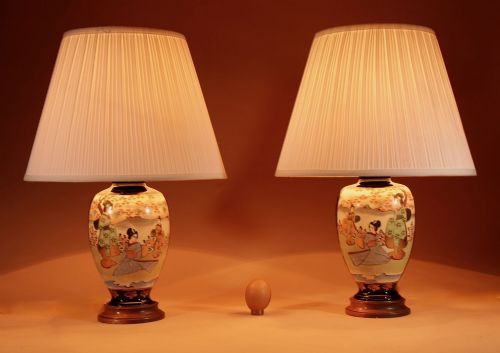
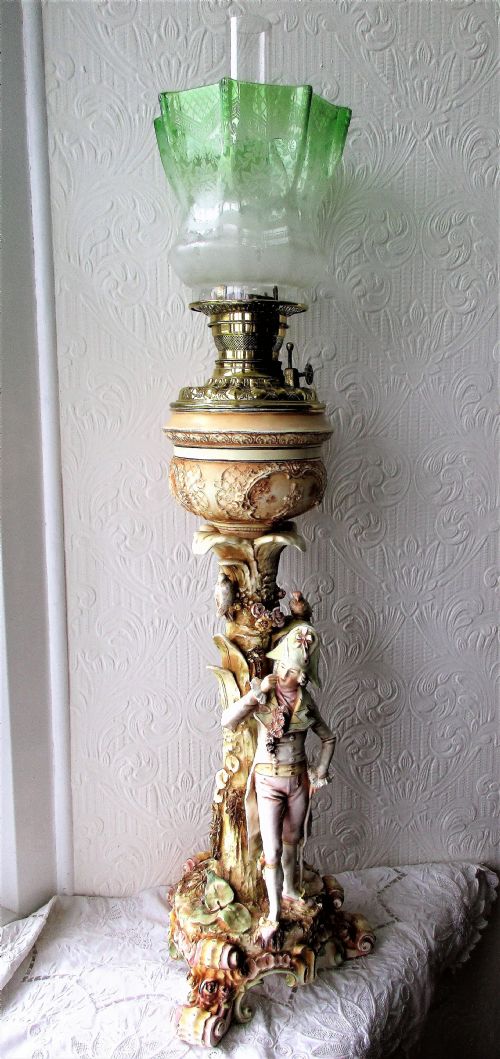
The selection on this page relies heavily on nineteenth-century Victorian pieces alongside Japanese Satsuma wares and French Paris porcelain. Table lamps and converted oil lamps dominate the selection, often paired with brass bases or fabric shades.
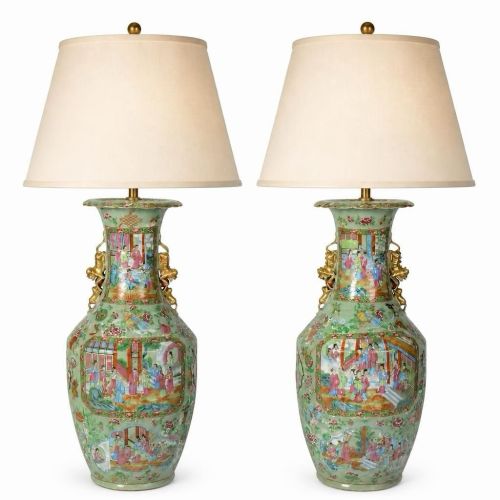
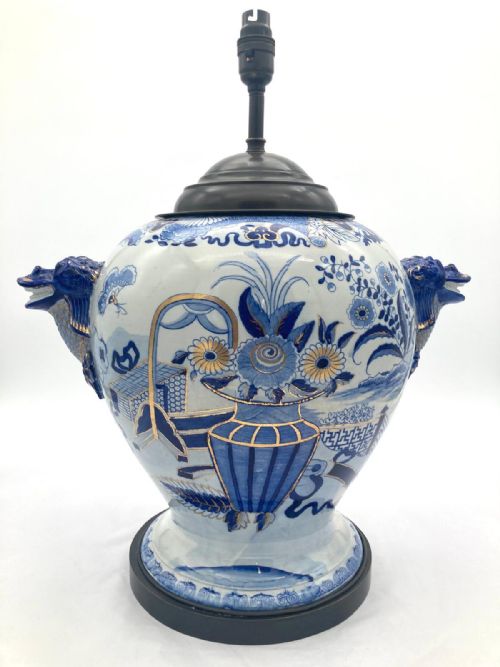
Vessels such as Chinese Famille Rose vases and Rose Medallion jars appear frequently converted into lamps. These pieces bridge the gap between antique ceramic display and practical daily illumination.
Materials and construction methods
Makers combined fired ceramic bodies with cast brass mounts, gilt bronze, and sometimes enamel or glass elements. Porcelain components were either glazed in workshops like Sitzendorf and Royal Worcester or decorated with hand-painted motifs.
Many examples utilise older vessels, such as Chinese export vases or ironstone jars from the Regency period, which were later adapted to hold electrical fittings or oil burners. Brass components provide structural support and weighted bases for taller ceramic columns.
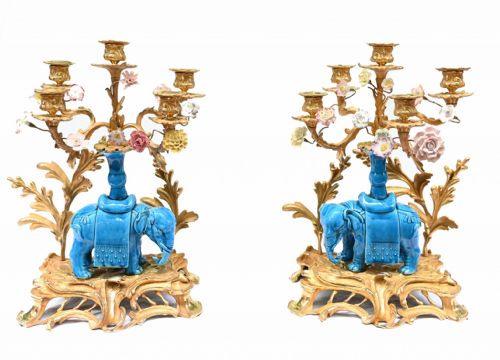
Elephants occasionally double as candelabras, holding light above their trunks with immense Victorian dignity.
Factors separating standard examples from exceptional ones
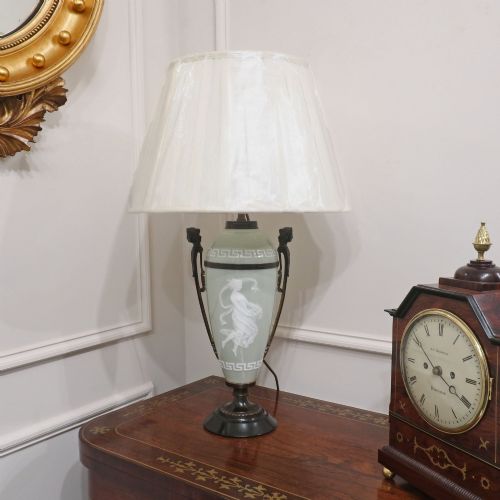
Quality rests upon the crispness of the porcelain moulding and the detail found in hand-painted surface decoration. Pieces featuring pate sur pate techniques or intricate Japanese Satsuma enamelwork display superior craftsmanship compared to plain or heavily worn alternatives.
The integrity of the original ceramic body matters greatly, particularly whether a vase was drilled cleanly for conversion or retains its structural form intact. Matching pairs command higher regard than single lamps, especially when the original gilt bronze mounts remain unpolished and well preserved.
Sitzendorf·Royal Worcester·Wedgwood·Hicks and Meigh·Bow
The Decorative Porcelain Lighting Glossary
- Pate sur pate
- A ceramic technique where successive layers of white slip are built up on a coloured clay body to create a low relief cameo effect. This method requires immense skill and produces a translucent design.
- Satsuma ware
- Japanese earthenware or porcelain decorated with intricate enamel patterns and gilt highlights over a crackle glaze. These items were widely exported during the Meiji period.
- Bocage
- An arrangement of applied porcelain leaves and flowers framing a figure or candlestick. This style is frequently associated with eighteenth-century English factories like Bow.
- Famille rose
- A palette of Chinese porcelain enamels dominated by opaque pink or purple, introduced during the Qing dynasty. The term translates to pink family.
- Diaper lustre
- A decorative pattern incorporating geometric grids combined with iridescent glaze effects. Wedgwood utilised this technique on porcelain and earthenware bodies.
Decorative Porcelain Lighting: Frequently Asked Questions
How do I safely wire an antique porcelain lamp?
Most antique lamps require modern rewiring to meet current safety standards. A qualified electrician can thread modern cord through the existing channels without damaging the ceramic body.
It is essential to check that the brass fittings and internal hardware match the weight and scale of the porcelain base to ensure stability.
Were all these lamps originally made for electricity?
The majority of nineteenth-century examples began life as oil lamps, candlesticks, or decorative vases before conversion. Conversion usually happened during the twentieth century to accommodate modern light bulbs.
Examining the base or collar often reveals the traces of older oil burners or drill holes added during the conversion process.
Can I find matching pairs of porcelain lamps?
Matching pairs do appear, particularly among nineteenth-century Japanese Satsuma vases and French Paris porcelain columns. These pairs were often created together or converted as matching sets from decorative vases.
Slight variations in hand-painted details are normal and confirm the individual human hand in their creation.