




Blue Pleated Lamp Shade
A blue pleated lamp shade tops a converted antique vessel, adding soft directional light and texture to a room.
Blue Pleated Lamp Shade
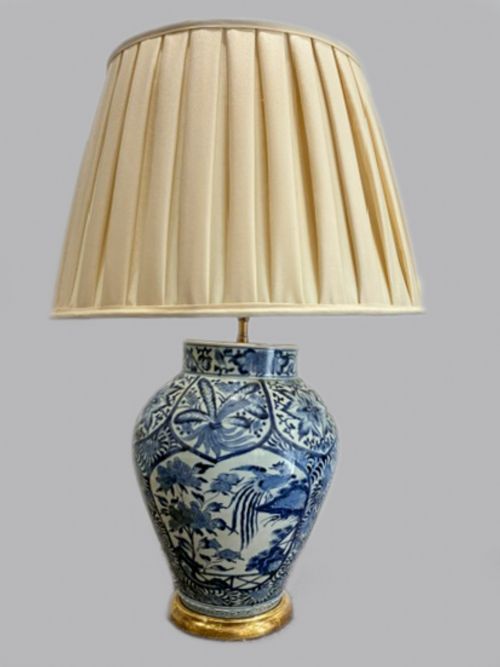
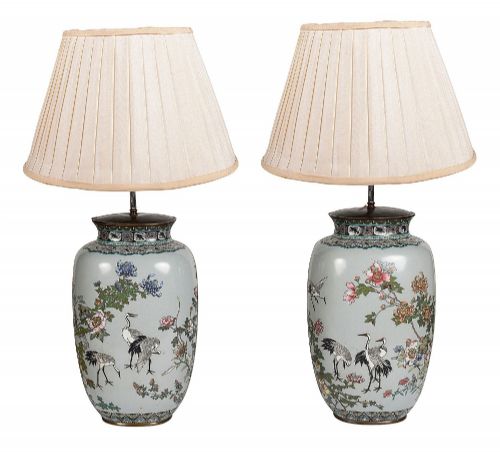
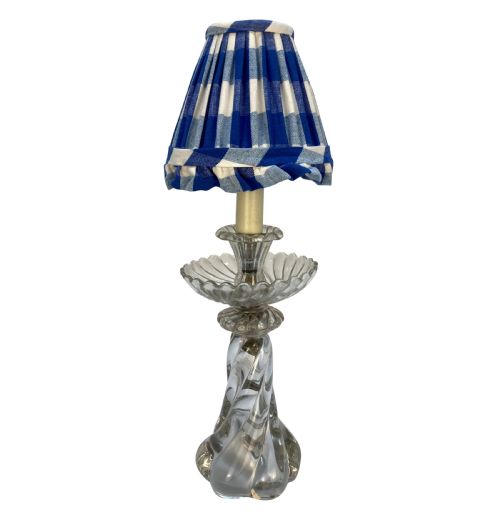
A blue pleated lamp shade tops table lamps created from converted ceramic and metal vessels, primarily focusing on Chinese and Japanese porcelain bases alongside French glass and brass pieces. The listings gathered here demonstrate how antique vases, ginger jars, and spill vases from the seventeenth to the twentieth centuries take on new life with fitted lighting elements and handmade shades.
The most common form encountered on this page pairs a blue and white porcelain vase base with a fabric shade, drawing on styles ranging from Edo period Arita wares to Art Deco designs. Buyers searching for a blue pleated lamp shade will find that the underlying bodies span Imari, crackleware, and cloisonné enamel types, creating varied silhouettes from slender spill vases to twin-handled urns.
Materials and Construction
The primary bodies utilise porcelain, ceramic, and cloisonné enamel, shaped by hand in East Asian and European kilns and workshops before later conversion into lighting fixtures. Metal elements incorporate brass, gilt bronze, and wood mounts, providing stable foundations for the porcelain and glass vessels.
Fabric and silk form the shades and coverings, paired with fitted electrical or burner components inside the ceramic structures. Skilled artisans combined hand-painted blue and white underglazes, crackle glazes, and detailed enamel work to produce the decorative vessels that now serve as table lamps.
Listings feature porcelain, brass, fabric, silk, wood, gilt bronze, cloisonné enamel, and ceramic across table lamp forms.
Assessing Quality and Execution
Quality rests in the crispness of the hand-painted underglaze blue and the precision of the enamel work on the porcelain or cloisonné body. Superior examples display balanced proportions between the converted vessel and the fabric shade, maintaining structural integrity across the mounts and gilt bronze bases.
The refinement of the vessel's glaze, whether a smooth celadon, a controlled crackleware pattern, or intricate Imari detailing, separates standard utilitarian pieces from exceptional works of art. The integration of the lamp fittings into the original ceramic neck without compromising the antique material marks the measure of professional conversion.
The Blue Pleated Lamp Shade Glossary
- Cloisonne Enamel
- A metalwork technique using thin wire soldered to a base to form compartments filled with vitreous enamel paste. This method creates intricate patterned surfaces seen on many nineteenth-century lamp bases.
- Imari
- A style of Japanese porcelain decorated in underglaze blue and overglaze red, gold, and green. Originating in Arita, these export wares appear frequently in antique lighting.
- Celadon
- A term for pottery denoting both wares glazed in jade green and the green glaze itself. It derives from Chinese kilns and provides a subtle, uniform tone for lamp bodies.
- Crackleware
- A ceramic glaze marked by a network of fine cracks intentionally created during cooling. The effect adds texture and depth to blue and white porcelain vases.
- Famille Verte
- A porcelain palette dominated by green enamel colours, introduced during the Qing dynasty. These pieces often feature botanical and figurative scenes suited to decorative lighting.
Blue Pleated Lamp Shade: Frequently Asked Questions
What periods do these lamps cover?
The available pieces span from the late seventeenth century through the nineteenth century and into the early twentieth century. Makers and artisans across these eras produced the ceramic and metal vessels later adapted into lighting.
Twentieth-century additions bring Art Deco and French glass designs into the mix alongside earlier Asian export wares.
How are antique vases turned into lamps?
Craftsmen drill or fit the historic porcelain, glass, or cloisonné bases with internal wiring and secure them to metal or wood mounts. This allows fragile antique vessels to function safely as table lamps.
Handmade shades, including pleated fabric designs, are then paired with the mounted bases to complete the piece.
Where do the porcelain bases originate?
The listings feature significant numbers of Chinese and Japanese ceramic bodies, including Arita, Imari, and Satsuma wares. European porcelain and glass from French workshops also appear among the selections.
These diverse geographical origins reflect global trade patterns and the Victorian and Edwardian taste for exotic conversion pieces.
How do I style a blue pleated lamp shade?
These table lamps work well on side tables, desks, or chests where their blue and white or coloured ceramic bases can serve as focal points. The fabric shades diffuse directional light suitably for reading or ambient illumination.
Pair them with neutral interiors to let the hand-painted porcelain patterns and pleated textures stand out.
How do I identify Imari porcelain?
Imari porcelain typically displays a distinctive colour palette combining underglaze cobalt blue with iron red, gilded highlights, and secondary colours like green or black. These Japanese export wares were produced primarily in Arita for Western markets.
The busy, decorative panels and floral motifs make them easily recognisable as lamp bases.