


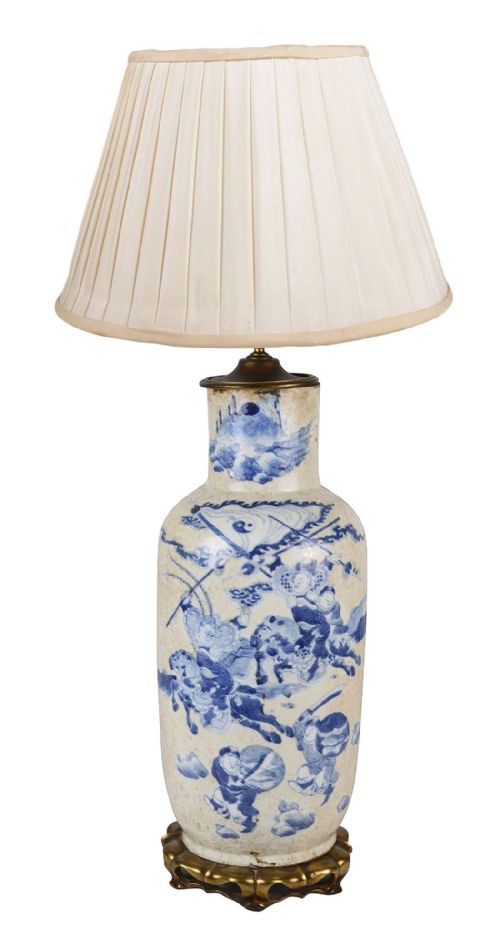


Ceramic Figure Lamp
A ceramic figure lamp brings sculptural presence and warm illumination to a room, uniting figurative modelling with functional lighting.
Ceramic Figure Lamp
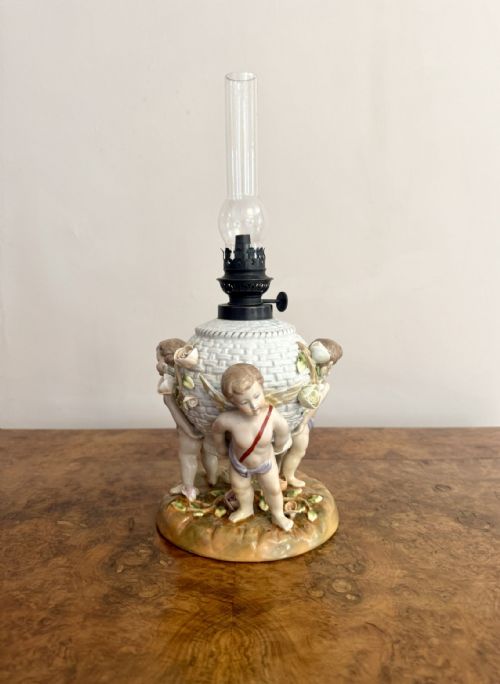
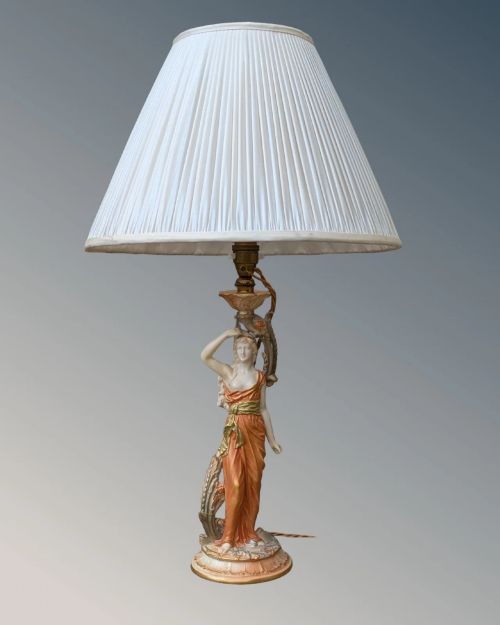
A ceramic figure lamp combines porcelain or pottery modelling with lighting components, taking the form of table lamps and converted oil lamps. When searching for a ceramic figure lamp, collectors encounter pieces shaped as animals, birds, pairs of vases, or classical figures mounted on bases.
The selections available here span the nineteenth century, the Victorian era, and the nineteen-twenties. Styles range from French Neoclassical and Victorian Greek Revival to Chinese Qing Dynasty, Chinoiserie, and Art Deco.
Makers and origins represented include Sitzendorf, Royal Worcester, Paris porcelain, and German factories alongside Chinese works. Buyers find individual examples and matched pairs suited to diverse decorative schemes.
How they were made
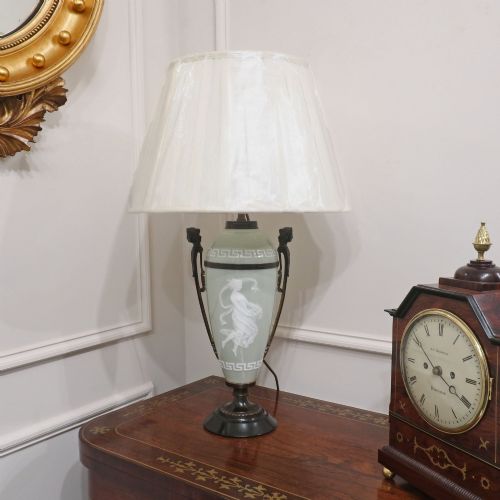
Makers utilised porcelain as the primary ceramic body, shaping figures and vases through moulding or hand-forming techniques. Glazes including famille rose, turquoise, and blue and white decorated the surfaces alongside pate-sur-pate ornamentation.
Mounts and structural elements incorporate brass, bronze, metal, and wood to support the ceramic bodies. Wiring and lamp fittings were added later during conversion from oil lamps or during contemporary rewiring.
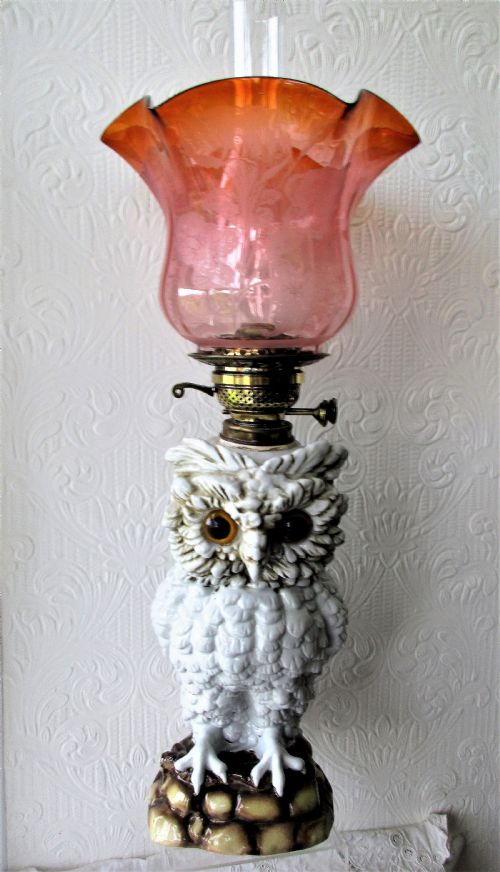
Spitz dogs and wise owls keep silent vigil from nineteenth-century porcelain bases, shedding light on the room.
What varies in quality
Quality rests in the crispness of the modelling and the finesse of the hand-painted details upon the porcelain body. Superior examples display subtle facial expressions, precise feather or coat rendering on animal figures, and harmonious glaze application.
The integration of the ceramic body with its metal or wood base distinguishes finer works from simpler assemblies. Original factory marks or attribution to established potteries elevate the standing of a piece within its period.
Sitzendorf·Royal Worcester·Samuel Alcock
The Ceramic Figure Lamp Glossary
- Pate-sur-pate
- A method of porcelain decoration where liquid white clay is built up in successive layers on a coloured background to create a low relief cameo effect. This technique demands exceptional skill from the ceramic artist.
- Famille rose
- A palette of opaque enamel colours dominated by pink, introduced to Chinese porcelain during the Qing dynasty. The style gained immense popularity across European decorative arts.
- Famille verte
- A ceramic classification characterised by a predominant green enamel palette used alongside other colours. It defines a distinct group of Qing dynasty wares.
- Neoclassical
- A style drawing inspiration from the classical art and architecture of ancient Greece and Rome. It emphasises symmetry, proportion, and restrained ornamentation.
- Porcelain
- A ceramic material made by heating raw materials, generally including clay in the form of kaolin, in a kiln. It fires at high temperatures to achieve a hard, non-porous body.
Ceramic Figure Lamp: Frequently Asked Questions
What is a ceramic figure lamp?
A ceramic figure lamp is a lighting fixture constructed from a ceramic sculpture, figure, or decorated vase. These pieces often originate as nineteenth-century oil lamps or decorative vases subsequently converted for electrical use.
They serve both as sculptural art objects and functional table lamps, combining figurative porcelain work with metal bases and fabric shades.
How do I date a ceramic lamp?
Dating relies on stylistic markers, manufacturing techniques, and factory marks found on the ceramic body. Pieces from the nineteenth century often exhibit hand-painted details and specific glaze characteristics associated with periods like the Victorian era or Qing dynasty.
Hardware components, wiring methods, and base construction also provide clues to age, though metal mounts and electrical fittings are frequently updated over time.
Are these lamps converted oil lamps?
Many older ceramic lamps began life as Victorian oil lamps or decorative mantel vases before receiving electrical fittings. This conversion process allowed fragile nineteenth-century porcelain to find a continuous, practical use in modern interiors.
Collectors appreciate these converted pieces for their historical integrity and the quality of their original ceramic bodies.
How do I style a figure lamp?
These lamps function effectively on side tables, desks, or chests of drawers where their sculptural form remains visible when unlit. Pairing them with a complementary silk or fabric shade helps balance the visual weight of the ceramic base.
Matching pairs work well on sideboards or mantelpieces, while single statement pieces anchor asymmetric room arrangements.