




Gilded Porcelain Table Lamp
A gilded porcelain table lamp brings rich colour and nineteenth-century craftsmanship into a room.
Gilded Porcelain Table Lamp
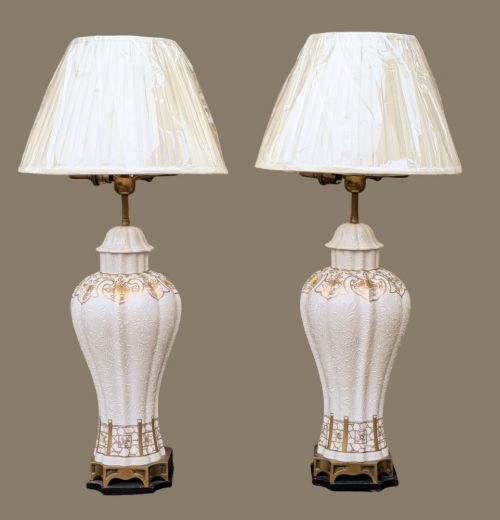
A gilded porcelain table lamp is typically formed from nineteenth-century ceramic vessels, including Satsuma, Kutani, and Cantonese vases, which have been converted into lighting.
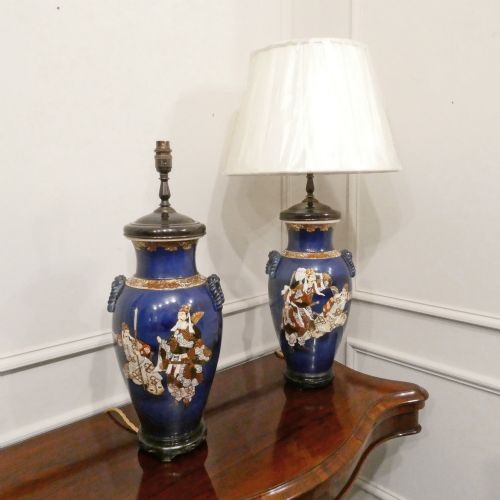
Many examples arrive in matched pairs, featuring hand-painted details on cobalt blue or cream backgrounds, often accented with gilt bronze, ormolu, or brass mounts.
The aesthetic draws heavily on Chinese Export traditions, Japanese Meiji period designs, and French Rococo Revival styles from the 1800s onward.
Materials and construction methods
The foundation relies on fired porcelain or earthenware bodies, frequently glazed in rich tones like powder blue before receiving hand-painted enamel decoration.
Metalwork components such as ormolu, gilt bronze, and brass provide structural mounts, bases, and neck fittings that support electrical wiring.
Many pieces incorporate fabric shades made from silk to complete the construction of the lamp.
Gilded Porcelain Table Lamp Retail Price Guide 2026
Typical asking prices for gilded porcelain table lamp among the pieces listed under this phrase on Sellingantiques today, from the lower quarter to the upper quarter. They describe what is for sale here now, not the wider market.
Even ginger jars designed for tea storage eventually found new careers illuminating Victorian drawing rooms.
Factors of quality and execution
The precision of the hand-painted enamels and the crispness of the gilt detailing dictate the visual depth of the ceramic body.
The integration of the metal mounts, whether ormolu or brass, shows the original maker's skill in combining ceramic vessels with functional lighting hardware.
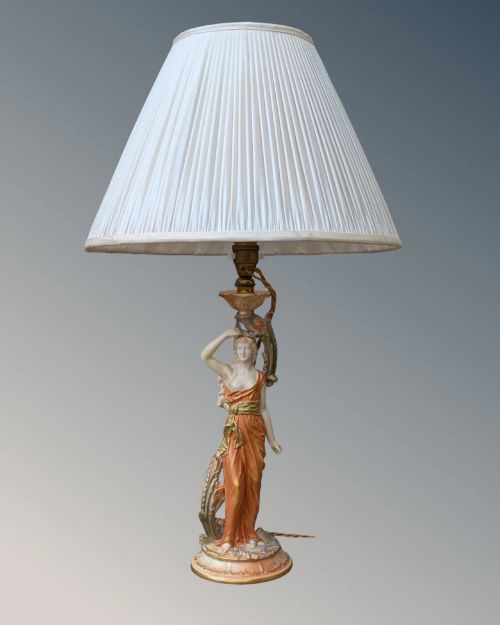
Royal Worcester·Samson
The Gilded Porcelain Table Lamp Glossary
- Ormolu
- Gilded bronze mounts applied to furniture and ceramics. This technique was widely utilised in French and European decorative arts during the nineteenth century.
- Satsuma
- Japanese earthenware originating from the Satsuma Province, typically finished with a crackle-glaze and elaborate polychrome and gilt decoration.
- Kutani
- Japanese porcelain or pottery known for bold enamel colours and detailed pictorial scenes. These wares often feature distinct red and gold palettes.
- Famille Rose
- A major palette of Chinese ceramic enamels introduced in the Qing dynasty, characterised by opaque pink enamel colours.
- Louis XVI Neoclassical
- A style reflecting classical restraint, symmetry, and architectural motifs. It frequently influences the gilt bronze mounts found on nineteenth-century European pieces.
Gilded Porcelain Table Lamp: Frequently Asked Questions
Are these lamps converted from antique vases?
Many examples began life as nineteenth-century Chinese ginger jars, Japanese Satsuma vessels, or European decorative vases before being adapted for modern use.
This conversion process typically preserves the original ceramic body while adding appropriate electrical fittings and bases.
How do I identify Satsuma ware?
Satsuma pieces feature a characteristic cream-coloured, crackled earthenware glaze decorated with detailed hand-painted designs and raised gilding.
These items originated in Japan and date from the nineteenth and early twentieth centuries.
What maintenance do these lamps require?
Dust the porcelain and gilt bronze gently with a soft, dry cloth to protect the painted enamel and metallic finishes.
Avoid using liquid cleaners or chemical polishes, as these can damage the delicate gilding and historical surfaces.
How do I style a pair of lamps?
Matched pairs function well on large sideboards, mantelpieces, or bedside tables to create symmetry in a room.
Selecting silk shades that complement the tones of the hand-painted porcelain helps tie the overall display together.