


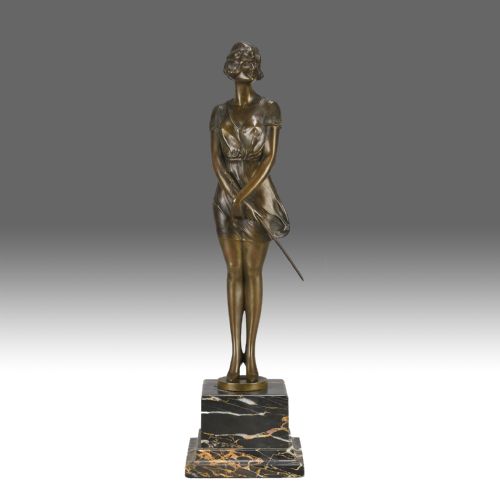
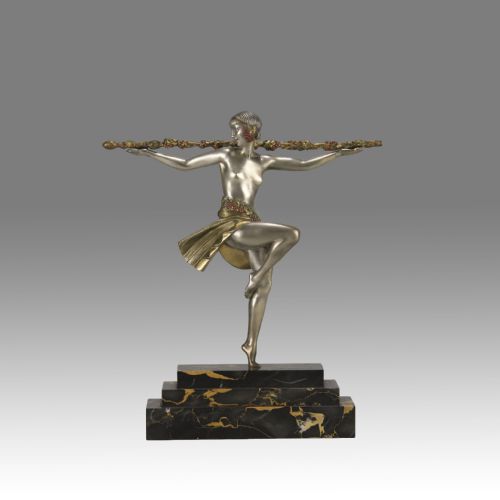
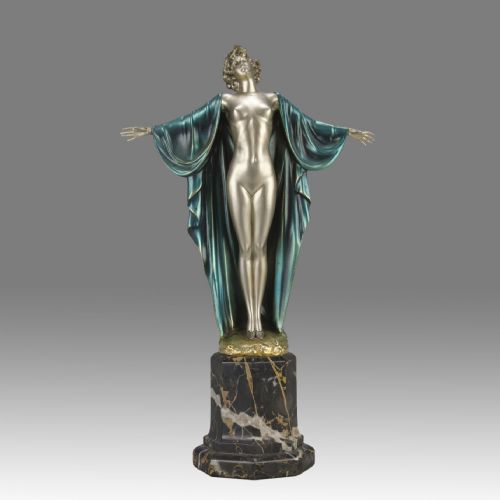
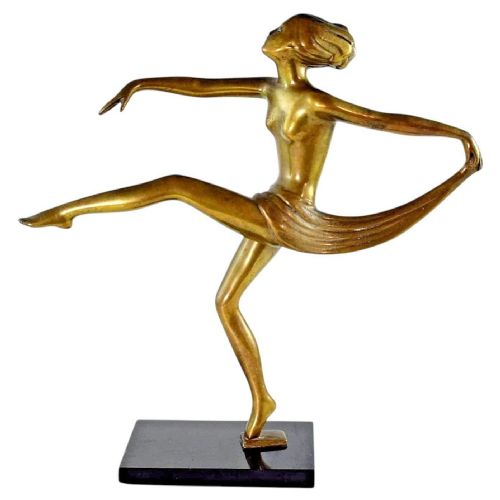
Female Figure Statue
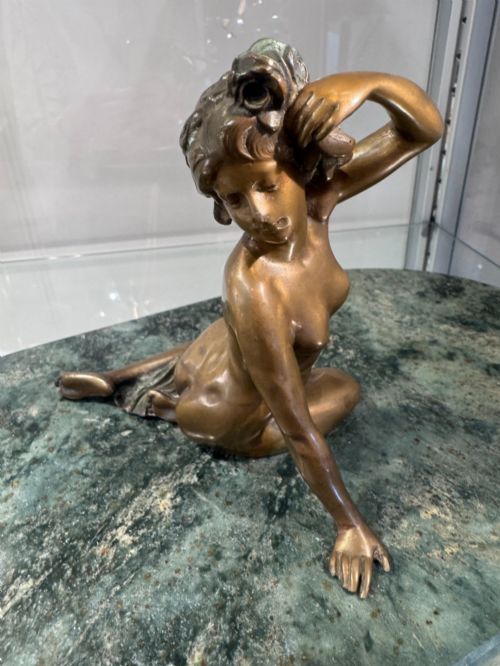
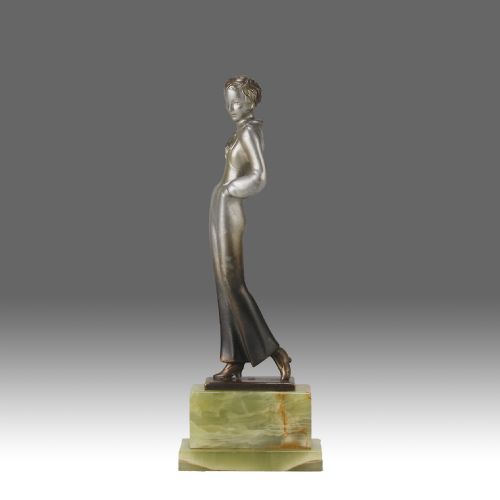
Every female figure statue on this page brings home the enduring presence of classical drapery, Art Deco movement and Victorian character.
Female Figure Statue
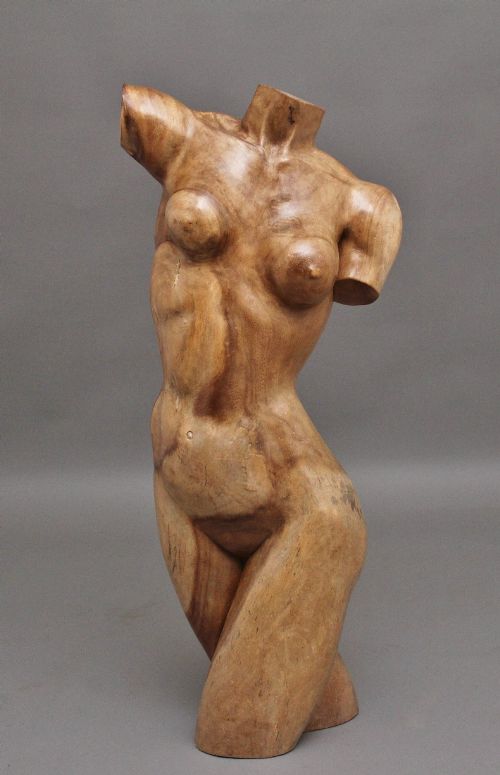
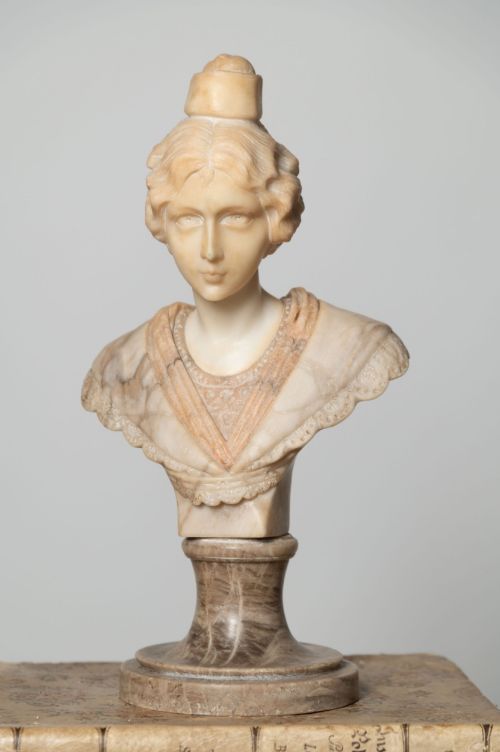
A female figure statue encompasses full-length sculptures, tabletop figurines, garden statues and portrait busts created across the nineteenth and early twentieth centuries. When searching for this phrase, collectors encounter works ranging from severe Neoclassical marbles and Grand Tour reductions to fluid Art Nouveau maidens and sharp Art Deco dancers.
The material vocabulary spans cast bronze, patinated bronze, gilt bronze, carved alabaster, marble, terracotta, spelter and Parian ware. Pieces emerge from French, Austrian and Italian workshops, reflecting shifts in taste from academic classicism to early twentieth-century modernism and tribal carving traditions.
Materials and methods
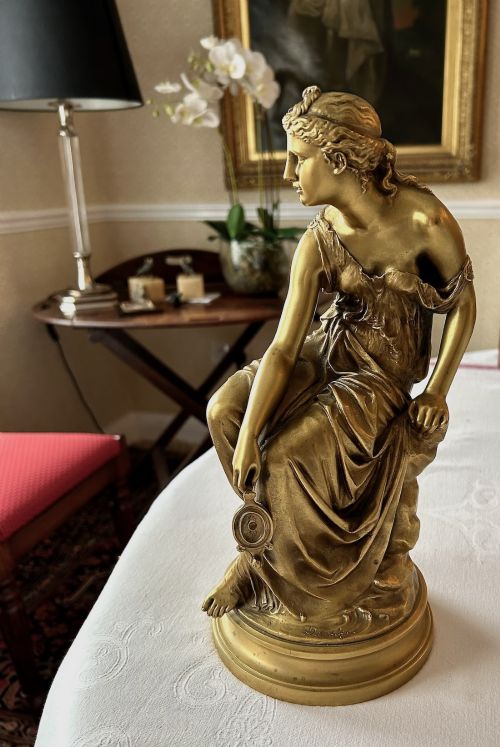
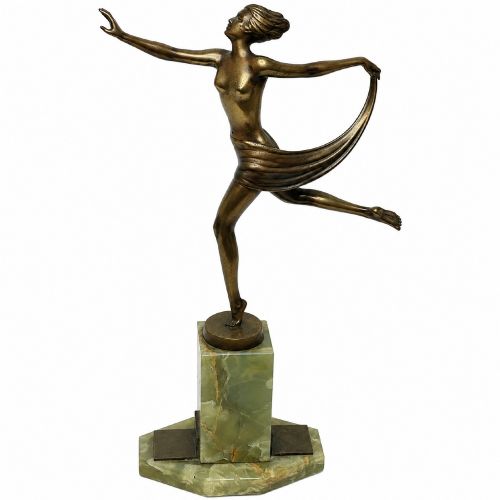
Metal sculptures rely on the lost-wax casting method, allowing founders to capture intricate folds in robes, hair strands and facial expressions before applying patination, cold-painting or gilt finishes.
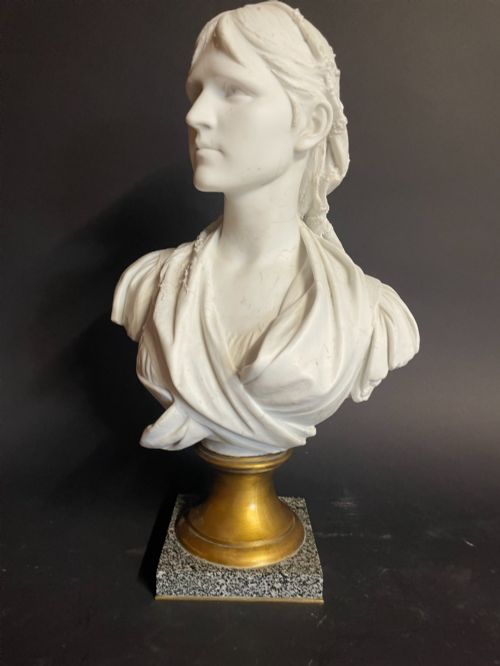
Carved pieces utilise blocks of Carrara marble, alabaster or serpentine, shaped by hand using chisels and rasps to achieve translucency in skin and contrast with rougher stone bases.
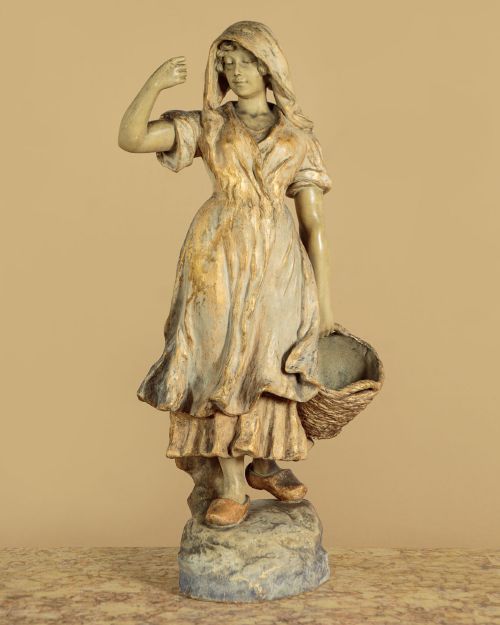
Terracotta figures undergo kiln-firing of moulded clay, sometimes finished with paint or glazes to simulate metallic or stone surfaces.
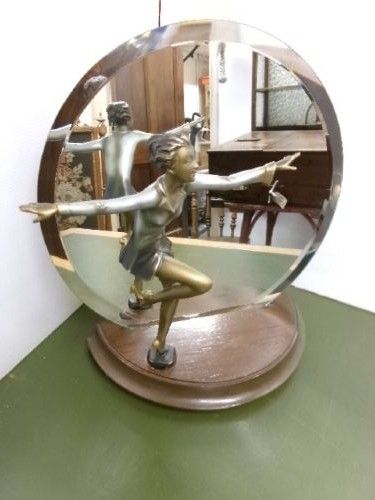
Several dancers balance on one toe without a care in the world, defying gravity across multiple decades of metalcasting.
Assessing quality
In carved stone and marble, merit lies in the purity of the medium and the sensitivity of the carving, particularly where the sculptor achieves realistic tension in muscles and softness in fabric.
Etienne-Henri Dumaige·Goldscheider·Rudolf Küchler·Ferdinand Barbedienne·Bruno Zach·Pierre le Faguays·Ferdinand Preiss·Josef Lorenzl·Antonio Canova·Mathurin Moreau·Eugene Aizelin·Demetre Chiparus·Emmanuel Villanis·Henri Godet
The Female Figure Statue Glossary
- Patina
- The surface sheen and colour developed by age or chemical treatment on bronze and metal sculptures. A rich patina adds depth to the contours of a figure.
- Cold-painted bronze
- A technique where oil paints are applied to a bronze casting without heat firing. This finish is frequently found on Austrian Art Deco figurines.
- Grand Tour
- Souvenir sculptures purchased by nineteenth-century travellers visiting classical sites in Italy. These reductions often replicate famous ancient marble statues in bronze or alabaster.
- Parian ware
- A fine-grained, unglazed porcelain resembling white marble, developed in the nineteenth century. It was widely used for portrait busts and literary figures.
- Spelter
- A zinc alloy used as a less expensive alternative to bronze during the nineteenth and twentieth centuries. It is typically painted or electroplated to imitate bronze.
Female Figure Statue: Frequently Asked Questions
What materials were used?
Makers utilised bronze, gilt bronze, patinated bronze, marble, alabaster, terracotta and painted surfaces. Sculptors also worked in spelter and Parian ware for cabinet figures.
Selection depends on the desired weight, finish and period aesthetic, ranging from metallic cold-painted dancer studies to heavy stone portrait busts.
How do I date a bronze?
Dating relies on stylistic markers from periods like the Victorian era, Art Nouveau or Art Deco, combined with foundry marks and artist signatures.
Casting quality, the composition of the metal and the condition of the surface finish also help establish whether a piece dates to the nineteenth century or the early twentieth century.
Where were these placed?
Nineteenth-century busts and figures typically occupied libraries, studies and drawing rooms as displays of classical learning and taste. Smaller dancer and nude sculptures adorned mantelpieces and sideboards during the interwar years.
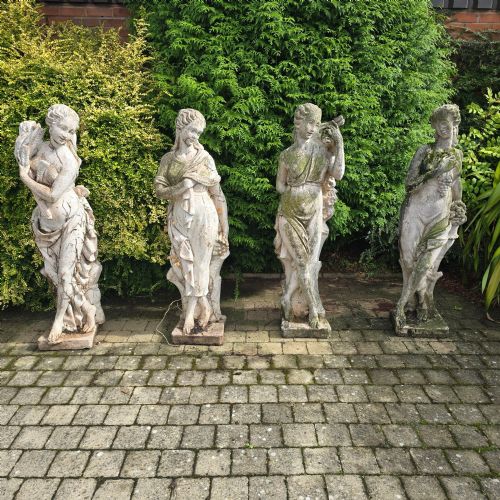
Larger pieces served as garden statuary or architectural focal points in grand interiors.
Are signatures important?
Signatures and foundry stamps confirm the origin of a work and link it to known sculptors or productive workshops. Unsigned pieces still reflect the period style and sculptural skill of their makers.
Authenticated signatures by notable artists generally indicate higher execution standards.