



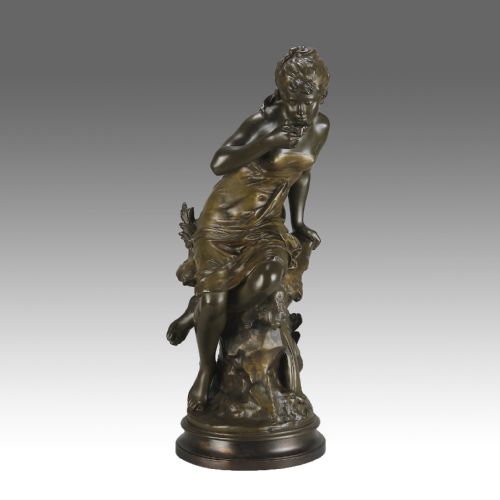
Classical Female Statue
A classical female statue brings mythological figures and robed maidens into interiors and gardens through enduring bronze, marble and stone forms.
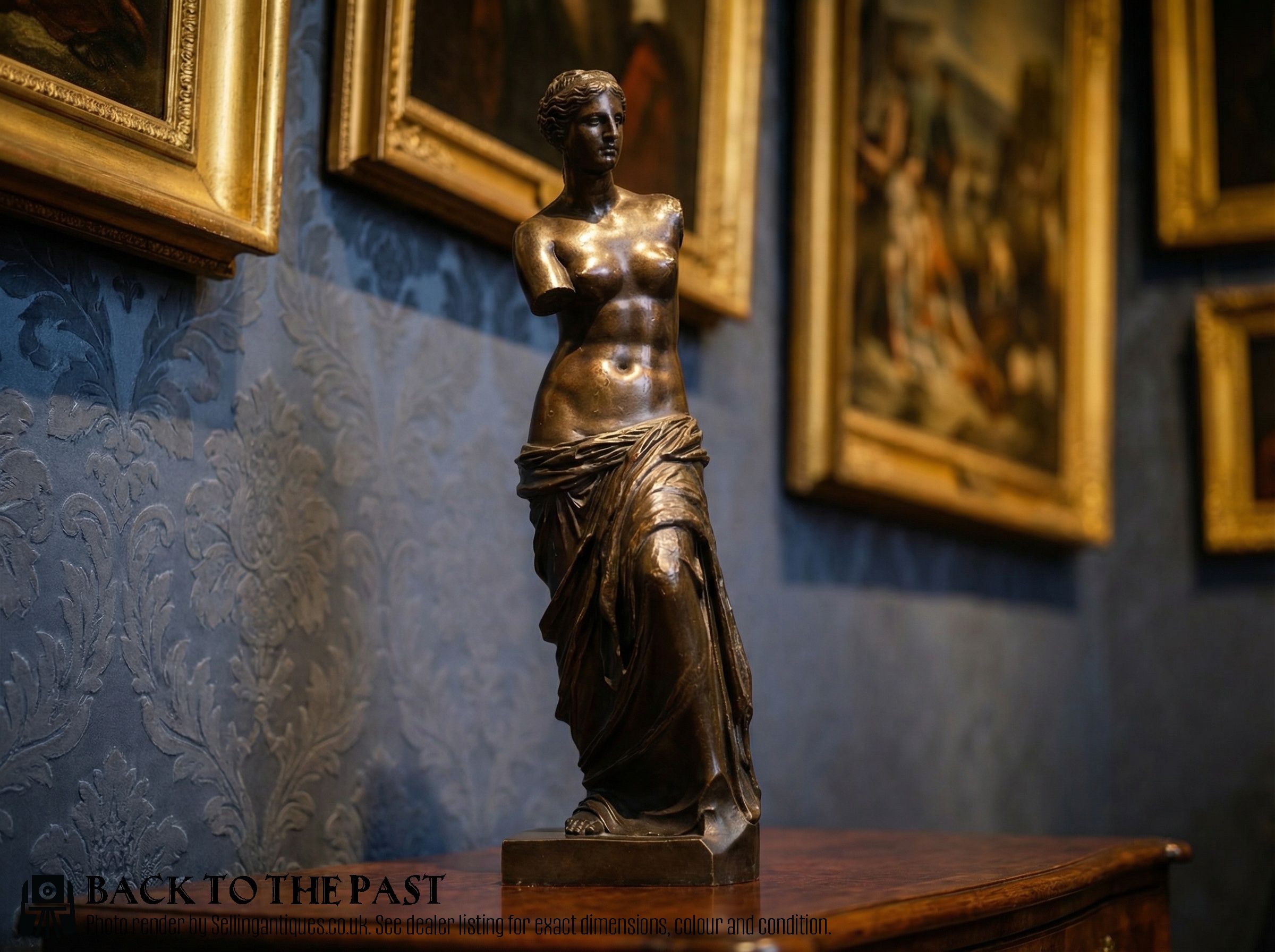
Classical Female Statue
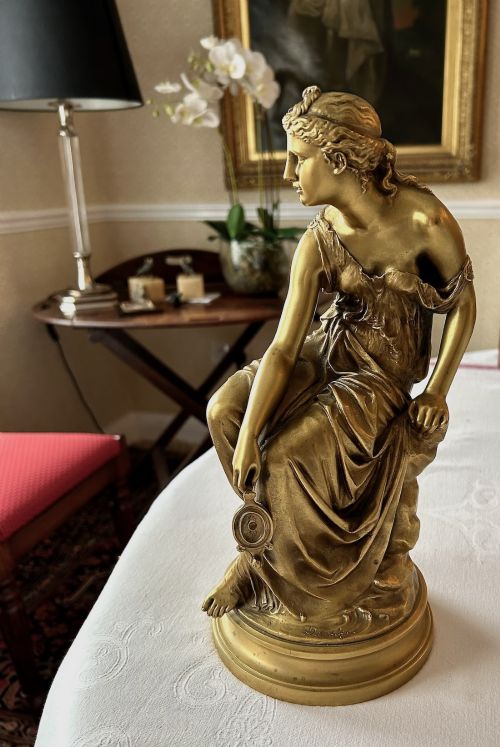
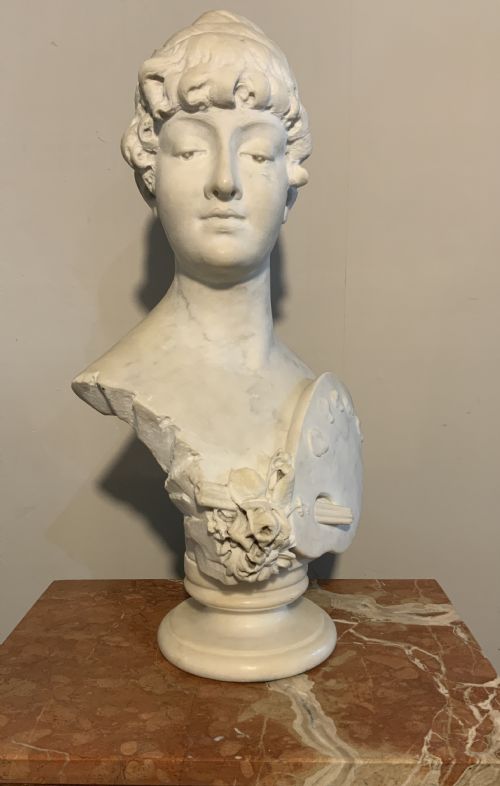
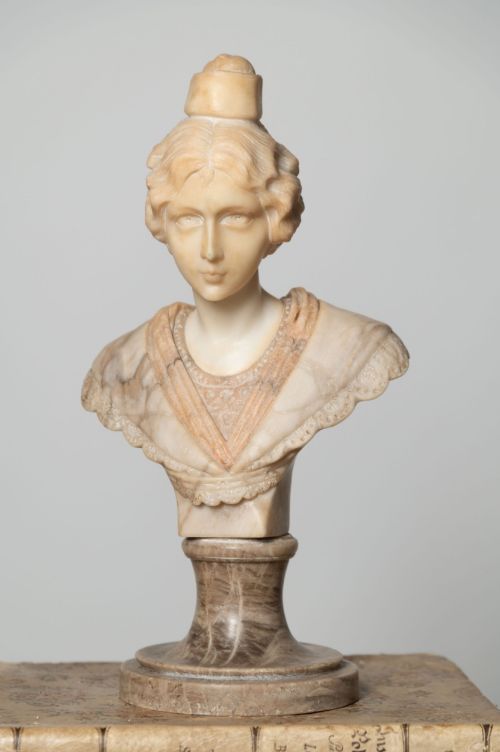
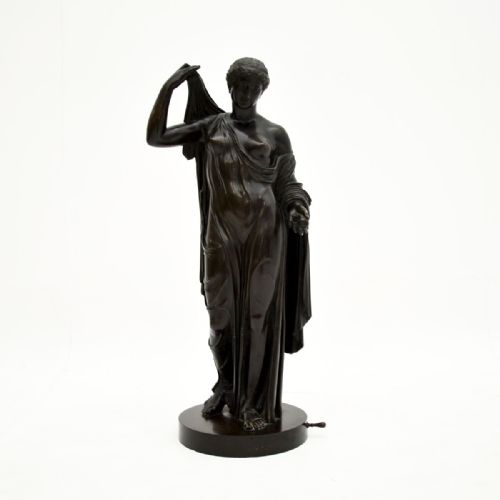
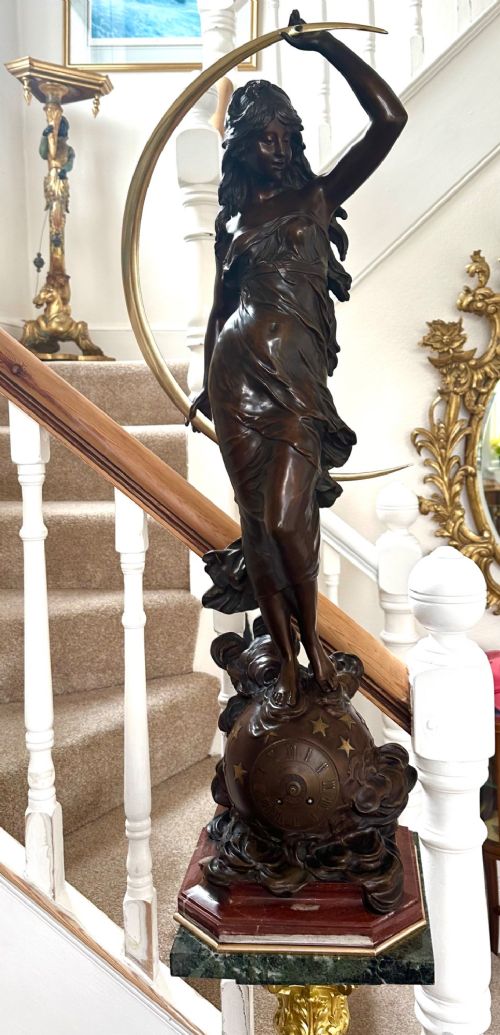
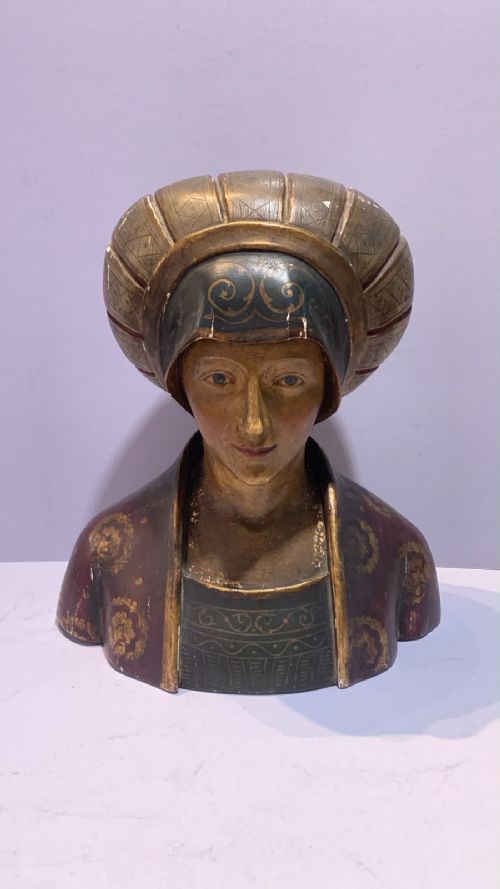
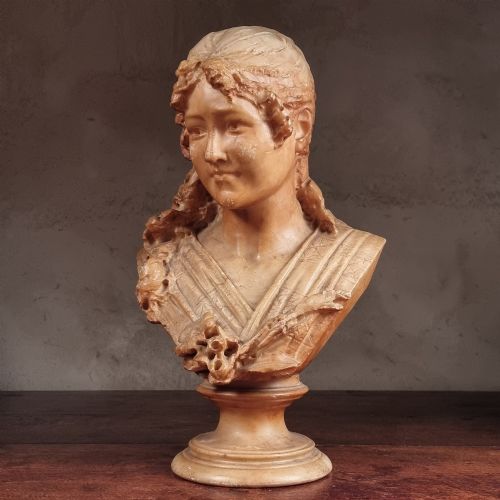
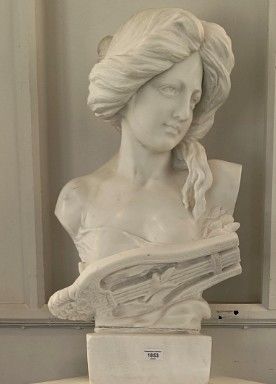
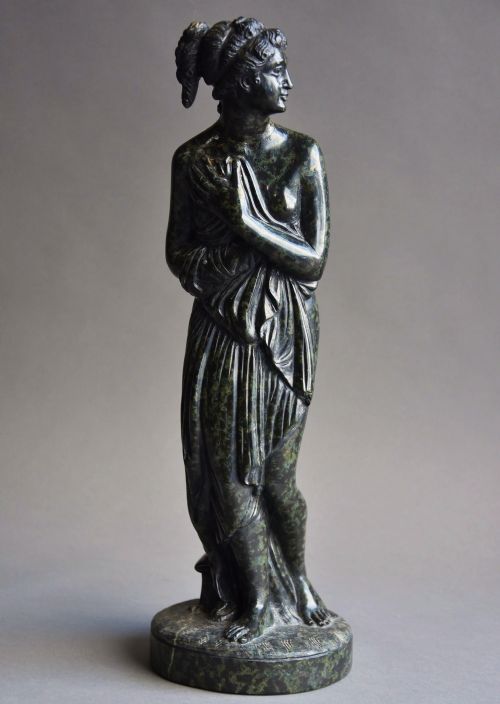
A classical female statue encompasses grand bronze sculptures, carved marble busts and terracotta figures produced across the nineteenth and early twentieth centuries. These pieces draw heavily on neoclassical and art nouveau idioms, depicting muses, dancers and mythological subjects like Venus and Selene.
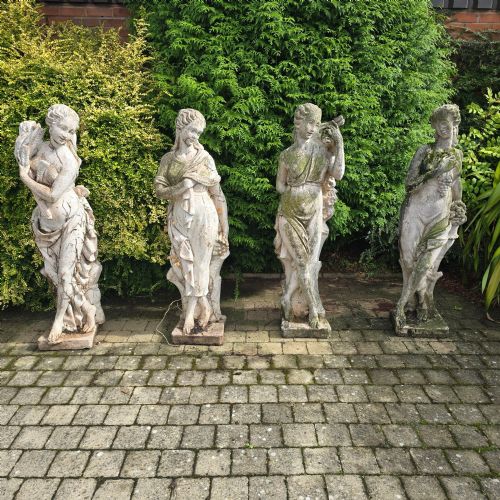
The version most commonly encountered on this page is the nineteenth century French bronze figure or grand tour marble bust, often cast in Paris or carved in Italian workshops. Alongside these gallery bronzes, composite and cast stone garden statues appear from the nineteen-thirties, built for exterior placement.
Makers and foundries stamped their work with signatures or foundry marks, recording names such as Ferdinand Barbedienne, Mathurin Moreau and the Val d'Osne foundry. Smaller works include porcelain figures from factories like Royal Worcester, alongside alabaster carvings from Italy.
Materials and Techniques
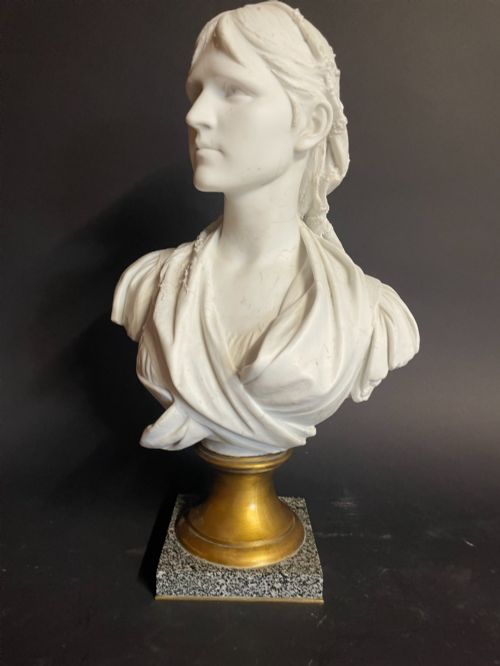
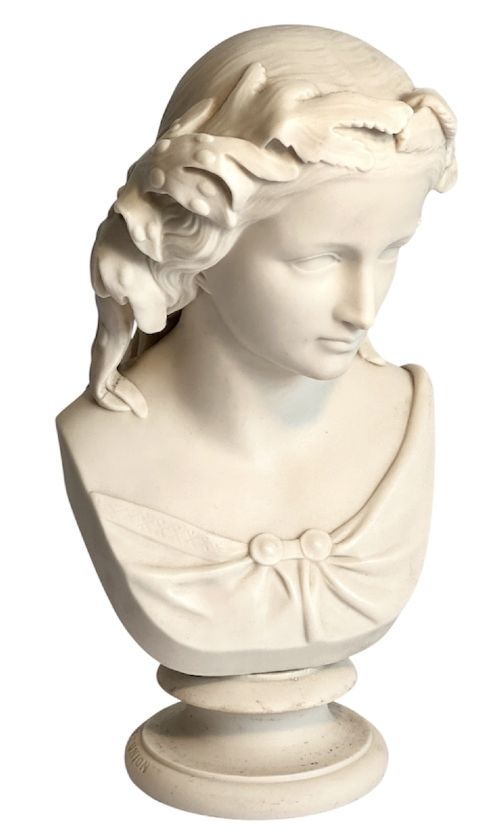
Porcelain figures like Parian ware utilised specialised ceramic slip poured into moulds, yielding an unglazed matte finish that imitated classical marble. Garden and architectural pieces employed cast stone, stucco and reconstituted stone poured into heavy moulds to withstand weathering outdoors.
Classical Female Statue Retail Price Guide 2026
Typical asking prices for classical female statue among the pieces listed under this phrase on Sellingantiques today, from the lower quarter to the upper quarter. They describe what is for sale here now, not the wider market.
Listings span the nineteenth century through the nineteen-thirties, featuring materials from Carrara marble and cast bronze to terracotta and porcelain.
Sculptural Execution
Foundry marks and legible artist signatures provide firm attribution, while unsigned workshop pieces rely entirely on the weight of the metal and the precision of the casting. The density of the stone and the absence of clumsy repairs govern the longevity of carved figures.
Etienne-Henri Dumaige·Ferdinand Barbedienne·Pierre le Faguays·Auguste Moreau·Mathurin Moreau·Eugene Aizelin·Aurore Onu·Edouard Drouot·Carrier-Belleuse·James Hadley
The Classical Female Statue Glossary
- Grand Tour
- A nineteenth century travel souvenir purchased by wealthy Europeans touring cultural sites in Italy and France. These pieces are typically smaller marble or bronze reductions of classical antiquities.
- Patination
- The chemical or natural surface colouration applied to bronze sculpture. A rich patina develops over decades through handling and environmental exposure.
- Parian Ware
- A fine-grained, unglazed porcelain developed in the nineteenth century to imitate carved white marble. It was frequently used for portrait busts and literary figures.
- Terracotta
- A porous, fired earthenware clay used for sculptural models and finished busts. Surfaces were often left biscuit or painted to resemble stone.
Classical Female Statue: Frequently Asked Questions
Where should I place marble?
Position carved marble and alabaster busts away from direct sunlight and sudden temperature shifts, which can cause internal stress fractures. Interior surfaces should remain stable and dry to protect the porous stone.
Use a sturdy, level plinth or table capable of supporting the substantial weight of stone sculpture. Felt pads beneath the base protect both the furniture and the underside of the carving.
Are garden statues weather resistant?
Cast stone and reconstituted stone statues are engineered to withstand outdoor conditions, developing a weathered surface over successive seasons. Protect composite pieces from severe frost by covering them or moving them indoors during freezing winters.
Bronze garden figures tolerate outdoor placement well, though the patina will shift depending on rainfall and foliage contact. Inspect structural anchors annually to ensure large statues remain stable on their stone bases.
How do I identify a casting?
Examine the bronze surface for foundry stamps, signature incisions and serial numbers, which often appear near the base. Fine chasing work and sharp separation between drapery and limbs indicate careful hand-finishing after the pour.
Compare the surface texture with known examples from the same period or foundry. Heavier patination and smooth interior cavities typically point toward nineteenth century French sand or lost-wax casting methods.