




Famille Rose Porcelain Figure
A famille rose porcelain figure brings hand-painted enamels and traditional symbolism to a room, offering both character and historical depth.
Famille Rose Porcelain Figure
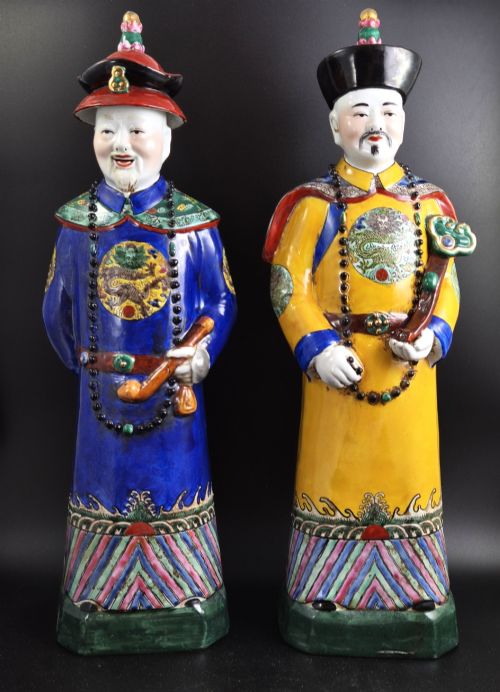
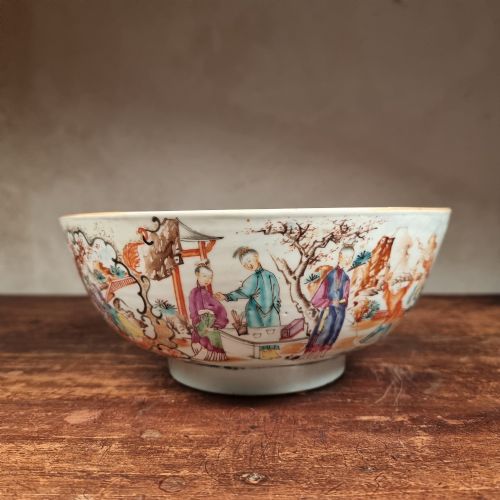
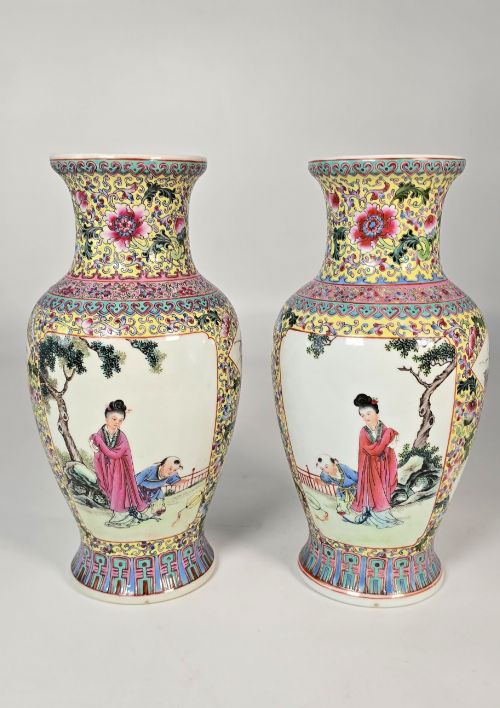
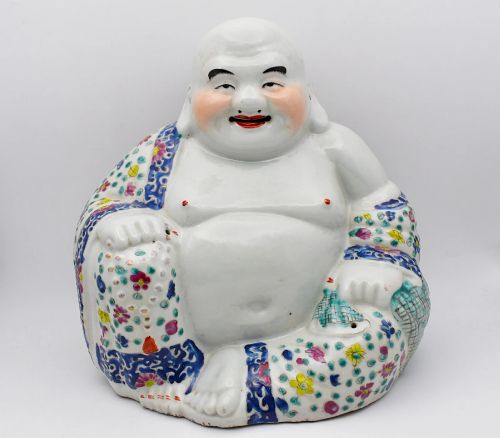
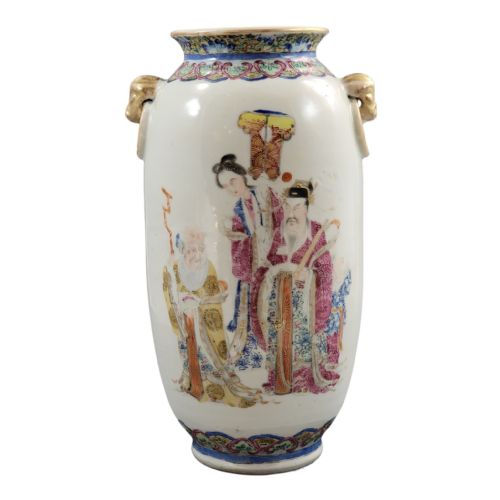
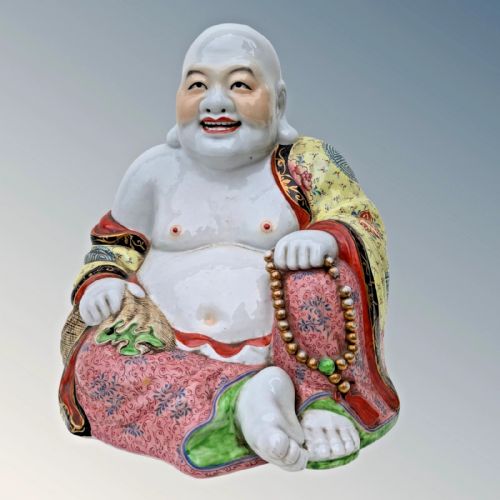
A famille rose porcelain figure represents characters from Chinese tradition, ranging from immortals and emperors to laughing Buddhas and scholars. When you search for a famille rose porcelain figure, you encounter works spanning the eighteenth century through the republican period and the twentieth century. These pieces take the form of freestanding statues, snuff bottles, and lamp bases modelled with meticulous detail.
The objects on this page originate primarily from Chinese kilns, including pieces created during the Qing dynasty and later republican eras. Figures often depict revered figures such as Shoulao, Budai, or Luohans, each carrying distinct iconographic attributes. Collectors find both single figures and matched pairs among the current selection.
What varies in quality
Age and provenance also influence the standing of a piece, with eighteenth-century and early nineteenth-century examples demonstrating greater subtlety in the modelling. The crispness of marks, where present, provides further indication of the workshop standard.
Listings span the eighteenth, nineteenth, and twentieth centuries, featuring porcelain, enamel, and gold leaf across figures, vases, and snuff bottles.
Zhu Mao Ji·Gao Hengsheng·Fujian Huiguan
The Famille Rose Porcelain Figure Glossary
- Famille rose
- A palette of opaque enamels dominated by a pink or rose colour, introduced in Chinese porcelain during the Qing dynasty. It allowed for greater tonal gradation than earlier green-dominant palettes.
- Overglaze enamel
- Pigments applied to the already-fired and glazed porcelain surface, requiring a second, cooler firing to fix the colours. This technique permitted vibrant multicoloured decoration on figures and vessels.
- Qing dynasty
- The final imperial dynasty of China, lasting from sixteen forty-four until nineteen twelve. Porcelain production during this era achieved exceptional technical and artistic heights.
- Republic period
- The era in Chinese history following the collapse of the Qing dynasty in nineteen twelve, lasting until nineteen forty-nine. Workshops during this time continued traditional porcelain arts while incorporating new stylistic influences.
- Bitong
- A cylindrical brush pot used by scholars for holding writing brushes. These items were frequently decorated with narrative scenes in the famille rose style.
Famille Rose Porcelain Figure: Frequently Asked Questions
How do I identify a republican period figure?
Republican period figures often display a distinct palette and finer, more painterly enamel work compared to later twentieth-century output. Makers from this era sometimes signed their pieces.
Examination of the base and the style of the robes helps separate these twentieth-century pieces from earlier Qing dynasty examples.
What do these figures typically depict?
The subjects are drawn from Chinese mythology, philosophy, and folklore, frequently representing immortals, deities, and auspicious figures. Common subjects include Budai, Shoulao, and various scholars or luohans.
Each character carries specific attributes that signal longevity, prosperity, or wisdom to the viewer.
How should I display porcelain figures at home?
Porcelain figures require stable placement away from heavy traffic areas to prevent accidental knocks. Displaying them in a cabinet or on a sturdy surface protects the delicate overglaze enamels.
Keeping them out of direct sunlight preserves the vibrancy of the pink and polychrome enamel colours.
Are these figures glazed all over?
Most pieces feature a clear glaze over the porcelain body, with enamels applied on top of this glazed surface. Some bases or interior areas may remain unglazed, exposing the white ceramic body underneath.
Inspect the underside to understand the firing methods used by the specific workshop.