


Chinese Glazed Ceramic Statue
A Chinese glazed ceramic statue brings tangible history into a room, offering centuries of artistry in porcelain and earthenware figures.
Chinese Glazed Ceramic Statue
A Chinese glazed ceramic statue encompasses decorative figures, figurines, and ceramic sculptures spanning multiple dynasties and centuries. Buyers searching for a Chinese glazed ceramic statue encounter diverse forms ranging from court attendants and Buddhist lions to cockerels, horses, and human figures.
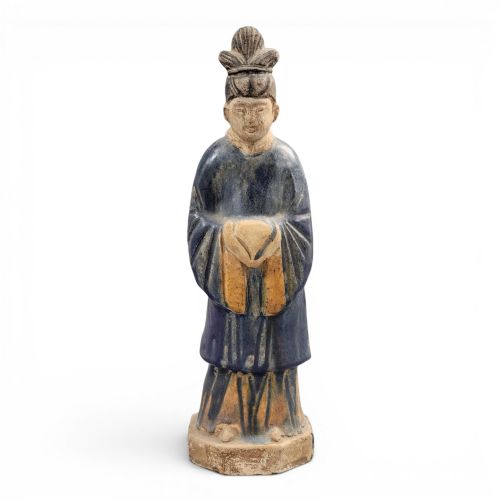
The pieces on this page heavily represent the 19th century and early 20th century, alongside earlier stylistic inspirations such as the Tang and Ming dynasties. Common subjects include mythological beasts, deities like Hotei, and various domestic or exotic animals rendered in characteristic glazes.
Materials and construction methods
Potters utilised materials such as porcelain, earthenware, terracotta, and stoneware to form the body of each sculpture. These clay bases were shaped by hand or moulded before receiving liquid mineral coatings.
Surface decoration relies heavily on specialised mineral glazes, including sancai tri-colour washes, turquoise, pale green, and famille rose enamels. Firing temperatures in kilns fused these chemical colours to the ceramic substrate, creating durable and glossy finishes.
Glazed ceramic goats and cheeky laughing boys share shelf space with fierce tigers and guardian lions.
Factors influencing quality
Quality rests in the precision of the modelling and the depth of the glaze application. Finer examples display crisp facial expressions, detailed anatomical rendering, and controlled pooling of colours across the ceramic surface.
The chemical complexity of the glaze contributes significantly to the visual success of the piece. Vibrant, evenly distributed sancai colours or rich turquoise coatings indicate superior kiln control by the potter.
The Chinese Glazed Ceramic Statue Glossary
- Sancai
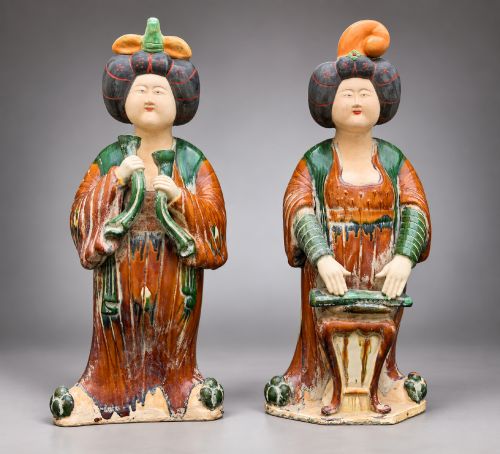
- A traditional three-colour lead glaze system prominent in Tang dynasty ceramics, typically combining amber, green, and cream hues. Potters allowed these colours to run and blend naturally during the firing process.
- Famille rose
- A palette of opaque enamel colours introduced in Chinese ceramics, featuring prominent pink and rose shades mixed from colloidal gold. This technique allowed for intricate painterly detail on porcelain figures.
- Shiwan
- A ceramic ware originating from the kilns of Shiwan, known for thick, dramatic glazes and expressive figurative sculptures. Pieces from this tradition often depict local deities, animals, and historical figures.
- Shishi
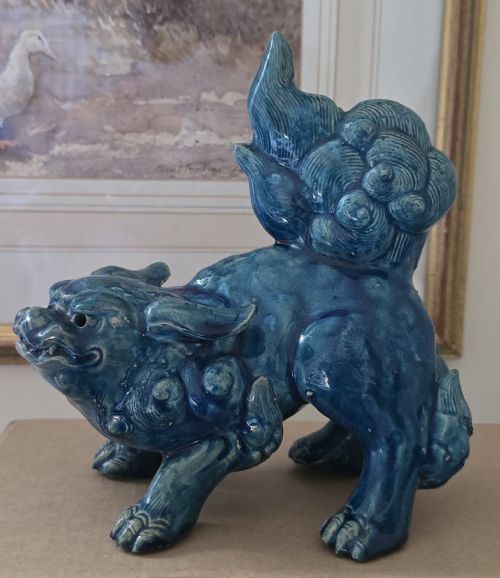
- A traditional guardian lion or Foo dog figure, placed to ward off malevolent spirits. These mythical beasts appear frequently in glazed ceramic forms.
- Blanc-de-Chine
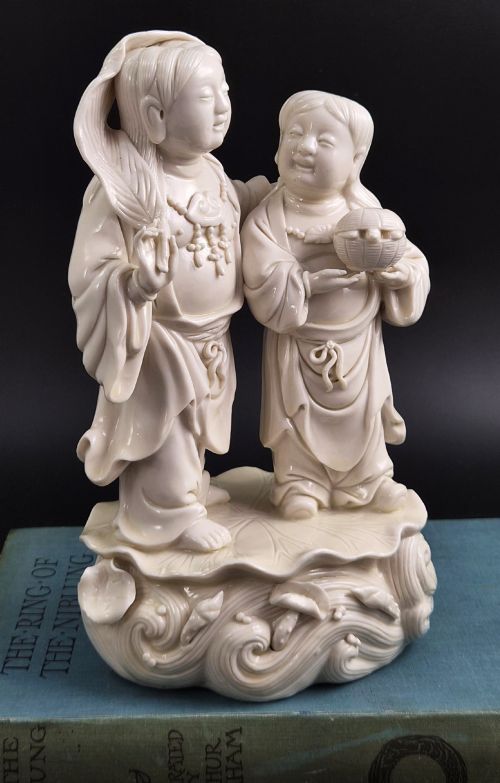
- A type of white porcelain made at Dehua in Fujian province, featuring a ivory or milk-white glaze that melds smoothly with the clay body.
Chinese Glazed Ceramic Statue: Frequently Asked Questions
How do I identify a Tang style piece?
Pieces styled after the Tang period typically feature sancai lead glazes with characteristic amber and green tones. They often depict court attendants, horses, or musicians with distinct archaic proportions.
Examination of the clay body and the way the glaze reacts helps differentiate revival pieces from older work. Stylistic markers remain the primary visual guide for these specific forms.
Where should I place these statues?
These ceramic figures suit tabletops, mantelpieces, or dedicated display cabinets where their colours can catch the light. Their glazed surfaces benefit from stable indoor environments away from direct foot traffic.
Pairing matching figures, such as cockerels or guardian lions, creates visual symmetry on sideboards or shelves. Single pieces work well as sculptural focal points in a room.
What is a Foo dog?
A Foo dog, or Chinese guardian lion, represents a traditional protective beast placed outside buildings or domestic spaces. Ceramic versions capture these mythical creatures in seated or guarding postures.
These figures often display detailed manes and open mouths, sometimes paired as male and female guardians. Glazes range from turquoise and pale green to multi-coloured sancai finishes.
How are earthenware and porcelain different?
Earthenware is a porous, lower-fired ceramic material that requires a glaze to become impermeable to liquids. Porcelain utilises fine white clay fired at higher temperatures until the body vitrifies.
Statues made from porcelain offer a finer, more ringing density, while earthenware pieces present a heavier, more rustic clay structure beneath their surface coatings.